
Uchambuzi: Nini kinachochochea kupanda sambamba kwa bei za Dhahabu na hisa za Marekani?
Kupanda sambamba kwa bei za dhahabu na hisa za Marekani ni jambo lisilo la kawaida kiasi fulani, kwani kiasili, dhahabu inachukuliwa kama rasilimali ya "kimbilio salama" ambayo huwa inafanya vizuri wakati wa kutokuwa na uhakika wa kiuchumi, wakati hisa zinahusishwa zaidi na ukuaji wa uchumi na hamu ya hatari. Mambo kadhaa yanachochea masoko yote mawili kupanda kwa wakati mmoja, kulingana na wachambuzi.
Wafanyabiashara wanaona uwezekano wa 63% wa kupunguzwa kwa pointi 25 za msingi mwezi Desemba, kulingana na zana ya CME ya FedWatch. Simulizi hiyo moja - pesa nafuu - inainua rasilimali ambazo kwa kawaida huenda katika mwelekeo tofauti: dhahabu, kimbilio salama la asili, na hisa, mchezo wa hatari wa kiasili.
Masoko yote mawili yanategemea matumaini yanayochochewa na sera badala ya nguvu za kiuchumi. Data dhaifu ya ajira, hisia hafifu za watumiaji, na dalili za msukumo wa kifedha zinawasukuma wafanyabiashara kujiweka tayari kwa njia laini ya kifedha, ikichochea mkusanyiko wa ukwasi unaofuta mstari kati ya usalama na uvumi.
Mambo muhimu ya kuzingatia
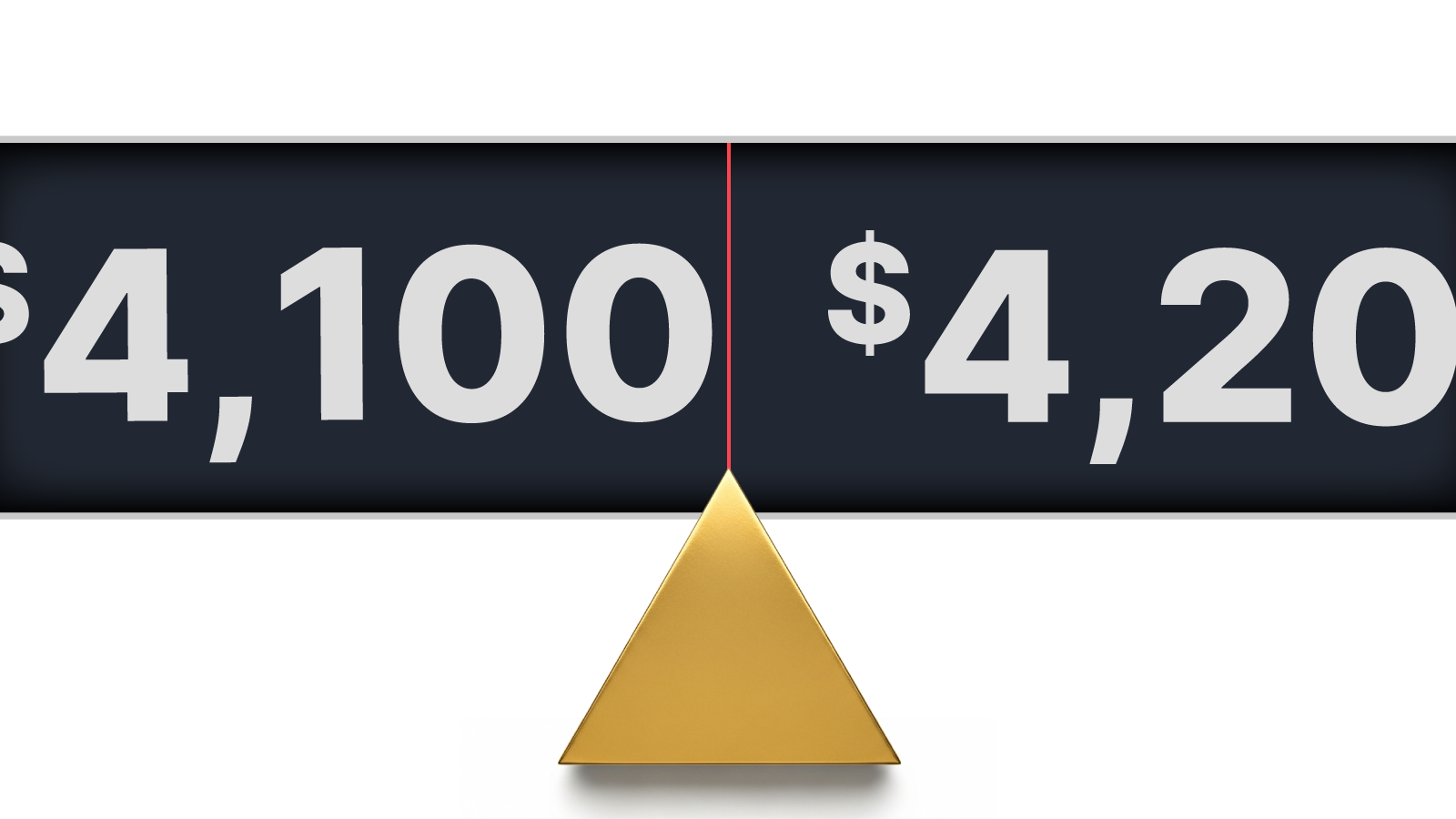
- Dhahabu inashikilia juu ya $4,100 kwa aunzi, kiwango chake cha juu zaidi katika wiki mbili, wakati wafanyabiashara wakitarajia kulegezwa kwa masharti na Fed.
- Hisa za Marekani pia zinapanda huku matarajio ya viwango vya chini yakiongeza uthamini wa mapato ya baadaye.
- Kupanda huku kunaonyesha imani ya ukwasi, sio ukuaji - soko linaloendeshwa na benki kuu, sio misingi.
- Wasiwasi wa kifedha na kupanda kwa mavuno ya Hazina ya Marekani (US Treasury yields) kunaongeza safu ya pili ya msaada kwa dhahabu.
- Mahitaji makubwa ya kifizikia kutoka India na benki kuu yanashikilia bei chini ya wimbi la uvumi.
Wito wa kupunguza viwango vya Fed unachochea dhahabu na hisa za Marekani
Kupanda kwa pamoja kunatokana na mabadiliko ya wazi ya jumla. Data za hivi karibuni za uchumi wa Marekani zimeonyesha kupoteza kasi - ajira za kibinafsi zilidhoofika mwezi Oktoba, ajira za serikali na rejareja zilianguka, na hisia za watumiaji zilishuka hadi kiwango cha chini zaidi katika miezi kadhaa. Masoko yalitafsiri hii kama uthibitisho kwamba Fed itageukia kupunguza viwango mwezi Desemba.
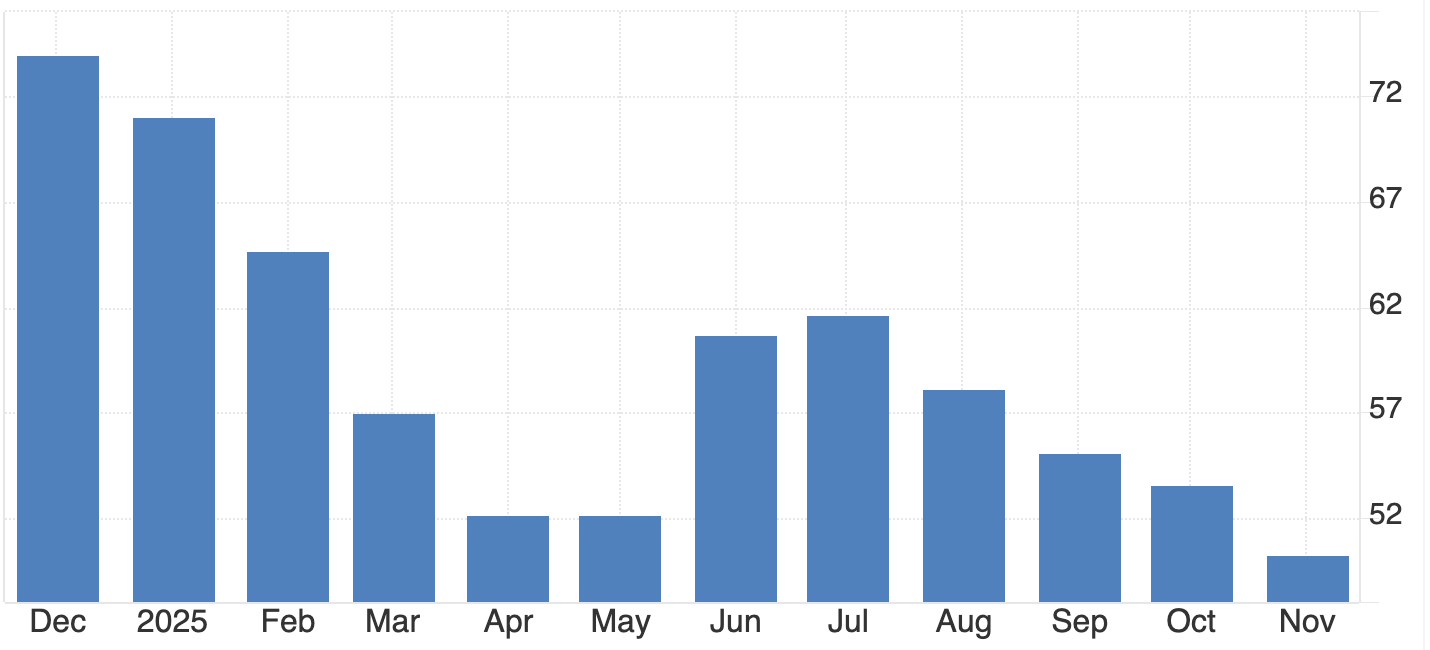
Viwango vya chini vya riba vinaathiri pande zote mbili za soko kwa wakati mmoja:
- Kwa hisa, zinafanya kukopa kuwa rahisi na kuinua thamani ya sasa ya mapato ya shirika.
- Kwa dhahabu, zinapunguza gharama ya fursa ya kushikilia rasilimali isiyo na mavuno.
Matokeo yake ni kupanda kwa pamoja. Wawekezaji hawachagui kati ya usalama na hatari; wanununua vyote viwili, wakiunganishwa na tarajio moja - kurejea kwa pesa rahisi.
Kwa wafanyabiashara kwenye Deriv MT5, mienendo hii ya rasilimali mtambuka imeunda fursa mpya za utofauti, kwani tete katika fahirisi, bidhaa, na metali zote zinaitikia msukumo ule ule wa sera.
Sera ya fedha ya Marekani yaibuka tena kama kichocheo kilichofichika
Kufungwa kwa serikali ya Marekani na utatuzi wake wa muda kumeongeza umakini kwenye utulivu wa kifedha. Maelewano ya pande mbili za Seneti kufungua tena serikali - yakiungwa mkono na Rais Donald Trump - yalipunguza msongo wa soko wa muda mfupi lakini yaliwakumbusha wawekezaji tatizo la deni la muda mrefu la Marekani.
Kama Ole Hansen wa Saxo Bank alivyobainisha, “Kupanda kwa mavuno kunakochochewa na wasiwasi wa kifedha, badala ya nguvu za kiuchumi, kihistoria kumekuwa msaada kwa metali za uwekezaji.” Mavuno ya juu ya dhamana, katika muktadha huu, yanaonyesha wasiwasi juu ya uendelevu wa deni, sio uchumi imara - kuimarisha hoja ya kushikilia dhahabu kama kinga dhidi ya kutokuwa na uhakika wa kifedha.
Kufunguliwa tena kwa mashirika ya serikali pia kutarejesha upatikanaji wa data rasmi za kiuchumi, kutoa uwazi zaidi kwa masoko. Hata hivyo, kwa data hiyo inayotarajiwa kuthibitisha kupungua kwa shughuli, wafanyabiashara wanaona uhalali zaidi kwa Fed kuchukua hatua.
Dhahabu na hisa: Ongezeko la pamoja adimu katika masoko
Dhahabu na hisa kiasili huenda katika mwelekeo tofauti. Moja inawakilisha hofu, nyingine imani. Hata hivyo, tabia ya soko ya 2025 inapendekeza kwamba vyote sasa ni maonyesho ya matarajio ya ukwasi.
Wakati wawekezaji wanatarajia kulegezwa kwa fedha, kila kitu kinachofaidika na pesa nafuu hupanda - kutoka dhahabu hadi hisa za teknolojia ya ukuaji. Mabadiliko haya ya uhusiano yanaangazia mabadiliko ya kimuundo katika jinsi masoko yanavyofanya kazi: matarajio ya sera yamechukua nafasi ya misingi kama kichocheo kikuu cha bei.
Uwezo wa dhahabu kupanda hata wakati dola ya Marekani inaimarika unasisitiza mabadiliko hayo. Mienendo ya sarafu inafunikwa na utawala wa sera ya benki kuu katika upangaji bei wa rasilimali za kimataifa.
Mahitaji ya dhahabu yanaongeza kina kwenye kupanda huko
Zaidi ya simulizi ya uvumi, kupanda kwa dhahabu kuna msaada mkubwa wa ulimwengu halisi. Mahitaji ya kifizikia yanabaki kuwa imara, hasa nchini India na miongoni mwa benki kuu:
- Mapato ya ETF ya dhahabu ya India yalifikia $2.9 bilioni katika miezi 10 ya kwanza ya 2025 - sawa na tani 26 za dhahabu, karibu kulingana na jumla ya kuanzia 2020 hadi 2024 kwa pamoja.
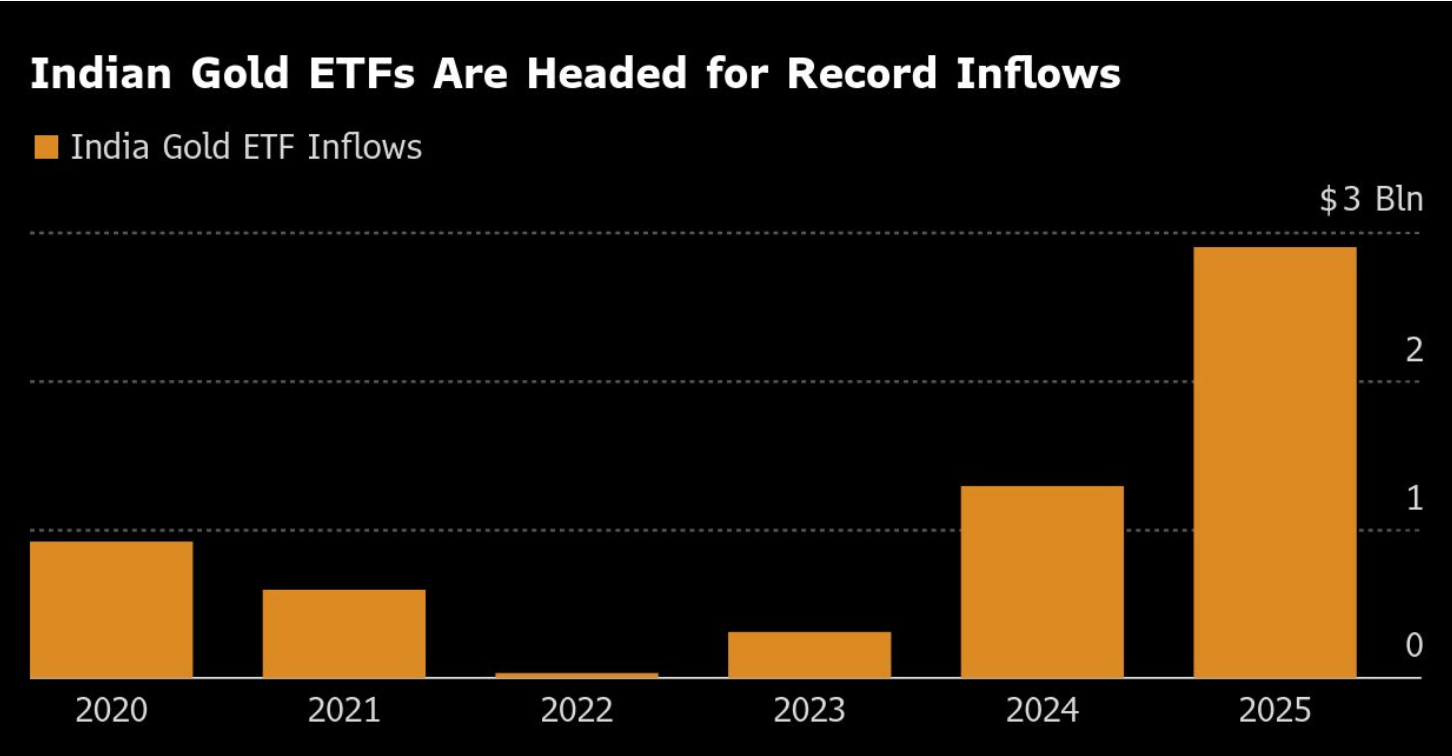
- Oktoba pekee ilishuhudia $850 milioni katika mapato mapya, kufuatia rekodi ya $942 milioni mwezi Septemba.
- Jumla ya umiliki wa ETF wa India sasa unasimama kwa tani 83.5, zenye thamani ya zaidi ya $11 bilioni.
Mahitaji haya yanapendekeza kuwa kupanda huko sio kwa uvumi tu. Kunaonyesha hamu ya kweli ya kimataifa kwa dhahabu kama hifadhi ya thamani ya muda mrefu - kipingamizi kwa kutokuwa na uhakika wa kifedha na sera.
Wachimbaji wa dhahabu wanaakisi imani ya wawekezaji
Upande wa ushirika wa soko la dhahabu unaunga mkono hisia hii. Barrick Gold (ABX.TO), mmoja wa wazalishaji wakubwa duniani, alipandisha gawio lake la robo mwaka kwa 25% na kupanua mpango wake wa kununua hisa wa $500 milioni baada ya kuripoti faida iliyorekebishwa iliyozidi matarajio.
- Wastani wa bei ya dhahabu iliyopatikana: $3,457 kwa aunzi, juu kutoka $2,494 mwaka mmoja uliopita.
- Uzalishaji ulianguka kutoka aunzi 943,000 hadi 829,000, wakati gharama zote za uendelezaji zilipanda kidogo hadi $1,538 kwa aunzi.
Licha ya changamoto za kiutendaji na kufutwa kwa $1 bilioni kulikohusishwa na kupoteza mgodi wake wa Mali, mabadiliko ya kimkakati ya Barrick kuelekea uzalishaji wa Amerika Kaskazini yanaashiria imani katika bei za juu za dhahabu endelevu.
Hata hivyo, mzozo wa Mali - ambao unajumuisha kuzuiliwa kwa wafanyakazi na vikwazo vya usafirishaji - unasisitiza udhaifu wa kijiografia wa usambazaji wa dhahabu duniani, jambo ambalo linaweza kubana masoko zaidi ikiwa halitatatuliwa.
Mandhari ya soko: deni, mavuno, na kitendawili cha sera
Kupanda kwa dhahabu kwa zaidi ya 50% mwaka huu sio tu tafakari ya hofu ya mfumuko wa bei. Ni jibu kwa udhaifu wa kifedha na utegemezi wa soko kwa ukwasi.
Kupanda kwa mavuno ya Hazina ni ishara ndogo ya afya ya uchumi na zaidi ni onyo kuhusu uendelevu wa deni. Wawekezaji wanununua dhahabu kama kinga dhidi ya hatari hizi za kimuundo huku wakipandisha bei za hisa kwa dhana kwamba ukwasi utaendelea kutiririka.
Tabia hii mbili - kutafuta usalama na hatari kwa wakati mmoja - ndio kitendawili kinachofafanua saikolojia ya soko ya 2025.
Dhahabu na hisa za Marekani: Matukio ya miezi ijayo
- Kuvunja kwa kupanda (Bullish breakout)
Ikiwa Fed itapunguza viwango mwezi Desemba na kuashiria kulegezwa zaidi, dhahabu inaweza kuvunja $4,200 haraka, ikisaidiwa na wasiwasi wa kifedha na mahitaji thabiti ya benki kuu.
- Uimarishaji wa muda mfupi
Msimamo wa tahadhari au uliocheleweshwa wa Fed unaweza kuona dhahabu ikielea kati ya $4,050 na $4,150, huku hisa zikitarajiwa kudumisha faida hadi matarajio ya ukwasi yatakapofifia.
Vyovyote vile, jambo kuu la kuzingatia ni kwamba dhahabu na hisa sasa zinajibu kichocheo kile kile cha uchumi mkuu - bei ya pesa - badala ya nguvu za kihisia zinazopingana.
Uchambuzi wa kiufundi wa Dhahabu
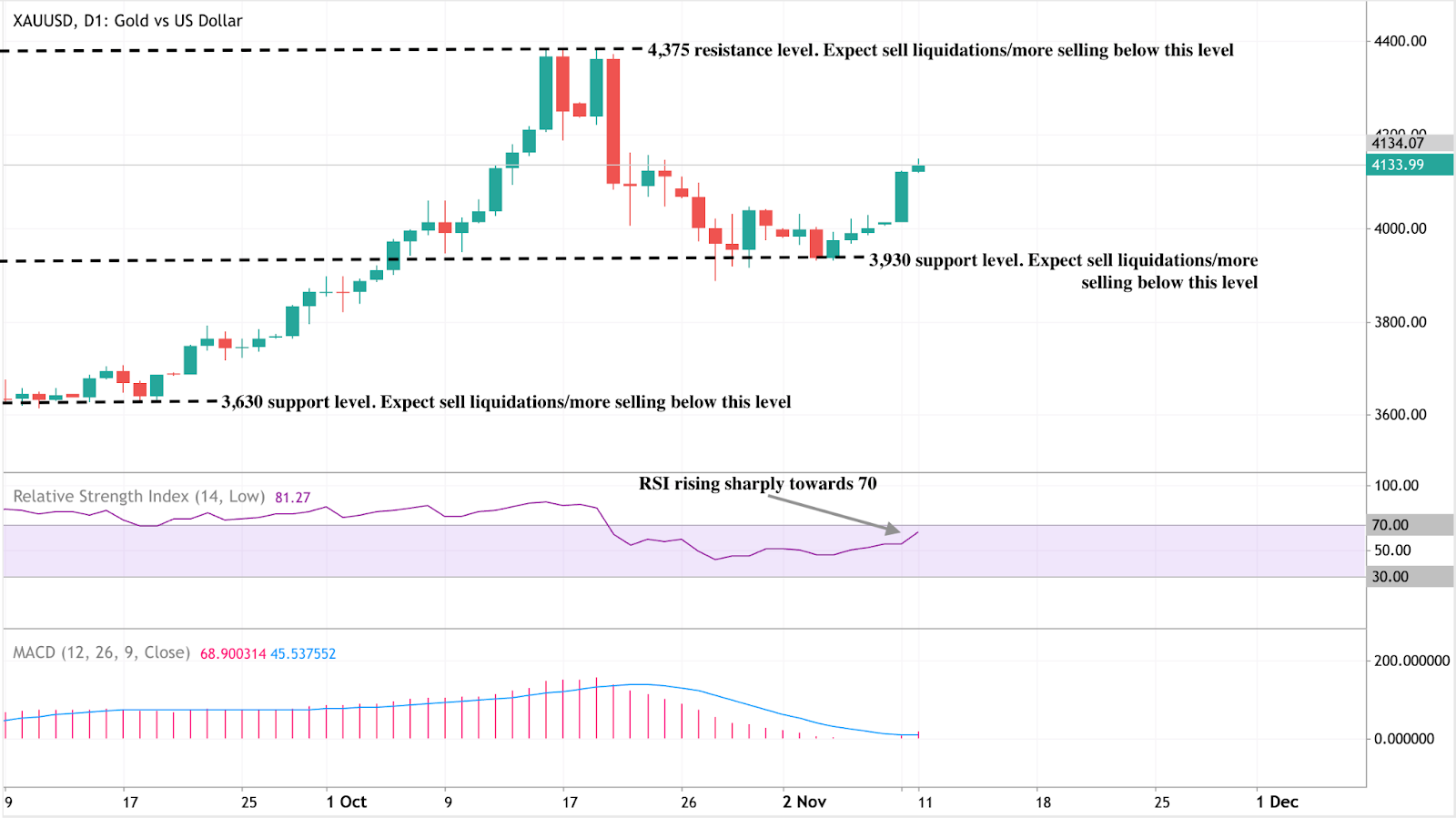
Dhahabu (XAU/USD) inafanya biashara karibu na $4,134, ikiimarika kati ya viwango muhimu - upinzani katika $4,375 na msaada katika $3,930. Kuvunja juu ya $4,375 kunaweza kuongeza kupanda, wakati kushuka chini ya $3,930 kunahatarisha uuzaji mpya kuelekea $3,630.
RSI (81) inaonyesha kasi kubwa ya kupanda (bullish) lakini inaashiria hali ya kununuliwa kupita kiasi (overbought), ikipendekeza uwezekano wa uimarishaji wa muda mfupi au kurudi nyuma. Wakati huo huo, MACD inabaki katika makutano ya kupanda, ikithibitisha shinikizo la kununua linaloendelea.
Kwa ujumla, mwelekeo wa dhahabu unabaki chanya juu ya $3,930, lakini wafanyabiashara wanapaswa kuangalia kupoa kwa kasi karibu na maeneo yaliyonunuliwa kupita kiasi. Unaweza kufuatilia viwango hivi moja kwa moja kwenye Deriv MT5 au jaribu mipangilio ya margin na hatari ukitumia Kikokotoo cha Biashara cha Deriv kupanga nafasi katika metali na fahirisi.
Mtazamo wa uwekezaji wa Dhahabu
- Wafanyabiashara wa muda mfupi: Eneo la $4,100–$4,200 ndio safu muhimu ya kuangalia kabla ya uamuzi wa Fed wa Desemba.
- Wawekezaji wa muda wa kati: Msongo wa kifedha, tete ya mavuno halisi, na mahitaji ya India yanaunda vichocheo vya msingi kwa nguvu inayoendelea.
Wasimamizi wa kwingineko: Uhusiano unaoendelea wa dhahabu na hisa unamaanisha kuwa sasa inafanya kazi kama rasilimali sambamba inayojali sera, sio kinga safi. Mikakati ya utofauti inapaswa kuzingatia mabadiliko haya ya kimuundo.
Takwimu za utendaji zilizotajwa sio dhamana ya utendaji wa baadaye.


