Analysis: What’s driving the parallel rally in Gold prices and US stocks?

November 11, 2025
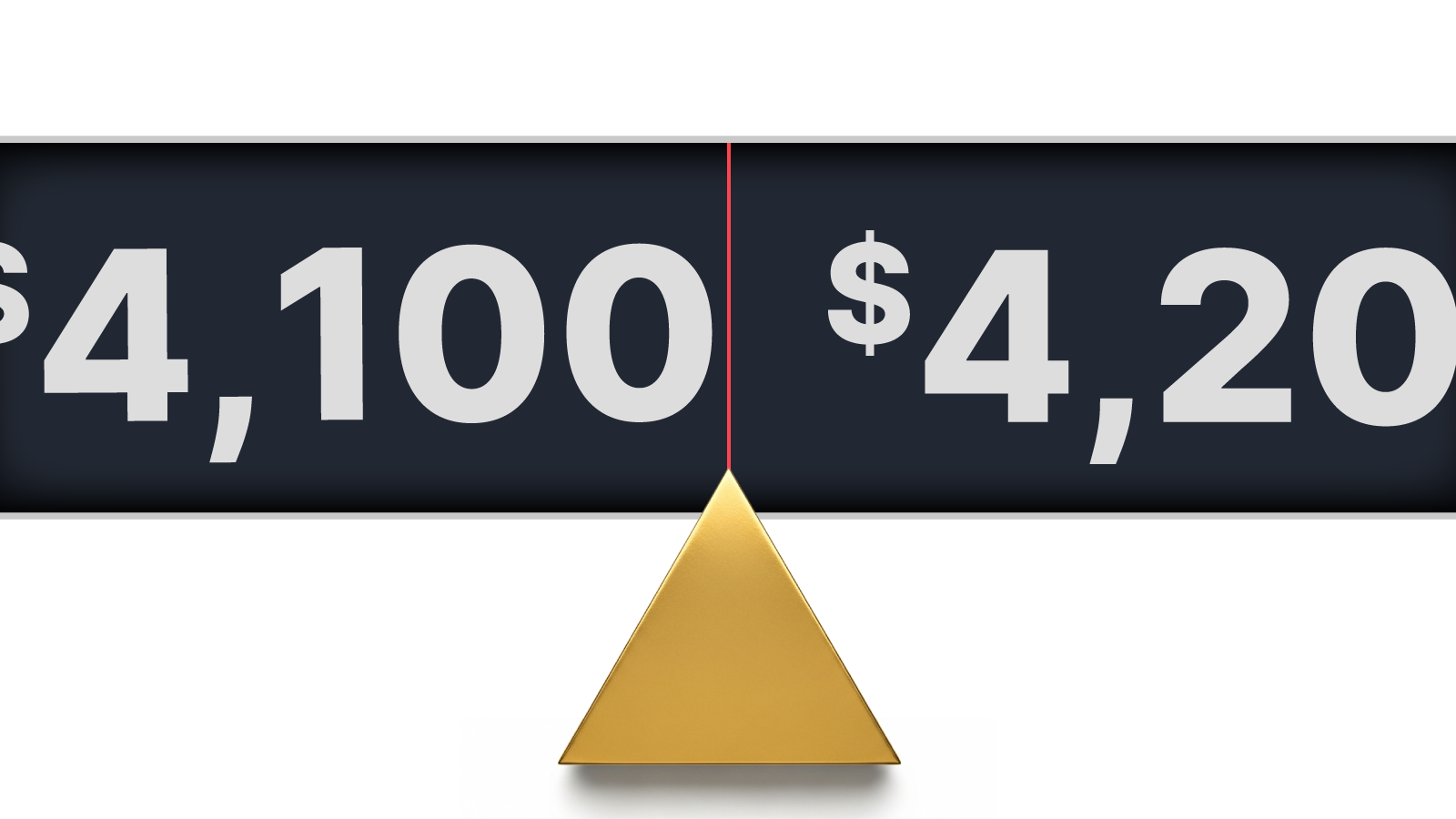
Visual illustration showing a golden triangular balance point between $4,100 and $4,200, representing a price equilibrium or decision level.

The parallel rally in both gold prices and U.S. stocks is somewhat unusual, as traditionally, gold is considered a "safe-haven" asset that tends to perform well during periods of economic uncertainty, while stocks are more linked to economic growth and risk appetite. Several factors are driving both markets higher simultaneously, according to analysts.

Traders see a 63% chance of a 25-basis-point cut in December, according to CME’s FedWatch tool. That single narrative - cheaper money - is lifting assets that usually move in opposite directions: gold, the classic safe haven, and stocks, the traditional risk play.

Both markets are feeding off policy-driven optimism rather than economic strength. Weak jobs data, soft consumer sentiment, and signs of fiscal strain are prompting traders to position for a gentler monetary path, fuelling a liquidity rally that blurs the line between safety and speculation.

Key takeaways

  • Gold holds above $4,100 per ounce, its highest level in two weeks, as traders anticipate the Fed's easing.
  • US equities are also climbing as lower rate expectations boost future earnings valuations.
  • The rally reflects liquidity confidence, not growth - a market driven by central banks, not fundamentals.
  • Fiscal anxiety and rising US Treasury yields add a second layer of support for gold.
  • Strong physical demand from India and central banks underpins prices beneath the speculative wave.

Fed rate cut calls drive gold and US stocks

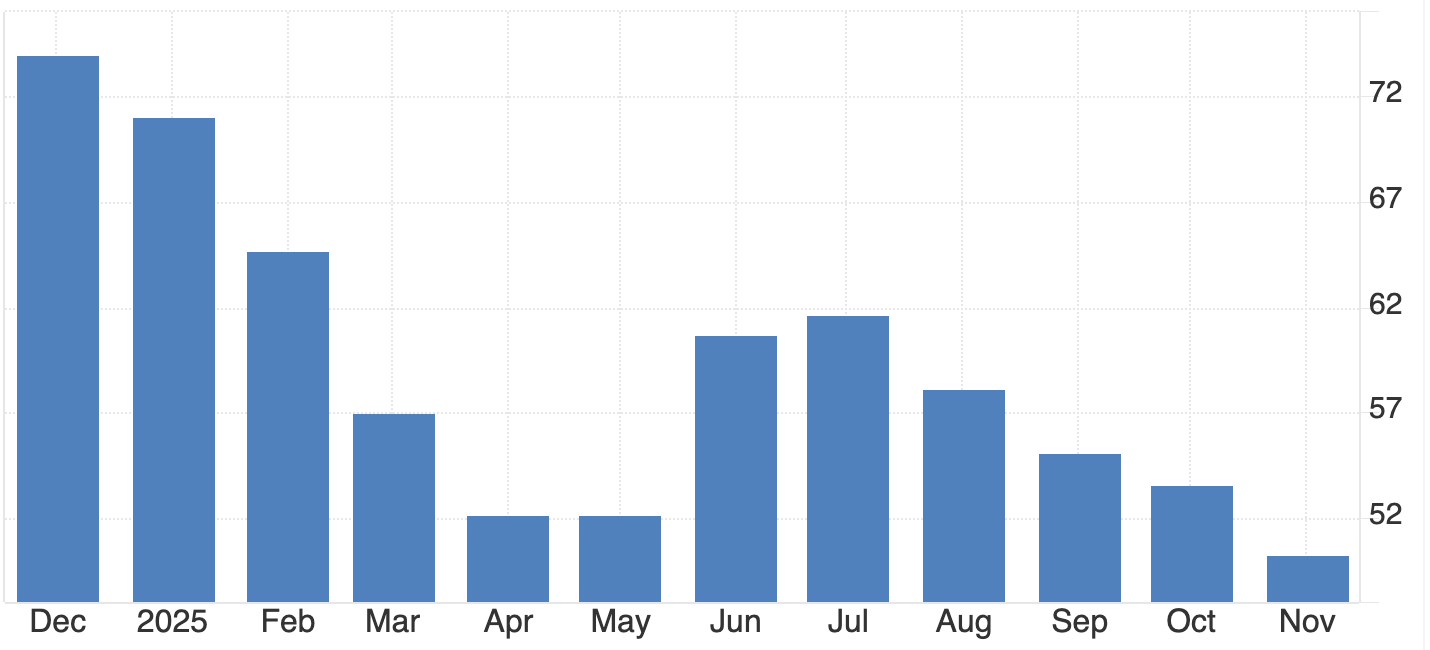
The joint rally stems from a clear macro shift. Recent US economic data has pointed to a loss of momentum - private employment weakened in October, government and retail jobs fell, and consumer sentiment dropped to its lowest in months. Markets interpreted this as confirmation that the Fed will pivot to rate cuts in December.

Source: University of Michigan, Trading Economics

Lower interest rates affect both sides of the market simultaneously:

  • For equities, they make borrowing cheaper and lift the present value of corporate earnings.
  • For gold, they reduce the opportunity cost of holding a non-yielding asset.

The result is a synchronised upswing. Investors aren’t choosing between safety and risk; they’re buying both, united by one expectation - the return of easier money.

For traders on Deriv MT5, these cross-asset dynamics have created new opportunities for diversification, as volatility in indices, commodities, and metals all respond to the same policy pulse.

US fiscal policy re-emerges as a hidden driver

The US government shutdown and its tentative resolution have sharpened focus on fiscal stability. The Senate’s bipartisan compromise to reopen the government - backed by President Donald Trump - eased short-term market stress but reminded investors of America’s long-term debt problem.

As Saxo Bank’s Ole Hansen noted, “Rising yields driven by fiscal anxiety, rather than economic strength, have historically been supportive for investment metals.” Higher bond yields, in this context, reflect concern about debt sustainability, not a stronger economy - reinforcing the case for holding gold as a hedge against fiscal uncertainty.

The reopening of government agencies will also restore access to official economic data, providing markets with greater clarity. Yet, with that data likely to confirm slowing activity, traders see even more justification for the Fed to act.

Gold and stocks: A rare tandem surge in the markets 

Gold and equities traditionally move in opposite directions. One represents fear, the other confidence. However, 2025’s market behaviour suggests that both are now expressions of liquidity expectations.

When investors expect monetary easing, everything that benefits from cheap money rallies - from gold to growth tech stocks. This correlation shift highlights a structural change in how markets operate: policy anticipation has overtaken fundamentals as the key price driver.

Gold’s ability to rise even as the US dollar strengthens reinforces that shift. Currency dynamics are being eclipsed by the dominance of central bank policy in global asset pricing.

Gold demand adds depth to the rally

Beyond the speculative narrative, gold’s rise has strong real-world backing. Physical demand remains robust, particularly in India and among central banks:

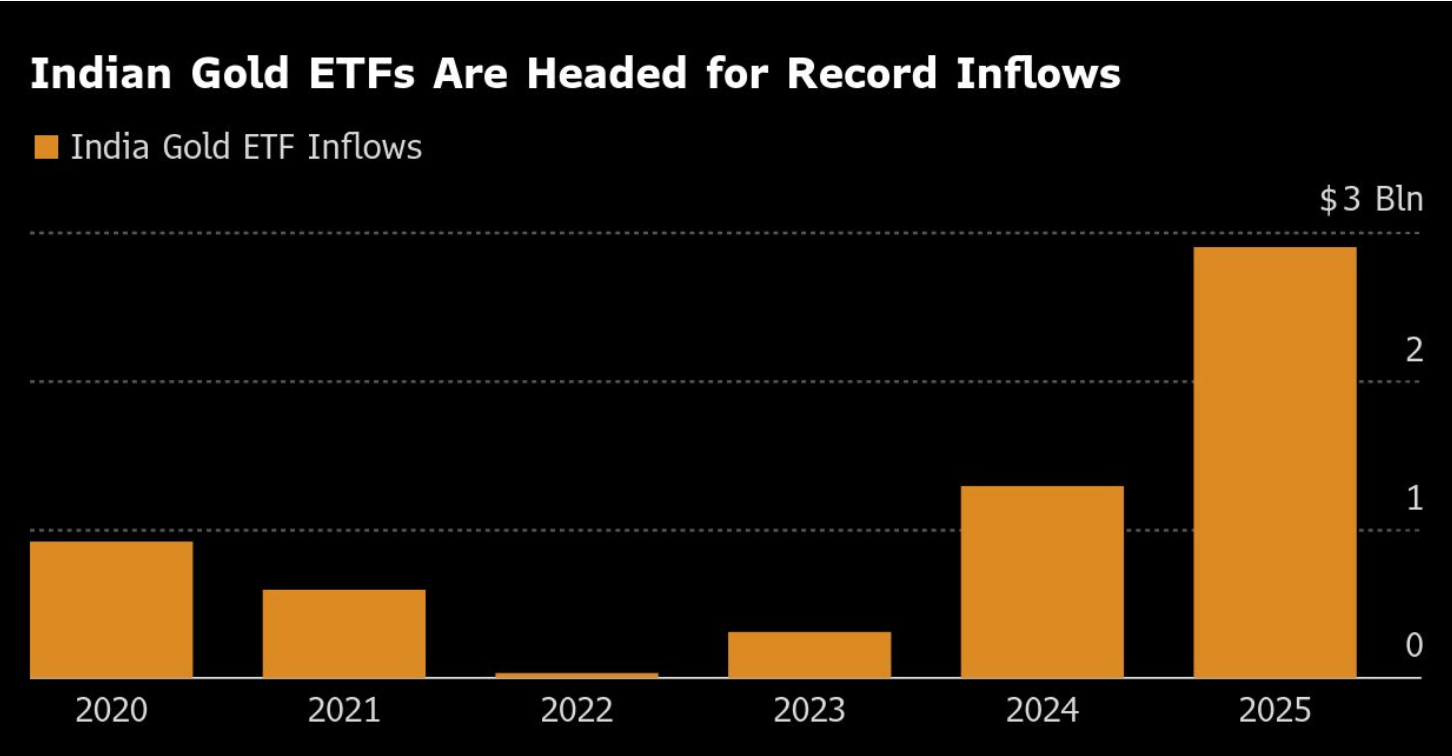
  • India’s gold ETF inflows reached $2.9 billion in the first 10 months of 2025 - equivalent to 26 tonnes of gold, almost matching the total from 2020 to 2024 combined.
  • October alone saw $850 million in new inflows, following a record $942 million in September.
  • India’s total ETF holdings now stand at 83.5 tonnes, worth over $11 billion.

This demand suggests the rally is not purely speculative. It reflects a genuine global appetite for gold as a long-term store of value - a counterbalance to monetary and fiscal uncertainty.

Gold miners mirror investor confidence

The corporate side of the gold market echoes this sentiment. Barrick Gold (ABX.TO), one of the world’s largest producers, raised its quarterly dividend by 25% and expanded its $500 million share buyback programme after reporting an adjusted profit beat.

  • Average realised gold price: $3,457 per ounce, up from $2,494 a year earlier.
  • Output fell from 943,000 to 829,000 ounces, while all-in sustaining costs rose slightly to $1,538 per ounce.

Despite operational challenges and a $1 billion write-off linked to the loss of its Mali mine, Barrick’s strategic pivot toward North American production signals confidence in sustained high gold prices.

However, the Mali dispute - which includes the detention of employees and export restrictions - underscores the geopolitical fragility of global gold supply, a factor that could tighten markets further if unresolved.

Market backdrop: debt, yields, and the policy paradox

Gold’s more than 50% rise this year is not simply a reflection of inflation fears. It’s a response to fiscal fragility and market dependence on liquidity.

Rising Treasury yields are less a sign of economic health and more a warning about debt sustainability. Investors are buying gold as a hedge against these structural risks while simultaneously bidding up equities on the assumption that liquidity will continue to flow.

This dual behaviour - seeking safety and risk simultaneously - is the defining paradox of 2025’s market psychology.

Gold and US stock Scenarios for the months ahead

  1. Bullish breakout

If the Fed cuts rates in December and hints at further easing, gold could breach $4,200 quickly, supported by fiscal concerns and steady central bank demand.

  1. Short-term consolidation

A cautious or delayed Fed stance could see gold hover between $4,050 and $4,150, with equities likely maintaining gains until liquidity expectations fade.

Either way, the key takeaway is that gold and stocks are now responding to the same macroeconomic driver - the price of money - rather than opposing emotional forces.

Gold technical insights

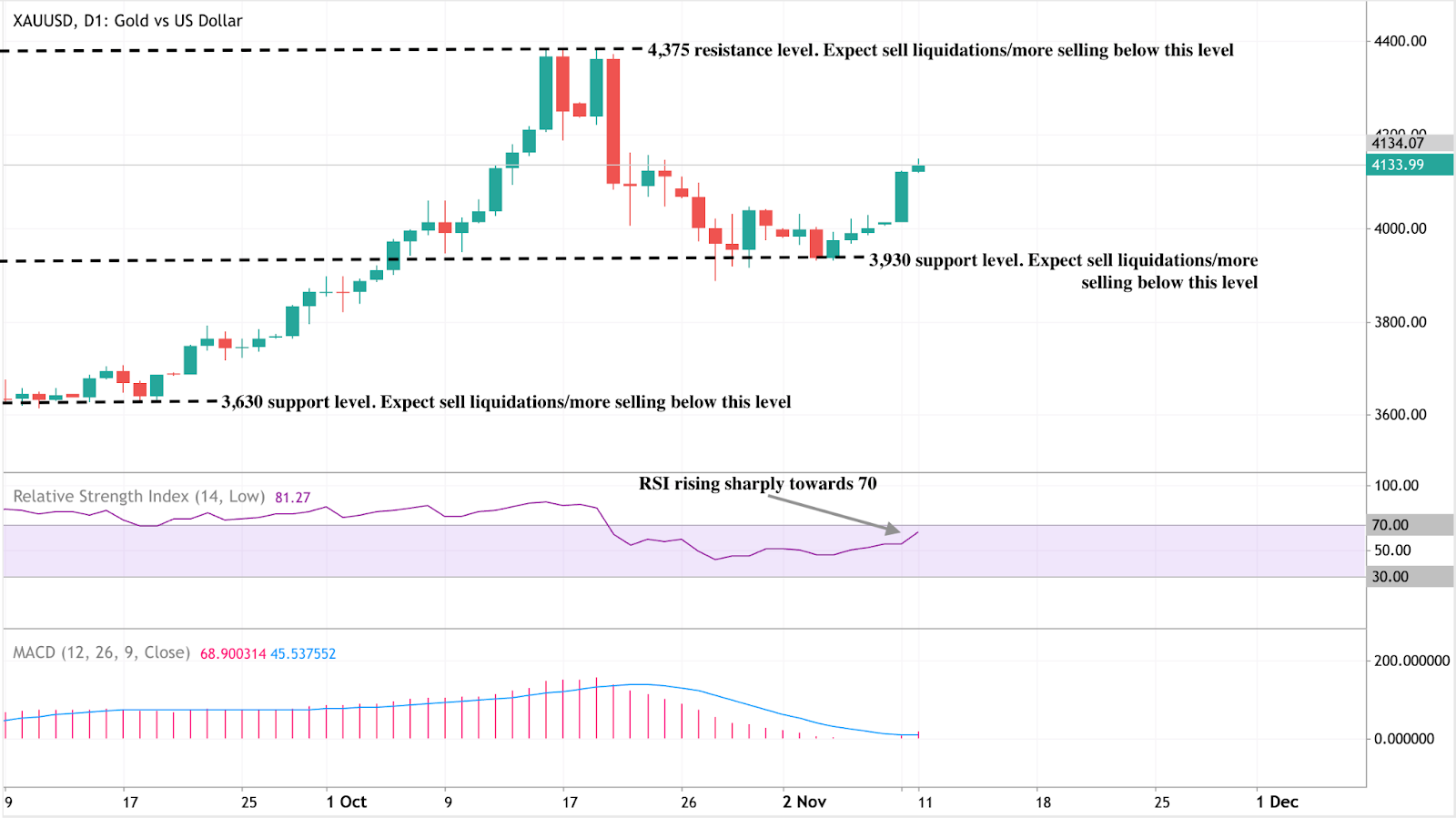
Gold (XAU/USD) is trading around $4,134, consolidating between key levels - resistance at $4,375 and support at $3,930. A breakout above $4,375 could extend the rally, while a drop below $3,930 risks renewed selling toward $3,630.

The RSI (81) indicates strong bullish momentum but signals overbought conditions, suggesting a possible short-term consolidation or pullback. Meanwhile, the MACD remains in a bullish crossover, confirming ongoing buying pressure. 

Overall, gold’s bias stays positive above $3,930, but traders should watch for momentum cooling near overbought zones. You can monitor these levels directly on Deriv MT5 or experiment with margin and risk setups using the Deriv Trading Calculator to plan positions across metals and indices.

Source: Deriv MT5

Gold investment outlook

  • Short-term traders: The $4,100–$4,200 zone is the key range to watch ahead of the Fed’s December decision.
  • Medium-term investors: Fiscal stress, real yield volatility, and Indian demand form the core drivers for continued strength.

Portfolio managers: Gold’s evolving correlation with equities means it now behaves as a policy-sensitive parallel asset, not a pure hedge. Diversification strategies should take into account this structural shift.

The performance figures quoted are not a guarantee of future performance.

자주 묻는 질문

미국의 재정 정책은 금에 어떤 영향을 미칩니까?

증가하는 정부 부채와 확대되는 적자는 미국 공공 재정의 지속 가능성에 대한 우려를 불러일으켰습니다. 수익률이 상승할 때조차도, 그것은 성장 때문이 아니라 재정 불안으로 인한 잘못된 이유 때문입니다. 투자자들이 장기 부채와 정책 불안에 대한 보호를 모색함에 따라 금이 혜택을 보고 있습니다.

인도는 금의 강세에 어떤 역할을 하고 있습니까?

2025년 인도의 사상 최대 ETF 유입액 29억 달러는 개인과 기관 투자자 모두가 변동성에 대한 헤지 수단으로 금에 주목하고 있음을 보여줍니다. 이 지속적인 실물 수요는 견고한 가격 하한선을 제공하여, 서구 시장의 투기성 자금 흐름이 완화될 때에도 금이 견고함을 유지하도록 돕습니다.

금광 채굴업자들이 이러한 환경에서 혜택을 받고 있습니까?

네. Barrick Gold와 같은 생산업체들은 더 강한 마진과 기록적인 현금 흐름을 경험하고 있으며, 그 결과 배당금 증가와 자사주 매입을 하고 있습니다. 그러나 말리와 같은 정치적으로 민감한 지역에서의 도전 과제는 지정학적 리스크가 전 세계 공급을 계속 제약하고 있음을 보여주며, 이는 간접적으로 higher 가격을 지지합니다.

연준이 금리 인하를 미룬다면 금 가격이 하락할 수 있을까요?

만약 연준이 결정을 연기한다면, 트레이더들이 수익을 실현함에 따라 단기 조정이 예상됩니다. 그럼에도 불구하고, 금의 장기 전망은 지속되는 재정 압박, 중앙은행 수요, 실질 수익률 역학에 의해 지지되어 $4,000 이하로의 지속적인 하락 가능성은 낮습니다.

Deriv 플랫폼에서 금과 미국 주식을 동시에 거래하려면 어떻게 해야 하나요?

Deriv MT5 또는 Deriv Trader에서 금(XAU/USD)과 주요 미국 주가지수(예: US 500 또는 Wall Street 30)를 나란히 거래할 수 있습니다. 두 플랫폼 모두 멀티 자산 전략이 가능하여 금과 주식 간의 헤지, 포트폴리오 다각화 또는 상관관계 비교를 실시간으로 할 수 있습니다. 거래를 시작하기 전에 Deriv Trading Calculator를 사용하여 필요한 증거금, 계약 크기 및 예상 수익을 계산할 수도 있습니다.

콘텐츠