
結果

EUR/USD outlook: The dollar’s rate-cut reckoning
What began as a quiet Thanksgiving week has turned into the dollar’s steepest weekly decline in four months.
According to reports, the dollar’s rate-cut reckoning is now the defining force in EUR/USD, with traders pushing expectations for a December Federal Reserve cut to more than 85%, up sharply from 39% just a week earlier. What began as a quiet Thanksgiving week has turned into the dollar’s steepest weekly decline in four months, reshaping the balance of power across major currency pairs.
EUR/USD is rising not because the euro has rediscovered its strength, but because the dollar is losing the policy advantage it has enjoyed for most of the year. As markets confront the prospect of a softer Fed and political pressure on the institution intensifies, the pair is becoming a barometer for how much credibility the central bank is willing to risk in the months ahead.
What’s driving EUR/USD right now?
The Fed sits squarely at the centre of the story. Rate expectations have shifted at a pace not seen since early summer, with futures markets now assuming a December cut as the most likely outcome. Reuters reported a series of softer labour market indicators, dovish public remarks from key policymakers, and increased speculation around Kevin Hassett’s potential nomination as the next Fed Chair have accelerated the move. Thin U.S. liquidity over the Thanksgiving holiday added fuel, allowing even modest data points to push the dollar lower.
This recalibration has allowed EUR/USD to climb despite Europe’s mixed economic backdrop. The dollar index, still hovering near 99.72, is heading for its worst weekly performance since late July.

The euro briefly touched a 1½-week high of $1.1613 before easing, supported more by dollar fatigue than by renewed optimism in the eurozone. Even so, the narrowing of U.S.–European rate differentials has created space for euro bulls to test higher levels, something that looked unlikely just two weeks ago.
Why the dollar is facing its own reckoning
Political pressure is becoming an increasingly prominent part of the narrative. President Donald Trump has renewed calls for deeper rate cuts, arguing that the Fed must “move quickly” to support economic momentum.
The possibility that Kevin Hassett - a prominent advocate of looser policy - could become the next Fed Chair has forced traders to reassess the institution’s independence and long-term trajectory. Markets are now questioning whether December’s cut is simply another precaution or the start of a strategically driven easing cycle.
At the macro level, the dollar’s credibility premium is also being tested. Barclays’ global head of FX strategy, Themos Fiotakis, argued that Europe had benefited in recent months from supportive rate differentials and improving sentiment, but warned that these assumptions are now under reassessment. The euro’s valuation remains high by several metrics, while the U.S. economy continues to show pockets of resilience, particularly in services. The dollar’s decline, therefore, reflects less a loss of faith and more a repricing of what the next policymaking regime might look like.
What this means for EUR/USD traders
Positioning in EUR/USD has turned decisively constructive, according to analysts. With holiday-thinned liquidity amplifying moves, traders have been quick to unwind long-USD positions accumulated during the autumn rally. The shift has also been visible in cross-asset markets: U.S. 10-year Treasury yields briefly dipped below 4% before rebounding, while German bunds held steady, creating a more supportive environment for the euro.

For corporates, the recalibration matters. European exporters face a marginally stronger currency, which could tighten their margins if the trend persists, while importers benefit from reduced dollar-denominated costs. For investors, the EUR/USD is becoming a call on relative credibility: whether the Fed’s pivot is justified by economic factors or shaped by politics - and whether the European Central Bank can maintain stability as global conditions change.
The geopolitical backdrop adds another layer, analysts added. Markets are tracking every incremental update on Ukraine peace negotiations, with Vladimir Putin signalling that draft proposals could form the basis of future talks. While analysts caution against expecting a rapid “peace premium”, even the possibility of de-escalation has helped cap dollar demand against the euro.
Expert outlook
In the near term, market watchers stated the EUR/USD will remain closely tied to U.S. policy signals. A confirmed December rate cut, reinforced by dovish messaging, could send the pair back toward 1.17. But any upside surprise in U.S. labour or inflation data would temper enthusiasm and reintroduce volatility, particularly for leveraged positions - something traders often evaluate beforehand using the Deriv trading calculator to manage risk.
Medium-term dynamics remain more uncertain. The eurozone continues to wrestle with uneven growth and limited fiscal momentum, which could limit the sustainability of any rally built solely on dollar weakness. At the same time, bond markets remain a crucial indicator: if the U.S. 10-year yield breaks back above 4.1%, the dollar could regain some cyclically driven strength, according to experts.
The next trigger may come from a combination of Fed rhetoric, incoming U.S. data, and developments in Eastern Europe, all of which have the potential to redirect EUR/USD in the weeks ahead.
EUR/USD technical insights
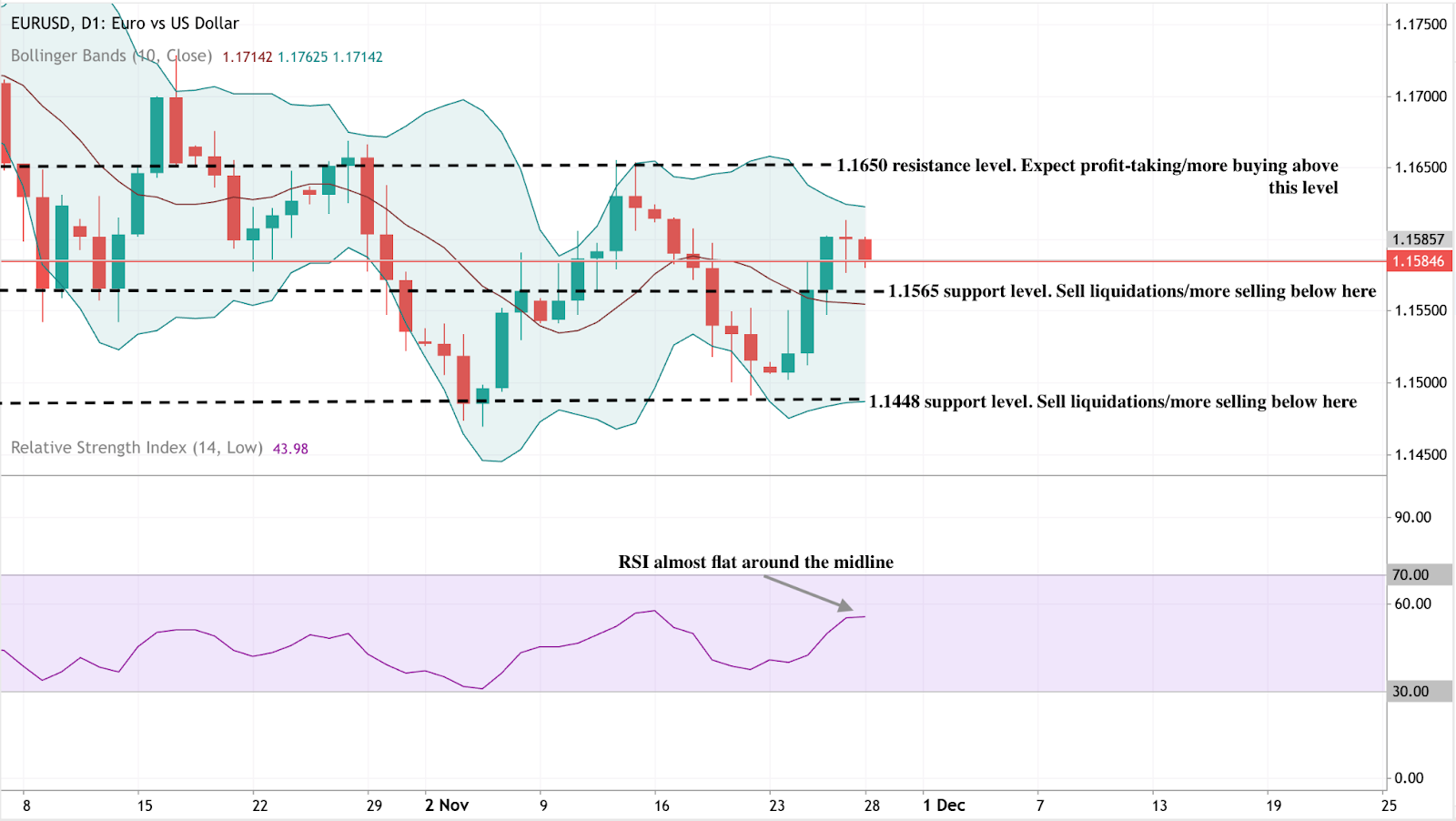
At the start of writing, EUR/USD is trading near 1.1585, moving sideways within a well-defined range. The pair continues to face overhead pressure from the 1.1650 resistance level, where traders may look for profit-taking or renewed buying if the price can break convincingly above it. On the downside, the first key support level sits at 1.1565, followed by a stronger base at 1.1448. A break below either level is likely to trigger sell liquidations and deeper downside momentum.
The price remains contained within the Bollinger Bands, indicating a market lacking strong directional conviction. This consolidative structure suggests EUR/USD may continue chopping within the range unless a macro catalyst - such as ECB or Fed commentary - forces a breakout.
The RSI is nearly flat, sitting around 44, close to the midline and signalling neutral momentum. Neither bulls nor bears currently dominate, reinforcing the idea that the pair is in a holding pattern while awaiting its next decisive move.
Key takeaway
EUR/USD is climbing because the dollar is undergoing a policy reckoning shaped by rapid shifts in rate expectations and rising political influence. The euro may not have a strong domestic story, but the repricing of U.S. monetary credibility has given it new momentum. The next leg depends on the Fed's decision in December, U.S. Treasury yields, and geopolitical developments. Traders on Deriv MT5 will closely watch those catalysts as they adjust their strategies.

白銀悄悄超越黃金:漲勢能否持續?
最新數據顯示,白銀本週已上漲超過7%,推動其價格接近歷史高點。
白銀悄悄超越黃金——但漲勢能否持續?最新數據顯示,該金屬本週已上漲超過7%,推動XAG/USD接近歷史高點,感恩節期間流動性稀薄放大了每一次波動。通常是焦點的黃金波動性已減弱,然而白銀正以一波看似非季節性的飆升搶盡風頭。
市場觀察者表示,這次突破背後的力量是真實存在的:美國零售銷售疲弱、消費者預期崩潰,以及市場隱含的12月聯準會降息概率高達84%,這些因素加速了避險資產的需求。交易者目前正權衡這波漲勢是暫時的假期流動性錯位,還是結構性重新評價的早期階段。這個問題——白銀的超越能否持續——為後續市場分析定下基調。
推動白銀飆升的原因是什麼?
白銀最新的漲勢正處於宏觀壓力與流動性減少的交匯點。自2021年以來,美國零售銷售名義上有所增長,顯示消費動能停滯,成長空間有限。會議委員會的預期指數已暴跌至63.2,這一水平歷史上常預示經濟衰退,強化了資金流向防禦性資產的趨勢。

隨著投資者重新評估美國需求走向,對經濟變化敏感的金屬反應最快——白銀尤甚。
聯準會的政策轉向加速了這一變化。市場迅速重新定價降息機率,幾天內從50%跳升至84%。
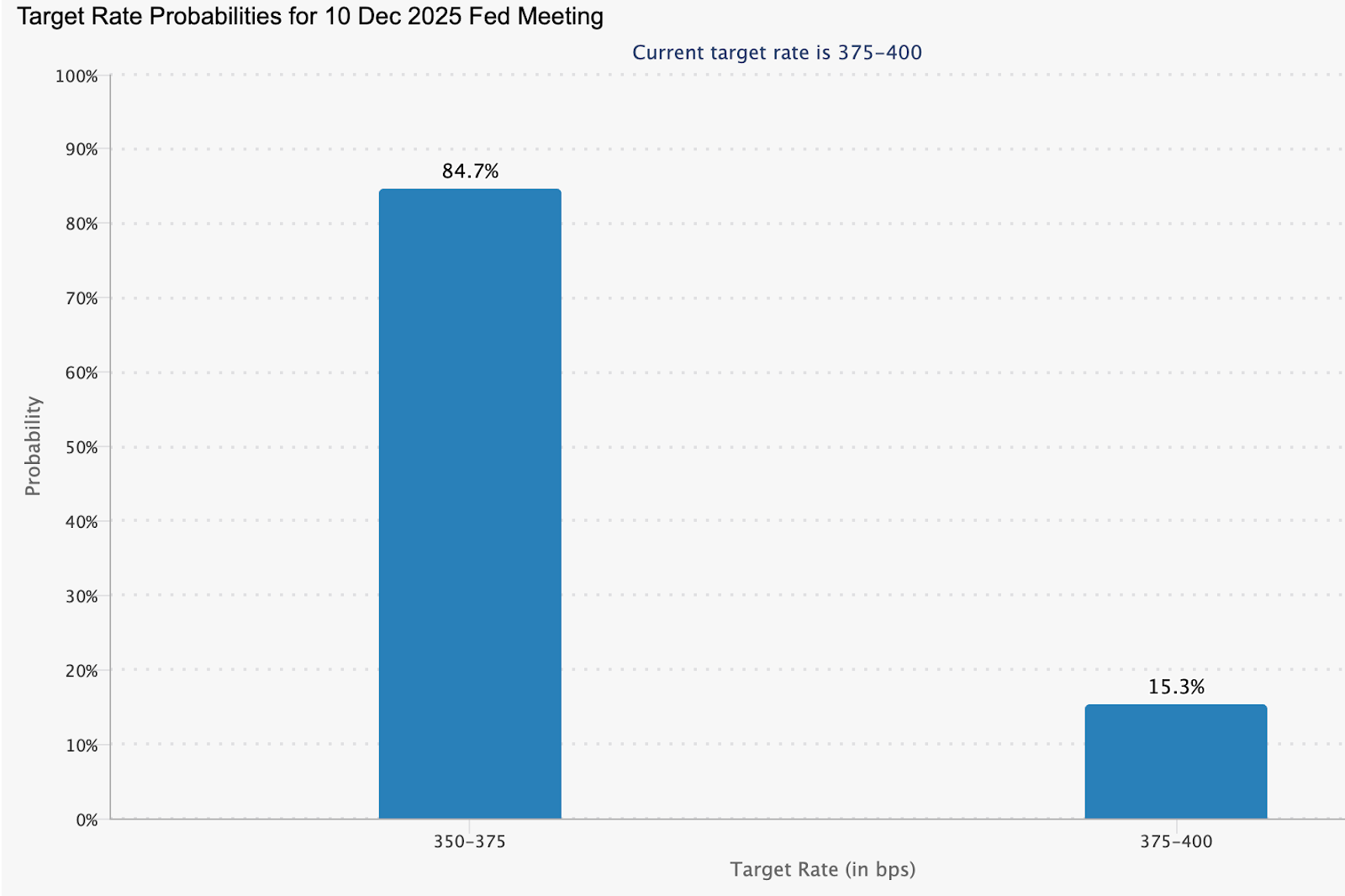
紐約聯邦儲備銀行行長John Williams及其他官員的評論表明,如果經濟動能持續減弱,準備放寬政策。隨著國債收益率回落至一個月低點,美元走軟,無收益資產獲得了超額優勢。白銀對這些條件的敏感性解釋了其漲勢為何如此迅速且劇烈。
為何這很重要
分析師指出,白銀的上漲重要的不僅是漲勢速度,更在於其反映的意義。儘管黃金被視為終極避險資產,白銀自2023年10月以來已上漲163%,本月初更創下54.38美元的歷史新高。這種超越表現讓機構投資者越來越難以忽視,因為白銀同時兼具貨幣對沖與工業用途的雙重角色。
他們也警告,價格走勢暴露了更深層的焦慮。KCM Trade首席市場分析師Tim Waterer指出,市場正對“鴿派言論合唱”作出反應,因為宏觀指標疲軟不斷累積。他的評估指向一個更廣泛的問題:白銀的漲勢不是因為經濟強勁,而是因為對美國經濟走向的信心正在減弱。金屬市場正實時吸收這種不確定性。
對市場與產業的影響
對交易者而言,白銀的飆升使假期期間市場持倉更為複雜。參與度降低放大了日內波動,增加了對沖方向性風險的難度。在如Deriv MT5等執行速度與精確交易規模至關重要的平台上,這種環境要求交易者保持警覺。許多人越來越依賴Deriv交易計算器等工具,在承擔白銀劇烈日內波動前,衡量潛在利潤、交換費用及持倉風險。
但更深層的故事存在於工業領域。2024年太陽能板製造對白銀的需求躍升至2.437億盎司,較2023年的1.918億盎司大幅增加,且是2020年水平的兩倍以上。
隨著全球太陽能裝機容量預計到2030年將達近1000 GW,需求預計每年再增1.5億盎司。然而供應仍受限:全球大部分白銀產量是銅、鋅、鉛或黃金生產的副產品,對價格信號反應緩慢。Mining Technology估計,全球產量到2030年可能降至9.01億盎司-這種結構性赤字強化了長期價格上漲的理由。
專家展望
專業交易者表示,白銀漲勢的可持續性取決於三大核心因素:聯準會的下一步動作、美國消費走向,以及工業擴張速度。如果政策制定者確認12月轉向,低收益率與美元走軟的組合可能成為推動價格創新高的催化劑。隨著衰退信號愈發明顯,避險資產需求不太可能迅速消退。
然而,沒有什麼是確定的。消費活動突然反彈或通膨意外可能減緩降息預期。工業用戶最終可能對高價產生抗拒,儘管太陽能需求似乎足夠強勁以吸收短期波動。目前,交易者正密切關注即將公布的宏觀經濟數據及Federal Reserve 的溝通。若能果斷突破前高,可能意味著市場認為白銀進入了全新的定價階段。
關鍵結論
白銀的飆升根植於真實的經濟信號,從美國數據疲軟到近期降息預期升高。該金屬已超越黃金,並正接近歷史高點,受到避險資金流入及強勁工業需求的雙重支持。漲勢能否持續,取決於聯準會的訊息及美國家庭的韌性,但整體趨勢指向供應收緊與需求持久。未來數週將揭示白銀究竟是短暫反彈,還是全新週期的重新定價。
白銀技術面洞察
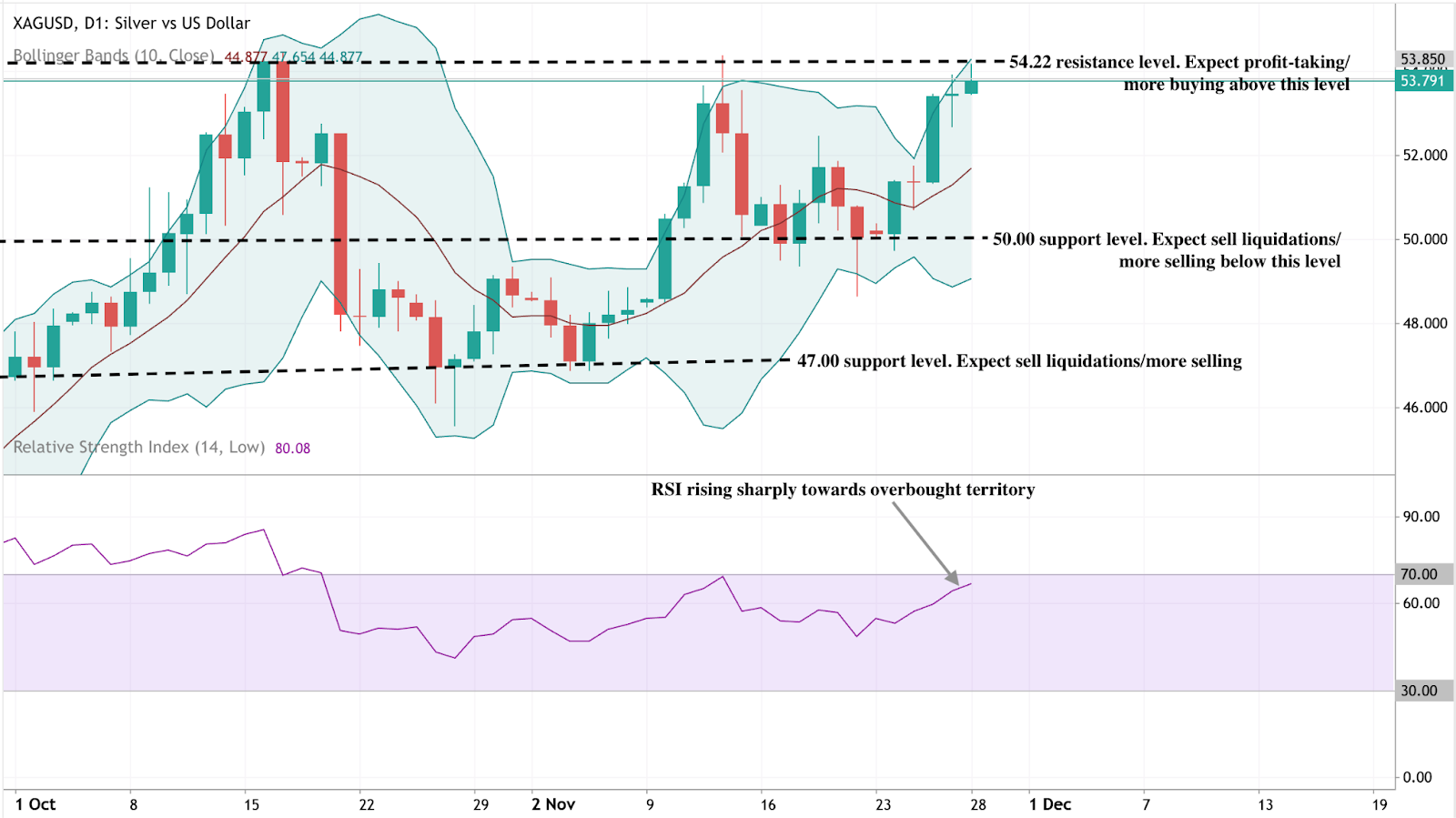
撰寫時,白銀(XAG/USD)交易於約53.79美元,隨著接近重要的54.22美元阻力位,價格強勢上揚。該區域可能吸引獲利了結,但若能乾淨突破,鑑於當前漲勢強勁,可能引發新一波動能買盤。
下方關鍵支撐位於50.00美元及47.00美元。若價格回落至任一支撐以下,將顯示多頭動能減弱,可能引發拋售清算或更深回調,尤其是價格跌破Bollinger Band通道中軸時。
動能依然強勁,RSI急升至約80,明顯處於超買區域。這表示買方掌控局勢,但也警示短期可能出現疲軟。儘管上升趨勢仍在,若超買狀態持續,白銀可能面臨回調或盤整風險。

比特幣的救贖軌跡:9萬美元突破能否真正站穩?
比特幣的救贖軌跡已全面展開,隨著其重新攀升至9萬美元以上,市場開始質疑這次突破是否能真正站穩。
比特幣的救贖軌跡已全面展開,這個全球最大加密貨幣重新攀升至9萬美元以上,市場開始質疑這次突破是否能真正站穩。此波走勢緊隨數日前約8萬400美元的低點急速反彈,主要受聯邦儲備可能於12月降息的預期升溫以及整體風險資產回歸的推動,根據報導。
然而,比特幣的反彈基礎仍然脆弱,現貨ETF仍面臨資金流入疲弱,且月度表現顯示比特幣下跌近19%,凸顯反彈背後的基礎不穩。
分析師表示,這種新興樂觀情緒與流動性惡化之間的張力,已成為市場情緒的主軸。若比特幣要將此次復甦轉化為持久走勢,必須突破9萬2000至9萬5000美元區間的強大阻力,並吸引零售交易量及ETF參與的明顯回歸。這些條件是否出現,或突破是否會演變成另一波修正下跌,將決定比特幣所謂救贖軌跡的下一章節。
推動比特幣最新走勢的因素
比特幣近期的上升部分受宏觀預期轉變推動。交易者現在賦予12月聯邦儲備降息更高的可能性,這助長了股票及加密貨幣市場的風險偏好反彈。
這種情緒轉變幫助比特幣在上週跌至8萬美元區域後重新站上9萬美元關口。然而,背景更為複雜:通膨仍然高企,QCP Capital分析師警告「供給可能會在9萬中期限制比特幣」,暗示反彈可能接近尾聲。
ETF市場情況則增添另一層挑戰。經歷數週創紀錄的資金流出後,美國比特幣ETF難以吸引穩定的資金流入。分析師指出流動性依然稀薄,投資者需求仍然謹慎。
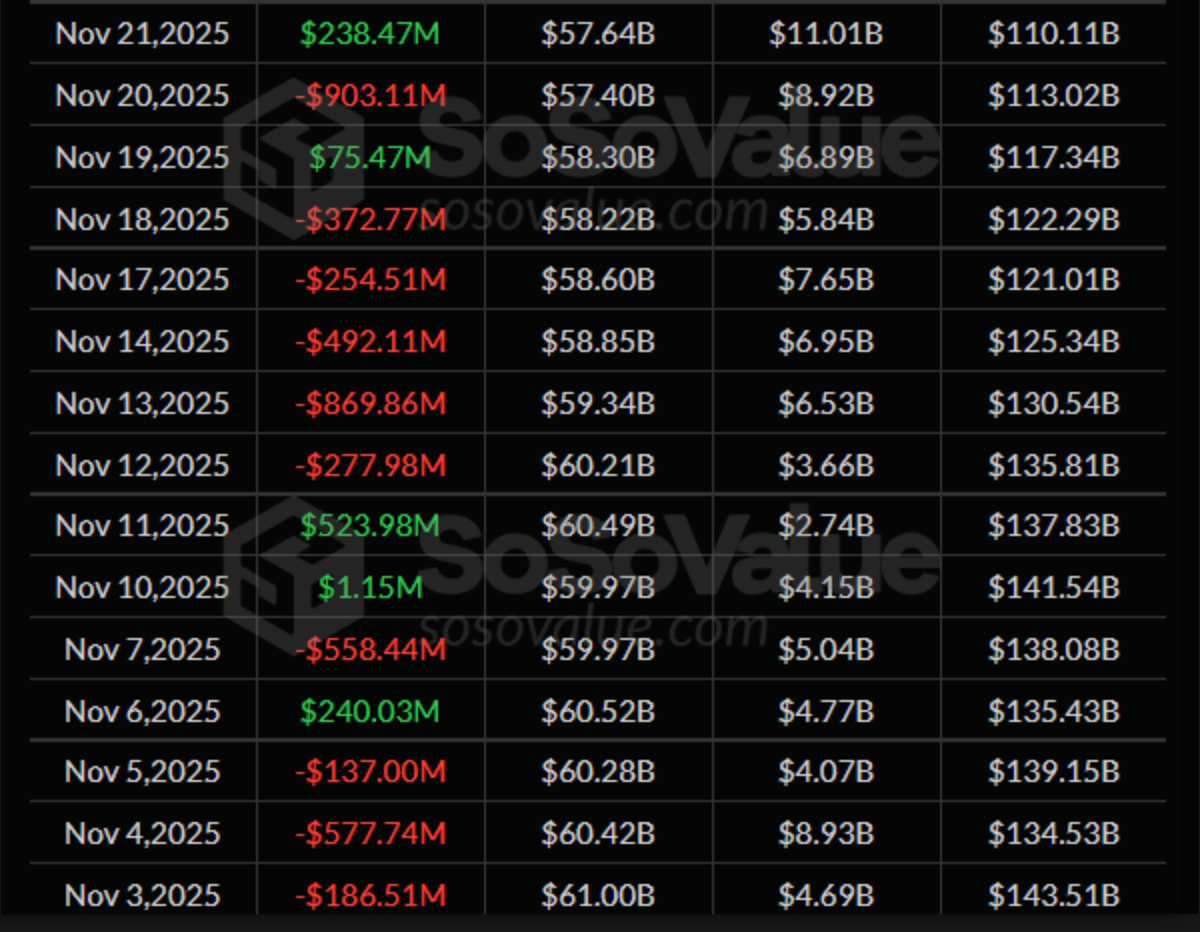
MicroStrategy——比特幣最大企業持有者之一——剛剛接近損益平衡點,且現已列入MSCI退市觀察名單,加劇了機構持倉的不確定性。這些壓力仍隱藏於表面之下,即使價格回升,反彈更多是基於宏觀頭寸而非強勁資金流入。
重要性解析
價格走勢與結構性指標的背離,已成為投資者關注的焦點。Apollo首席經濟學家Torsten Slok指出,比特幣與納斯達克的典型相關性近週來減弱,因比特幣跌幅快於主要科技指數。

這種脫鉤引發了關於加密貨幣特有流動性問題的疑問,尤其在股票市場趨於穩定之際。同時,10X Research分析師警告市場可能過度信賴12月降息。他們的研究顯示,比特幣對Fed的溝通與語氣反應更大,勝過實際政策行動。
若鮑威爾表達謹慎或淡化未來寬鬆步伐,市場可能迅速反轉。該公司亦質疑財政部一般帳戶(TGA)支出作為加密流動性催化劑的假設,指出過去TGA釋放資金需長達兩個月才可能反映在比特幣價格上——若有的話。
對產業、市場與消費者的影響
最新數據顯示,比特幣重回9萬美元以上或許恢復了一些心理信心,但結構性狀況仍不均衡。該資產今年迄今仍下跌5%,ETF產品在經歷大量資金流出後才剛剛穩定,這些流出促使比特幣跌至約8萬美元。反彈帶來喘息,但市場尚未顯示明確的上升趨勢。
機構資金流入帶來轉變曙光。VALR執行長Farzam Ehsani表示,現貨ETF週二迎來數週以來首次資金流入——「機構流動性回歸的早期信號」。透過Deriv MT5監控價格行為的交易者指出,9萬美元是結構性轉折點,短期時間框架顯示多頭嘗試與獲利了結波動交替出現。同時,Deriv交易計算器對於試圖估算持倉成本與風險的交易者來說越來越有用,因比特幣在主要阻力位附近徘徊。
市場觀察者認為,比特幣的表現持續影響整體數位資產生態。若能穩定守住9萬美元以上,可能提升山寨幣與穩定幣市場的流動性。風險若爆發,可能引發強制拋售並侵蝕整個行業信心。
專家展望
QCP Capital認為9萬2000至9萬5000美元形成明顯阻力帶,警告流動性萎縮可能限制進一步上攻。他們指出8萬至8萬2000美元區間是關鍵支撐區,買家在最近的拋售中守住此區。10X Research分析師補充,若歷史TGA流動性滯後持續,比特幣可能盤整至2026年1月底,降低快速突破的可能性。
並非所有策略師都認為已觸底。Compass Point分析師Ed Engel主張,熊市常見「迅速的反彈隨後伴隨強烈的賣壓」。他希望看到長期持有者的淨累積以及期貨市場更積極的空頭部位,才會轉為看多。若無這些信號,Engel認為比特幣若接近9萬2000至9萬5000美元,可能遭遇沉重阻力,進而觸發新一波下跌。
關鍵結論
分析師指出,比特幣重回9萬美元以上象徵其救贖軌跡的重要轉折點,但此次反彈的基礎仍然薄弱。9萬2000至9萬5000美元附近的阻力、疲弱的ETF資金流入,以及歷來脆弱的年終流動性環境,都對突破的持續性構成挑戰。
下一階段將取決於市場如何消化聯邦儲備12月的訊息,零售交易者是否回歸,以及機構資金流入是否增強。這些力量將決定比特幣的復甦是繼續還是停滯於熟悉的阻力位。
比特幣技術洞察
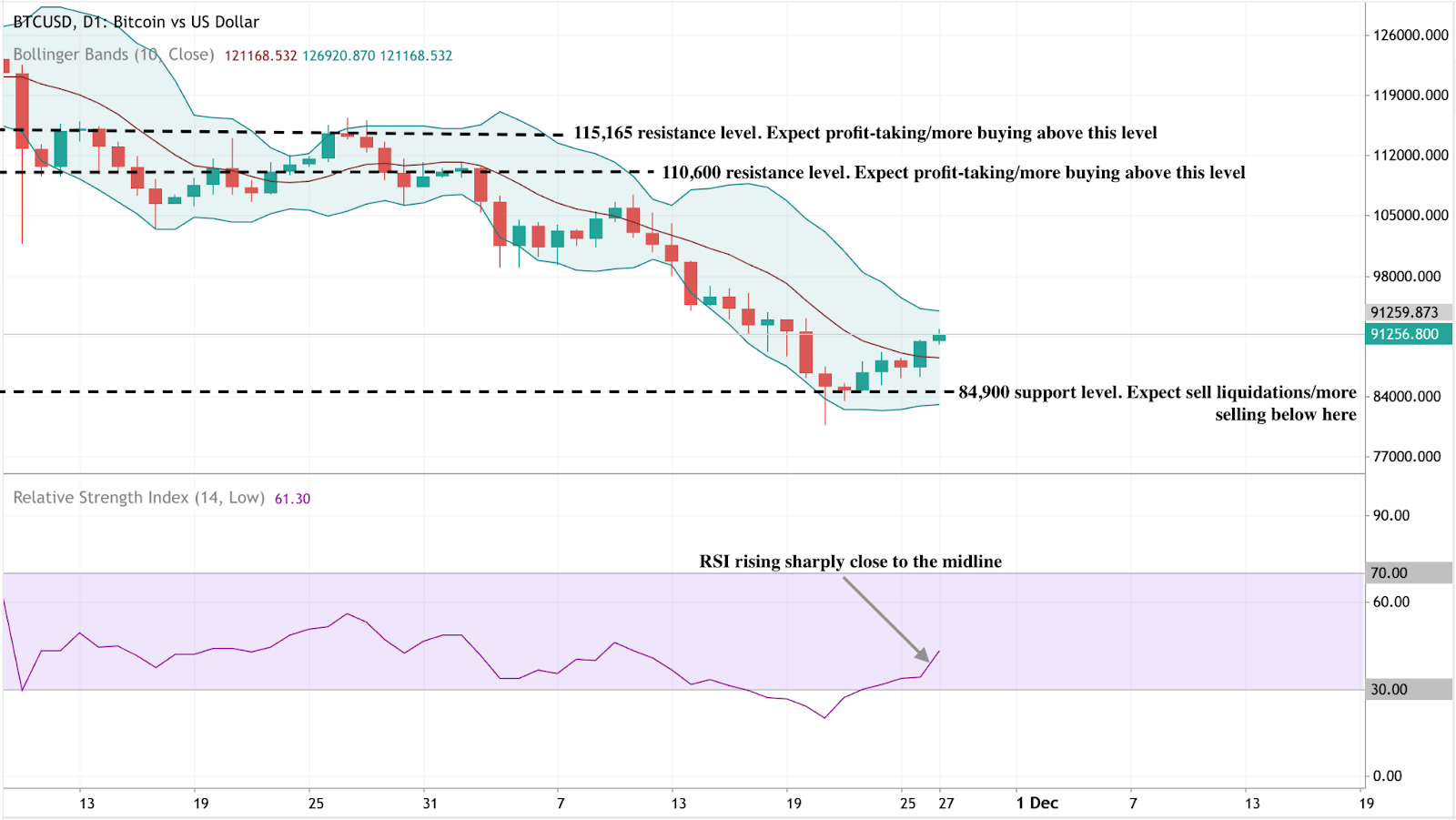
撰寫時,比特幣(BTC/USD)正試圖從近期低點反彈,價格在從關鍵8萬4900美元支撐區反彈後,交易於9萬1200美元以上。守住此水平至關重要——若跌破,可能觸發拋售清算並重新開啟下跌趨勢。上方,比特幣面臨兩個重要阻力位:11萬600美元及11萬5165美元,若價格能積聚足夠動能重測,交易者可能在此尋求獲利了結或重新買入。
價格行為仍受限於Bollinger Bands,比特幣在長期疲弱後開始向中軌推進。這顯示早期穩定跡象,儘管整體趨勢仍偏謹慎,直到明確突破阻力區。
RSI急速上升至約61,從超賣區回升至中線附近。此變化凸顯多頭動能改善,但距離超買區仍有空間,暗示若買盤持續介入,反彈仍有擴展空間。

BoJ vs Fed: How December decisions could shatter the yen’s fragile range
A potential BoJ rate hike clashing against near-certain Fed easing could finally tip the scales
December 2025 is poised to deliver a high-stakes policy showdown between the Bank of Japan (BoJ) and the US Federal Reserve, with USD/JPY hovering in a precarious 154–158 band, suggesting intervention is likely.
As of 27 November 2025, the pair trades around 155.91, down slightly from recent highs near 157.89 but still vulnerable to a break in either direction. A potential BoJ rate hike clashing against near-certain Fed easing could finally tip the scales - yen bulls are banking on a downside rupture, while bears eye a dollar rebound if either central bank disappoints.
The yen’s tightrope: USD/JPY’s November range
USD/JPY has been confined between the 154.00 support price and 158.00 danger zone price through much of November, a tug-of-war between persistent US yield strength propping up the dollar and mounting speculation on policy divergence.
The upper end-157-158-marks familiar "intervention territory," where Tokyo has deployed verbal and actual yen support in past episodes of rapid depreciation. This range persists amid a backdrop of weak yen-fueled inflation risks in Japan and cooling US data, which is tilting toward Fed cuts.
BoJ: A December hike edges into focus
BoJ rhetoric has sharpened on yen weakness as an inflation accelerant, with import costs now a key concern. A Reuters poll from 11-18 November revealed a slim majority - 53% (43 of 81 economists) - anticipating a 25 basis point hike to 0.75% at the 18-19 December meeting, up from prior surveys. All polled forecasters see at least that level by March 2026.
Easing political friction has helped: Prime Minister Sanae Takaichi’s recent nod to gradual normalisation, following talks with Governor Kazuo Ueda, has reduced near-term hurdles. Ex-BoJ insiders echo this, citing current levels as a catalyst for action sooner than later.
Fed: Overwhelming odds on a December cut
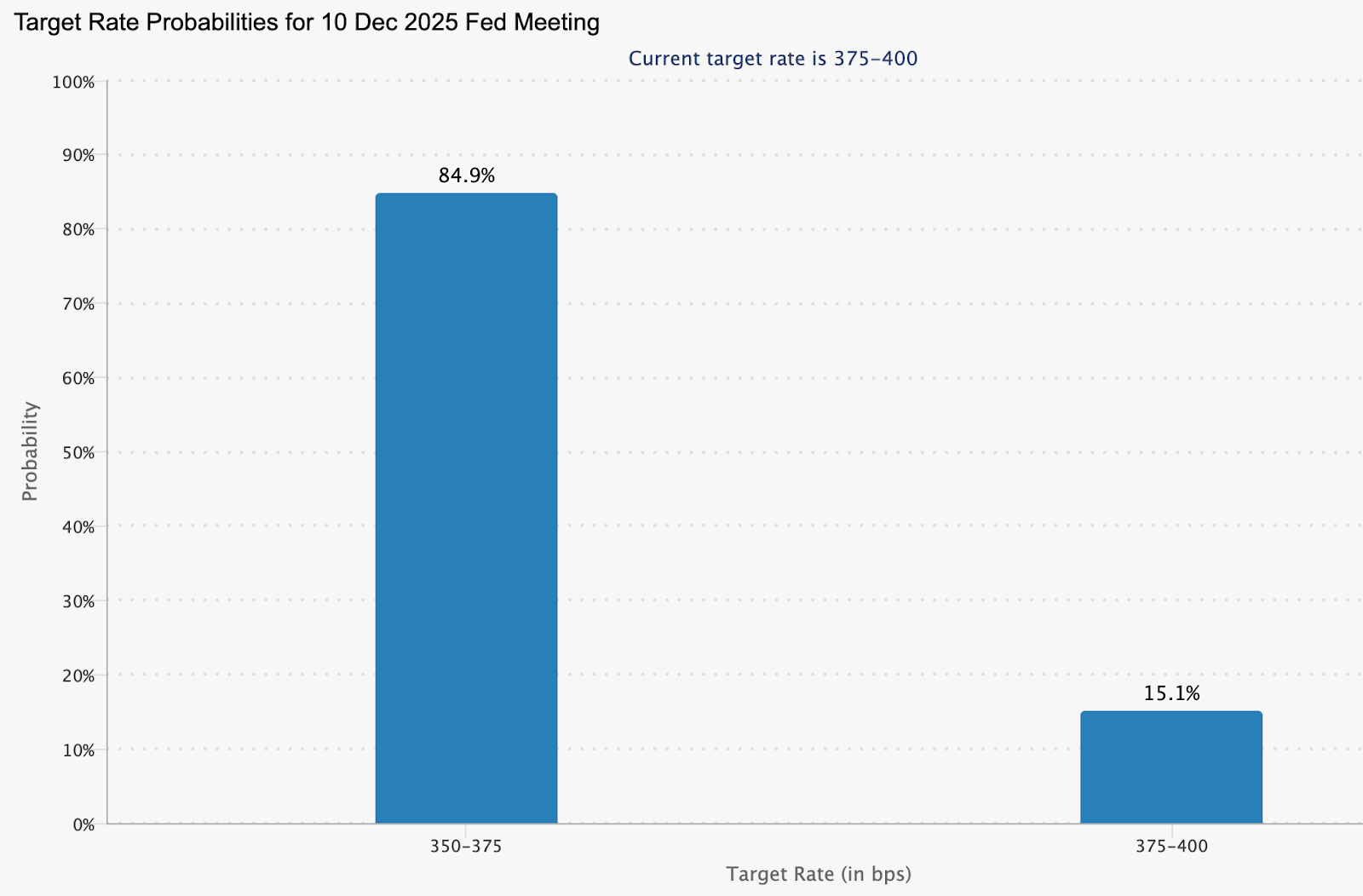
Market pricing leans heavily toward Fed easing, with the CME FedWatch Tool data as of 26 November showing an 84.9% probability of a 25-basis-point reduction at the 10 December FOMC meeting.
This reflects softer US indicators, including recent jobs data that hasn't derailed cut expectations despite some internal Fed debate. Such a move would trim the US–Japan yield gap modestly, offering tailwinds to the yen independent of BoJ moves.
Why it matters
The December decisions will determine whether the yen’s months-long stasis finally resolves into a trend - a critical shift for traders, Japanese policymakers, and multinational firms managing currency exposure. A break from the 154–158 range would influence capital flows, hedging strategies, and carry-trade dynamics at a time when global FX volatility is already rising.
For Japan, the stakes are especially high. A stronger yen would ease imported inflation and energy-cost pressures, while a renewed slide would intensify political scrutiny and prompt the Ministry of Finance to consider direct intervention. For the US, the Fed’s decision will signal how confidently it believes inflation is returning to its target, shaping global risk appetite as the year-end approaches.
Breakout scenarios: Two paths for USD/JPY
These outcomes hinge on post-meeting commentary - hawkish BoJ signals or dovish Fed dots could exaggerate moves.
What to monitor closely
- Event timeline: Fed decision on 10 December; BoJ on 18–19 December.
- Volatility gauges: One- and two-week option-implied vol expected to spike, signaling hedge flows.
- The intervention threshold of 157–160 remains a political flashpoint for Ministry of Finance action.
USDJPY technical insights
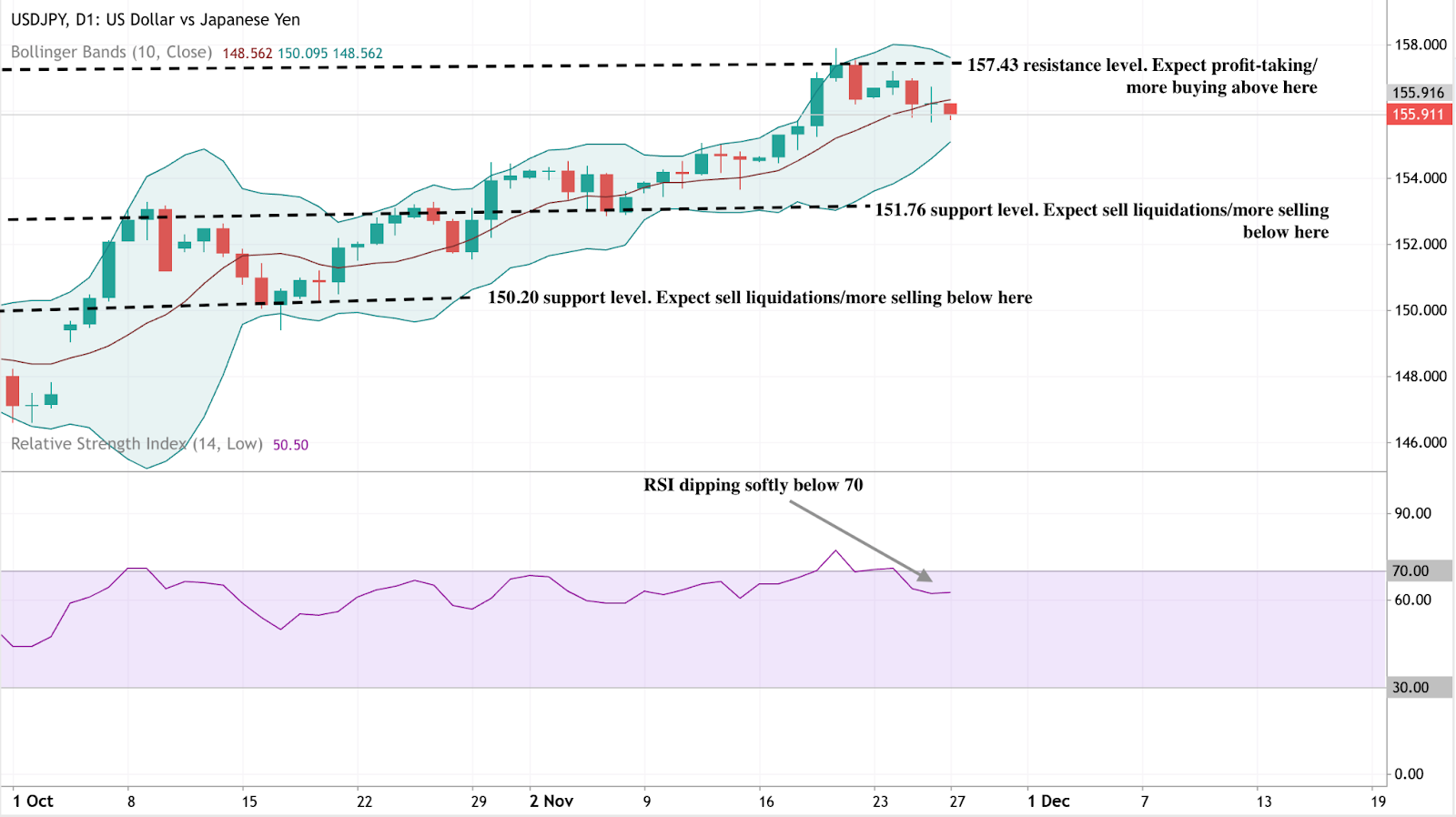
At the start of writing, USD/JPY is trading just below 156, easing slightly after failing to hold levels near the 157.43 resistance zone - an area where traders typically look for profit-taking or fresh upside breakouts. The pair now sits above two key supports at 151.76 and 150.20; slipping below either level could trigger sell liquidations and a deeper corrective move toward the lower Bollinger Band.
Despite the recent pullback, price action remains broadly constructive, with the pair still riding the middle Band and holding below the short-term moving averages.
The RSI, meanwhile, has dipped gently below 70, signalling that bullish momentum is cooling after a stretch of overbought readings. This soft decline hints at consolidation rather than a full reversal, suggesting the pair may trade sideways while the market waits for new catalysts, such as U.S. data or Bank of Japan commentary, to determine its next leg.

科技巨頭 2025 年 AI 資本支出競賽:Amazon 以逾 1,250 億美元領跑
數字令人震驚。2025 年,Amazon、Microsoft、Alphabet 和 Meta 預計合計資本支出將達 3,600-4,000 億美元。
數字令人震驚。2025 年,Amazon、Microsoft、Alphabet 和 Meta 預計合計資本支出將達 3,600-4,000 億美元,年增幅約 60%,其中絕大多數將投入 AI 相關基礎設施(數據中心、專用晶片、GPU/Trainium 叢集)。
2025 年 11 月 24 日,BNP Paribas Exane 首度覆蓋 Amazon,給予「優於大盤」評級及 320 美元目標價——目前為主要券商中最高,較 11 月 26 日收盤價約 230 美元有約 39% 上行空間。
2025 年資本支出指引——四大科技巨頭
| 公司 | 2025 年資本支出指引 | AI 主要聚焦領域 |
|---|---|---|
| Amazon | >1,250億美元(2025 年多次上調) | AWS 超大規模叢集、Trainium/Inferentia 晶片、主權及政府雲端 |
| Microsoft | 800-1,210億美元(2026 年 6 月財年結束) | Azure 擴展、OpenAI 基礎設施、企業級生成式 AI |
| Alphabet | 約 910 億美元(由 850 億美元上調) | Google Cloud TPU、彌補過往產能短缺 |
| Meta | 700-720億美元 | Llama 模型、AI 驅動廣告、大型單一數據中心 |
資料來源:公司公告、財報電話會議、BNP Paribas Exane、BBC、Bloomberg、Reuters
BNP Paribas Exane 為何看好 Amazon
BNP Paribas Exane 分析師認為,市場對 Amazon 在 AI 領域投資不足或進展落後的擔憂「過於誇大」,因為公司已公開的支出與規劃顯示其投入充足。Amazon 財務團隊曾討論 2025 年資本支出預期約 1,250 億美元,並預計 2026 年將更高,且明確表示絕大多數資金將用於 AI 基礎設施,如數據中心、網路及 AWS 專用加速器。
該報告強調了 Amazon 在本輪資本支出週期中的幾個差異化亮點:
- 垂直整合: 透過自研 AI 晶片(如 Trainium 和 Inferentia),管理層指出相較僅依賴第三方 GPU,能帶來潛在成本與效率優勢,長遠有助於價格與產能彈性。
- 多元變現管道: AI 基礎設施不僅支援 AWS 企業與政府工作負載,還能提升廣告相關性、優化物流及消費者服務,為 Amazon 帶來多元營收轉化途徑。
- 長期利潤率故事: 報告假設 AWS 增速重回 20% 中段區間,廣告年增 20-25% 以上,推動集團營運利潤率於多年期內擴張,實際結果仍取決於執行力與市場需求。
主要投資人爭議與風險
| 爭議/風險 | 代表性「多頭」觀點 | 代表性「空頭」觀點 |
|---|---|---|
| 資本支出規模 | 大規模 AI 資本支出被視為雲端、AI 服務及廣告長期需求的保障,現有支出反映工作負載結構性成長。 | 有投資人擔心產能擴張快於需求,導致資本回報率下降、資產閒置。 |
| 回報時點 | 樂觀者預期 2026-2027 年隨生成式 AI 專案從試點轉向全面部署,利用率與變現將大幅提升,特別是在雲端與企業軟體領域。 | 保守觀點則關注短期自由現金流壓力,以及實驗階段轉為大規模 AI 支出的速度仍具不確定性。 |
| 競爭地位 | 支持者認為 Amazon 全方位策略(從晶片到雲端再到消費應用)相較僅聚焦單一層級的同業更具持久優勢。 | 批評者則指出 Microsoft Azure 及 Alphabet/Google Cloud 勢頭強勁,質疑單一企業能否長期領先。 |
| 總體經濟敏感度 | 有觀點認為雲端與 AI 支出正趨向「基礎設施化」,即使消費支出放緩,對關鍵任務型工作負載仍具韌性。 | 另有擔憂認為,若經濟全面放緩,數位廣告預算與電商交易量——Amazon 與 Meta 的關鍵收入來源——將受壓抑。 |
即將到來的催化劑/數據觀察點
- AWS re:Invent——2025 年 12 月初
市場參與者預計將關注新 AI 服務、模型產品、產能擴充等公告,以及展示生產規模工作負載的客戶案例。
- Amazon 2025 年第四季財報——預計 2026 年 1 月底/2 月初
重點指標包括 AWS 收入增長率、分部營業利潤,以及管理層對 AI 需求與 2026 年資本支出規劃的評論。
- 同業財報與最新指引——2026 年初
Microsoft、Alphabet 及 Meta 於 2026 年初的財報預計將揭示資本支出走勢、AI 產品採用情況,以及各公司如何在投資與自由現金流間取得平衡。
這些事件有望進一步釐清 AI 投資轉化為營收的速度,以及資本支出水準在 2026 年是否維持高檔、趨於溫和或進一步上升。
Amazon 技術面觀察
撰文時,Amazon(AMZN)股價約 229 美元,較近期低點小幅回升,並穩守 218.45 及 213 美元等重要支撐區。若跌破這些區間,可能引發賣壓湧現;若向上突破,則 250.15 美元壓力位將再度成為市場焦點——此區域或為部分交易者獲利了結或尋求新買點的關鍵。
RSI 指標持平於 50 附近,顯示動能中性,市場在近期回調後仍在尋找方向。


XRP 價格展望:當 ETF 動能與拋售潮正面衝突,接下來會如何發展?
隨著 ETF 動能激增正面迎上沉重的拋售潮,XRP 的價格展望變得異常緊張。
隨著 ETF 動能激增正面迎上沉重的拋售潮,XRP 的價格展望變得異常緊張。根據市場分析師 Eric Balchunas 的說法,該代幣本應因 11 月 21 日多項美國 ETF 獲批而上漲——其中部分產品首日交易量超過 5,000 萬美元——但 XRP 卻在更廣泛的加密貨幣拋售潮中從高點 2.29 下滑至 2.18。這種結構性進展與市場壓力的矛盾,正定義著當前的市場格局。
這場衝突為投資者帶來尖銳的疑問:受監管的 ETF 資金流入是否代表長期重估的基礎,還是持續的拋售將壓倒市場情緒,將市場拖向更深層的調整?XRP 現正處於技術面與心理層面的轉折點,這種緊張局勢的化解將決定其下一個重大走勢。
是什麼推動了 XRP 最近的變化?
據報導,XRP 近期的價格動態正受到兩種相互競爭的敘事影響。一方面,長期看好 XRP 並設定雄心目標的分析師——如 24HrsCrypto 及 Black Swan Capitalist 創辦人 Versan Aljarrah——持續主張 XRP 的價值最終取決於全球結算需求,而非散戶炒作。
他們認為,比特幣因投機而上漲,而 XRP 的長期上行則依賴於「實用性、結算需求與全球流動性需求」。這些分析師堅持認為,耐心的累積與機構採用仍是 XRP 創造價值的核心。
這一主題與重大監管發展相碰撞:多項美國 XRP ETF 正式獲批。紐約證券交易所認證 Franklin Templeton 的 ETF,Bitwise、21Shares 等公司也推出相關產品,為傳統投資者創造了一個合規、透明的進入通道。
早期資金流入反映出真實的市場興趣——Bitwise 首日成交量達 2,200 萬美元,而 Canary Capital 的 XRPC 產品則錄得 5,800 萬美元,成為今年最強勁的開局之一。儘管現貨市場仍然波動,這些產品擴大了 XRP 的潛在需求基礎。
為什麼這很重要
市場分析師表示,ETF 獲批為 XRP 的長期信譽帶來結構性提升。Bitwise 將其 ETF 首發形容為「歷史性時刻」,強調受監管產品對於仍對數位資產持謹慎態度的財務顧問與退休基金經理具有分量。這些投資者通常會在監管批准後數月才做出決策,意味著隨著投資組合架構調整,實質性資金流入可能要到 2026 年才會出現。
但短期情緒則呈現不同景象。儘管有 ETF 里程碑,XRP 跌破 2 美元顯示即時市場環境依然脆弱。Glassnode 數據顯示,目前流通供應量中有 41.5% 處於虧損狀態,隨著交易者投降,壓力進一步加劇。

巨鯨活動加劇了跌勢,ETF 消息發布後兩天內超過 2 億枚 XRP 被拋售。這種結構性利好與短期疲弱的分歧,現已成為 XRP 展望的核心。
對市場與投資者的影響
根據近期報導,Ripple 的機構策略為 XRP 的發展增添了新維度。該公司以 12.5 億美元收購 Hidden Road,並將其更名為 Ripple Prime,這是加密原生公司首次擁有全球多資產主經紀商。
該平台每年結算 3 兆美元,Ripple 高層表示自收購以來業務大幅成長。XRP 與 RLUSD 將作為機構客戶的抵押品,顯示公司正積極將代幣嵌入專業交易與結算基礎設施。
觀察人士認為這一轉變至關重要,因為主經紀商是機構資本流動的中樞。將 XRP 納入抵押與結算管道,強化了不依賴散戶熱情的流動性路徑。Hidden Road 的迅速擴張顯示合規數位資產工具的需求持續上升。對投資者而言,這造成一種罕見局面:基礎設施持續改善,但短線走勢疲弱,這在市場過渡期相當常見。
專家展望
技術分析師認為 XRP 正接近關鍵門檻。若能重返 2.195 美元,將釋出穩定訊號並有望上探 2.6 美元;若失守 2 美元,則可能下探 1.5 美元,屆時長線投資者或將重新布局。曾經熱門的 3.6 美元目標,如今看來遙不可及,除非整體加密市場情緒逆轉。
長線爭論依然分歧。支持 100 美元論點者認為,XRP 的未來取決於流動性管道與機構結算,而非投機循環。批評者則認為,真正的資金流入要等到顧問與受監管基金真正配置,這很可能要到 2026 年。宏觀逆風與比特幣走勢仍是關鍵:若市場全面反彈,ETF 需求將被放大;若持續疲弱,XRP 可能長期徘徊於支撐位附近。
重點總結
許多人認為,XRP 的展望正由 ETF 帶動的樂觀情緒與沉重拋售壓力交織而成。分析師指出,隨著機構整合,底層生態系正逐步強化;然而,隨著巨鯨分散籌碼及宏觀經濟壓力影響風險資產,價格仍然脆弱。下一波重大走勢取決於 XRP 能否重返 2 美元區間、吸引持續 ETF 資金流入,並搭上更廣泛的加密反彈。這些力量的平衡將決定 2026 年的走勢。
XRP 技術面解析
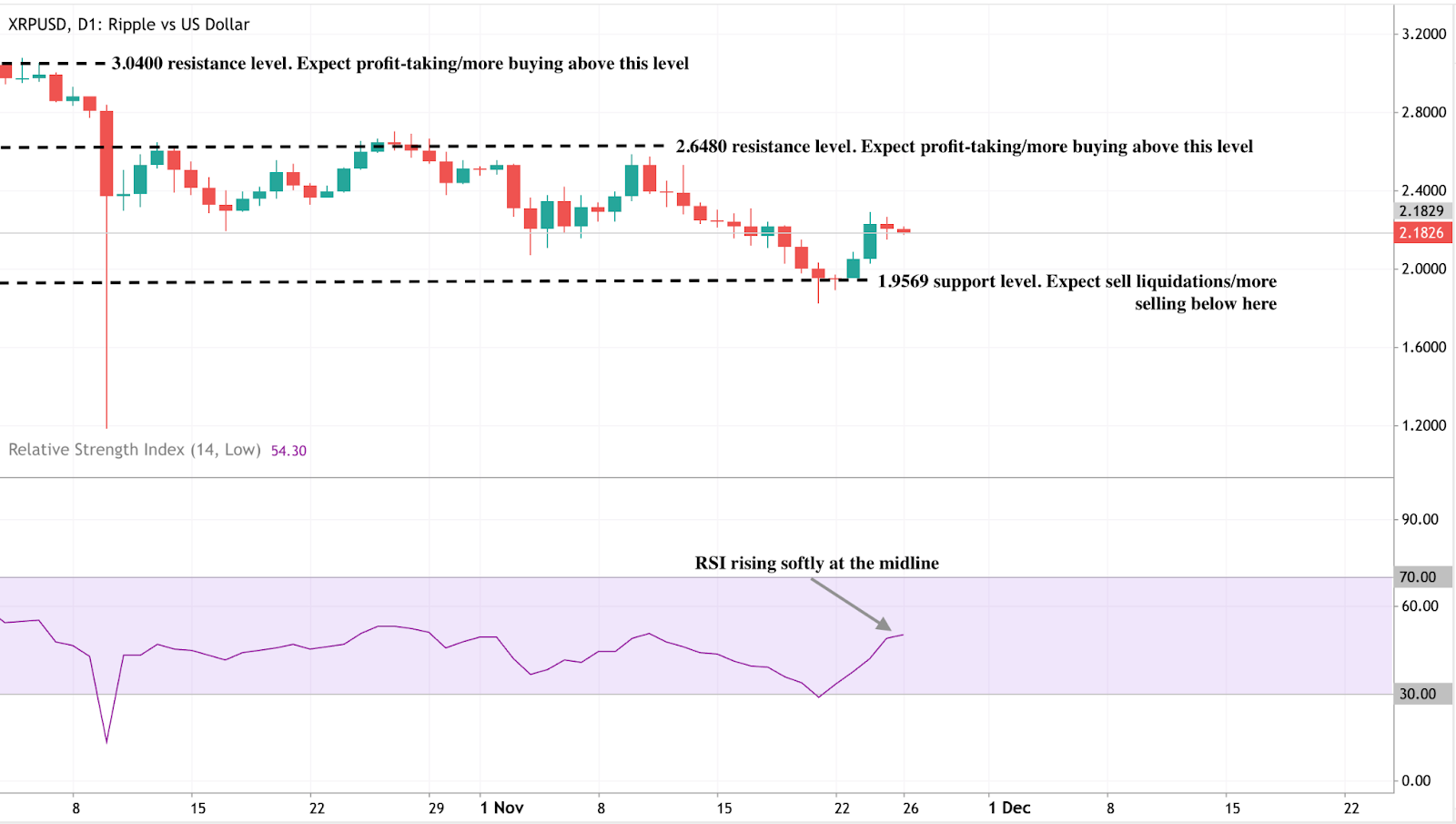
撰寫時,XRP/USD 約在 2.1800 美元附近波動,交易區間介於 2.6480 美元的關鍵壓力位與 1.9569 美元的強力支撐位之間。若跌破支撐,可能引發拋售清算;若突破 2.6480 或 3.0400 美元,則可能吸引獲利了結或新一輪買盤。
RSI 指標正從約 54 的中線溫和上升,顯示動能略有回升,但尚未進入超買區間。
.png)
Google’s AI comeback: Has the sleeping giant finally awoken?
Google has been criticised for years for lagging behind OpenAI, especially after ChatGPT exploded in late 2022 and reshaped the AI landscape.
Google has been criticised for years for lagging behind OpenAI, especially after ChatGPT exploded in late 2022 and reshaped the AI landscape. Yet the company’s recent streak of breakthroughs has triggered a dramatic reappraisal.
At the centre of this shift is Gemini 3, Google’s newest flagship AI model, which has impressed analysts with its performance in reasoning, coding and specialised tasks that traditionally stump chatbots. As demand grows for both cloud compute and Google’s custom AI chips, investors are beginning to question whether Google’s comeback is already underway - and whether the AI race is entering a new phase.
What’s driving Google’s resurgence
Alphabet has gained substantially since mid-October, sending shares to $323.64 and bringing it within reach of the $4 trillion club.
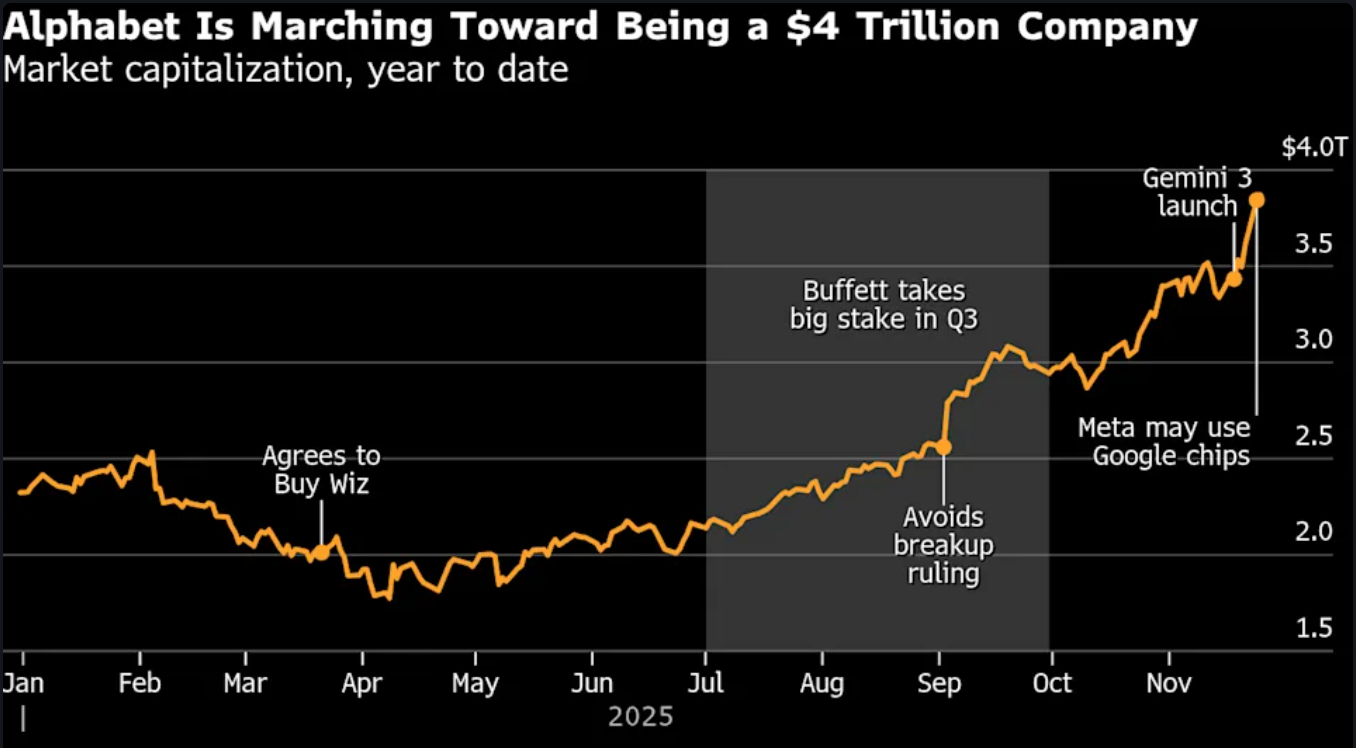
Google’s return to form is rooted in a combination of technical breakthroughs and strategic repositioning. The launch of Gemini 3 captured global attention after the model surged to the top of AI leaderboards such as LMArena and Humanity’s Last Exam, winning praise from analysts and technologists for its reasoning ability and performance on complex science tasks
Its improved reliability in generating images with accurate embedded text - a challenge that has plagued many chatbots - signals a maturity necessary for enterprise adoption. At the same time, Google has refreshed its AI product suite, including updates to its viral Nano Banana generator, which reinforces momentum across both consumer and developer segments.
The second force propelling Google forward is its deep investment in infrastructure. Once criticised for falling behind Microsoft, OpenAI and Nvidia, the company now benefits from rising demand for Google’s Tensor Processing Units (TPUs) - a specialised chip architecture Google has refined for over a decade.
Reports that Meta is in talks to deploy Google’s chips in its data centres by 2027 triggered a rally in Alphabet stock, demonstrating that Google’s hardware ecosystem may finally offer a meaningful alternative to Nvidia’s dominant GPUs. Partnerships with Anthropic - potentially involving up to 1 million TPUs - further signal a structural shift in AI compute preferences.
Why it matters
Google’s resurgence has implications far beyond its own balance sheet. As Neil Shah of Counterpoint Research put it, “Google has arguably always been the dark horse in this AI race — a sleeping giant now fully awake.” . If Gemini 3 continues to outperform expectations, it may reshape competitive dynamics between the three pillars of modern AI: OpenAI for model innovation, Nvidia for hardware, and Microsoft for cloud and enterprise distribution. A strengthened Google challenges this equilibrium, creating new strategic options for companies seeking alternatives to Nvidia’s high-cost GPUs or Microsoft’s deep integrations with OpenAI.
The return of competitive balance is also important for consumers and regulators. Google escaped the most severe outcome in a US antitrust case partly because AI competition has intensified. If Google proves it can innovate at scale, it may relieve pressure on regulators while accelerating the adoption of AI products beyond search advertising.
Units like Waymo, which is expanding into multiple cities and now supports highway driving, illustrate how Alphabet’s deep research pipeline fuels progress beyond software. The question is whether Google can convert technical superiority into commercial leadership - something it has historically struggled with outside advertising.
Impact on industry, markets and consumers
Google’s ascent poses both opportunity and disruption across the tech landscape. Nvidia, which lost $150 billion in market value on the day Meta’s chip discussions were reported, now contends with the prospect of a viable alternative for certain AI workloads. While Nvidia insists its GPUs remain the industry’s Swiss Army knife - flexible, widely supported, and essential for model training - TPUs give Google a niche advantage. As ASIC-based designs gain traction, analysts expect custom silicon to grow faster than the GPU market over the next several years.
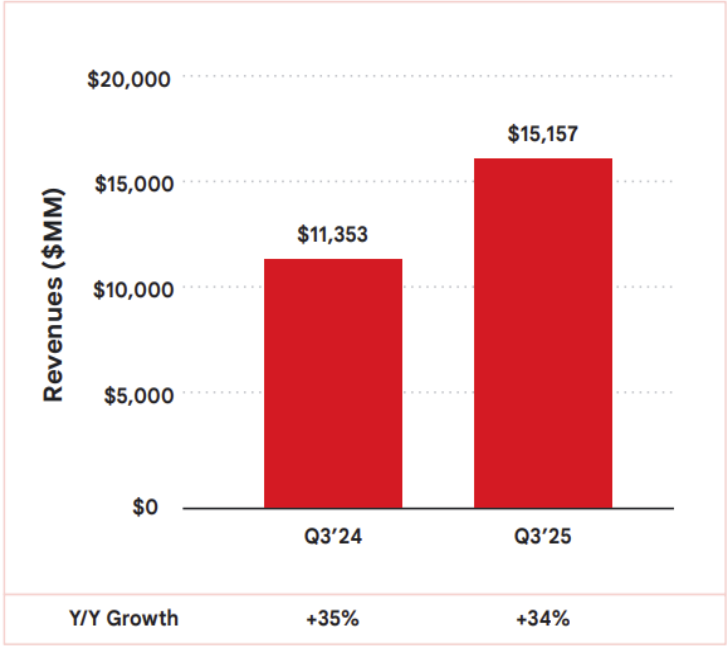
This shift has a significant impact on the broader cloud industry. Google Cloud, which generated $15.2 billion in third-quarter revenue - up 34% year-on-year - remains behind AWS and Microsoft Azure, but the demand for generative-AI compute is narrowing the gap.
Companies attracted by TPUs' cost efficiency may choose Google Cloud for specialised workloads, while still relying on Nvidia GPUs for general tasks. For consumers, the competition translates into better AI experiences: models with stronger reasoning, fewer errors, and safer behaviour.
Across financial markets, Alphabet’s rally affects index weightings and rotation patterns. As traders reassess Google’s valuation, volatility in Nvidia, AMD, Microsoft and Meta increases - creating opportunities for directional and event-driven strategies on platforms like Deriv MT5, where both tech stocks and index CFDs see heightened activity during AI-driven shifts. Tools such as the Deriv Trading Calculator help quantify margin impact and manage exposure as market reactions intensify.
Expert outlook
Forecasts for Google’s next phase remain divided. Some analysts argue that Google’s resurgence marks a long-awaited payoff from its “full-stack” strategy - controlling data, models, chips, cloud and applications. CEO Sundar Pichai emphasised during the last earnings call that this unified approach “really plays out” when scaling frontier models that integrate reasoning, multimodal capabilities and advanced coding. If Google continues to refine its ecosystem, it could rival or surpass OpenAI in enterprise adoption while weakening Nvidia’s dominance in hardware.
Yet uncertainties persist. Data revealed consumer adoption of Gemini still lags behind that of ChatGPT, with 650 million users compared to ChatGPT's 800 million weekly users, and monthly downloads of 73 million, which trail ChatGPT’s 93 million. Google Cloud, although accelerating, is still half the size of AWS and Azure.
It was noted that if Google cannot convert its technological strength into sustained commercial traction, the gap could widen again. Much will depend on whether Meta and other AI-intensive companies formalise their TPU commitments and whether Gemini 3 continues outperforming rivals in real-world deployments. The next six to nine months will be decisive, according to analysts.
Key takeaway
For market watchers, Google’s rapid AI resurgence suggests the company has moved far beyond its defensive posture of recent years. Gemini 3’s strong performance, rising TPU adoption and fresh cloud momentum have revived Alphabet’s standing in the global AI race. Yet the outcome is far from settled.
The next phase hinges on whether Google can scale its breakthroughs commercially while sustaining hardware and model performance. Traders and analysts await confirmation from enterprise adoption, chip-supply agreements and quarterly cloud-revenue growth - the indicators that will decide whether this comeback becomes a lasting transformation.
Alphabet technical insights
At the start of writing, Alphabet (GOOG) has broken into a price discovery zone above $323, signalling strong bullish momentum after an extended run along the upper Bollinger Band. Key supports sit at $268.75 and $240, where a drop below either level could trigger sell liquidations or deeper pullbacks.
The RSI, now around 74, is approaching overbought territory, highlighting stretched conditions that may lead to short-term cooling or consolidation, even as the broader trend remains firmly upward.


Gold’s November surge: From $4,000 barrier to all-time highs. What’s really happening?
Imagine waking up to headlines screaming 'Gold Smashes Past $4,300,' and no, it’s not a dream; it has been the reality of October 2025.
Imagine waking up to headlines screaming 'Gold Smashes Past $4,300,' and no, it’s not a dream; it has been the reality of October 2025. Now, November’s keeping the momentum alive with prices hovering near $4,132 as of 25 November 2025. If you’re wondering whether this shiny metal remains a smart addition to your financial mix, stick around. We’re breaking down the fresh data, historical peaks, and practical takeaways without the hype.
Why is gold climbing so sharply in late 2025?
The gold spot price breached $4,100 per ounce on November 24, a 1.65% increase from the prior day, driven by investor bets on U.S. Federal Reserve rate cuts amid cooling inflation signals. This isn't random volatility; it's a response to broader economic jitters. Geopolitical tensions, like ongoing Russia-Ukraine talks, add a layer of safe-haven demand, pushing prices up even as crude oil dips on "peace" rumours.
Breaking it down: Central banks worldwide are projected to acquire over 900 tons of gold in 2025, according to reports, surpassing demand for jewellery and technology. This institutional buying creates a floor under prices - think of it as a global vote of confidence in gold as a hedge against currency wobbles.
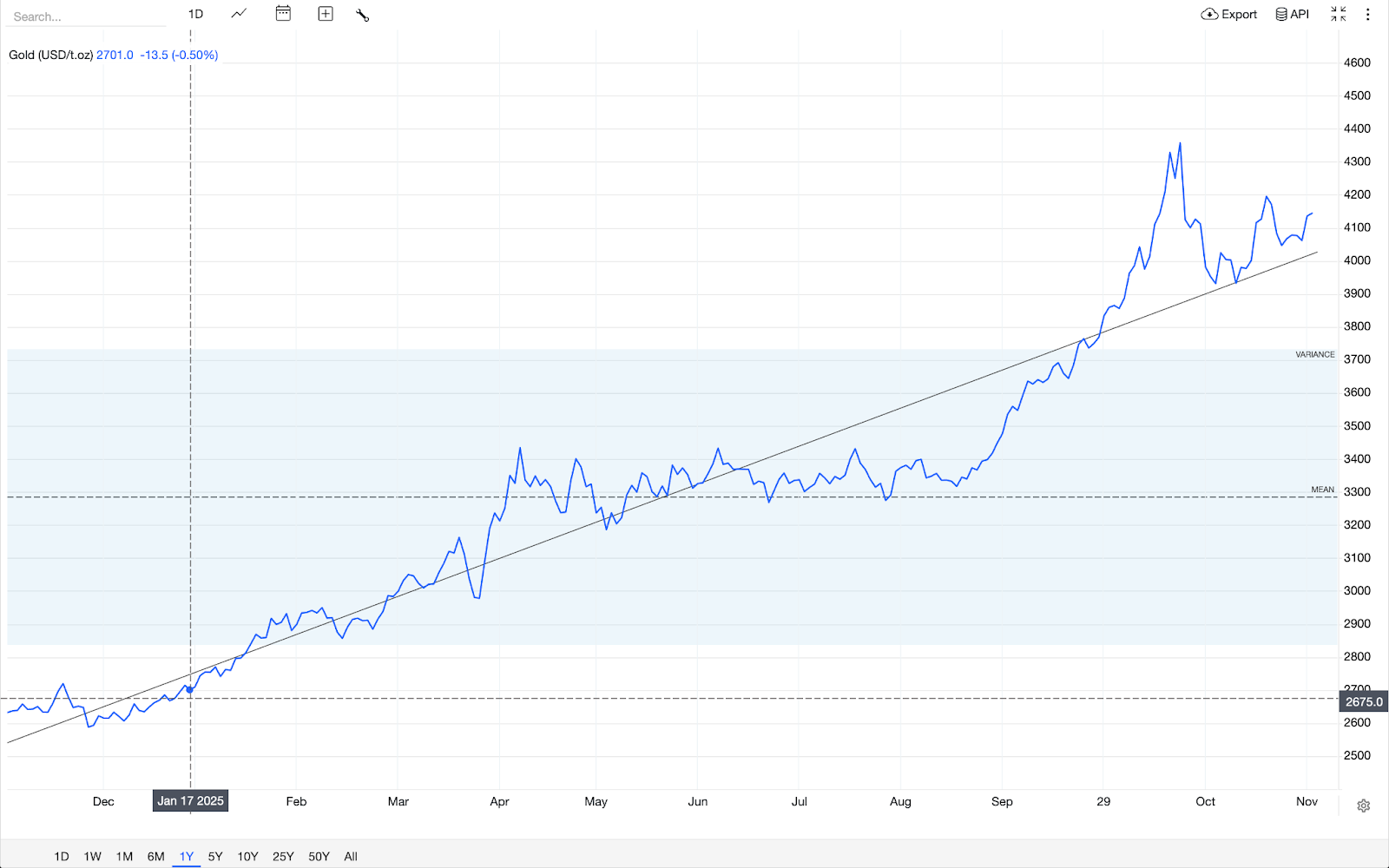
For everyday folks, it means reviewing your asset allocation might reveal whether gold’s 58% year-to-date gain (from -$2,600 in January) aligns better with your risk tolerance now than it did during last year’s flatline.
How close is gold to its historic peaks, and what do the charts say?
Gold’s all-time high? $4,379.13 on October 17, 2025, eclipsing the inflation-adjusted 1980 record of about $3,400 (when an ounce topped $850 nominally). Fast-forward to November: Spot prices traded between $4,046 and $4,145 on 24 November, coiling in a bull pennant pattern on daily charts - a setup that hints at continuation if it breaks upward, based on Kitco’s intra-day analysis.
Visualise this: On a 5-minute Comex futures chart, gold is hugging the 50-period moving average as support around $4,010, with resistance at $4,108. Zoom out to weekly: It’s testing the upper Bollinger Band after a 3.7% monthly rise.

Historically, such consolidations after highs (like the post-2020s $2,070 peak) often precede 10-15% corrections or fresh legs up - a reminder to track these levels when assessing gold’s role in long-term savings, such as in a retirement portfolio.
Expert take: "Gold’s resilience stems from its inverse correlation to real yields,” notes FX Empire analyst Yoav Niv, who points to the metal’s consolidation amid delayed U.S. data releases. Actionable angle? If inflation reports this week nudge yields lower, gold could revisit its October high - use that as a cue to compare gold’s performance against your bond or cash holdings.
Gold’s role in everyday portfolios
Hypothetically, let’s consider a mid-40s couple in Chicago, facing 7% inflation that ate into their savings in 2024. So, they shifted 5% of their nest egg to a gold ETF in early 2025; by November, that slice would have grown 58%, offsetting spikes in grocery and housing costs. Nothing magical here, but gold acting as a diversifier when stocks wobble.
Or take an example of a small business like a jeweller who rode out November’s uptick by locking in supplier rates at $4,000, buffering against dollar strength that hammered imports. The insight? Gold isn’t just for vaults; it’s a tool for smoothing cash flow volatility.
Scan your expenses - if currency fluctuations hit suppliers or travel, a modest gold exposure (via accessible ETFs) could stabilise planning without overcomplicating things.
November’s gold action underscores its enduring appeal: a buffer against the unpredictable. Whether eyeing historic charts or current consolidations, the key is integration - weave it into your financial story thoughtfully.
Gold technical insights
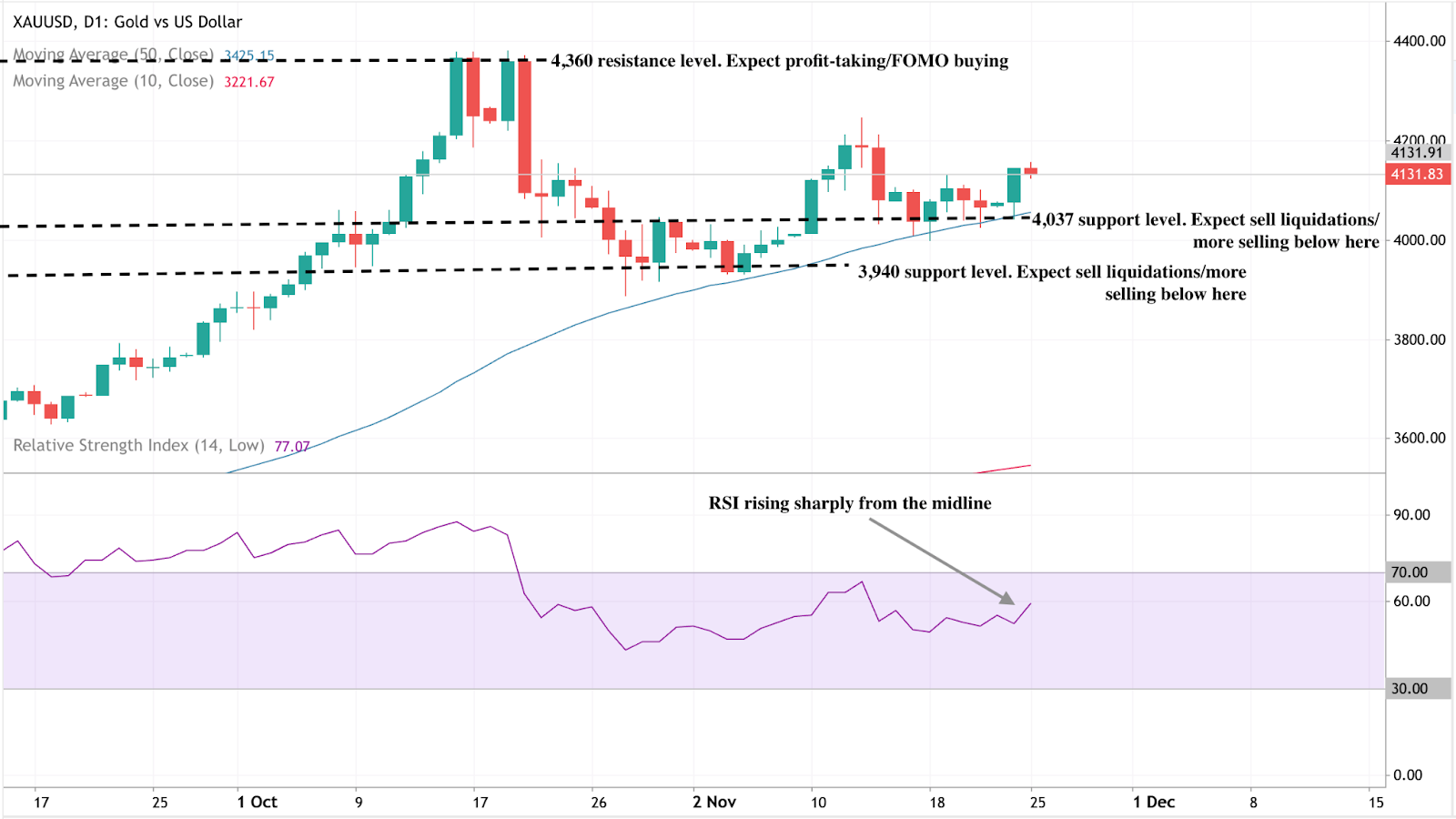
At the start of writing, Gold (XAU/USD) is trading near $4,132, maintaining bullish momentum above key supports at $4,037 and $3,940. A sustained move above these levels suggests buyers remain in control, though a drop below either could trigger sell liquidations.
The $4,360 level stands out as a major resistance, where traders may take profits or new buyers could enter on FOMO sentiment. Meanwhile, the RSI has surged to around 77, rising sharply from the midline - a signal of strengthening momentum but also a potential sign of overbought conditions that could invite short-term pullbacks.

The tech stock rally: Is this the start of a new cycle?
This week’s sharp rebound in tech stocks poses a compelling question: Is this more than just a bounce?
This week’s sharp rebound in tech stocks poses a compelling question: Is this more than just a bounce? With the Nasdaq Composite jumping 2.7% and the S&P 500 up roughly 1.5% as investors embraced both AI momentum and hopes for a December rate cut, the tone has shifted, according to reports.
The deeper issue, however, is whether this marks the beginning of a new tech cycle, underpinned by accelerating AI deployment and cheaper capital, or simply a rally within an existing one. The following insights examine what drives the move, its significance, its impact on markets, and what comes next.
What’s driving the tech stock rally
Market watchers say that at the heart of the current advance lie two forces: renewed confidence in AI-led innovation and fresh traction in monetary policy expectations. On the policy side, signals from the Federal Reserve, including Governor Christopher Waller and President John Williams of the New York Fed, have bolstered expectations for a December rate cut, helping to lift growth-stock valuations.
The reduction in discount rates on long-term earnings tends to favour tech firms, which rely on high forward-rate growth. Parallel to that, the AI story remains central. Firms such as Alphabet Inc. surged after enthusiasm for its Gemini model, while the “Magnificent Seven” pulled the broader tech cohort higher.
The market appears to be reconciling the earlier pullback (driven by bubble fears) and repositioning into stocks that benefit from the AI infrastructure build-out, including chips, cloud, and software. The question now is whether this is the launch of a new growth wave or simply the next leg of the existing one.
Why it matters
If tech is entering a new cycle, the implications extend far beyond a handful of large-cap stocks. These companies increasingly lag behind not only in market weight but also in shaping index trajectory, sector rotation, and investor psychology. As one analyst observed: “Scepticism around AI cap-ex might be a contrarian positive” for the trade in the long term.
For institutional and retail investors alike, the timing could matter: a true cycle shift may favour growth and innovation over value, alter asset-allocation flows, and provide a greater runway for risk assets. Conversely, if this is not a new cycle, then mispricing valuations could lead to sharp reversals. For corporates - from chip fabricators to SaaS startups - the cost of capital, demand for AI services, and global semiconductor supply chains all hinge on how the cycle evolves.
Impact on the market and industry
A credible new tech cycle would signal substantial real-world change: surging investment in data-centres, exponential scaling of AI models, and ecosystem shifts toward cloud-native, AI-first companies. We’re seeing some of that. Analysts estimate that AI could add $5-19 trillion in incremental revenue to US companies, although many warn that much of this may already be priced in.
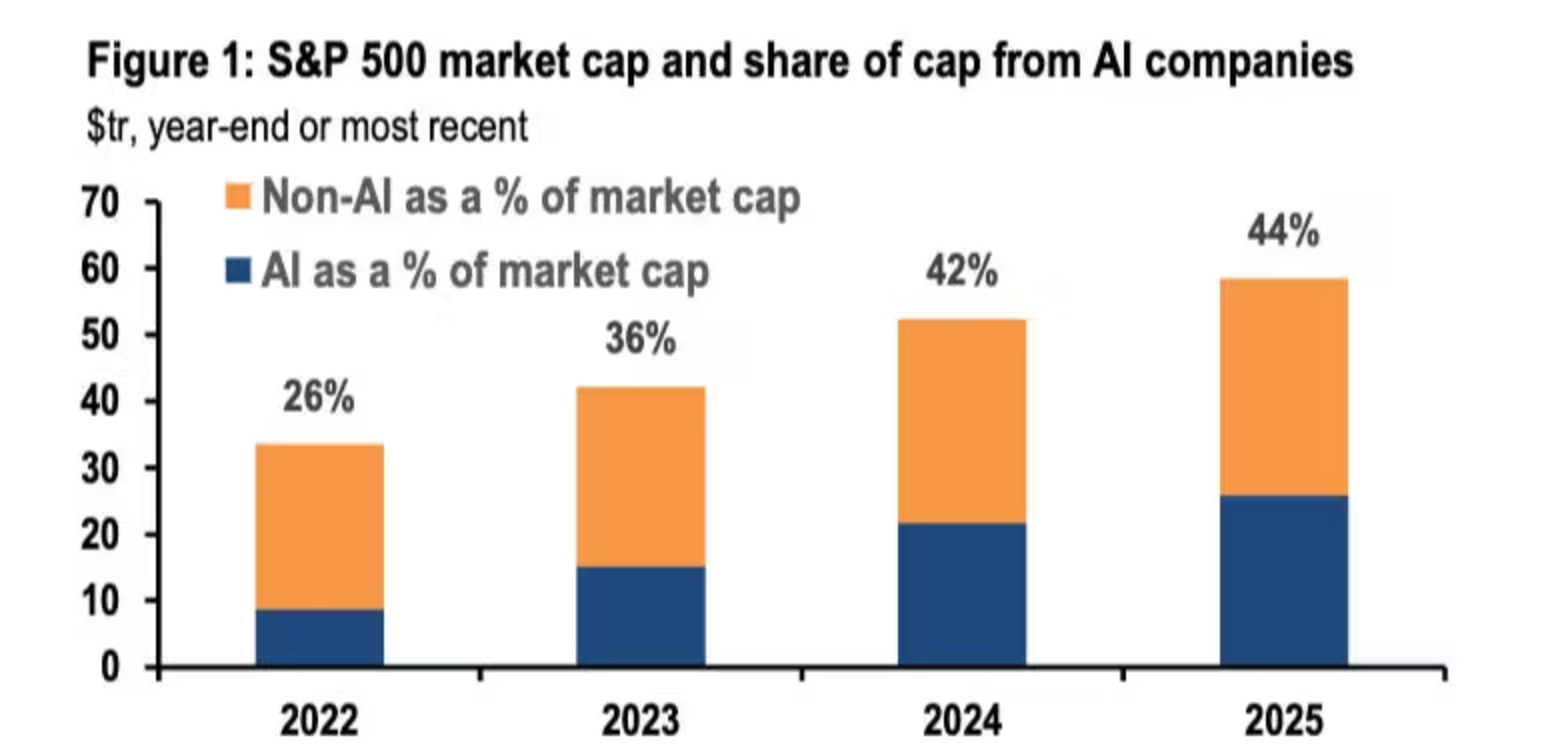
In market terms, a cycle change could reinvigorate under-weight tech portfolios, trigger rotation out of value/cyclicals and reshape the “growth vs. value” trade. For the industry, this means that winners will likely emerge among firms that scale AI profitably, while laggards will face margin pressure, heavier capital expenditure burdens, and competitive erosion. The stakes are high: the surge could be transformative - but the infrastructure and competitive demands are intense.
For the market, that means volatility is likely to stay elevated. Traders balancing positions on platforms like Deriv MT5 can use advanced order types, leverage settings and stop-loss controls to navigate sharp swings. Understanding margin impact and exposure - via the Deriv Trading Calculator - is increasingly essential as the cycle matures.
Expert outlook
Looking ahead, professional traders note that key signals to monitor include inflation trajectories, clarity on Fed policy, earnings from major tech companies, and progress on supply-chain goals in the AI build-out. Markets currently price in a high probability of a December rate cut, but if inflation proves persistent or earnings disappoint, momentum could stall.
Some strategists caution that we may simply be in yet another leg of the initial tech-cycle rather than in the dawn of a fresh era. For instance, Goldman Sachs analysts suggest much of the potential upside from AI is already embedded in current valuations.
This means that while the upside exists, the risk-reward becomes less attractive. The best scenario: a renewed tech cycle with broad-based participation. The risk: concentrated gains, fading momentum and underlying disillusionment. Either way, the next few months will be critical.
Key takeaway
The surge in tech stocks carries more than a feel-good bounce - it could mark the opening stages of a new cycle where AI deployment and supportive policy drive sustained growth. However, the caveats remain substantial: valuations are stretched, execution risk is real, and macroeconomic headwinds loom. Investors should watch upcoming inflation data, Fed commentary and earnings from tech heavyweights as signals to validate the shift. The moment is promising, but not yet definitive.
Alphabet technical insights
At the start of writing, Alphabet’s stock (GOOG) has entered a price discovery zone above $318, signalling strong bullish momentum. The $280 and $238 levels act as key supports - a break below these zones could trigger sell liquidations or deeper corrections.
Meanwhile, the RSI has climbed to around 74.5, pushing into overbought territory, suggesting that the stock may face short-term profit-taking or consolidation before attempting further upside.

抱歉,無法找到符合 的結果。
搜尋提示:
- 檢查拚寫並重試
- 嘗試其他關鍵字