
Results for

What is cryptocurrency?
Learn the basics of cryptocurrency and crypto trading in our video. We also go through what makes crypto so secure and how you can trade it on Deriv.
Welcome to our comprehensive guide on "What is Cryptocurrency?" This informative video unravels the basics of cryptocurrency and crypto trading, offering a deep dive into what makes digital currencies so secure and revolutionary.
Moreover, this video demonstrates how you can engage in crypto trading on Deriv, providing insights into the platform and its functionalities. Whether you're a beginner seeking an introduction to cryptocurrencies or an enthusiast looking to delve deeper into crypto trading, this video equips you with essential knowledge to navigate the crypto market.

Market news – Week 1, January 2023
Lower risk appetite in the last week of 2022 didn’t stop traders from buying the Japanese yen. However, the major US stock indices — the Dow Jones, Nasdaq, and S&P 500 — broke their three-year winning run to finish 2022 in the red.
Lower risk appetite in the last week of 2022 didn’t stop traders from buying the Japanese yen. However, the major US stock indices — the Dow Jones, Nasdaq, and S&P 500 — broke their three-year winning run to finish 2022 in the red.
Forex
Despite the lower risk appetite seen in the global markets over the last week, the Japanese yen was sought after. The demand for yen was fuelled by worries about the coronavirus outbreak in China and its effect on China’s economy. Plus, the unexpected asset purchases announced by the Bank of Japan also contributed to the demand for yen.
Across the Pacific, there were market rumblings of a possible resurgence by the US dollar, which never materialised as the EUR/USD pair was on a bullish trajectory. Given the difference in inflation rates between the US and the Eurozone, the European Central Bank (ECB) may decide to tighten its monetary policy more than the Federal Open Market Committee (FOMC) of the United States.
Meanwhile, a prevalence of risk aversion on the final trading day of 2022 meant that the pound sterling (GBP) reduced its losses relative to the US dollar. While Wall Street continued to lose money, the GBP/USD exchange rate remained within the expected range due to a lack of major market-moving developments over the course of last week.
On the events front, the first week of 2023 will see the release of the S&P Global/CIPS Manufacturing Purchasing Managers' Index (PMI) data in the UK. Meanwhile, the S&P Global Manufacturing PMI, non-farm payrolls, and unemployment data will all be released in the United States.
Level up your trading strategy with the latest market news and trade CFDs on your Deriv X account.
Commodities
Nearly flat for the year, gold reached a high of $1,825 on Friday before receding. Although the bias is upward, gold prices are struggling to maintain the $1,820 level at the time of writing.
Last year was a tumultuous one for the precious metal. During the first half of 2022, its prices rose beyond $2,000 before plummeting to $1,615, from where they began a recovery that is still in progress.
On the other hand, although oil prices were volatile in 2022 due to the Ukraine war that disrupted global supplies, it turned out to be a second consecutive year of gains for the commodity.
Oil prices rose on Friday as traders closed out the year on a high note. In a decree issued last week, Russian President Vladimir Putin prohibited the supply of oil and related products for five months from February 1 to countries that abide by the Western-imposed price cap. The Group of Seven, or G7 nations, the European Union (EU), and Australia had imposed a USD60 a barrel cap on Russian crude from December 5 in response to the Russian military operation in Ukraine. As a result of the sanctions, Russia's oil production may decline by 1.4 million barrels per day in 2023.
Cryptocurrencies
The cryptocurrencies market showed little signs of recovery, with most digital tokens trading in the red throughout the week. The global crypto market capitalisation stood at around the $810 billion mark on Sunday, 1 January.
According to statistics, the daily cryptocurrency trade volumes dropped notably in December 2022. As per the data collected on Sunday, January 1, assets worth $22.95 billion were traded over the previous 24 hours — significantly less than $54.78 billion that was traded over the same duration two weeks prior, on Sunday, 18 December 2022. The last time global cryptocurrency trade volumes were this low was exactly two years ago in December 2020.
The largest cryptocurrency by market capitalisation, Bitcoin, entered 2023 on a positive note as it witnessed a jump of 0.39% in its value. It was trading at $16,605 at the time of writing after reaching a high of $16,918 on Monday, 26 December. Ethereum, which follows behind Bitcoin as the second-most traded digital asset, was trading at $1,200.
Take advantage of market opportunities by sharpening your trading strategy and trading the financial markets with options and multipliers on Deriv Trader.
US stock markets

*Net change and net change (%) are based on the weekly closing price change from Friday to Friday.
The stock market ended 2022 with a thud as major US indices continued their bearish run. On the last trading day of 2022, the Dow Jones Industrial Average fell 0.17% to close at 33,147.25, the S&P 500 shed 0.14% to end at 3,839.50, and the Nasdaq Composite was down by 0.42% to finish the year at 10,939.76.
Overall, the three major US stock indices snapped out of a three-year winning streak, as they faced their worst year since the great recession of 2008. The Dow had the least losses in 2022, down about 8.8%. The S&P 500 sank 19.4%, more than double the losses of the Dow, while the tech-heavy Nasdaq dropped a whopping 33.1%.
The stock market has been influenced by geopolitical factors such as Russia’s invasion of Ukraine, tension between China and Taiwan, and the Covid pandemic across the globe. Furthermore, economic factors such as inflation and rising interest rates have been at the forefront of market movements.
The first week of 2023 will be marked by the release of the December jobs report in the United States as well as the readout of the US Federal Reserve’s December policy meeting, which will give clues about the central bank’s next move.
Now that you’re up-to-date on how the financial markets performed last week, you can improve your strategy and trade CFDs on Deriv MT5.
What is blockchain? - Video
Delve into the essence of blockchain technology with this informative video, exploring its basics and profound impact on cryptocurrencies.
Welcome to our comprehensive guide on "What is Blockchain?" This insightful video breaks down the fundamental concepts of blockchain technology, offering a clear understanding of its mechanics and applications, especially in the realm of cryptocurrencies.
Whether you're new to blockchain or seeking to understand its connection to cryptocurrencies, this video provides essential knowledge to grasp the intricacies of this transformative technology.
Join us on this educational journey into the realm of blockchain, empowering you to comprehend its significance and how it underpins the fascinating world of cryptocurrencies.

Weekly market report – 30 Aug 2021
Gold prices held their three-week positive trend. Read our weekly report to find out how other markets performed.
XAU/USD — Gold

Last week, gold prices managed to cross a multi-week high and closed near to its key resistance level of around $1,820. A dovish Jackson Hole Symposium outcome followed by the Fed's Powell speech helped gold prices to hold their three-week positive trend. In the coming week or two, the prices might continue to hold a bullish view but with choppiness. On the higher side, it has multiple resistance around the $1,830 and $1,845 zone, anything above that signals that it might attempt to get back to the $1,900 levels. On the downside, $1,780 and $1,760 will continue to provide support. For the upcoming week, the market will keep an eye on non-farm payroll data on Friday.
Trade Gold options on DTrader and CFDs on Deriv MT5 Financial account.
EUR/USD
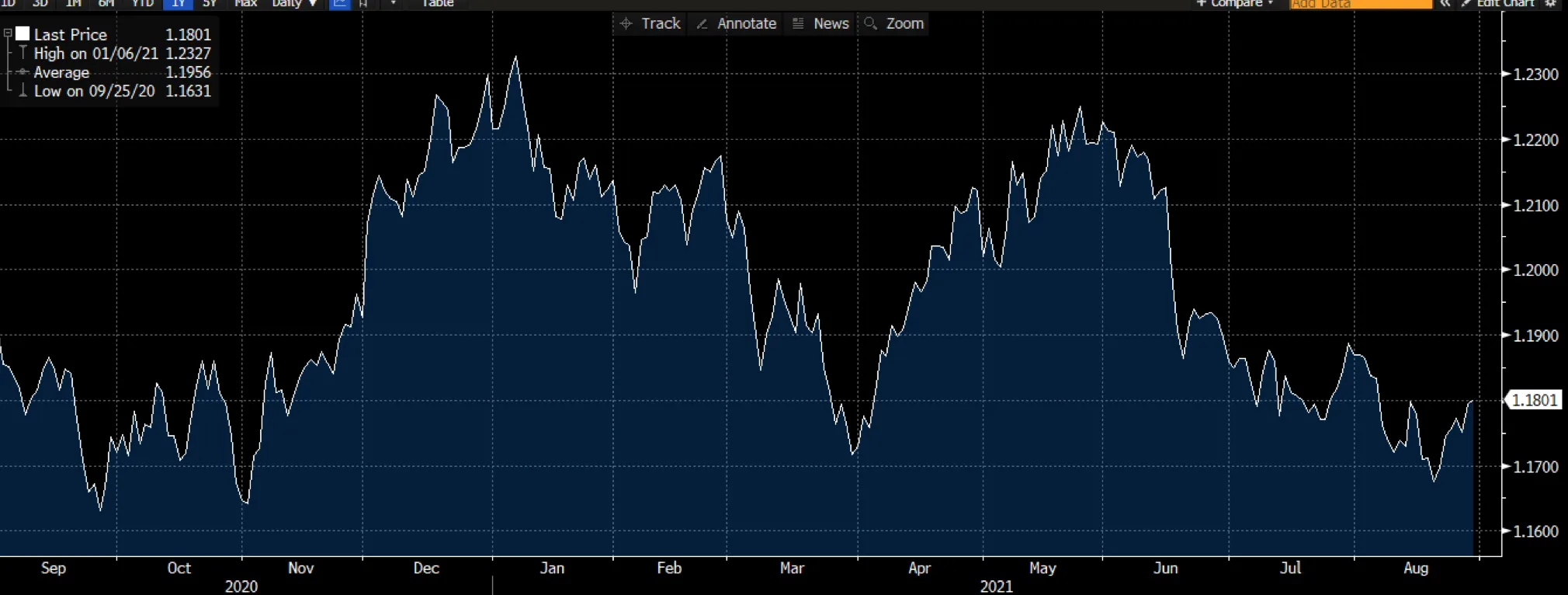
The major currency pairs EUR/USD climbed last week and closed just above the 1.1800 level. It hasn’t crossed this level for three consecutive weeks, but the US dollar Index correction helped the EUR/USD recover from its monthly low. Going forward, the price is likely to remain volatile. The resistance zone for the pair is 1.1800-1.1815, while on the downside, the first support is 1.1750 followed by 1.1700.
Trade EUR/USD options on DTrader and CFDs on Deriv MT5 Financial and Financial STP accounts.
NASDAQ — US Tech 100

The US Tech Index, Nasdaq, hit a record high last week due to the Fed’s dovish comments and a decline in bond yields. Wider expectations of delayed tapering by the Federal reserve is helping the major indices to rise. The market momentum is positive, as long as the market doesn't experience some setbacks due to geopolitical tensions in Afghanistan. On the higher side, the next levels to watch will be $15,600 and $15,774, while on the downside, $14,870 is the key support area for the week.
Trade US Tech Index options on DTrader and CFDs on Deriv MT5 Financial accounts.
BTC/USD
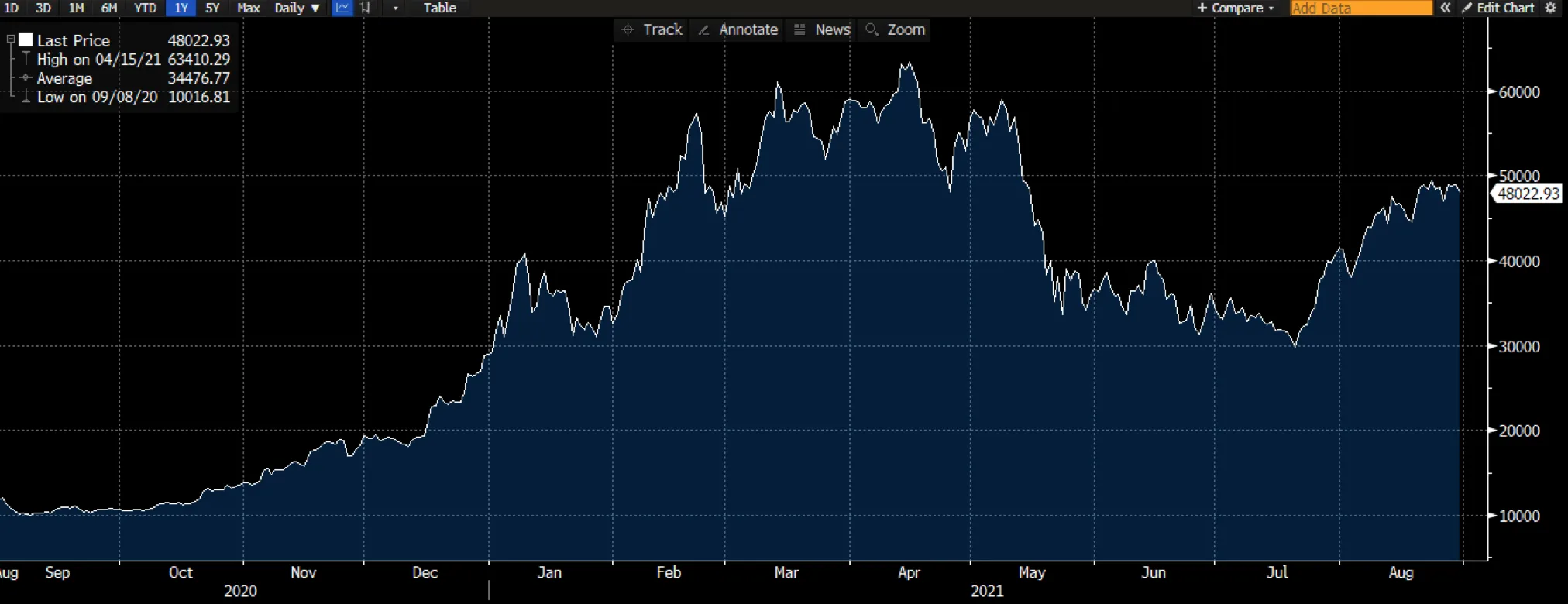
Last week, the price of BTC/USD crossed the $50,000 mark and later dropped back to $48,000. The overall trend of BTC/USD remained bullish for the last two months, and it needs to cross the $51,000 level for a fresh uptrend. In the event of any pullback, it might take support near $45,000 and below that at $41,700.
Trade BTC/USD multipliers on DTrader and CFDs on Deriv MT5 Financial and Financial STP accounts.

BeSquare by Deriv — the IT graduate programme for Malaysians
BeSquare is based on the idea that individuals with a broad range of knowledge and skills are better equipped for a successful career. So instead of focusing on one area of work, participants will learn connected skills that can make them even more valuable in their role.
The harsh truth is that employers prefer candidates with work experience. The reason is simple: people with experience are likely to get things done faster and with fewer newbie mistakes.
So if you’re a fresh graduate, finding your first job can be difficult. How do you get an employer’s attention without that ‘fresh from university’ vibe?
That’s exactly what we intend to fix with BeSquare, a tech graduate programme designed to provide fresh graduates with the experience and skills that are attractive to prospective employers.
What’s BeSquare about?
BeSquare is based on the idea that individuals with a broad range of knowledge and skills are better equipped for a successful career. So instead of focusing on one area of work, participants will learn connected skills that can make them even more valuable in their role.
Throughout the programme, trainees will work with different tech teams, and work on modules that’ll cover various aspects of the business, including product design, front-end and back-end development, cyber security, and business intelligence.
Participants will also be able to gain international exposure by collaborating with the teams located around the world, and be guided by the best tech minds in Deriv.
Besides tech skills, participants will also learn soft skills like communication, collaboration, and problem-solving through specially designed modules based on Harvard Business Review principles.
After BeSquare
Having completed BeSquare, graduates are able to add the relevant experience to their résumés, which includes their training on industry-standard projects in the various tech domains of BeSquare. This gives them an extra edge over other fresh grads with no experience.
Plus, by being involved in the various aspects of completing a project, participants should also be able to learn more about their strengths and preferences, which can help them plan out their career paths.
BeSquare also offers the opportunity of a permanent position with Deriv should participants perform exceptionally well during their time in the programme.
Who is BeSquare for?
BeSquare is open to Malaysian fresh graduates and last-term students in any STEM programme (science, technology, engineering, mathematics).
If you love working on collaborative projects and are looking to build a career in tech, you’re the one we’re looking for.
Check deriv.com/careers/ for more info. Or email [email protected].

Weekly market report – 13 Sep 2021
After making a record high above $15,700, Nasdaq fell down throughout the last week and ended a week in a negative. It faced strong resistance at a 161.8% retracement level of around $15,708 on a monthly basis and fell back down to $15,430 levels.
NASDAQ — US Tech 100
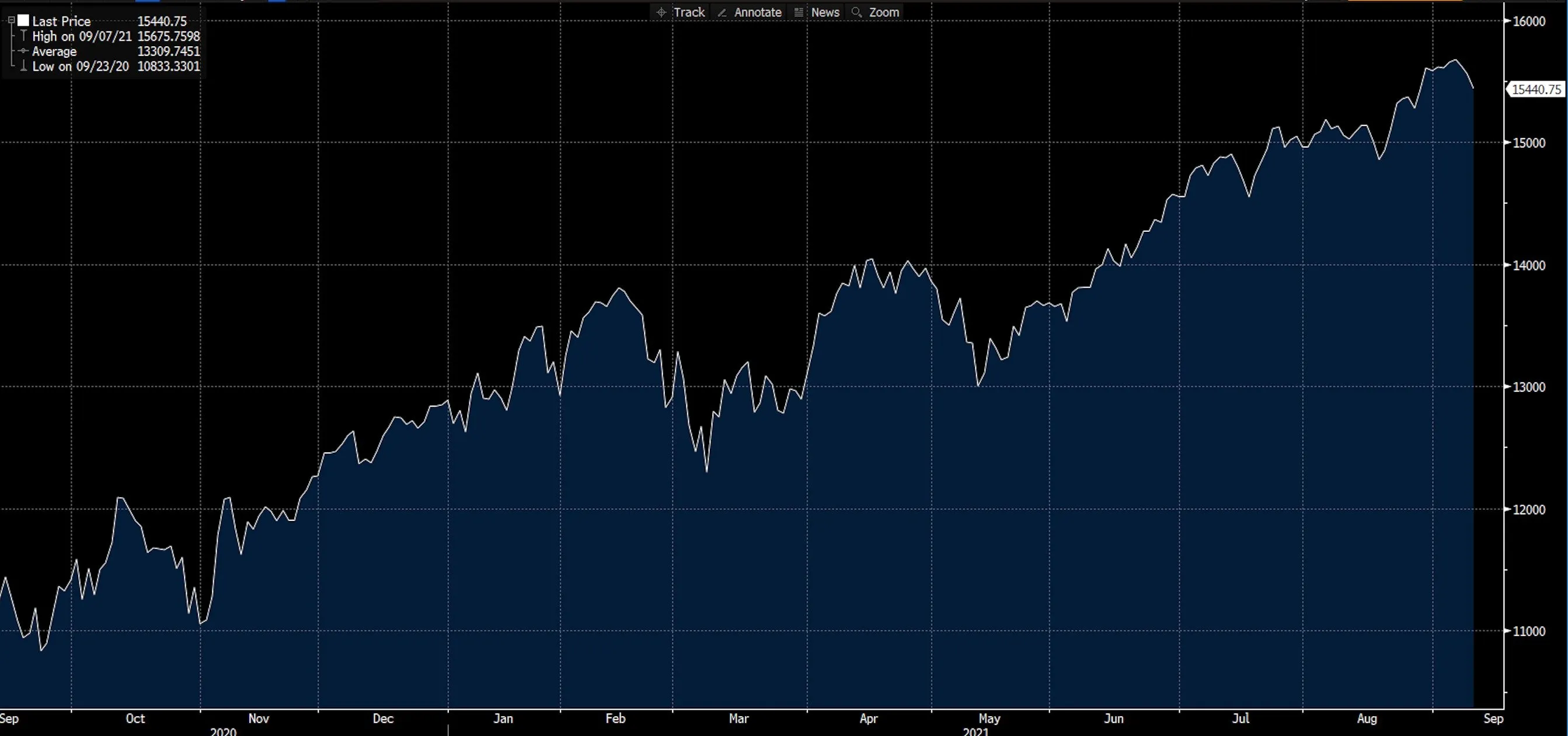
After making a record high above $15,700, Nasdaq fell down throughout the last week and ended a week in a negative. It faced strong resistance at a 161.8% retracement level of around $15,708 on a monthly basis and fell back down to $15,430 levels. On a weekly basis, the RSI is still trading above 70 level, suggesting chances of more weakness for the coming few weeks. In the coming week, if it breaks $15,390, the next support will be near to 50 DMA at $15,110 followed by major support in the $14,800-900 zone and major channel support near the $14,410 area. The previous high of $15,710 will continue to act as the major resistance. The market will react to US Core retail sales and CPI data next week.
Trade US Tech Index options on DTrader and CFDs on Deriv MT5 Financial accounts.
XAU/USD — Gold
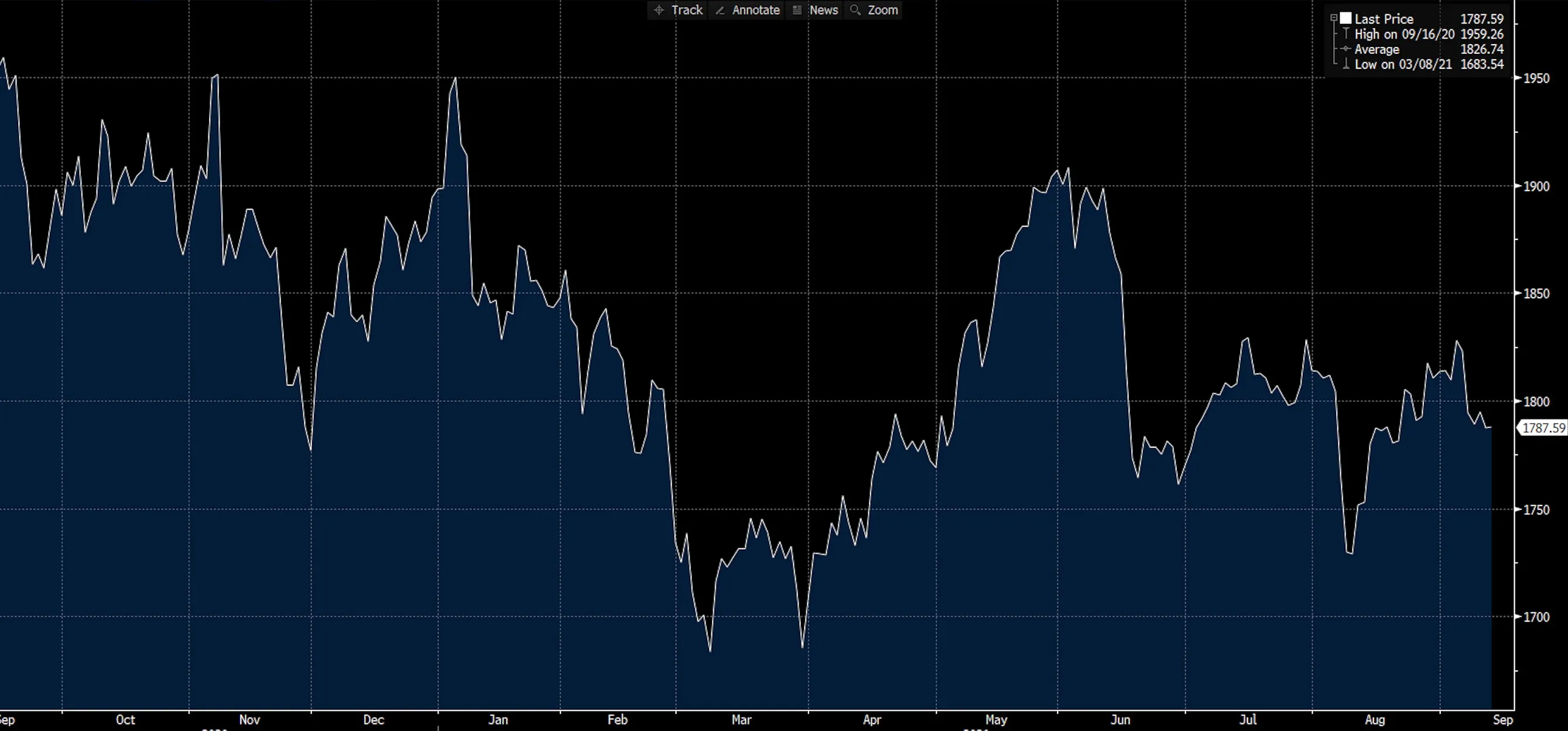
The price of gold dropped below $1800. On a weekly basis, Gold has been facing strong resistance near the $1830 area. Despite lower employment data helping the price rebound to the $1830 area in August, the price did not sustain or cross its resistance and continued to make lower highs and lower lows. As the US dollar weakens, gold's price is under pressure. Within the next week, it could consolidate in the same $1830 to $1770 range. Major support is near to 50 DMA around $1752. In terms of fundamentals, the market may be watching the upcoming US CPI and retail sales data, as well as the ECB president's speech.
Trade Gold options on DTrader and CFDs on Deriv MT5 Financial account.
EUR/USD
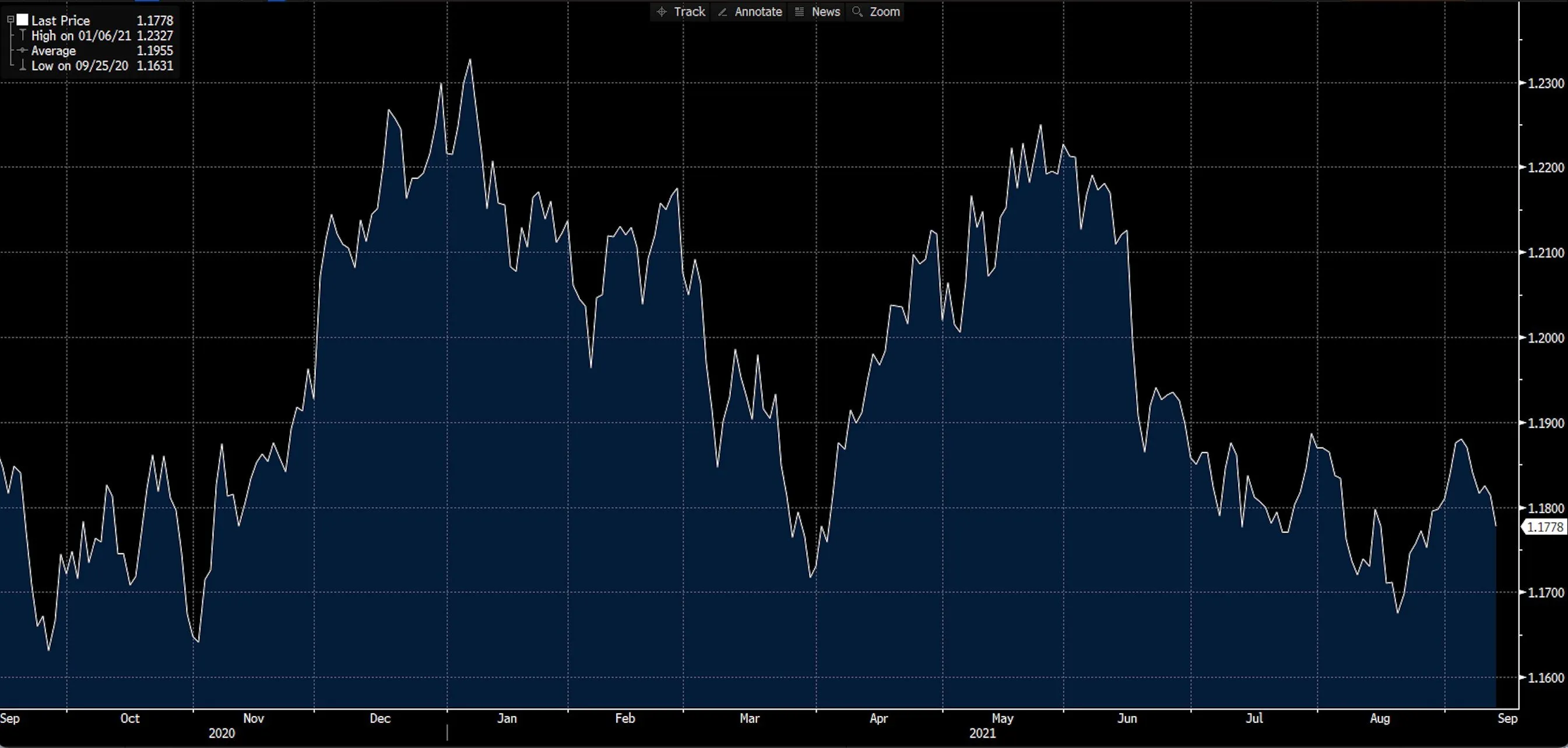
After it crossed the 1.19 level in the previous week, EUR/USD fell back down again back to the 1.18 level in the last week. For more than two months now, EUR/USD has been consolidating between 1.19 and 1.17. Weekly, it has multiple supports of 200 and 100 weekly SMAs near 1.1590. While on the higher side, it has to decisively cross the 1.19 level for any confirmed change in the trend.
Trade EUR/USD options on DTrader and CFDs on Deriv MT5 Financial and Financial STP accounts.
BTC/USD
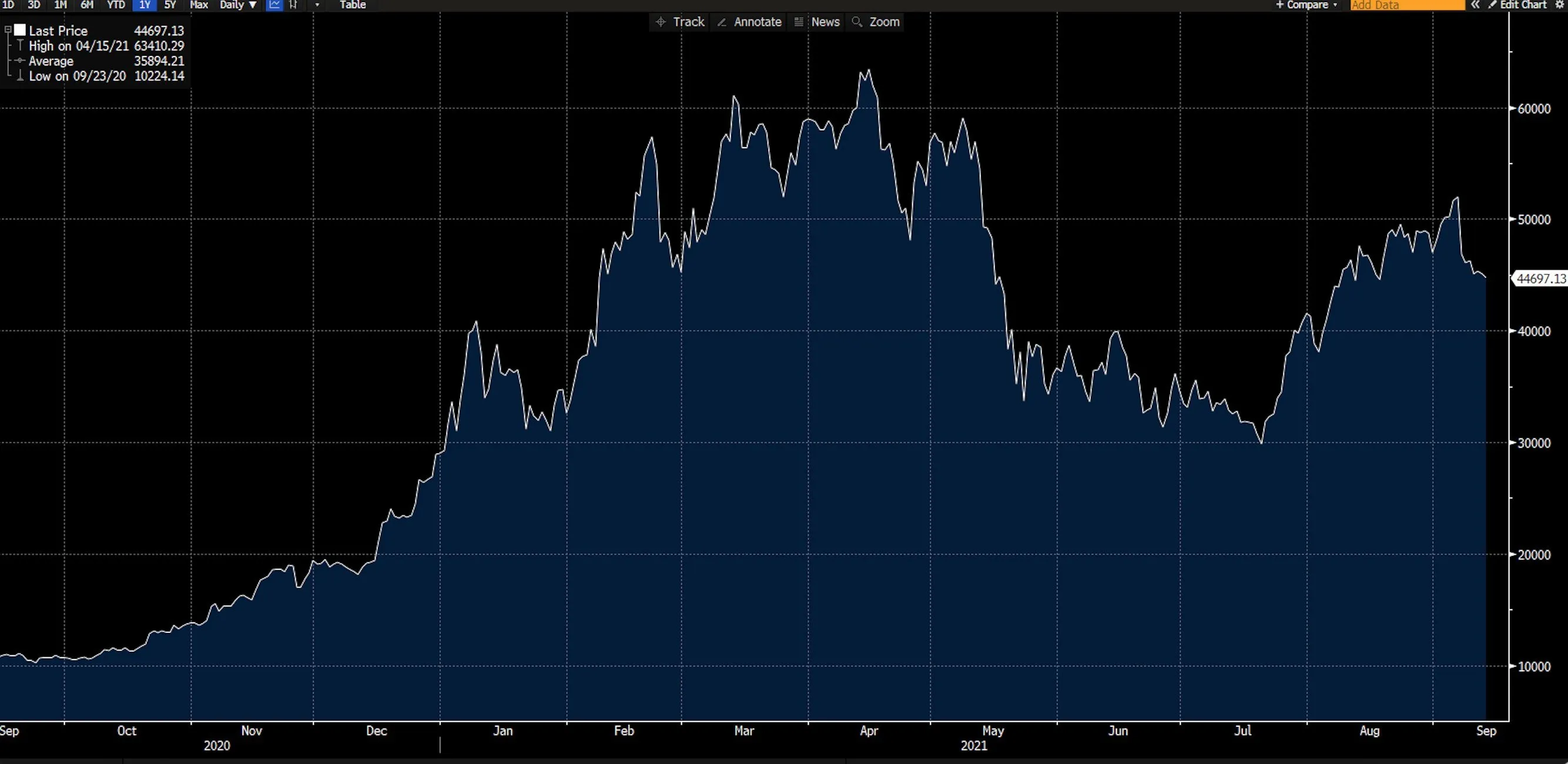
Prices of Bitcoin dropped last week, wiping out gains from the previous three weeks. It crossed over its three-month high of $52,900 and fell to $43,000 within a week. Traders find Bitcoin's price to be volatile, which makes it interesting to trade. It broke down the rising trend channel on a daily basis. Support could be found near the 61.8% retracement level around $41,880, followed by the weekly 20 MA near $40,900 in the coming week. While on the higher side, it might face resistance near to $48,000 followed by a key level of $50,000 for any upside momentum.
Trade BTC/USD multipliers on DTrader and CFDs on Deriv MT5 Financial and Financial STP accounts.

Weekly market report – 06 Sep 2021
Prices of gold closed green for four weeks in a row and silver prices crossed the four-week high. Read our take on how the markets did last week.
XAU/USD — Gold
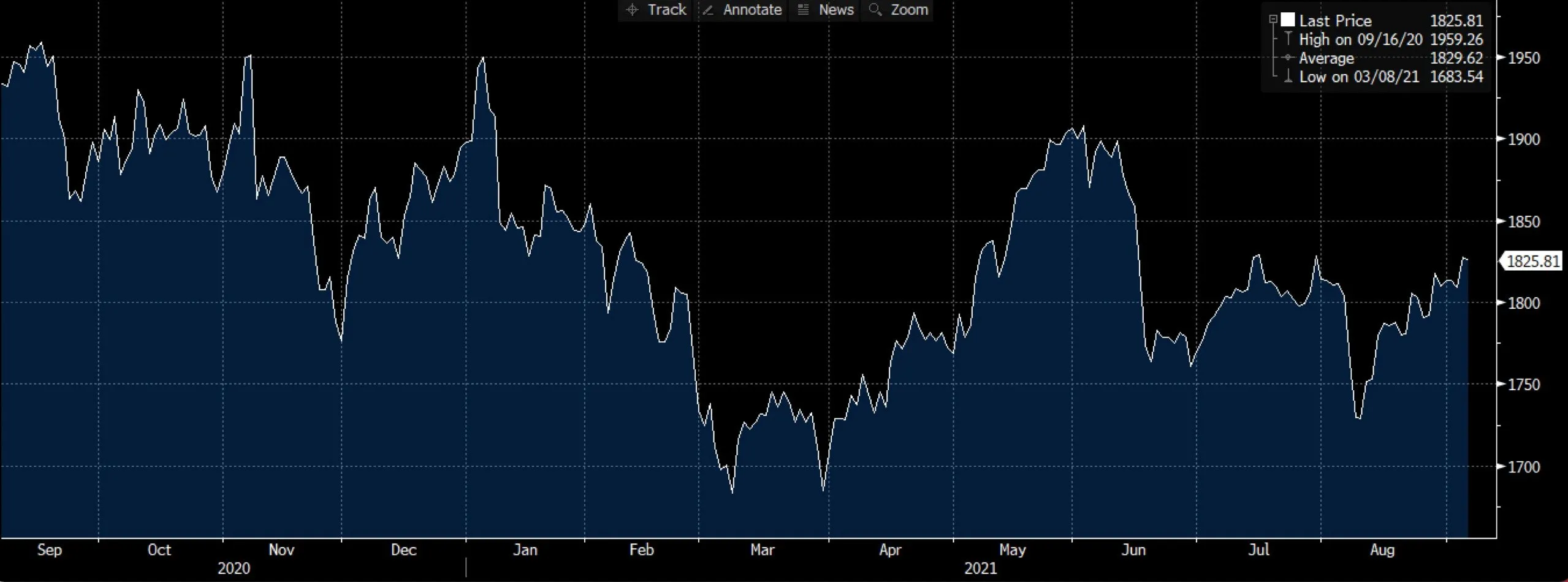
The price of gold has closed green for four weeks in a row and above its key resistance level of $1820. It also made a fresh five-month high last Friday. It moved a massive 9% from the recent flash low it made in the month of August at the $1680 level. On a daily basis, the 100 SMA has crossed the 200 SMA, indicating a Golden crossover for the short to medium term. However, it is important for the prices to cross the $1830-40 zone, which it has failed to cross for the last four months. On the daily and weekly time frames, the RSI is trading at 53 and 61 respectively, which suggests further upside is likely. Technically, once it manages to cross its immediate resistance zone, the next level to watch out for will be the $1849 and $1877 levels. While on the downside, $1787 will act as the first support followed by $1746 as the major support.
Trade Gold options on DTrader and CFDs on Deriv MT5 Financial account.
XAG/USD — Silver
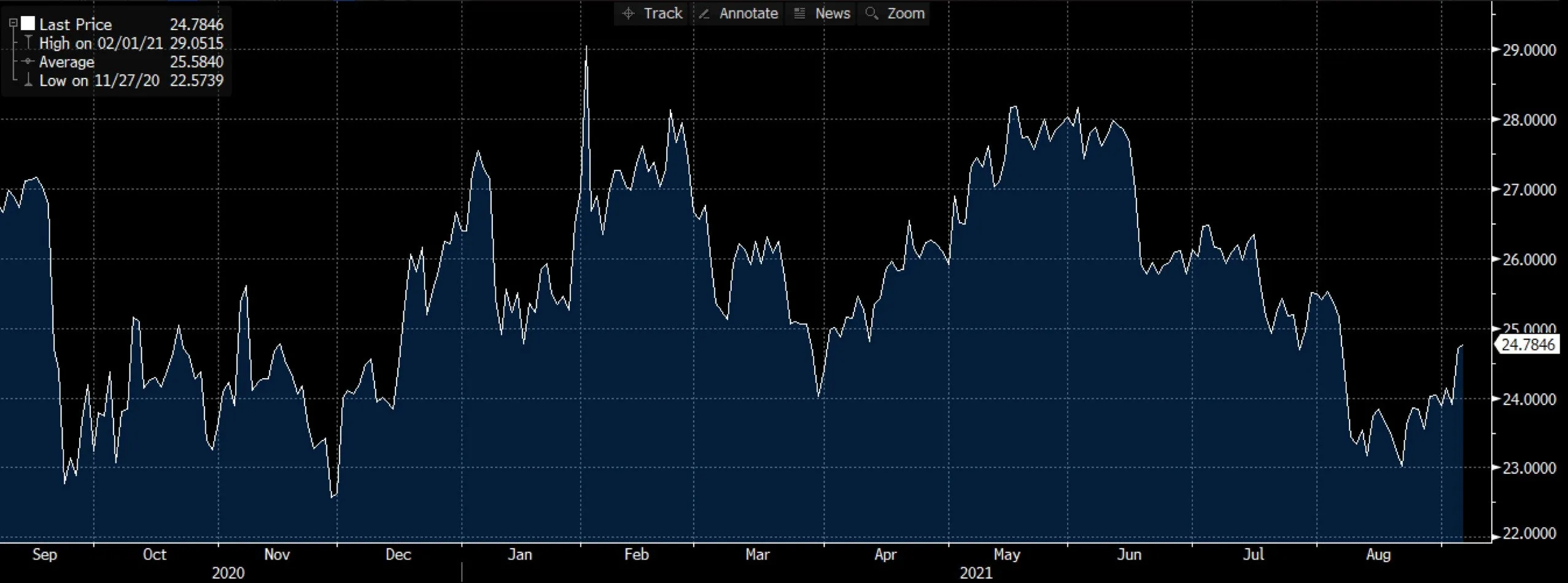
Silver prices crossed the four-week high last week and closed near their 50-week moving average of around $24.68. The weak U.S. dollar and lower-than-expected US job numbers helped precious metals to go up in the past week. Daily and weekly RSI are at 56 and 46, suggesting further price gains may be expected. The 200-day SMA at $25.95 could be the next resistance on a daily basis. On the other hand, the weekly 100-day SMA might act as the major support near $22 levels.
Trade Silver options on DTrader and CFDs on Deriv MT5 Financial account.
EUR/USD
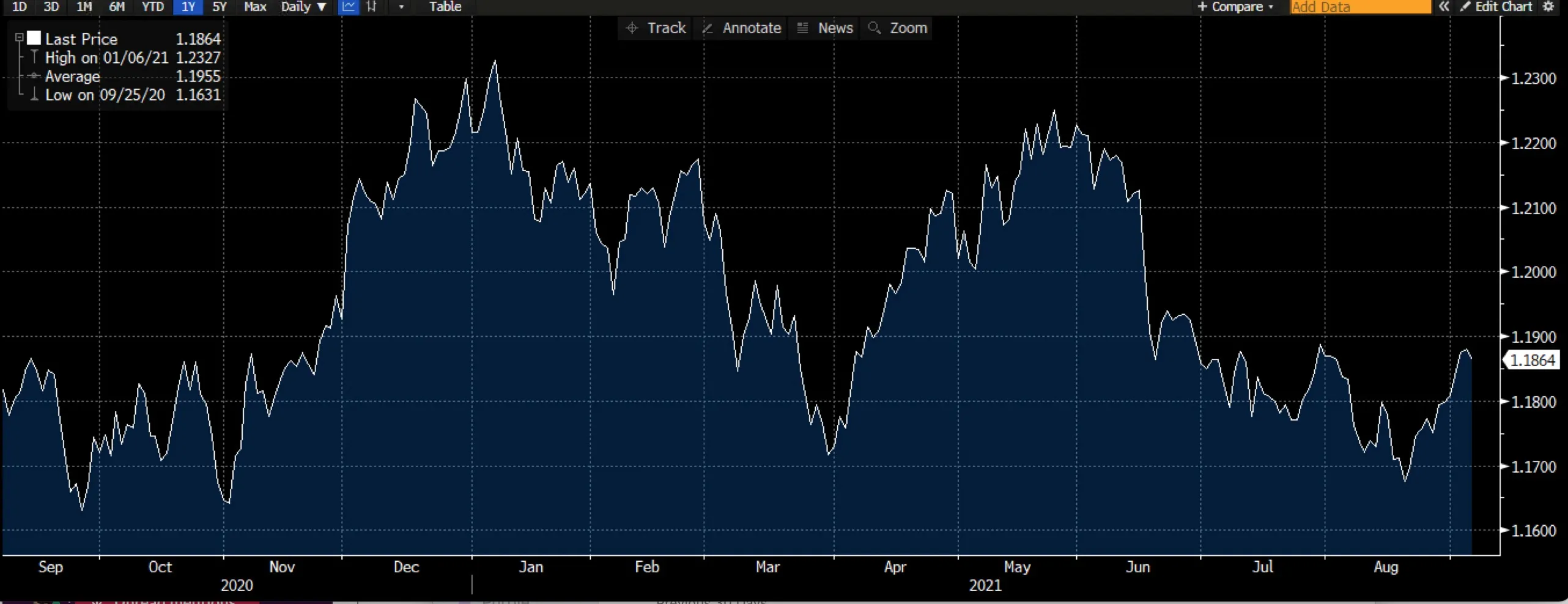
EUR/USD reached a new three-month high last Friday. The weak US dollar and lower than expected US employment data helped the EUR/USD close near 1.18680 this week. The price managed to close above the major resistance level of 1.1850. When it crosses the 1.1930-50 zone, it might attempt to reach the 1.20 level. The price has multiple support between 1.1750 and 1.170 on the lower side. The EUR/USD pair has been trading sideways for the past three months; a reversal of trend can only be achieved if it manages to close above 1.20.
Trade EUR/USD options on DTrader and CFDs on Deriv MT5 Financial and Financial STP accounts.
NASDAQ — Tech 100
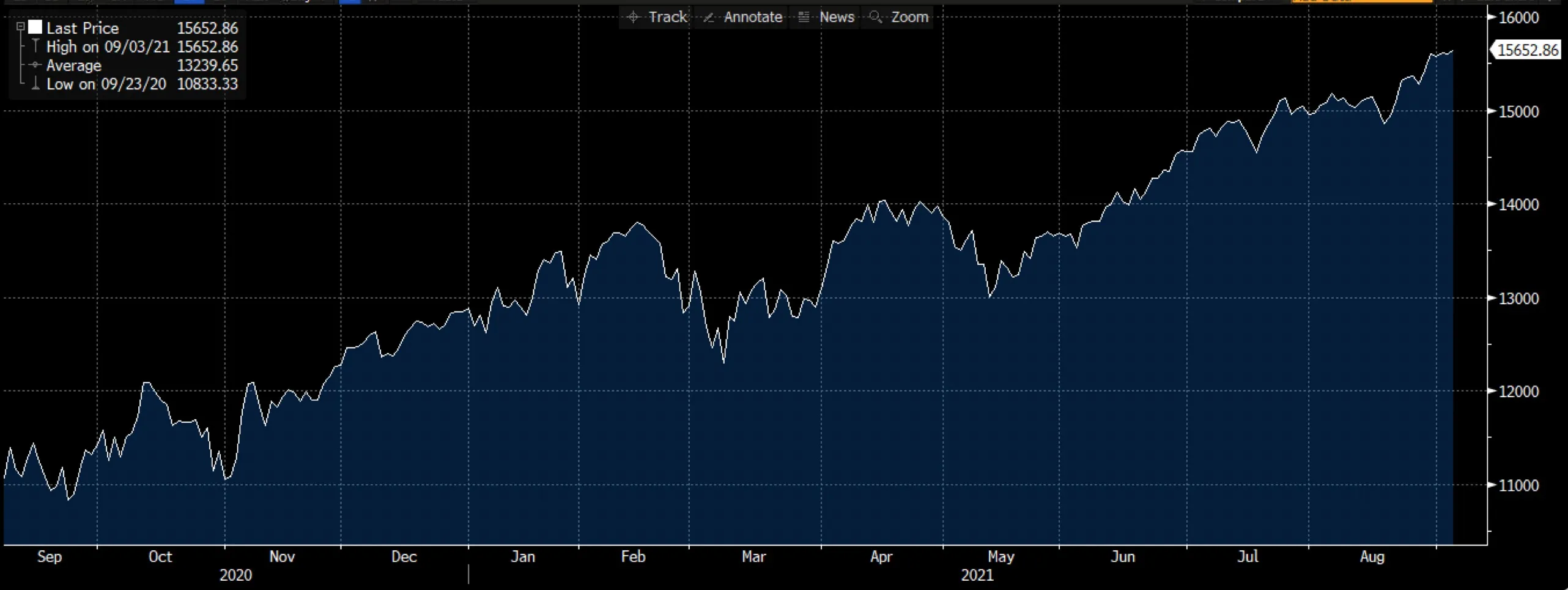
This year, the Nasdaq is in a growth trend and has gained almost 22%. Last Friday, it reached a new record high of 15699. According to US unemployment data, interest rate tempering has been delayed, helping major indices to trade higher. Though the Nasdaq seems to be trending upward, technical indicators indicate an overbought zone. The RSI is at 80 and 75 on a monthly and weekly basis, respectively, suggesting risks of time correction. There is a strong resistance near 16,000 on the upper side, and there is support near 14800 and 14450 on the lower side.
Trade US Tech Index options on DTrader and CFDs on Deriv MT5 Financial accounts.

Will the rise of the Brazilian stock market continue?
The year 2020 saw the world experiencing unprecedented times. In addition to major political shifts, the worldwide Covid-19 pandemic affected everything from our day-to-day lives to the economy's performance and major financial markets.
The year 2020 saw the world experiencing unprecedented times. In addition to major political shifts, the worldwide Covid-19 pandemic affected everything from our day-to-day lives to the performance of the economy and major financial markets.
However, it was not all bad. The Brazilian stock market performance changed completely during the pandemic, and experienced a major boost. To illustrate this point, we take a look at the two most striking pieces of data collected by the São Paulo Stock Exchange Index (IBOVESPA) this year:
- On February 25, there was a variation of -2.86.
- On May 7, there was a variation of 1.77.
What happened?
In an interview with InfoMoney, XP Investments chief strategist Fernando Ferreira explained the reasons behind this growth. Based on Ferreira's analysis, this spike was the result of a supercycle in commodities as well as Brazil being the country with the largest number of products in the category.
Who grew?
The result of this change quickly reached the big brands. Vale, for example, benefited from the appreciation of iron ore, its flagship export product, which grew by more than 30% in 2021. On May 7, this material reached 200 USD a ton, a number reached for the first time in history.
In more direct numbers, this change promoted gains of 42.33% for Vale in 2021, with 4.59% in May alone. The company's shares now account for 12.3% of the composition of the theoretical portfolio of IBOVESPA.
In addition to iron ore, gains were also recorded through oil. During the first five months of 2021, Brent barrels rose 34.43% and reached $69.42. However, this increase may deceive investors who do not take their eyes off Petrobras.
Despite its shares advancing 11.47% in this period, the company continues operating in the red. Much of this is due to the country's political instability, which promotes interventions that frighten specialists in this area.
Overcoming the pandemic
In the same InfoMoney article, BNP Paribas equity fund manager, Marcos Kawakami, explained the stock market growth in relation to overcoming the crisis caused by Covid-19.
According to Kawakami, the gradual attempts to return to normality, combined with fiscal stimulus for infrastructure development, is one of the main reasons for this growth. This can be explained by the increase in the use of raw materials, acquired in large volumes in situations of this kind.
"We also do not see a large increase in the supply of commodities in the short term, so this trend of appreciation should continue." added Kawakami.
US instability reflected in the world

Ferreira also pointed out a possible global concern with the continued increase of US inflation. Seeking a way to protect themselves from this phenomenon, many investors look to Brazil as an alternative, since materials are directly related to the values of basic products.
Levante Capital's analysis team commented to InfoMoney, saying: "(...) despite some scares regarding inflation, the central banks of the United States and Europe must maintain the 'stimulating' monetary conditions. And in times of abundant money and zero or negative interest, one of the alternatives for investors around the world is to buy commodities to defend against the currency's loss of value.”
In addition to troubled political relations, macroeconomic risks are connected to the potential growth of the country's debt over GDP. Therefore, the team recommended an attentive view at this moment.
They said: "We were so cheap and so far behind that we ended up experiencing a confluence of benign factors: we are now in the best possible place to take advantage of a market that seeks to protect itself from inflation."
Between banks
Kawakami also referred to the constant growth of banking institutions as one of the main factors that contributed to the boost in the stock exchange. Among the brands that have strengthened the most are:
- Banco do Brasil, up 8.3%
- Itaú Unibanco, up 5.2%
- Bradesco, up 5.4%
This can be explained by the increased dependence of companies on the big names, at least that is according to the banking sector analyst at XP Investments, Marcel Campos. Campos elaborated that this increase occurred despite the fall in the return on equity (ROE) of these groups, as a result of the Central Bank's actions to encourage the growth of fintechs.
One fintech that has been gaining ground in the Brazilian market is Paylivre, a digital portfolio that facilitates electronic payments, deposits, and withdrawals on trading sites, binary options, forex and diversified investments in several countries. For example, many Brazilian users are able to access Deriv, through Paylivre, which has generated a revolution in the domestic market, bringing new possibilities and new markets to its audience.
Looking to the future
Brazil’s economy has been recovering gradually. And although it is neither an easy nor a quick process, each step is an important step forward. The year 2021, despite being difficult, still has the potential to be a productive year for the Brazilian economy.
Studies carried out by XP Investments led to the company revising its annual projection for the IBOVESPA for the end of 2021, increasing its forecast of 135 thousand points to 145 thousand. Bradesco BBI's analysis team also followed the same path, pointing to an increase of 130 thousand points to 135 thousand.
The main factors that could explain these changes are the discreet accommodations in the country's long-term interest rates and the increase in profit expectations of companies involved.
For XP Investments, this could mean a 199% increase in sales per share compared to 2020. If compared to 2019, this growth should still be 125%.
However, 2022 still appears to be a very cloudy landscape for some areas. Although projected earnings for this period are stable due to the normalisation of commodity prices and the weakening of the dollar, some companies are not willing to take any chances.
Bradesco BBI, in turn, still estimates an increase of 140 thousand points to 150 thousand for 2022, based on a supposed improvement in the economic scenario, a view shared by BNP Paribas.
However, Marcos Kawakami of BNP Paribas warns of a probable differentiation between companies, as had occurred between 2010 and 2016, a period in which the two extremes reigned in this environment.
References:
IBOVESPA closes practically stable and has the 4th session in a row without falls; dollar drops to BRL 5.25.

Top 3 advantages of CFD trading
Find out the biggest benefits of CFD trading and get to know an easy strategy for beginners to start trading CFDs.
This post was originally published by Deriv on 25 August 2021
More traders trade contracts for difference (CFDs) daily because of its many benefits. If you already know what CFD trading is but are still trying to decide whether to start, let us tell you its major benefits. Plus, we’ll also share how you can get started on your online CFDs trading journey.
Wide selection of financial markets and assets
One of the main advantages of CFD trading is that you can access all the largest financial markets. Trading a wide selection of assets in different markets allows you to diversify your portfolio – this is considered a good risk management strategy, as a diversified portfolio can help to prevent big losses.
On Deriv, you can trade forex, stocks & indices, ETFs, and commodities during regular market hours. If you prefer trading on weekends, Deriv also offers CFDs on cryptocurrencies and synthetic indices (under derived indices) that are available to trade 24/7. There are two CFD trading platforms you can choose from on Deriv – the popular Deriv MT5 and the customisable Deriv X.
Opportunity to profit from both rising and falling financial markets
In CFD trading, you predict the price movement of an underlying asset without buying it. Remember, you’re trading on a contract for difference of the asset. So it doesn’t matter if the price rises or falls; as long as it moves according to your prediction, you may earn a profit. Unlike other trade types, a CFD trade can be opened with either a buy order (going long), or a sell order (going short) even if you don’t have anything to sell.
Here’s how it works: let’s say you believe the price of an asset will drop because the company failed to reach its quarterly targets, which usually leads to a sell-off – a large number of its shares being sold at a low price. If you place a sell order on its stock CFD and your prediction is correct, you earn a profit. To successfully execute this kind of trade, it’s important to understand the general logic behind going long and going short in CFD trading.
Cost-effective capital utilisation
As CFDs are typically traded on margin, you can use it as an opportunity to build a cost-effective trading strategy. Since you only need to pay a small percentage of the trade value, you can allocate your budget to several trades at once. There are also risk-management tools like the stop loss feature, which protects you from losing too much of your capital if a trade goes against your prediction.
You also won’t be paying extra tax on asset ownership since you don’t own the underlying asset when trading CFDs, which can be a big plus. Most brokers also don’t charge commissions for CFD trading, making it even more cost-effective.
How beginners can benefit from CFD trading
Professional traders have quite a few CFD trading strategies. Some of them are very complex and require technical knowledge. But it doesn’t mean that beginners can’t enjoy the advantages of trading CFDs too. Here is a relatively easy way to start: news trading.
Most financial markets are affected by economic and political events in one way or another. As a result, big announcements are usually followed by big price fluctuations of the related assets. For example, the British pound (GBP) experienced a big drop right after Brexit, or when Bitcoin’s price skyrocketed when Tesla bought over a billion USD worth of it in early 2021.
You can start your CFD trading journey by watching the news and learning how they affect asset prices. Once you know how to connect the dots, you can start predicting the price movements and benefit from them.
If you’re not confident with news trading, try trading Deriv’s synthetic indices. With these synthetic indices, you’ll get to trade online CFDs on assets that simulate real-world market movements but aren’t affected by world events and market liquidity.
Whatever market you choose to start your CFD trading journey with, you can practise trading with virtual funds in a demo trading account before investing real money. Create your free Deriv demo account today, and try CFD trading on either Deriv MT5 or Deriv X.
You may also like:
Dos and don'ts of CFD trading
Fundamental analysis for beginners
Sorry, we couldn’t find any results matching .
Search tips:
- Check your spelling and try again
- Try another keyword