
Results for

Avoid common trading mistakes with these 4 steps
Beginner traders tend to find trading intimidating and worry about making mistakes. But did you know common trading mistakes aren't specific to beginners? Even seasoned traders make mistakes. The solution to avoiding them lies in developing a structured and disciplined approach to trading, and this blog explains how to do it in 4 steps.
Beginner traders tend to find trading intimidating and worry about making mistakes. But did you know common trading mistakes aren't specific to beginners? Even seasoned traders make mistakes. The solution to avoiding them lies in developing a structured and disciplined approach to trading, and this blog explains how to do it in 4 steps.
A few of the most common mistakes traders make are…
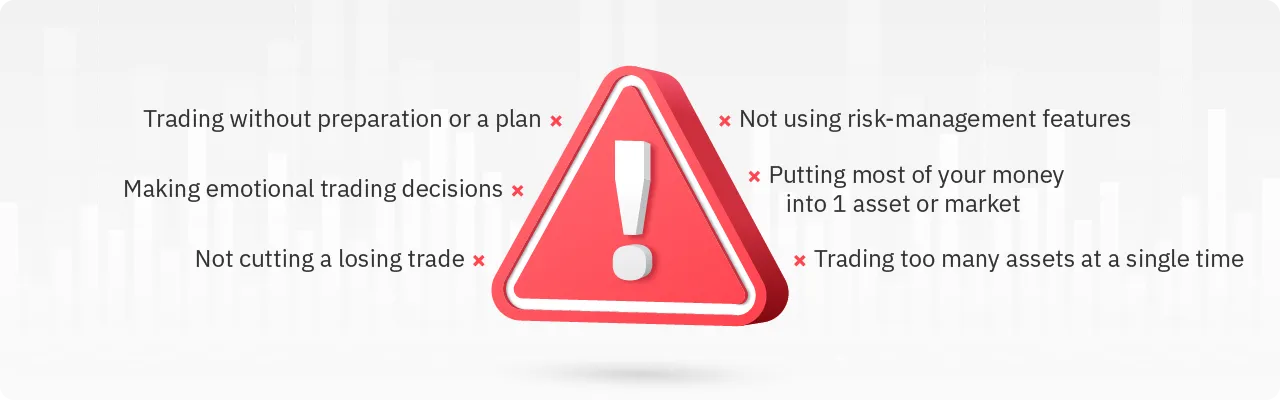
…the list can go on. Now, the financial markets are unpredictable, but you can try to avoid these (and several other) trading mistakes by following this 4-step plan of action. These steps aren’t foolproof but are a good way to help you develop the habit of making more responsible trading decisions.
Step 1 – Planning what trades to start and when
Contrary to what most people think, placing a potentially successful trade has less to do with luck and more to do with planning your trades in a disciplined manner. Your prediction needs to be thought out and based on fact-based research that includes a survey of market conditions.
Prepare a trading plan that includes analysing current global and economic events and do your research on how markets are responding to them. If you have limited time for research and analysis, use lesser capital to trade 1 or a maximum of 2 markets simultaneously. This trading plan will help you analyse trading opportunities practically and objectively while also discovering which asset is better suited for your risk appetite.
Step 2 – Planning what trades to end and when
Every trader thinks of when to start a trade. Very few know how to analyse when to end it. Traders land up suffering more losses on losing trades in the hope that the market will reverse and the loss will turn into profit. A fundamental and technical exit strategy plan will help you avoid mistakes like emotional and impulsive trading or not cutting a losing trade. Key indicators like resistance and support lines are a fact-based way to understand market sentiment. Information on resistance and support lines can also highlight the range of an asset's price movement.
When placing trades, use this information to identify the prices at which you will close the trades – either to secure your potential profit or to limit losses if the market reverses. But more importantly, avoid changing your plan so you can handle any trade objectively if it doesn't go as planned.
Step 3 – Use risk-management features
Trading is a high-risk activity, and the best way to deal with a high-risk situation is to have a safety net even if you’re fully geared up. That safety net is using risk-management features to secure your potential gains and control your losses when the market moves against you.
Suppose you’re the type of trader who diversifies their portfolio with assets from different markets. In that case, you may not be able to monitor all assets’ price movements simultaneously and cut losses in time. In an instance like this, features like take profit and stop loss can help you secure your potential gains or cut losses before they become too much, especially when market conditions are volatile.
Step 4 – Journal to learn about financial market trends and your trading style
Use a journal to document the events of your trading day. Note down which trades were profitable and which weren’t. Add notes against each of them, mentioning what data you based your prediction on and any insights or past learnings that impacted your decision-making process.
Apart from helping you stay objective, this journal will be useful in understanding how markets respond to various global and economic events and discover what kind of a trader you are. In the long run, you will learn to avoid trading mistakes, sharpen your trading skills, and develop a trading plan that suits your trading style.
The above 4 steps can help beginner and seasoned traders refine their trading skills through constant learning, practise, and discipline.
However, if you are unsure which market to trade, how to use risk-management features, or want to test a trading strategy, practise risk-free with a demo account, which is preloaded with virtual funds. Sign up today so you can try out these steps.

Market news – Week 2, November 2022
The Federal Reserve (Fed) hiked the federal funds rate by 75 bps last week at its November Federal Open Market Committee (FOMC), affecting all sectors.
The Federal Reserve (Fed) hiked the federal funds rate by 75 bps last week at its November Federal Open Market Committee (FOMC), affecting all sectors.
Forex
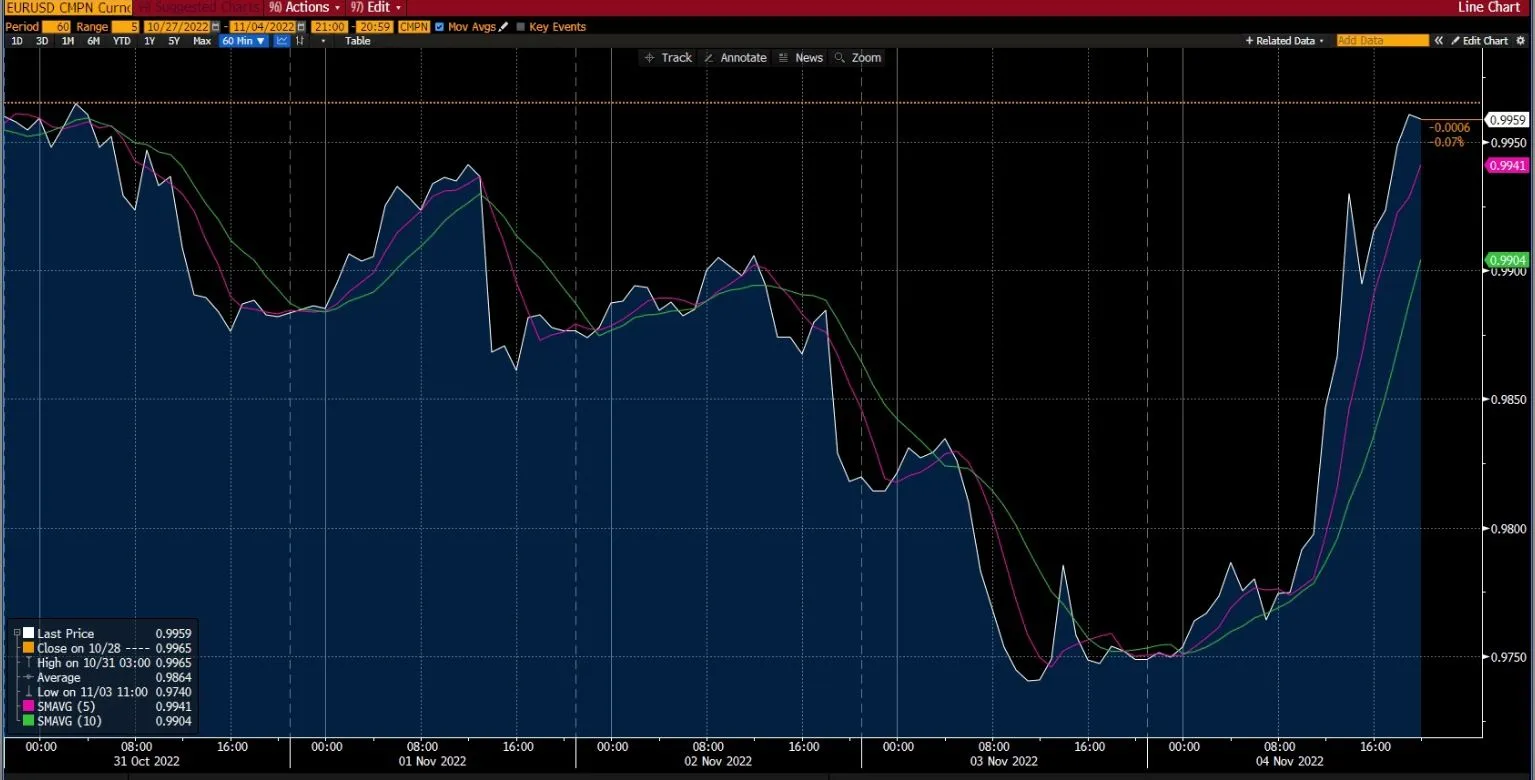
The euro got a boost towards the end of last week after a better-than-expected services Purchasing Managers’ Index (PMI) figure for October, a relatively hawkish commentary from the European Central Bank President Christine Lagarde, and the US non-farm payroll numbers. While the job numbers beat expectations, unemployment came in higher than expected, pushing the euro upwards as markets reacted.
Meanwhile, the pound fell to a two-week low due to policy divergence between the Federal Reserve and the Bank of England (BoE). The BoE warned that the UK is expected to experience a lengthy recession, with the economy unlikely to recover until mid-2024.
Midweek, the Fed surprised markets with a hawkish monetary policy stance, boosting the US dollar. Federal Reserve Chairman Jerome Powell tempered expectations of a slowdown in tightening and reaffirmed the Fed's aggressive path this year.
Meanwhile, the Eurozone is likely to be dominated by retail sales in the coming weeks, while the US is expected to be largely focused on inflation and consumer sentiment.
Across the Atlantic, GDP will be the focus of the UK. The UK’s weakening currency, combined with an expected recession, may not have as much market-moving potential as before.
Level up your trading strategy with the latest market news and trade CFDs on your Deriv X account.
Commodities

After struggling to gain traction midweek due to the Fed's hawkish tone, XAU/USD recovered and closed the week in positive territory due to a strong market sentiment and widespread dollar weakness.
As China grapples with fresh outbreaks of Covid-19 and prospects of lockdowns loom, developments around the country’s zero-Covid policy will be closely watched this week by market participants. On the back of an improving outlook for demand, gold prices are likely to rise if China softens its stance on reopening.
The Consumer Price Index (CPI) data will be released by the US Bureau of Labor Statistics later this week. Gold price could come under renewed bearish pressure if inflation prints remain strong, reminding traders of the Fed's willingness to maintain aggressive tightening. However, the yellow metal is likely to benefit from a softer-than-expected Core CPI reading, which will allow markets to reduce the 75 bps December rate hike bets.
As the dollar eased on Friday, oil prices rose despite recession fears and Covid outbreaks in China. The market is still under pressure from supply concerns as Europe is preparing to embargo Russian oil and crude stockpiles are being reduced in the US.
Cryptocurrencies
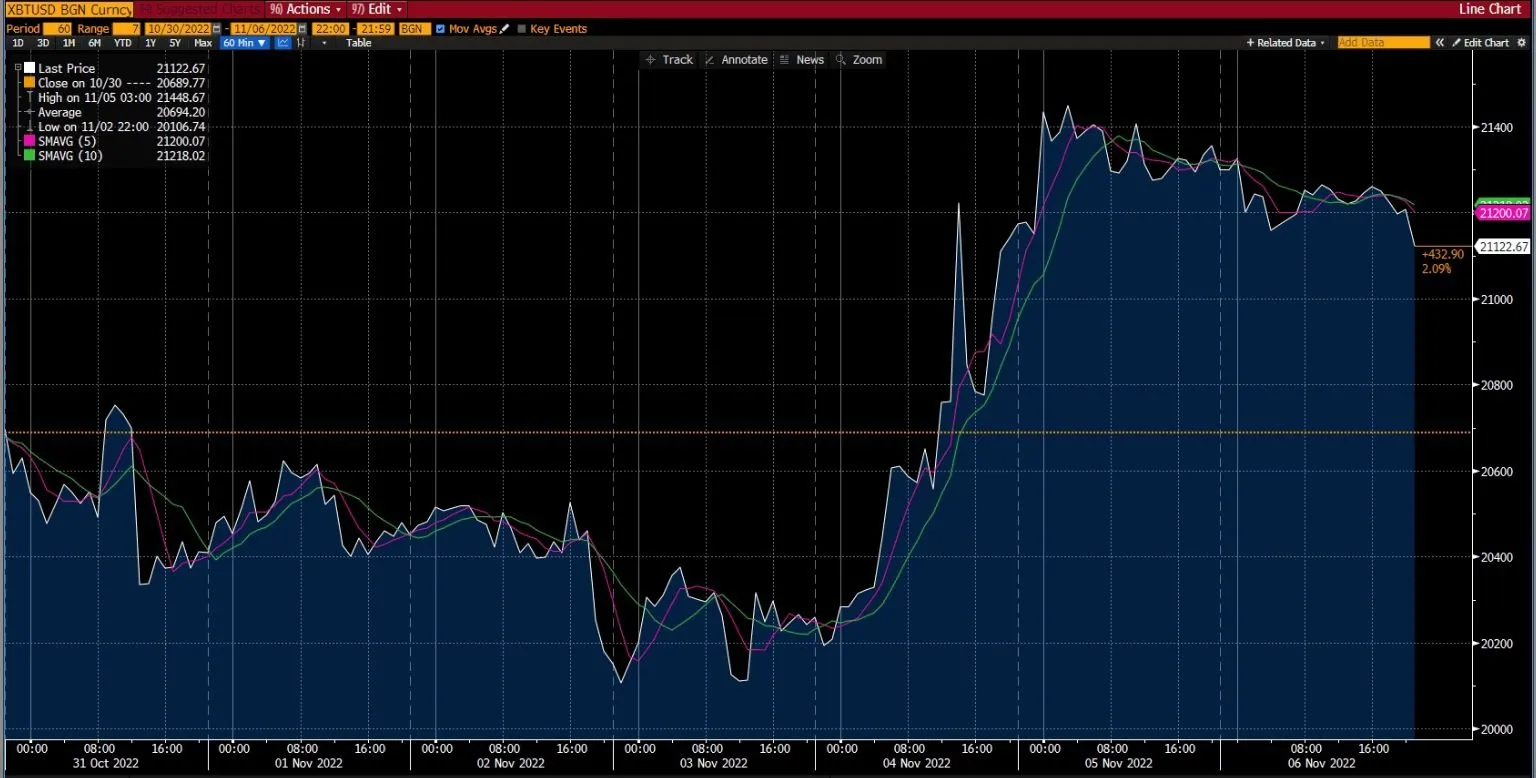
The cryptocurrency market has been in the green for the second week in a row. The market giants Bitcoin (BTC) and Ethereum (ETH) usually lead the way, but they took a back seat last week as other currencies saw spectacular increases.
In the past seven days, Bitcoin has gained about 3%, while Ethereum has risen around 2%. Their prospects of further progress were dented by the Fed’s Wednesday announcement of yet another 75 bps rate hike.
Among the major gainers, Binance Coin (BNB) rose 18.6%, Litecoin (LTC) gained 25%, and Algorand (ALGO) was up by 24%.
The US Bureau of Labor Statistics will issue the October CPI figures on Thursday. These are key figures that the Fed will take into account when contemplating future rate hikes, and it has the potential to have a substantial influence on cryptocurrencies too as any probable future hike may cause a downward price pressure on them.
Take advantage of market opportunities by sharpening your trading strategy and trading the financial markets with options and multipliers on Deriv Trader.
US stock markets
.webp)
*Net change and net change (%) are based on the weekly closing price change from Friday to Friday.
Stocks plummeted as the Federal Reserve shattered market expectations of a monetary policy shift with its 75 bps hike. It marked the Fed's fourth straight 75 bps raise, bringing the rate from near zero to 4.0% in just eight months, an unparalleled rate of hikes for the US economy.
The repercussions of a poor earnings season for bellwether stocks like Facebook parent Meta Platforms, Amazon.com, and Microsoft continued to weigh heavily on tech stocks. Amazon said late last week that it was halting corporate employee recruiting, further dampening mood.
Despite the fact that it is now a private corporation, mass layoffs at Twitter under new owner Elon Musk have added to the sector's gloom. To compound matters further, Meta is also likely to downsize its staff.
The October CPI inflation data may provide an insight into the current course of consumer prices and will likely impact the Federal Reserve's monetary policy agenda. On Friday, the University of Michigan will issue its preliminary Michigan Consumer Sentiment Index (MCSI) for November, offering an important update on consumer confidence.
Now that you’re up-to-date on how the financial markets performed last week, you can improve your strategy and trade CFDs on Deriv MT5.
Disclaimer:
Options trading and the Deriv X platform are unavailable for clients residing in the EU.

Market news – Week 4, November 2022
Markets in the United States were down for the week, unable to maintain the upward momentum that followed last week's favourable Consumer Price Index (CPI) data. Meanwhile, hawkish remarks by US Federal Reserve officials over the last few days have prolonged the economic uncertainty.
Markets in the United States were down for the week, unable to maintain the upward momentum that followed last week's favourable Consumer Price Index (CPI) data. Meanwhile, hawkish remarks by US Federal Reserve officials over the last few days have prolonged the economic uncertainty.
Forex
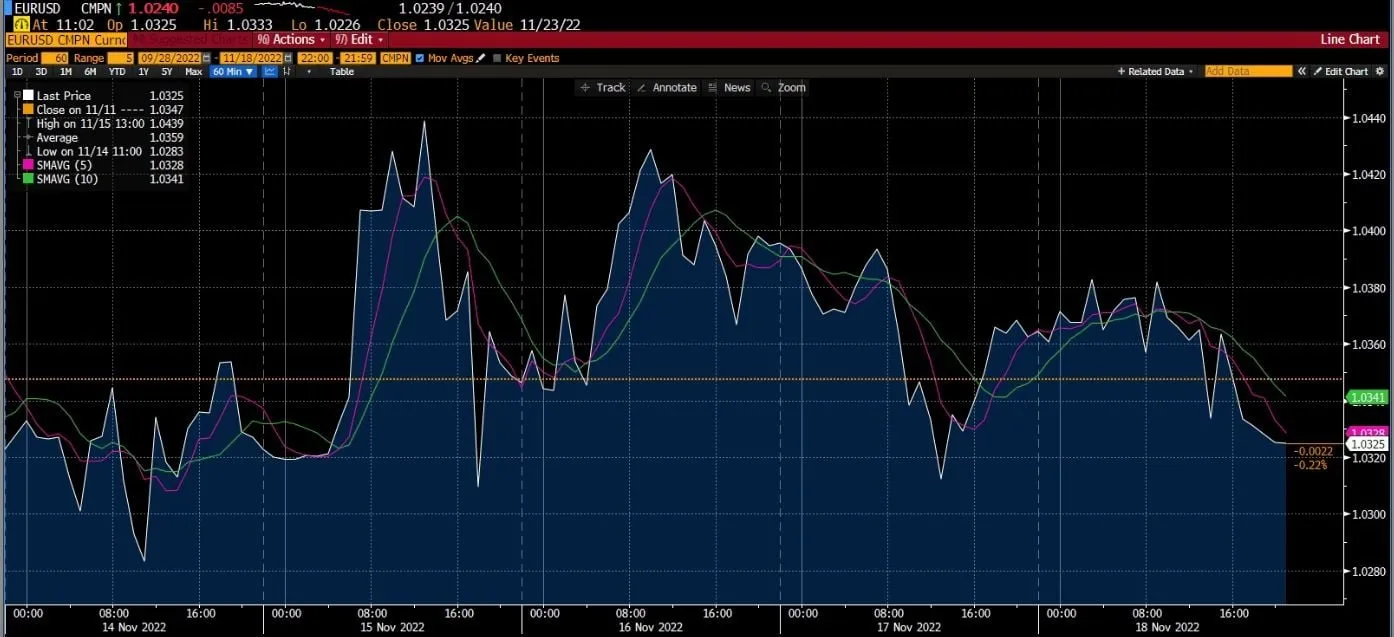
Last week, EUR/USD fell back after showing signs of gaining traction as indicators of global inflationary pressures continued strong. Growing tensions between Russia and the West, and worries of fresh supply-chain difficulties — which appeared to be resolved over the course of the week — also contributed to the fall of the currency pair.
Central banks are dropping signals ahead of their monetary policy meetings in mid-December. The European Central Bank (ECB) President Christine Lagarde stated that it will continue to raise rates, adding that it may need to restrict economic activity to tame inflation. Meanwhile, the US Federal Reserve took an aggressive stance much earlier than the ECB and is moving closer to restrictive rates, which are expected to bring inflation even lower.
On the other hand, despite a lack of bullish impetus from the much-anticipated autumn budget of the United Kingdom, GBP/USD buyers remained unstoppable for the second week in a row, helping the pair maintain its upward momentum.
Thanksgiving and Black Friday will make it a holiday-shortened week, which shall include the S&P Global providing preliminary November Purchasing Managers’ Index (PMI) estimates for the European Union, the United Kingdom, and the United States. The Federal Open Market Committee (FOMC) meeting minutes will also be published this week.
Level up your trading strategy with the latest market news and trade CFDs on your Deriv X account.
Commodities
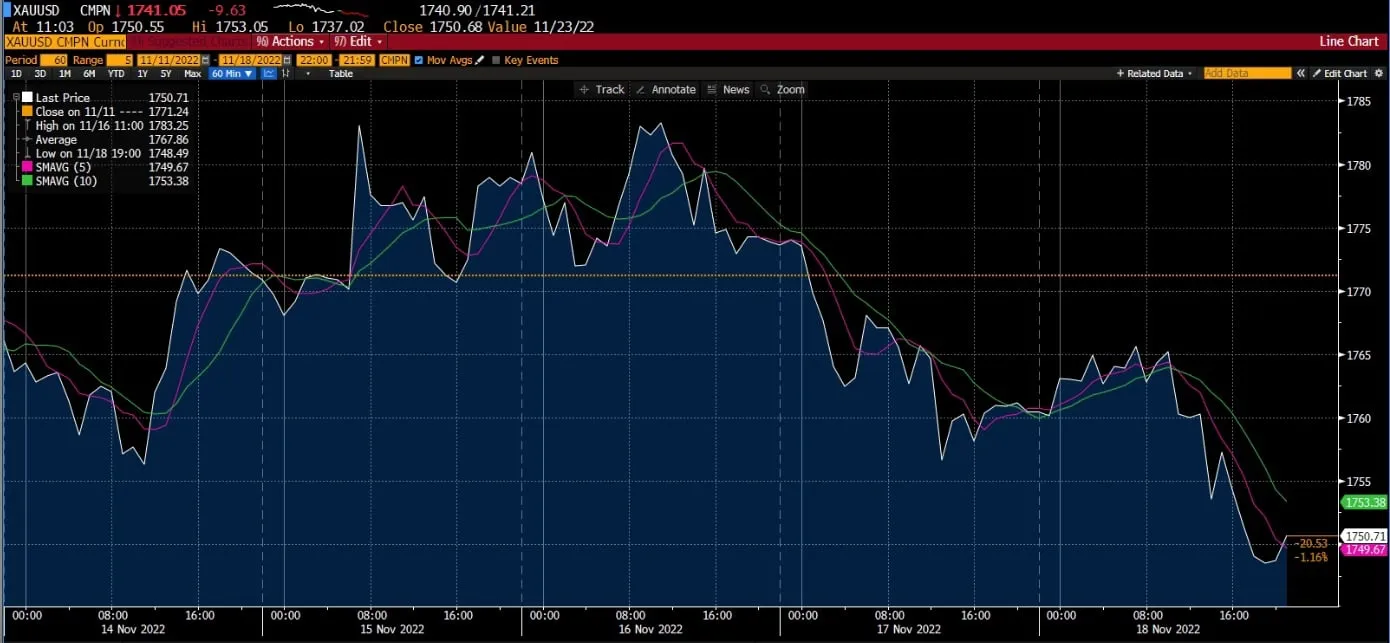
Gold began the new week under moderate negative pressure, but it was able to recoup traction before staging a downward correction near the end of the week. For the week, spot silver prices shed roughly 3.7%.
The minutes of the Federal Reserve's October policy meeting, which is scheduled for November 23, as well as Purchasing Managers’ Index (PMI) surveys might have an impact on the US dollar's (USD) valuation and movement this week.
According to the Federal Reserve’s latest policy statement, policymakers will make decisions regarding rate hikes based on "cumulative tightening, policy lags, and economic and financial developments". While his comment led some to expect a less aggressive Fed policy tightening moving forward, FOMC Chairman Jerome Powell pointed out that the central bank is focused on achieving the terminal rate and he expected it to be revised higher.
During the week, oil prices also dropped as concerns over weakening Chinese fuel demand outweighed worries that tighter EU sanctions on Russian crude exports (happening next month) could result in lower supply.
Cryptocurrencies
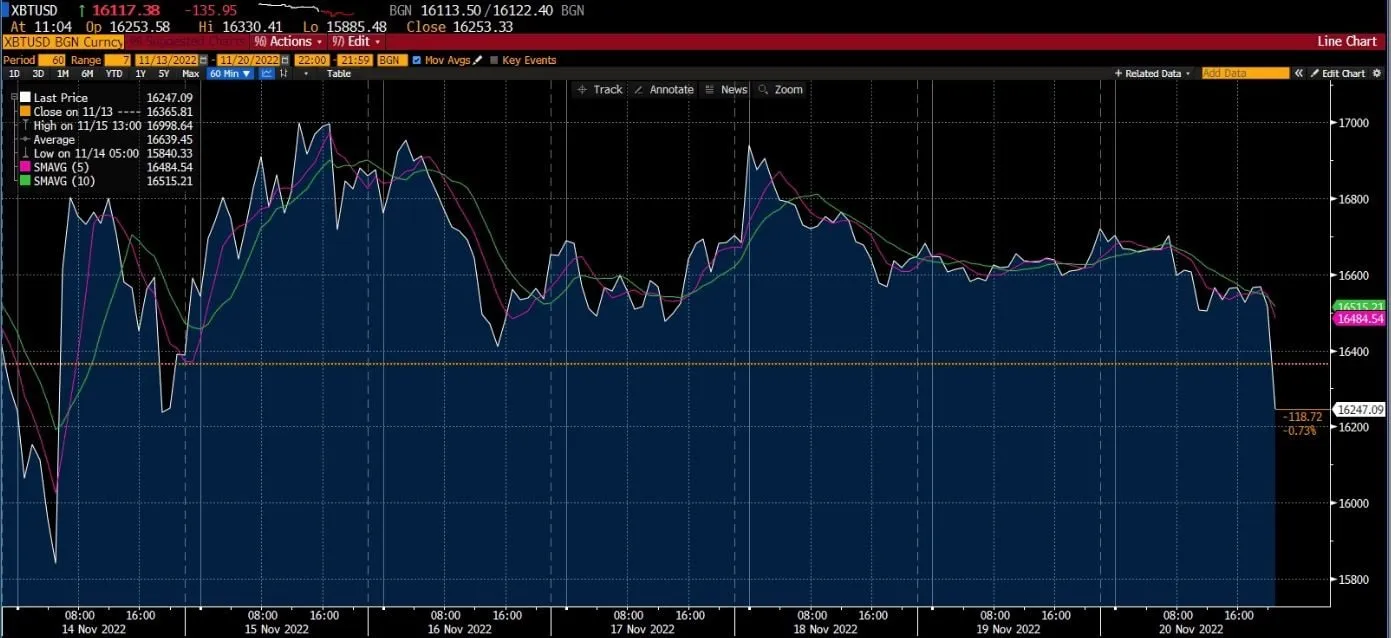
Cryptocurrencies have taken a massive hit following the catastrophic meltdown at FTX — which was one of the largest crypto exchanges before its unraveling — last week, thereby marking November 2022 as one of the worst months in the cryptocurrency history. The global crypto market cap now stands under USD 800 billion.
After hitting an all-time peak of around USD 69,000 nearly a year ago, Bitcoin, the world's leading cryptocurrency, is now nearly 75% down from its record high. It was trading at USD 16,252.50 at the time of writing.
Ethereum, on the other hand, is currently trading below USD 1,150, registering a fall of around 8% over the past week.
A majority of cryptocurrency investors appear to have lost faith in exchanges and centralised platforms due to the implosion at FTX. Massive outflows from these platforms show the evident loss of trust, with over USD 3.7 billion worth of Bitcoin being withdrawn from exchanges along with other digital currencies.
In an effort to reduce the negative impact of FTX’s collapse, Binance — the world’s largest cryptocurrency exchange — is setting up a fund to help potentially strong projects experiencing liquidity challenges.
Take advantage of market opportunities by sharpening your trading strategy and trading the financial markets with options and multipliers on Deriv Trader.
US stock markets

*Net change and net change (%) are based on the weekly closing price change from Friday to Friday.
Most of the major indices lost a portion of the strong gains they recorded last week — when they posted their best day since 2020 — and closed modestly lower.
The S&P 500 dropped 0.69% during the course of the week whereas Nasdaq shed 1.18%, owing to the Fed’s statements that indicated further aggressive policy tightening. The Dow Jones Industrial Average remained relatively flat for the week.
This week, the markets will look to rebound from last week’s losses and it could be fueled by the outcome of the Fed’s November policy-setting meeting. Furthermore, a report from the central bank’s meeting earlier this month is set for release on Wednesday. It could give direction to the markets.
Additionally, the third-quarter earnings head into the final stages as the earnings calendar for the coming week looks sparse.
Traders must keep in mind that the holiday season starts this week and US stock markets will be closed Thursday, 24 November 2022, due to the Thanksgiving holiday. Furthermore, trading will end early on 25 November 2022 on account of Black Friday as markets shut at 1pm E.T.
Now that you’re up-to-date on how the financial markets performed last week, you can improve your strategy and trade CFDs on Deriv MT5.

Market news – Week 3, November 2022
The implosion at FTX — the cryptocurrency exchange once valued at USD 32 billion — sent ripples across the cryptocurrencies market, resulting in huge crashes for most digital coins. However, it was not all gloom and doom in the financial markets as Dow Jones, S&P, and the Nasdaq posted their best day since 2020.
The implosion at FTX — the cryptocurrency exchange once valued at USD 32 billion — sent ripples across the cryptocurrencies market, resulting in huge crashes for most digital coins. However, it was not all gloom and doom in the financial markets as Dow Jones, S&P, and the Nasdaq posted their best day since 2020.
Forex
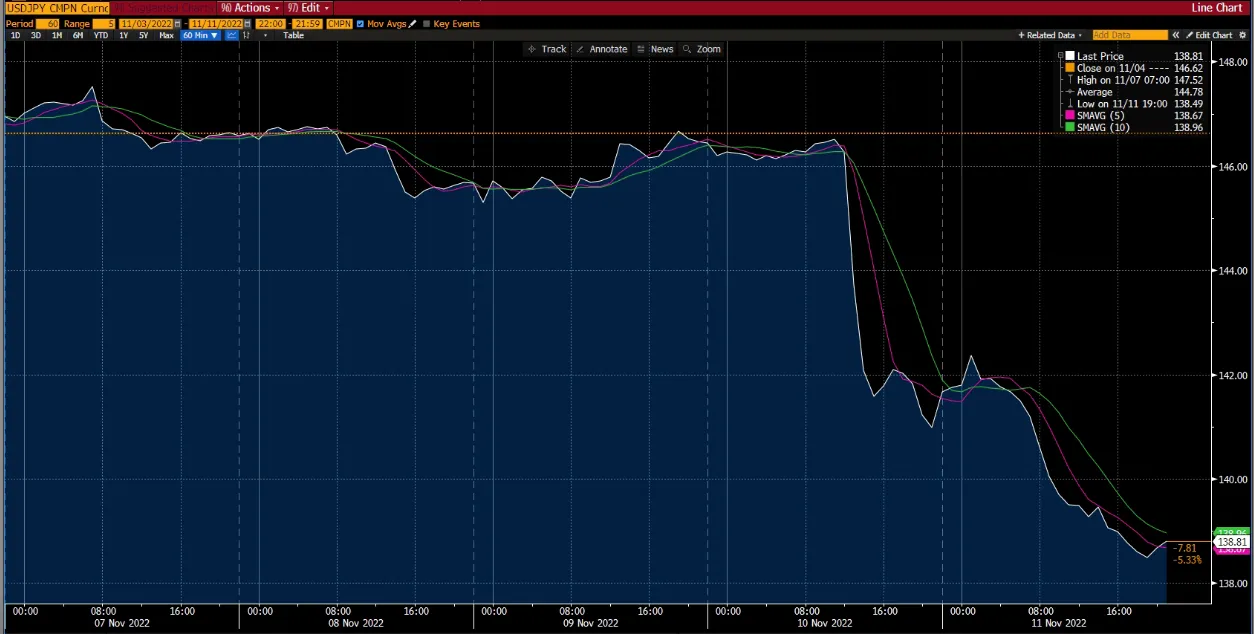
The EUR/USD pair surged above parity and reached a new monthly high after the lower-than-expected US Consumer Price Index (CPI) data, extending the pair’s positive momentum ahead of the weekly close. As a result, the possibility of the US Federal Reserve becoming less hawkish has grown after four consecutive 75 bps hikes in the federal funds rate.
As the dollar repositioned after Thursday's softer CPI print, the GBP/USD pair posted a phenomenal week. A weaker dollar, not a stronger pound, has driven the recent advance. Meanwhile, USD/JPY remains under pressure at the start of this week.
The Eurozone will issue a preliminary estimate of its Q3 gross domestic product (GDP), while the United States will post October retail sales data. The United Kingdom's data drought will end this week, with the release of high-tier CPI and employment figures. The primary event risk, however, will be the UK Prime Minister Rishi Sunak's fiscal statement on Thursday.
In Asia, the Japanese data week is going to be big. This week's highlights include GDP and national CPI reports. With market reactions to the US CPI and its implications for the Bank of Japan’s (BoJ) approach to monetary policy on the horizon, the inflation print will be especially important.
Level up your trading strategy with the latest market news and trade CFDs on your Deriv X account.
Commodities
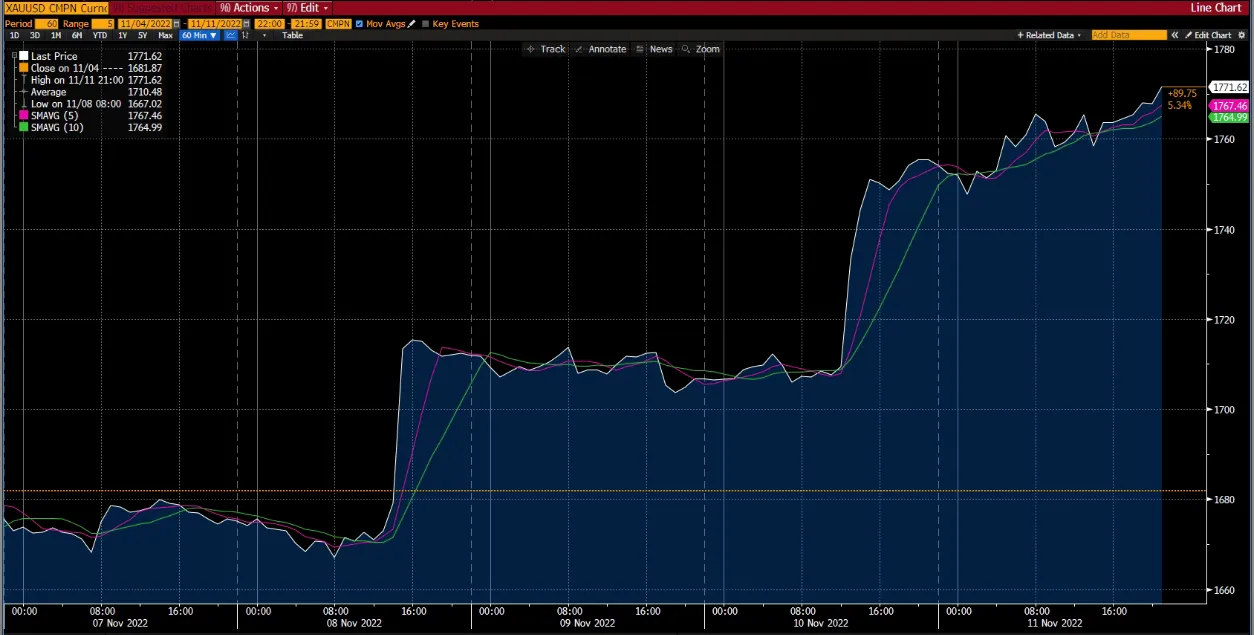
A weaker USD and falling US yields boosted gold prices. As reported by the Bureau of Labor Statistics, the annual Consumer Price Index in the US decreased to 7.7% in October from 8.2% in September. The dollar came under heavy selling pressure as a result of the lower-than-expected CPI data.
Participants will pay particular attention to Fed remarks and the general risk sentiment. If global share indices maintain their strong pace this week, XAU/USD might benefit from the weakening of the US dollar.
Oil prices rose on Friday but fell for the week after China, the world's top oil importer, lifted some Covid-19 restrictions that were imposed after fresh outbreaks of the disease. The larger-than-expected build-up in US crude stocks also contributed to the fall in oil prices.
According to the US Energy Information Administration, commercial crude oil stocks in the United States climbed by 3.9 million barrels in the week ending 4 November, reaching its highest level since July 2021.
Cryptocurrencies
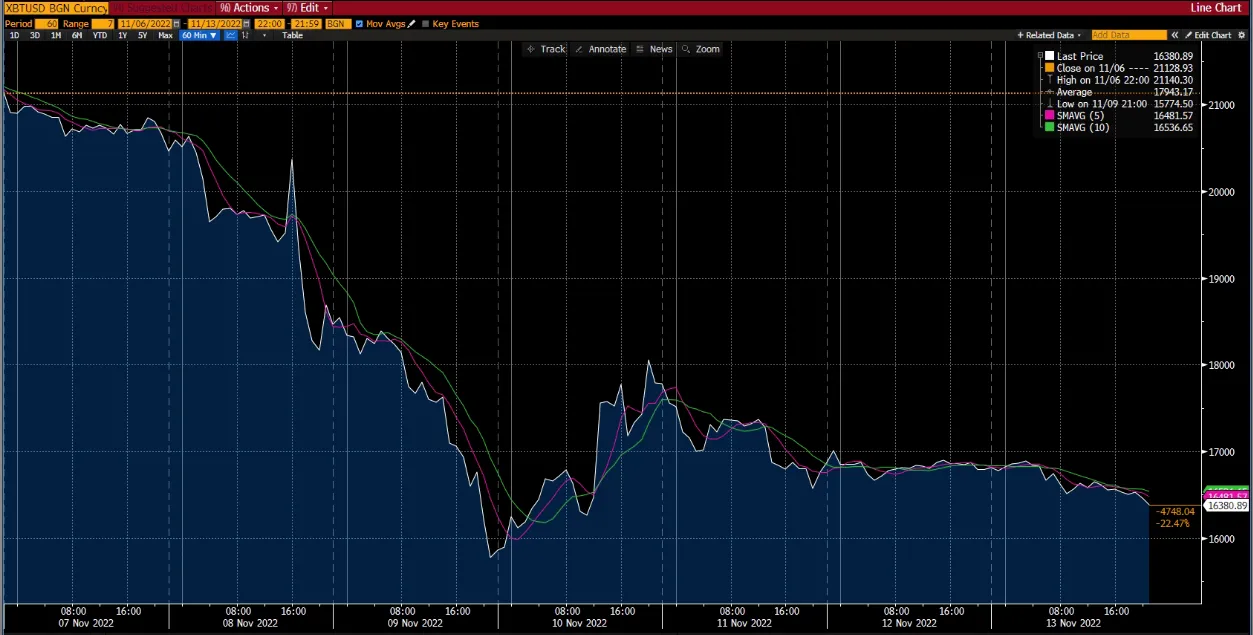
The cryptocurrency market faced a tumultuous week after the implosion at FTX, one of the largest players in the industry. The cryptocurrency exchange, which had over a million registered users, went from a USD 32 billion valuation to bankruptcy in a span of a few days as liquidity dried up and customers fled over fears of insufficient capital. BlockFi, a crypto lending platform that Sam Bankman-Fried, the CEO of FTX, had helped finance, suspended its operations after the fiasco. At the start of this week, the global market cap of cryptocurrencies was approximately USD 840 billion. Bitcoin, the world’s largest cryptocurrency plunged from USD 20,591 to a low of USD 15,757 during the week and is currently trading at USD 16,704 at the time of writing. Ethereum isn’t faring much better either. The world’s second most valuable cryptocurrency is trading at $1,253, having sunk over 20% over the past week.This event has not just destroyed confidence in the cryptocurrency industry, but it will potentially encourage regulators around the world to establish stricter frameworks.
Take advantage of market opportunities by sharpening your trading strategy and trading the financial markets with options and multipliers on DTrader.
US stock markets
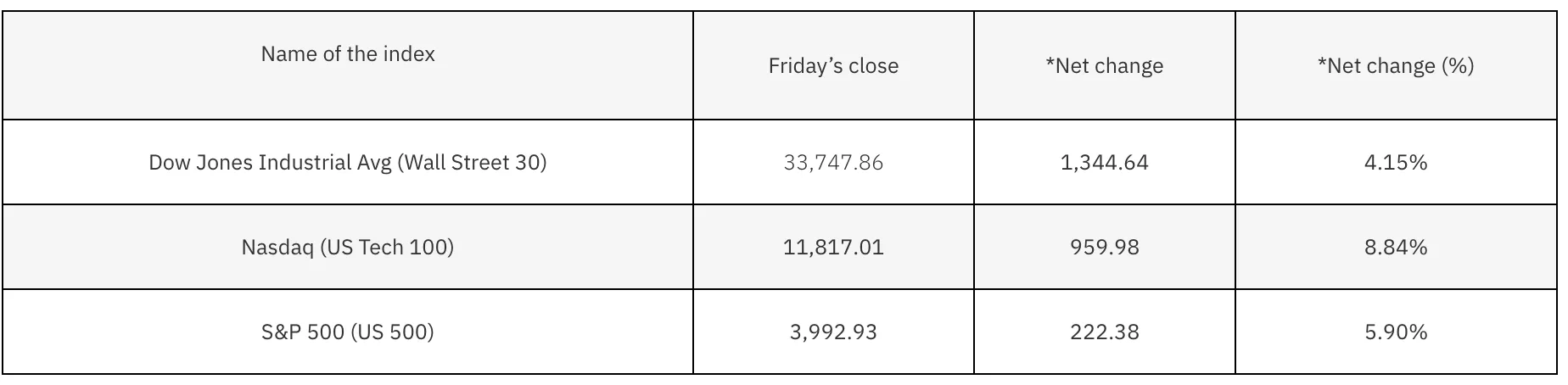
*Net change and net change (%) are based on the weekly closing price change from Friday to Friday.
The stock market saw some respite as investors welcomed the lighter-than-expected inflation numbers.
On Thursday, 10 November 2022, the 3 major US indices posted their best day since 2020. The Dow Jones index climbed over 3.7%, S&P rallied 5.54%, and the Nasdaq rose a whopping 7.49%, all owing to the inflation data released last week.
Going forward, investors hope that the Fed continues to throttle back the interest rate hikes and the monetary policy shifts. However, these hopes will soon be put to the test as the retail sector unveils its financial reports.
Retail giants such as Walmart sit on top of a lengthy list of companies expected to release their earning numbers this week, which would likely impact the stock market trends.
Additionally, the US Department of Commerce will publish its monthly retail sales report for October this week. Economists expect the report will have an effect on the stock market as the spending remained relatively flat last month.
Now that you’re up-to-date on how the financial markets performed last week, you can improve your strategy and trade CFDs on Deriv MT5.
Sorry, we couldn’t find any results matching .
Search tips:
- Check your spelling and try again
- Try another keyword