
Results for
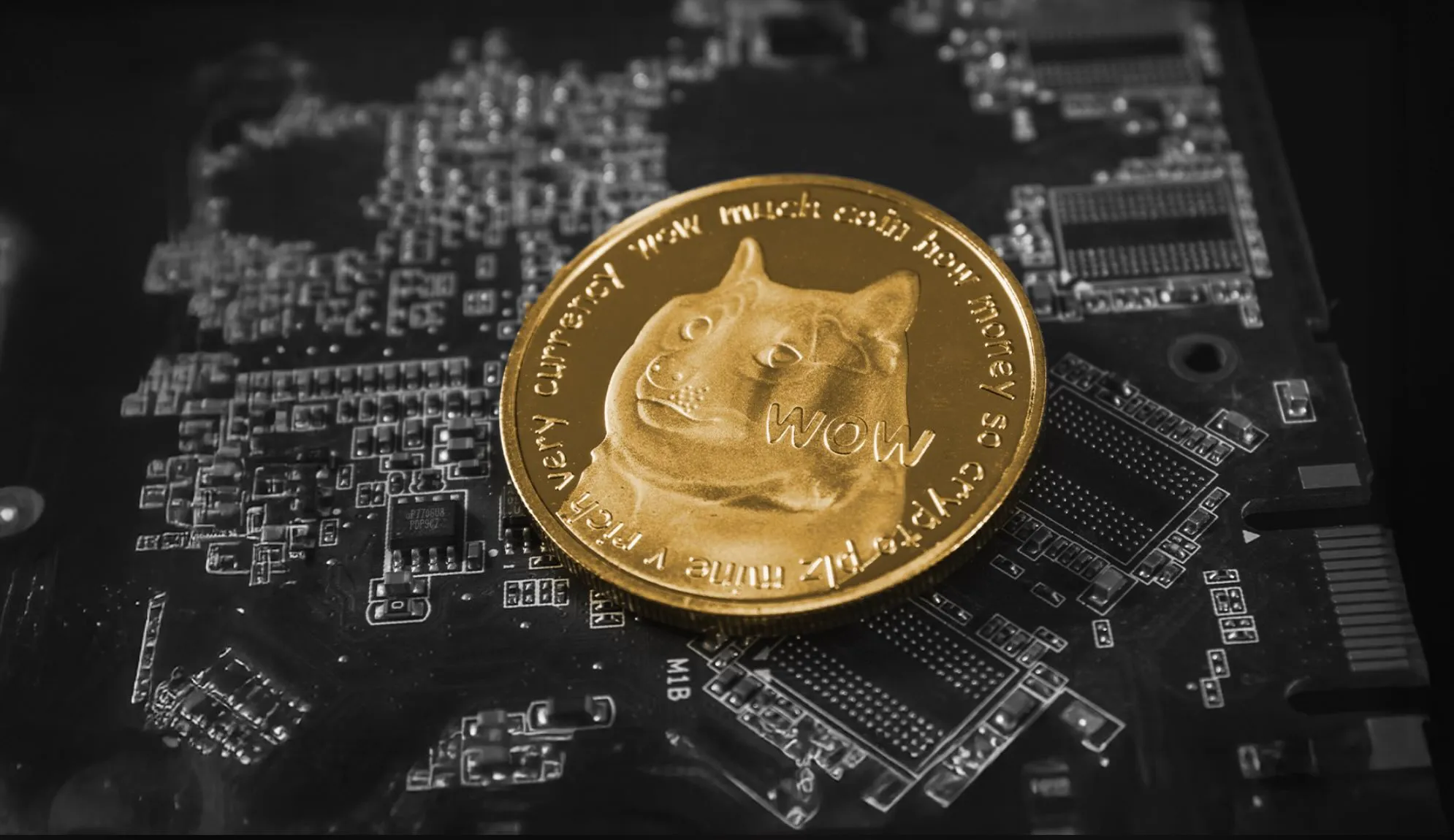
Dogecoin’s future at risk? The rise of utility-driven cryptocurrencies
For years, Dogecoin (DOGE) has been a staple of the cryptocurrency market, fueled by internet culture, celebrity endorsements, and meme-driven hype.
For years, Dogecoin (DOGE) has been a staple of the cryptocurrency market, fueled by internet culture, celebrity endorsements, and meme-driven hype. However, as the crypto landscape evolves, investors are beginning to prioritize real-world utility over speculative assets.
This shift raises a critical question: Is Dogecoin done, or can it adapt to the new era of blockchain innovation?
The shift towards utility cryptocurrencies
The early days of cryptocurrency were characterized by speculative trading and community-driven projects, with Dogecoin thriving as the original meme coin. However, the market is maturing, and investors are now focusing on projects that offer tangible value.
Utility-driven cryptocurrencies like Stellar (XLM) and Lightchain AI (LCAI) are gaining momentum due to their real-world applications. Stellar provides a fast and cost-effective cross-border payment system, making it a preferred choice for financial institutions. Lightchain AI, on the other hand, is leveraging artificial intelligence to improve blockchain efficiency and scalability, attracting institutional and retail investors alike.
Dogecoin’s challenges
Despite its loyal community and periodic price rallies, Dogecoin faces significant hurdles in a utility-driven market:
- Lack of fundamental use cases: Unlike Stellar and Lightchain AI, Dogecoin does not have a clear utility beyond being a tipping and transactional token.
- Inflationary supply: Unlike Bitcoin’s fixed supply, Dogecoin continuously adds new coins into circulation, making it difficult to maintain scarcity and long-term value growth.
- Dependence on social hype: DOGE’s price has historically been influenced by social media trends and endorsements from figures like Elon Musk. However, this model is proving unsustainable in an evolving crypto ecosystem.
The rise of Stellar (XLM) and Lightchain AI (LCAI)
As Dogecoin struggles with utility concerns, other cryptocurrencies are capitalizing on the market shift.
- Stellar (XLM) is a decentralized payment network designed to facilitate fast, low-cost international transactions. Stellar’s partnerships with global payment providers position it as a major player in financial inclusion.
- Lightchain AI (LCAI) integrates artificial intelligence into blockchain technology to enhance scalability, efficiency, and automation, making it a highly attractive investment for the future of decentralized systems.
Can Dogecoin adapt?
For Dogecoin to remain relevant, it needs to undergo significant upgrades that enhance its functionality. Potential improvements could include smart contract capabilities, partnerships with mainstream payment networks, or integration with decentralized finance (DeFi) ecosystems. Without innovation, DOGE risks fading into obscurity as utility-driven cryptocurrencies take center stage.
The crypto market is evolving, and projects with real-world applications are becoming the primary focus for investors. While Dogecoin remains a cultural icon, its future depends on its ability to move beyond hype and adopt meaningful technological advancements. As utility-driven cryptos like Stellar and Lightchain AI gain traction, Dogecoin must decide-adapt or become a relic of the past.
Technical outlook: Will the meme coin rebound?
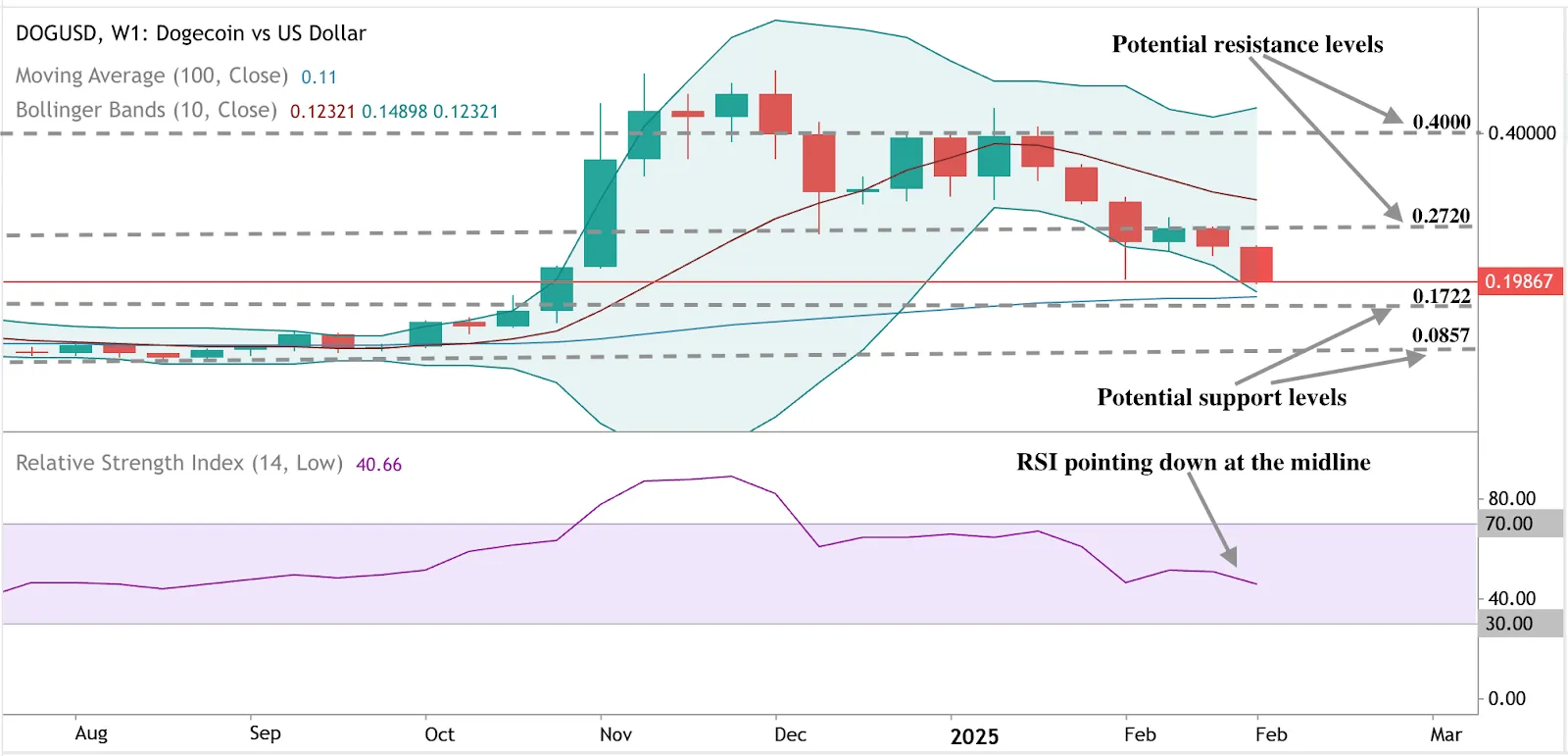
At the time of writing, Dogecoin is trending down as crypto markets see blood red on Tuesday. Though there is a clear bearish bias, prices are touching the lower bollinger band-hinting at oversold conditions. Key levels to watch on the downside are $0.1722 and $0.0857, and on the upside, $0.2720 and $0.4000.

Why Bitcoin's next surge could be just around the corner
Bitcoin's bull market shows resilience with institutional backing. Analysis reveals why the next surge might be closer than you think.
As whispers of a looming dip begin to stir panic among investors, the crypto community stands on edge. Will Bitcoin defy the odds and maintain its bullish stride, or are we on the brink of a market shift? The answers may surprise you.
Bitcoin's resiliency: A 2025 perspective
Despite potential price drops, Bitcoin's bull market appears unshaken. CryptoQuant's CEO, Ki Young Ju, suggests that even a 30% decline would merely mirror historical patterns rather than signal an end to the rally.
Key takeaway: Bitcoin's potential dip to $77,000 still keeps it within a bullish trajectory, maintaining levels above previous all-time highs.
Institutional moves: A new era for Bitcoin
The recent approval of spot Bitcoin ETFs and sovereign interest marks a pivotal shift in the crypto landscape. With institutional investors like Abu Dhabi’s Mubadala fund making significant Bitcoin investments, the stage is set for further market growth.
Key takeaway: Institutional adoption and regulatory developments are key drivers in Bitcoin's bullish narrative, highlighting its emerging role as a gold competitor.
Market volatility: Navigating the ups and downs
Reports of Bitcoin's multi-month low volatility raise concerns of liquidation cascades. However, traders are advised to stay vigilant as market conditions could shift rapidly.
Key takeaway: Despite current volatility, historical patterns suggest potential for a significant market upswing in the near future.
How do you think increased institutional adoption will shape Bitcoin's future?

Silver on the brink: Is a breakout imminent or will prices falter?
Silver price approaches $32.53 resistance level. Will it break through or retreat? Analysis of key factors driving the precious metal's momentum.
Imagine standing at the edge of a financial frontier, where silver is poised to leap—or plummet. The stakes are high as silver prices edge toward a critical resistance point. Will this precious metal follow gold’s meteoric rise, or will we witness a dramatic reversal?
The current silver landscape
Silver (XAG/USD) prices have been gaining momentum, mirroring gold’s upward trajectory. Silver is trading at $32.51 per troy ounce on Feb 19, inching closer to a pivotal resistance level at $32.53. Investors are watching closely—will silver break through or retreat?
- #1: Silver has increased by 12.50% since the beginning of the year, reflecting strong market interest.
The Silver/Gold ratio: A symbiotic relationship
Silver often moves with gold, acting as a secondary safe-haven asset. Silver’s potential to breach new levels becomes enticing as gold hovers near record highs.
- #2: The Gold/Silver ratio currently stands at 89.60, suggesting a comparative valuation between the two metals.
Industrial demand and economic impacts
Silver’s role in electronics and solar energy industries means its price is also influenced by industrial demand. Economic fluctuations in major markets like the US, China, and India play a significant role in determining silver’s price trajectory.
What lies ahead: Breakout or breakdown in silver resistance levels?
Traders are eyeing the $32.53 resistance level with anticipation. A breakthrough could see silver accelerating toward $33.39, opening new profit avenues. However, failing to surpass this threshold may trigger a pullback to $31.81—a crucial support level.
With gold's continued rally, is silver undervalued, or is this the calm before the storm?

Crude oil prices drop: Can prices hold above $70 amid Trump's pro-drilling agenda?
Oil prices are under pressure, slipping below key levels as bearish sentiment dominates amid President Trump's aggressive pro-drilling policies.
Oil prices are under pressure, slipping below key levels as bearish sentiment dominates amid President Trump's aggressive pro-drilling policies. Brent crude fell to $79.49 per barrel, while WTI dropped to $76.68, sparking concerns about the market’s ability to sustain prices above $70.
President Trump’s moves to expand U.S. drilling, including lifting restrictions on Arctic and coastal areas, have stoked fears of oversupply. However, U.S. oil drilling remains subdued, with rig counts near post-pandemic lows as producers prioritize shareholder returns over production growth. Low real oil prices and rising costs further dampen the incentive to ramp up output, even as demand uncertainties loom.
Global crude oil dynamics and structural challenges
The market faces additional pressure from OPEC+ supply discipline and sanctions on Russian oil, which have displaced barrels but failed to significantly tighten supply. Meanwhile, U.S. shale fields, particularly in the Permian Basin, are showing signs of maturity, limiting long-term production growth. Efficiency gains have supported output, but geological constraints and capital discipline among producers pose headwinds.
Crude oil price forecast
With oil hovering precariously above $70, market watchers question whether prices can hold. While geopolitical disruptions and seasonal demand offer some support, the combination of Trump’s pro-drilling policies, restrained U.S. output growth, and global market fragility raises doubts about sustained price strength. Resistance levels are seen near $72 and $74, while support may emerge at $69 and $68.
Read the full article here: https://www.finextra.com/blogposting/27685/bearish-winds-for-oil-can-prices-hold-above-70-amid-trumps-pro-drilling-agenda

Was the Nvidia sell-off an overreaction?
The release of DeepSeek’s R1 AI model triggered a $1 trillion tech stock sell-off, with Nvidia facing significant losses.
The release of DeepSeek’s R1 AI model triggered a $1 trillion tech stock sell-off, with Nvidia facing significant losses. The Chinese startup claims to have built a rival AI model for just $5.6 million, raising concerns about AI infrastructure spending and Nvidia’s long-term demand. But is the fear justified?
DeepSeek’s efficiency claims under scrutiny
DeepSeek asserts that its R1 model was trained at a fraction of the cost incurred by U.S. giants like OpenAI. However, industry experts question whether the reported figures exclude key costs such as pre-training, infrastructure, and engineering salaries-potentially pushing real expenses closer to $500 million. Additionally, speculation surrounds DeepSeek’s access to restricted Nvidia H100 chips, casting doubt on its cost-efficiency narrative.
Future of Nvidia stock: Trouble or growth opportunity?
Despite the initial sell-off, some analysts believe the market reaction is exaggerated. The Jevons Paradox suggests that as AI models become more efficient, overall demand for computing power may increase. Tech giants like OpenAI and Meta continue to invest heavily in AI infrastructure, with Meta planning $65 billion in AI spending for 2025.
Technical outlook: Key levels to watch
Nvidia has begun recovering from its early-week slump, though prices remain below key moving averages. A potential bounce could face resistance at $140.00 and $148.80, while support lies around $121.80. With AI demand still surging, Nvidia’s long-term growth story may not be over yet.
Read the full article here: https://www.finextra.com/blogposting/27738/deepseek-disruption-is-the-nvidia-sell-off-an-overreaction

Gold rallies above $2,700: Rate cuts ahead?
Gold prices have surged past $2,700, marking a third consecutive day of gains, fueled by signs of cooling U.S. inflation.
Gold prices have surged past $2,700, marking a third consecutive day of gains, fueled by signs of cooling U.S. inflation. As inflation eases, investors speculate that the Federal Reserve may slow its rate hikes, potentially leading to rate cuts that would benefit gold.
Softer inflation and rate outlook
The December U.S. CPI showed a slight uptick in inflation but a slower-than-expected rise in core CPI, fueling optimism that the Fed may reduce its aggressive tightening. Investors now anticipate a nearly 98% chance the Fed will hold rates steady in January, which has boosted gold’s appeal.

Gold as a safe haven asset
Gold thrives in uncertain economic times, especially when inflation cools and rates drop. As U.S. Treasury yields decline, gold becomes more attractive due to lower opportunity costs. Despite the Fed's cautious tone, markets expect inflation to ease further, raising the likelihood of rate cuts and supporting gold's rise.
Outlook for gold
With gold hovering above $2,700, traders are watching the Fed's next move. Technical indicators suggest that gold may be approaching overbought conditions, but the ongoing uncertainty and potential for rate cuts could support continued gains. Resistance is seen around $2,711 and $2,720, while support lies at $2,668 and $2,657.
Read the full article here: https://www.fxstreet.com/analysis/gold-rallies-above-2-700-is-softer-inflation-setting-the-stage-for-rate-cuts-202501170917

Gold vs. Bitcoin: Which safe haven will prevail in 2025?
Bitcoin's meteoric march toward the $100,000 mark faces unexpected resistance, while gold is quietly gaining ground.
Bitcoin's meteoric march toward the $100,000 mark faces unexpected resistance, while gold is quietly gaining ground. Is the digital darling losing its allure, or are we witnessing a strategic pivot by major players? Here’s a deep dive into the current dynamics shaping this intriguing financial landscape.
Gold's steady ascent: A testament to stability
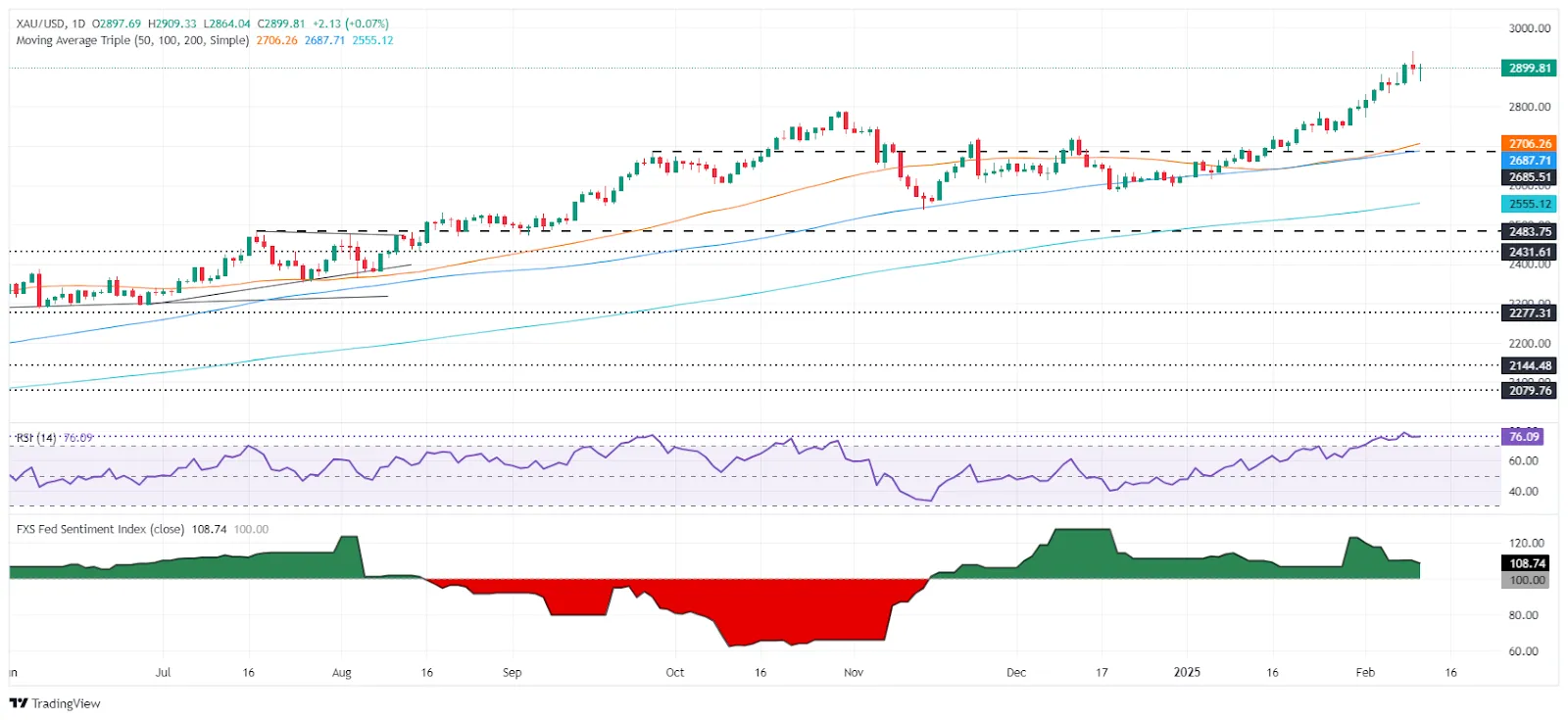
Gold continues to shine in early 2025, capitalising on macroeconomic uncertainties and evolving investor sentiment. The precious metal has not only held its ground but also demonstrated significant growth, with a 44% increase in the past year and a robust 10% rise in the first two weeks of 2025. Several factors contribute to this strength:
- Inflation concerns: The US Consumer Price Index (CPI) reported a 3% increase in January, fueling inflation fears.
- Geopolitical tensions: The potential for reciprocal tariffs by President Trump has heightened global trade anxieties.
- Central bank purchases: For the third consecutive year, central banks have accumulated over 1,000 tons of gold.
Bitcoin's Volatile journey towards $100,000
Bitcoin's price surge toward $100,000 has invigorated analysis regarding its trajectory. However, the cryptocurrency faces formidable challenges:
- Profit-taking behavior: Investors are realizing gains, limiting further upward movement.
- Declining trading volume: A 12% drop to $33.3 billion reflects waning speculative interest.
- Institutional shift: Notable traders, including Peter Brandt, observe institutional investors reallocating from Bitcoin to gold.
The VIX Factor: Market volatility and investor sentiment
The Volatility Index (VIX) has reached historic lows, indicating reduced stock market turbulence. This stability often leads investors to seek refuge in less volatile assets, with gold benefiting as a preferred choice over Bitcoin. Historically, as VIX levels fall, the appetite for risk diminishes, favouring traditional stores of value.
Key levels and market projections
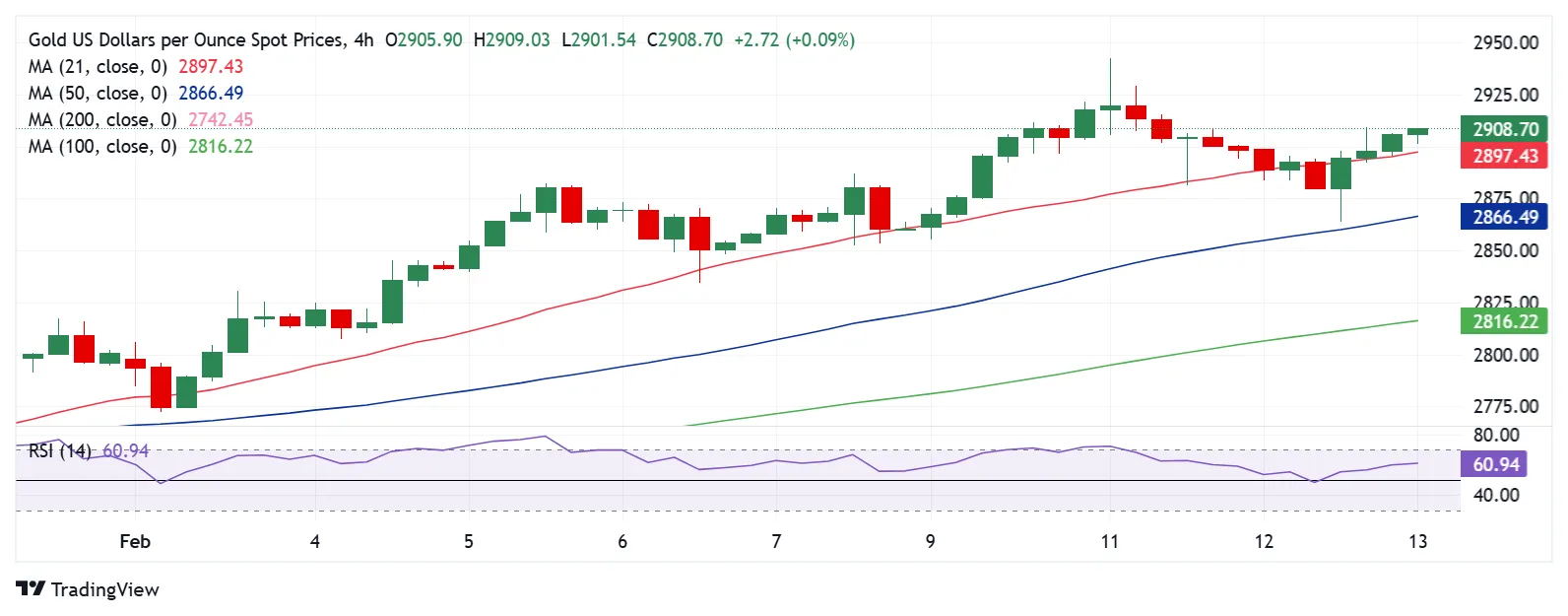
For gold, crucial support is identified at $2,864, with resistance levels at $2,909 and $2,943. Should gold breach the $2,943 high, it may target $2,961 and beyond. Meanwhile, Bitcoin's journey remains fraught with resistance, as it struggles against market forces despite a strong open interest of $60 billion.
With global markets in flux, traders face a pivotal decision: to lean on the historical reliability of gold or to bet on the transformative potential of Bitcoin. As both assets evolve, the coming months will be telling.
- Gold's bullish trend: With support established at $2,864, traders should watch for potential upside targets at $2,961 and $2,982.
- Bitcoin's resilience: Despite current hurdles, the digital currency's open interest remains strong at $60 billion.
- Diversification strategies: As the market evolves, traders might consider balancing their portfolios with both digital and traditional safe-haven assets.
Which side are you on in this clash of safe havens?
Sources:
- FX Empire: Gold Price Forecast
- FXStreet: Technical Analysis and Market Commentary
- X: Market Analysis on Bitcoin and Gold

What’s happening with Apple — and why it matters to you
Trump's 10% China tariff hits Apple shares. Learn how the tech giant's global strategy and 2.35B device base could weather this storm.
Did you know that one unexpected announcement can make a tech titan’s shares tumble? That happened when President Donald Trump announced a new 10% tariff on Chinese imports this week, causing Apple’s shares to drop by over 3%.
But what does this mean for Apple, a company that relies heavily on China for its product assembly, and more importantly, what does it mean for investors like you?
Apple’s battle with tariff challenges
Few know that Apple has historically dodged some financial hits from tariffs by negotiating waivers and shifting parts of its production to countries like India and Vietnam.
Despite these measures, the latest tariff announcement places Apple in a precarious position like other tech giants such as Tesla. With the tariffs set to take effect soon, Apple remains silent, spurring speculation about its next move.
Analyst Barton Crockett from Rosenblatt speculates that Apple might pass these increased costs onto consumers, which could spark further debate.
Apple’s current financial status
In its recent financial disclosures, Apple reported a 4% revenue growth in the December quarter, with earnings reaching $124 billion. However, the tech giant softened expectations for the upcoming quarter, predicting "low to mid-single digits" growth.
Notably, sales in Greater China plummeted by 11%, underscoring the region’s tough economic climate. The tariff's impact on Apple’s profits may depend significantly on how much of its US demand can be satisfied by sources outside China.
On a recent earnings call, CEO Tim Cook announced that Apple now has a record 2.35 billion active devices worldwide. That’s up +550 million since 2022, and +150m since 2024.
If Apple can produce 80% of US devices elsewhere without hiking prices, it could mitigate the negative effects on annual earnings.
Strategic moves: What’s Apple going to do next?
As the tariff challenges loom large, Apple might ramp up production in other countries. Wamsi Mohan from Bank of America Securities points out that increasing output in nations like India could be a smart strategy.
Apple’s remarkable resilience and adaptability continue to make it a focal point for investors. As Mohan puts it, Apple is designed for “earnings resiliency”, showcasing its strategic foresight and financial strength.
What lies ahead for Apple?
As all eyes remain fixed on Apple, its ability to deftly navigate these tariff challenges will be closely watched. With a massive user base and continuous efforts to explore global production alternatives, Apple remains a formidable force in tech.
This unfolding scenario tests Apple's strategic agility and could have broader repercussions across the market. How will Apple adapt, and what lessons might it offer the tech world? Only time will tell.

Google’s $75 Billion AI Gamble: Inside the Most Expensive Tech Investment of 2025
See how this massive tech gamble impacts global markets and what it means for investors.
Picture this: A single company betting $75 billion on the future of artificial intelligence. That’s more than the GDP of 100+ countries combined. Google’s parent company Alphabet just dropped this bombshell, sending shockwaves through Silicon Valley. But what’s really behind this massive power play?
Breaking down the billions
Let's cut through the noise and look at what's really happening:
• $75B planned investment for 2025
• 132% increase from 2023's $32.3B spend
• $96.5B in current revenue (up 12%)
• Cloud division alone hitting $12B (10% growth)
The numbers are staggering, but they tell only part of the story.
Why this changes everything
Remember when AI was just a buzzword? Those days are gone. Google's unprecedented investment signals a fundamental shift in how tech giants view the future. While not every dollar will directly fund AI development, this move reveals where the smart money is heading.
The hidden competition
But Google isn’t playing solitaire. A fascinating subplot is emerging:
- Microsoft and Meta are matching billions in AI investments
- Chinese startup DeepSeek claims similar results at a fraction of the cost
- Nvidia’s hardware becoming the new gold standard
What’s really at stake?
Beyond the headlines and huge numbers lies a crucial reality: this isn't just about building better chatbots. Google's betting big on a future where AI transforms everything from search to cloud computing. Their recent partnership with Nvidia's Blackwell platform hints at capabilities we’ve only dreamed about.
The ripple effect
This massive investment isn't happening in a vacuum. It's creating waves across:
• Hardware manufacturers (especially Nvidia)
• Cloud computing services
• Enterprise AI solutions
• Consumer tech products
What this means for you
Whether you're a tech enthusiast, investor, or just someone who uses Google daily, this shift will impact your life. The real question isn't if but how soon.
And as this AI arms race accelerates, we’re witnessing history. But here’s the million-dollar question: Is Google making a brilliant move, or is this the tech world’s most expensive gamble?
Sorry, we couldn’t find any results matching .
Search tips:
- Check your spelling and try again
- Try another keyword