
Results for

AI stocks fuel momentum as the stock market rallies 50% past bonds
The US stock market is now 50% larger than the bond market, a gap we haven’t seen since the 1970s. And quietly sitting near the centre of it all? Alphabet and Tesla.
The US stock market is now 50% larger than the bond market, a gap we haven’t seen since the 1970s. And quietly sitting near the centre of it all? Alphabet and Tesla, two familiar names navigating an AI-fuelled moment that’s reshaping the investing landscape.
This isn’t just another stock rally. It’s a story of shifting priorities: risk over safety, ambition over stability, algorithms over interest rates. Since 2020, investors have poured trillions into equities - not just chasing growth, but chasing the future, wherever AI might lead.
Alphabet, despite facing threats to its search empire, is reportedly lending its cloud infrastructure to OpenAI. Tesla, even with political drama in tow, is inching closer to launching autonomous robotaxis in Texas. Neither move guarantees dominance - but both reflect how AI is being woven into strategies that could redefine what these companies are, and what the market values next.
US market out of balance
Let’s zoom out.
The total value of US stocks has surged by $38 trillion since 2020, up 69%. Bonds, traditionally the steady hand of the financial world, are up only $17.8 trillion over the same period, a 40% gain. That imbalance has pushed the bond market down to just 68% of the size of the stock market - the lowest ratio since the disco era.

This matters because when stocks stretch too far ahead of bonds, it often signals a market that’s running on momentum rather than fundamentals. We’ve seen it before. And while history doesn’t repeat, it often rhymes.
The big difference this time is the market’s latest obsession, artificial intelligence, and the companies seen as its main carriers.
Alphabet AI: The unlikely AI middleman
One of the most surprising developments this past week was the news that Alphabet may be working with OpenAI - the very company that’s eating into its search business.
According to Reuters, OpenAI has agreed to use Google Cloud’s infrastructure to help train and deploy its AI models. While the deal hasn’t been officially confirmed, the report alone lifted Alphabet’s share price by over 3% before settling slightly lower.
Why the fuss?
This is not just a tech story - it’s a strategy story. OpenAI’s ChatGPT is widely seen as a direct challenge to Google’s search dominance, with some analysts predicting it could take 30% of the search market by 2030. That’s potentially £80 billion in annual ad revenue on the line.
So what’s Alphabet doing, seemingly enabling a rival? The answer lies in scale. Training large AI models requires enormous computing power, and Google Cloud wants a piece of the action - even if it means doing business with a company aligned with Microsoft.
It’s a calculated move, but not without risks. Analysts have called it a win for Google’s cloud division, but the threat to its ad business hasn’t gone away. Alphabet’s valuation may look reasonable at 19x earnings, but that discount could reflect deeper investor uncertainty around its long-term strategy.
Tesla AI: A real-world test of AI
While Alphabet deals in servers and software, Tesla is putting AI on the road - literally.
The company is gearing up to launch its robotaxi service in Austin, Texas. Its listing as an autonomous vehicle operator is now live on the city’s Transport and Public Works website. Initial trials will include 10 - 20 vehicles, each monitored by remote teleoperators in case something goes wrong.
For all the talk of AI in chatbots and cloud APIs, Tesla’s approach is more visible - and arguably more fragile. Autonomous driving has always been a high-stakes goal, and robotaxis add another layer of complexity, both technically and politically.
The stock has been volatile - not just because of tech but also because of Elon Musk’s increasingly public clashes with Donald Trump. A spat over government spending recently wiped 15% off Tesla’s market cap in a matter of days.
Some recovery followed as Trump softened his tone, but the episode highlighted a deeper concern for investors: key person risk.
Still, Tesla’s ambitions remain intact. If early tests go well, analysts expect the robotaxi programme to expand to 20–25 cities over the next year. Whether that becomes a commercial success or a costly experiment remains to be seen, but Tesla's AI ambitions and investor sentiment are clearly intertwined.
What the rise of AI stocks means for the market
The rise of AI-linked stocks like Alphabet and Tesla is playing out against a backdrop of record market imbalance.
In normal times, bonds offer a safety net - a place for capital to hide when equities wobble. But higher interest rates and inflation concerns have made bonds less popular, and AI’s allure has only amplified the equity tilt.
That’s not to say a crash is imminent. But historically, when one side of the market becomes too dominant, as stocks are now, some kind of adjustment tends to follow. Whether that’s a rotation back into bonds or a broader market pullback depends on what comes next: real earnings or dashed expectations.
Technical insights: Tesla and Alphabet
Alphabet and Tesla are not perfect, and they’re not guaranteed winners. But they are bellwethers of this current moment - companies adapting (or doubling down) in a market increasingly shaped by AI narratives and tech optimism.
With the stock market reaching heights not seen relative to bonds in half a century, and AI optimism pouring fuel on the fire, the question isn’t just whether Alphabet and Tesla can deliver.
It’s whether this new market order - bold, unbalanced, and AI-obsessed - is built to last.
At the time of writing, Alphabet stock is showing a clear bullish bias on the daily chart. The bullish narrative is supported by the volume bars showing a tug-of-war between bears and bulls -with bulls coming out on top. Should the surge continue, bulls could have a hard time breaching the $182.00 price level. Conversely, should sellers make a decisive move, the slump could be held at the $167.00 and $149.70 price levels.

Tesla is also seeing a significant uptick after a multi-day slump as prices bounce off a support and resistance level. This bullish narrative is supported by the volume bars revealing a dominant showing by the bulls over the past few days. Should bulls remain dominant, we could see an uptick that may struggle to breach the $347 price level. If we see a price slump, sellers could be held at the $285.00 and $224.00 price levels.

Are you tracking the biggest AI stocks? You can speculate on the price trajectories of Tesla and Alphabet with a Deriv MT5 account.

Will real utility or global headlines drive crypto prices in 2025?
One tweet from a hacked president’s account sent Bitcoin soaring past $110K. Meanwhile, Chainlink quietly helped two central banks move digital money across borders. Two wildly different stories. One market.
One tweet from a hacked president’s account sent Bitcoin soaring past $110K. Meanwhile, halfway across the world, Chainlink quietly helped two central banks move digital money across borders. Two wildly different stories. One market. And the big question for 2025: Is crypto finally being driven by what it does - or still by what it says in the headlines?
The crypto headline read around the world
Let’s start with the chaos.
On a quiet Monday, the X account of Paraguayan President Santiago Peña was hijacked. The imposter post boldly claimed that Paraguay had declared Bitcoin legal tender, with a $5 million BTC reserve to back it up.

The post even dropped a wallet address urging people to “secure your stake”. Within minutes, the real government flagged it as fake. But the damage, or rather, the surge, was already done. Bitcoin jumped 4%, topping $110,000, riding a wave of algorithmic traders and retail excitement.
It was classic crypto: one wild headline and the markets lit up like a Christmas tree. And yet, no one lost money. The wallet only held $4, and the tweet was gone within the hour. But the price spike? That stuck around.
Meanwhile, Chainlink crypto news was shaking up the real world...
While Twitter (X) was faking monetary policy, Chainlink was actually enabling it.
As part of a major cross-border pilot, Chainlink’s Cross-Chain Interoperability Protocol (CCIP) was used to exchange Hong Kong’s central bank digital currency (e-HKD) for an Australian dollar stablecoin. This wasn’t a demo at a blockchain expo. It was part of a live trial sanctioned by Hong Kong’s government involving Visa, Fidelity, and ChinaAMC.
And it worked.
It’s easy to ignore these quieter moments, there’s no viral tweet, no flash rally. But they matter. This is the real infrastructure being laid beneath crypto, public blockchains linking to government-backed currencies. That’s utility, not hype.
Another bullish signal? Coinglass’s LINK long-to-short ratio just hit 1.25 - its highest in over a month. A ratio above 1 means more traders are betting on a price increase than a drop, pointing to growing market optimism.

Ripple’s Japan power move
Over in Japan, Ripple is also playing the long game. The company partnered with the Web3 Salon project, backed by JETRO, to offer up to $200,000 in grants per startup through its XRPL Japan and Korea Fund. The focus? Decentralised finance (DeFi), tokenised assets, and payments - all built on the XRP Ledger.
It’s part of Ripple’s broader $1 billion XRP commitment, aimed squarely at nurturing real-world applications. Japan may have regulatory clarity, but its startup scene faces tight structures and high entry barriers. Ripple’s move isn’t just generous - it’s strategic.
And markets noticed. XRP rebounded strongly, eyeing its fourth straight day of gains as open interest in XRP futures hit $4.1 billion - the highest in over a month.

SEC crypto news: The regulatory reboot
Here’s where things get even more interesting.
At the SEC’s DeFi roundtable in Washington D.C., Chair Paul Atkins did something unexpected: he embraced the concept of self-custody. He called it a “foundational American value” and suggested that developers of DeFi tools shouldn’t be punished for building wallets that let users hold their own assets.
In short: a U.S. regulator just told DeFi developers to keep building.
That’s a far cry from the regulatory chill of years past when the mere act of coding a non-custodial wallet could land you in hot water. It’s not full regulatory clarity yet, but it’s a notable shift - and one that could unlock serious innovation if it continues.
But are any of these moving crypto market trends?
Here's where the real tug-of-war begins.
On one hand, crypto prices still respond most violently to external noise - hacked tweets, trade negotiations, ETF approvals, and the occasional Elon Musk meme. On the other hand, the underlying drivers of long-term value, cross-border CBDC pilots, DeFi infrastructure, funding for builders, are all quietly maturing in the background.
Bernstein’s recent report exemplifies this paradox. The firm re-affirmed its $200,000 Bitcoin price forecast, calling it “conservative”. Why? Not hype, not halving cycles - but the structural integration of Bitcoin into global capital markets, driven by institutional adoption and the rise of spot ETFs now managing $120 billion in assets.
That’s real. And it’s happening.
So, what will really drive crypto prices in 2025?
Probably both.
The headlines will always move markets in the short term. We live in an age where a single tweet - real or fake - can trigger billions in trades. But over time, it’s the quieter work being done by Chainlink, Ripple, and developers building on open protocols that will form the bedrock of price stability and sustained growth.
Hype may light the match. But utility builds the fire.
Chainlink technical insight
At the time of writing, there’s a notable price uptick within a sell zone - hinting that we could see a retreat. However, volume bars have shown a buy pressure bias over the past few days - hinting that buy pressure could prevail, leading to a further price uptick. If further uptick materialises, we could see price encounter resistance walls at the $15.30 and $16.75 price levels. Conversely, if we see a slump, prices could be held at the $13.65 and $12.90 support levels.

Trade these top cryptocurrencies today with a Deriv MT5 account.
.webp)
USD/JPY analysis suggests the currency pair could be bracing for impact this week
USD/JPY analysis suggests the currency pair is bracing for impact as traders eye CPI data, BoJ signals, and shifting momentum.
The surface looks calm, but history suggests the storm is coming. USD/JPY has been stuck in a narrow range, but with US inflation data and jobless claims on deck, both proven volatility triggers, that stability may not last. Add in Japan’s surprise GDP revision, growing rate hike bets from the BoJ, and high-stakes US-China trade talks, and you’ve got a perfect setup for a breakout. Traders may be holding their breath now, but the next move could be anything but quiet.
CPI risk: Data-driven drama incoming
Let’s start with the facts. Over the past year, USD/JPY has had an average daily trading range of around 160 pips. But on days when US Nonfarm Payrolls (NFP) or CPI figures are released, that number jumps significantly - up to 198 pips and 205 pips, respectively. In other words, when the data hits, the pair moves.
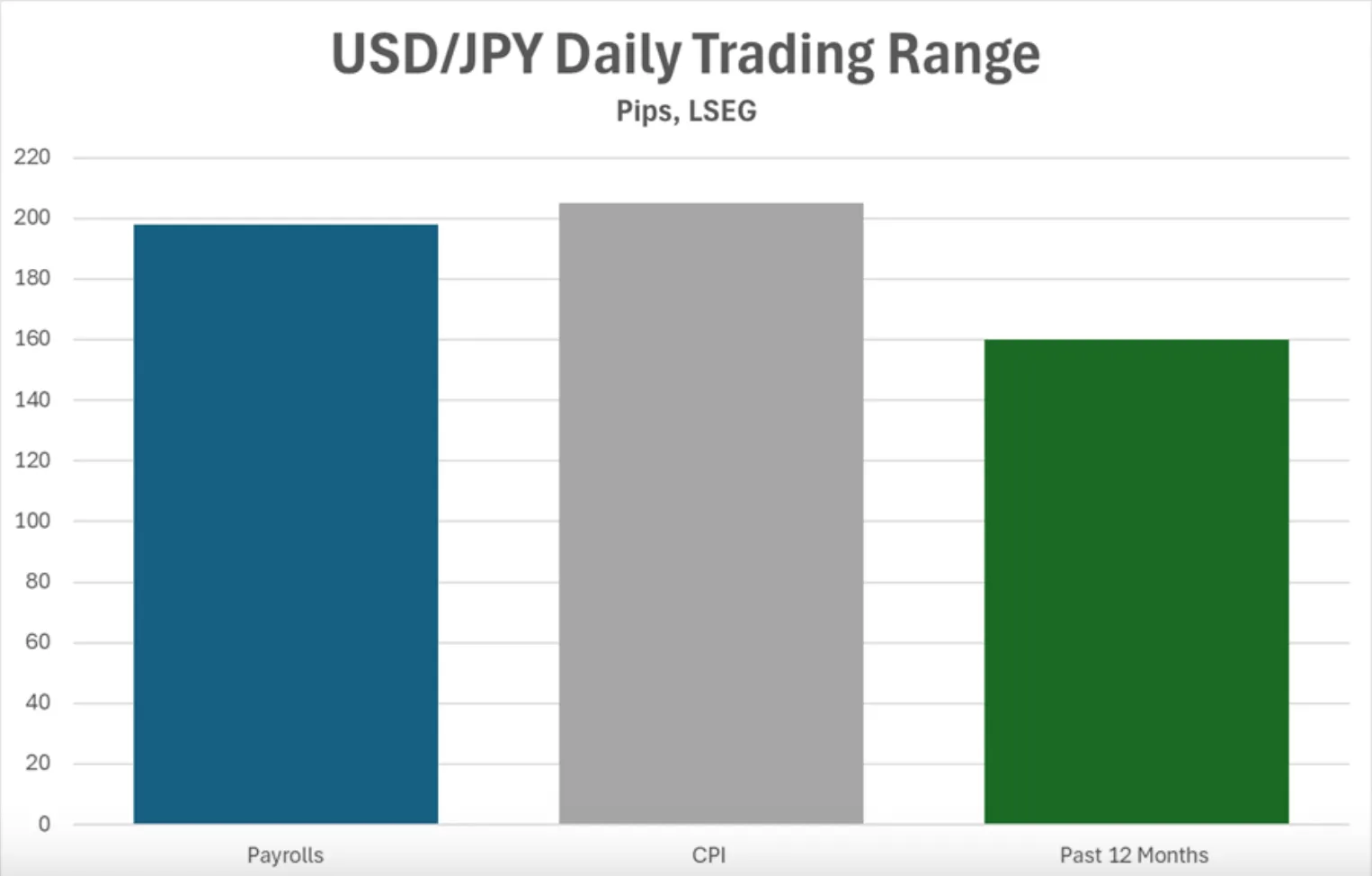
This week, traders are eyeing US CPI and jobless claims, both of which are known catalysts. If either print surprises, and let’s face it, they often do, we could see USD/JPY break decisively out of its recent rut.
Dollar strength and USD outlook skepticism
You’d think the US Dollar might have more momentum behind it, especially after last Friday’s stronger-than-expected jobs data. The US economy added 139K jobs in May, beating forecasts, while wages held steady at 3.9%, and unemployment stuck at 4.2%. Solid stuff, right?
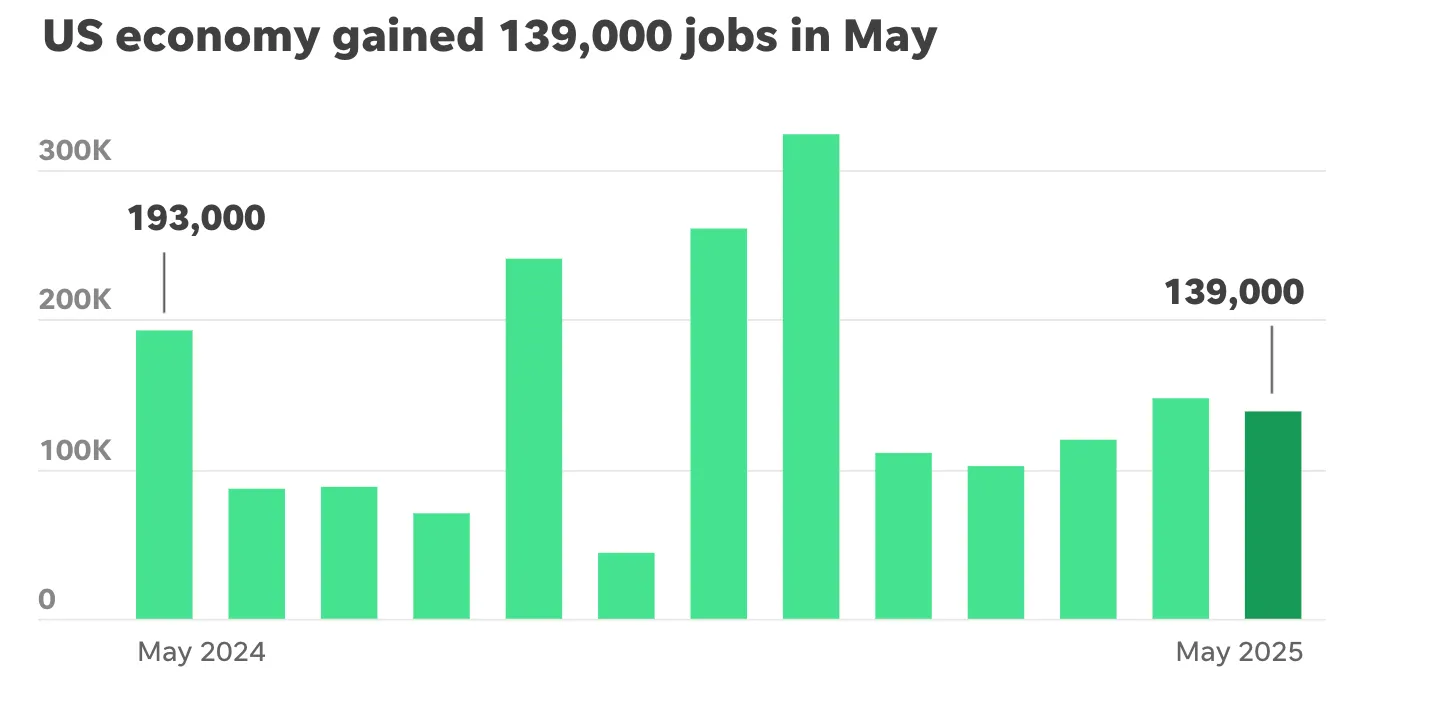
But even with the data on its side, the greenback isn’t exactly charging ahead. That’s likely because the market remains deeply skeptical about the US outlook, with growing uncertainty around Fed policy, politics, and trade tensions keeping investors cautious.
Japanese Yen outlook: A quiet power play
Meanwhile, the Japanese Yen has been quietly staging a comeback - and not just because of dollar softness. The real boost came from Japan’s Q1 GDP revision. Instead of the originally reported 0.2% contraction, the revised figure showed flat growth.
Annualised contraction was also revised from -0.7% to just -0.2%, while private consumption even ticked up 0.1%.

For the Bank of Japan, this is a green light. With inflation already broadening, this stronger data gives the BoJ more room to raise interest rates, further supporting the Yen. That’s why the currency has snapped its recent losing streak and held firm against a broadly weaker dollar.
Geopolitics, tariffs, and trade talks
Still not convinced volatility’s coming? Let’s throw in some geopolitical spice.
Top US and Chinese officials are meeting in London this week for high-stakes trade talks, hoping to cool tensions after months of escalating disputes. Traders aren’t taking any chances - risk appetite is thin, and safe havens like the Yen could be the go-to if talks falter.
And then there’s the ECB drama. Board member Isabel Schnabel says inflation is near target and that rates are now in “neutral territory.” It’s a similar tone from ECB President Lagarde - the easing cycle may be wrapping up. That should be good news for the euro, but ECB policymaker Yannis Stournaras threw a spanner in the works, warning that potential US tariffs could derail eurozone growth.
USD/JPY technical analysis: What happens next?
With all these forces in play, markets are coiled tight. If US data disappoints or trade talks break down, the Yen could surge and USD/JPY may resume its bearish trajectory. But if CPI surprises to the upside, Fed rate cuts could get pushed back, giving the Dollar a reason to rebound. Either way, the days of rangebound yawns in USD/JPY may be numbered.
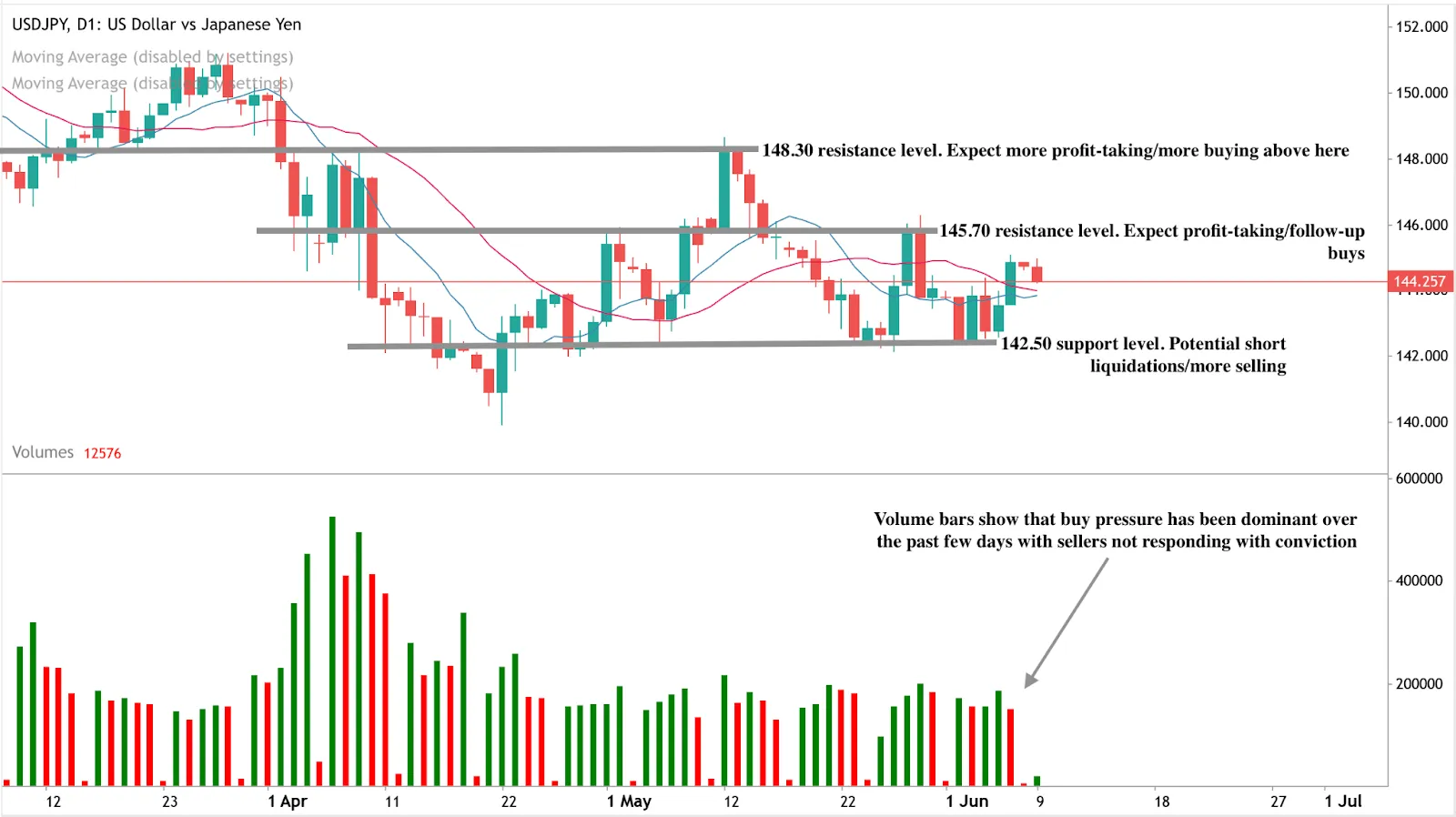
At the time of writing, the currency pair is edging downwards as the Yen strengthens, within a sell zone - hinting that we could see more downward movement. However, the volume bars show little sell pressure and dominant buy pressure - suggesting that an uptick could be on the cards.
If sellers prevail, prices could find a support floor at the $142.50 price level. Conversely, if we see an uptick, prices could encounter resistance walls at the $145.70 and $148.30 resistance levels.

Cut trading costs with up to 50% reduced spreads
The difference between potential profit and break-even often comes down to a few pips. That’s why we’re offering reduced spreads on select instruments during specific windows.
The difference between potential profit and break-even often comes down to a few pips. That's why we're introducing dedicated windows where spreads on select instruments are significantly reduced, so your trades keep more of every favourable move.
During these Spread Advantage Hours, spreads are automatically up to 50% tighter. No opt in, no minimum trading volume, just lowered costs and improved entries and exits.
Instruments and trading window hours
These trading windows run daily on Deriv MT5 Standard and Swap-free accounts at the same times during the active period, making it easier to plan your trading strategy around these conditions.
For the latest updates, schedule, and instrument listings, check the Spread Advantage Hours page.
Why tighter spreads matter for your trading
Tighter spreads mean lower trading costs and more room for your strategies to potentially succeed. When spreads are reduced:
- You enter positions closer to your intended price levels
- You reduce the distance the price needs to move before reaching profitability
- You’ll benefit from improved cost efficiency
Whether you're scalping quick movements or building longer-term positions, reduced spreads give your strategies more breathing room to perform.
Reduced spreads applied automatically
These Spread Advantage Hours work seamlessly in the background. If you're trading eligible instruments during the promotional hours on your Deriv MT5 Standard account, the improved spreads apply without any action required on your part.
This makes it perfect for both manual trading and automated strategies. Set your Expert Advisors or trading bots to capitalise on these conditions, or simply trade as usual.
Log in to your Deriv account and start trading during these specific time windows. New to Deriv? Sign up today and experience the difference tighter spreads can make to your trading results.

Are the Magnificent 7 stocks driving in a new economic era?
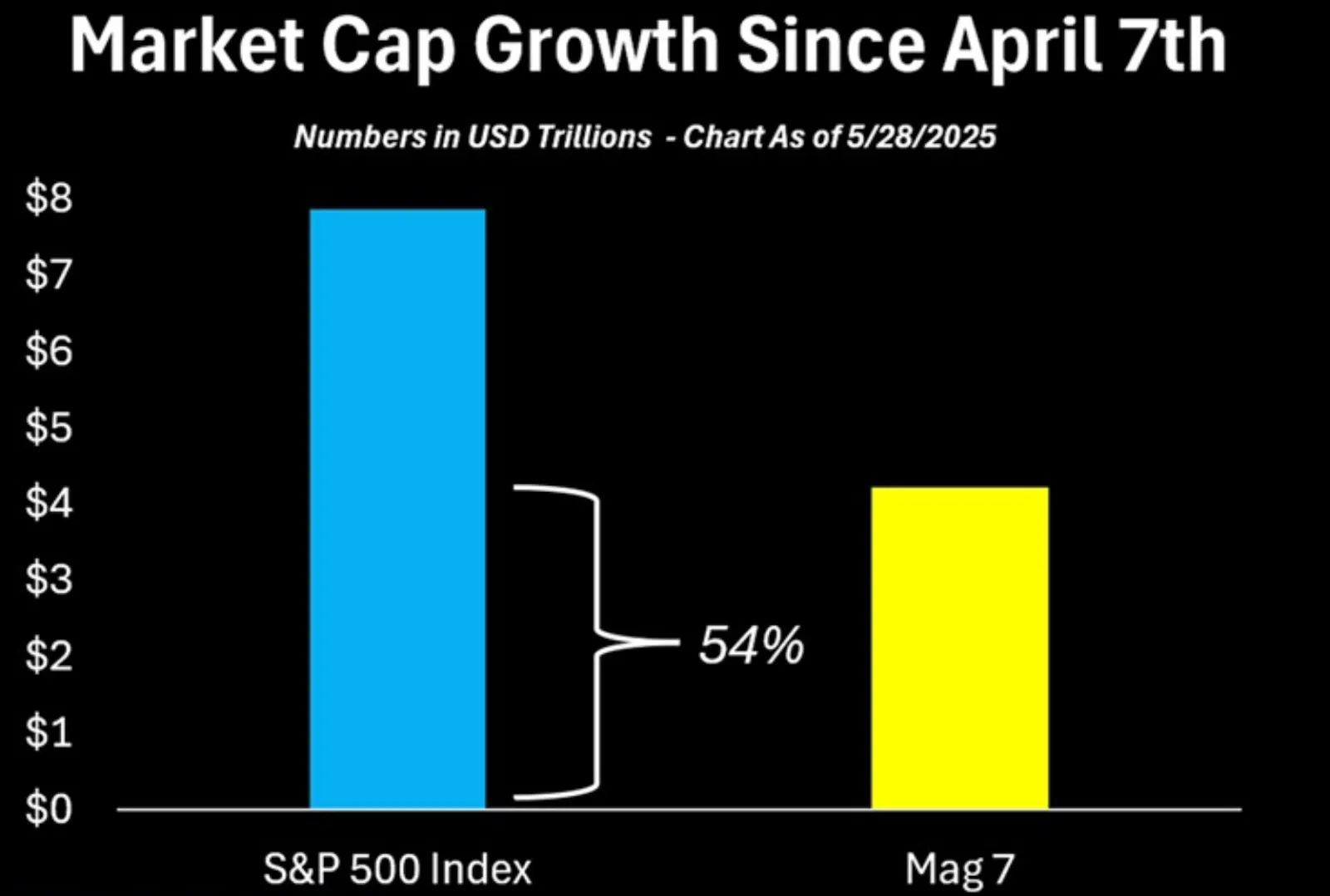
Since 7 April 2025, the S&P 500 has added a staggering $7.5 trillion in market capitalisation. But here’s the kicker: over half of that, around $4 trillion, has come from just seven companies.
Something extraordinary is happening in the markets and it’s wearing a silicon crown.
Since 7 April 2025, the S&P 500 has added a staggering $7.5 trillion in market capitalisation. But here’s the kicker: over half of that, around $4 trillion, has come from just seven companies. You know them well: Alphabet, Amazon, Apple, Tesla, Meta, Microsoft, and Nvidia.
Collectively known as the Magnificent 7, these tech titans are more than just market leaders. They’re carrying the entire show. But does this signal the dawn of a bold new AI-led economy - or are we speeding towards a rerun of the dot-com crash, just with shinier code?
Big tech stocks: A trillion-dollar surge with just seven engines
Let’s talk numbers.
Since early April, the Magnificent 7 have delivered 9.1 percentage points of the S&P 500’s 16.8% return. That means the remaining 493 companies have barely moved the needle.
It’s like watching a Formula 1 race where only one team remembered to put fuel in the cars.
Two names are driving this surge more than most:
- Nvidia, up 42.6%
- Tesla, up a jaw-dropping 53.6%
The market’s obsession with AI and autonomy is so intense that it’s practically glowing in the dark. But with such intense focus on a handful of firms, we have to ask - what happens if the glow fades?
Magnificent 7 stocks: From underdogs to overlords
In 2015, Nvidia was the smallest player among tech giants. Fast-forward a decade, and it’s the second-largest of the group, having added $3.2 trillion in value. Why? One word: AI.
AI isn’t just trendy - it’s transforming entire industries. But when The Motley Fool pointed out earlier this year that the Magnificent 7 were actually underperforming (down 4% YTD while the S&P 500 was up just 0.2%), it hinted at how quickly sentiment can shift.
That shift arrived in full force with the AI hype train - and Nvidia was sitting in the conductor’s seat.
AI market trends: Is the supercycle for real?
There’s no denying AI’s promise. But even Nvidia’s rise is triggering flashbacks for some. Analysts are now drawing parallels between Nvidia’s current run and Tesla’s 2017–2021 rally, during which Tesla soared spectacularly before plummeting over 50% by 2024.

Market strategist Adam Sarhan offered a cheeky yet sobering take:
“When investors fall in love with the idea of the technology innovation du jour, logic takes a back seat.”
And it’s not just hype driving this. According to MIT Technology Review, Big Tech - think Microsoft, Google, Amazon - controls the infrastructure, compute power, and global reach of AI. That kind of dominance can either anchor the next economic age.. or trap us in a dangerously narrow market narrative.
Tesla’s bright spot Is flickering
Speaking of Tesla - despite its stock’s big bounce, the EV side of the business is showing signs of strain, especially in China, one of its key markets.
Insurance registrations in China are down 21% year-over-year in Q2, and sales in May dropped 15% compared to last year. That’s the eighth straight YoY decline in China.
Globally, Tesla is struggling in Europe and the US as well - thanks in part to Elon Musk’s political entanglements, particularly his ties to Donald Trump. Investors are hoping that the upcoming robotaxi launch in Austin on 12 June can reset the narrative, but delivery forecasts suggest Tesla could miss its Q1 total of 336,681 vehicles.
Even Musk admitted that they have “lost some sales on the left but gained them on the right.” Still, he insists Tesla is doing fine. Whether the market agrees, we’ll soon find out.
Tech stock concentration: Outsized weight on too few shoulders?
Here’s the danger. As X user SightBringer put it: “The S&P 500 is dead weight disguised by Nvidia’s mask.” He argues that when 54% of gains come from just seven stocks, we’re not seeing market strength - we’re witnessing fragility in disguise.
If GPU bottlenecks (like the US clampdown on Nvidia’s H20 chip), slow AI adoption, or geopolitical spats stall progress, the tech rally could unravel quickly. Add rising bond yields to the mix, and we could be looking at a very uncomfortable reversal.
But, there’s always a “but”, Goldman Sachs points out that the market has historically rallied after such concentration. In 2024, when the top 10 stocks made up 33% of the S&P 500, the index still climbed.

So, which story are we living in: warning sign or launchpad?
Is this Bitcoin’s moment or just more noise?
Interestingly, some investors are already hedging. Bitcoin’s rise this year has sparked debate about a potential rotation into harder collateral assets - crypto, gold, and even commodities.
SightBringer called tech stocks “artificially propped-up belief-coins” while hailing Bitcoin’s “organic adoption and sovereign demand”.
It’s a colourful metaphor - but a telling one. If AI falters and investors start to doubt Big Tech’s limitless future, assets like Bitcoin might seem less like a gamble and more like Plan B.
So, are we in a new economic era or just a new bubble?
Investors like MacroInsight360 are urging caution, saying that “Diversification is more vital than ever.” Sean Wilson says it more bluntly: “That which leads it up, will lead it crashing down.”
According to a recent breakdown from The Kobeissi Letter, Nvidia alone contributed 12.1% of the S&P 500’s gain. That’s followed by Microsoft (10%) and Apple (5.5%). A slip from any one of them could rattle the entire market.
Tesla’s technical outlook
Big Tech is no longer just part of the market - it is the market. AI, autonomy, and cloud computing are reshaping everything from how we invest to how we work. But there’s a real risk in putting all our chips on one side of the table.
So, is Big Tech ushering in a new economic era? Possibly. But history has a way of humbling even the most confident predictions.
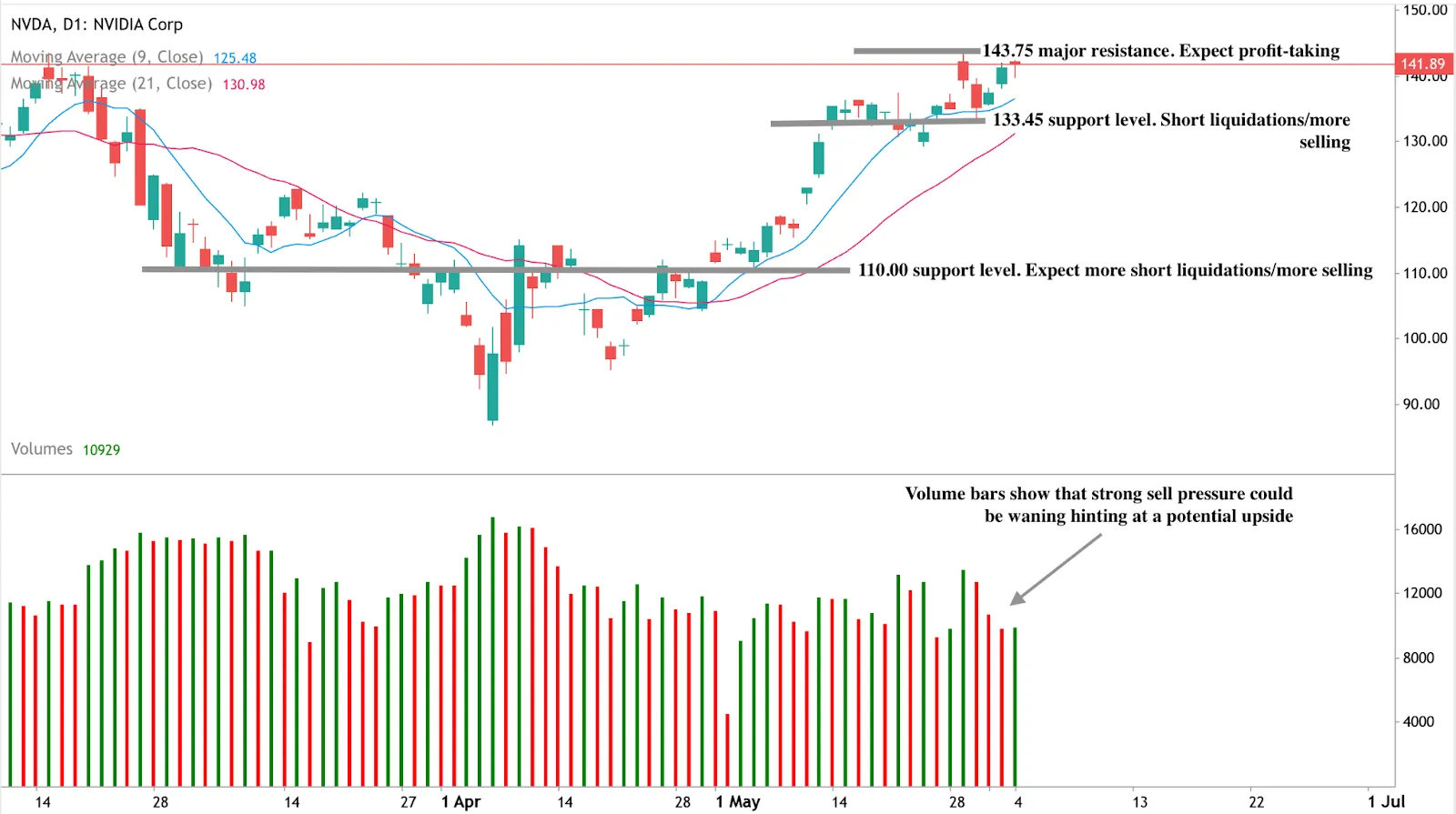
At the time of writing, Nvidia’s uptick is showing signs of exhaustion at a major resistance level, hinting at a potential drawdown. However, the most recent volume bars show waning sell pressure being met by strong buy pressure, hinting at a potential uptick.
Should the retreat materialise, prices could find support floors at the $133.45 and $110.00 price levels. If buyers make a push, they could struggle at the $143.75 major resistance level that has held the market before.
Are you watching the magnificent 7 stocks? You should be!
You can speculate on NVDA with a Deriv MT5 account.

What treasury yield strength and dollar weakness mean for Bitcoin
Something strange is happening in the markets and Bitcoin might just be quietly loving it.
Something strange is happening in the markets and Bitcoin might just be quietly loving it.
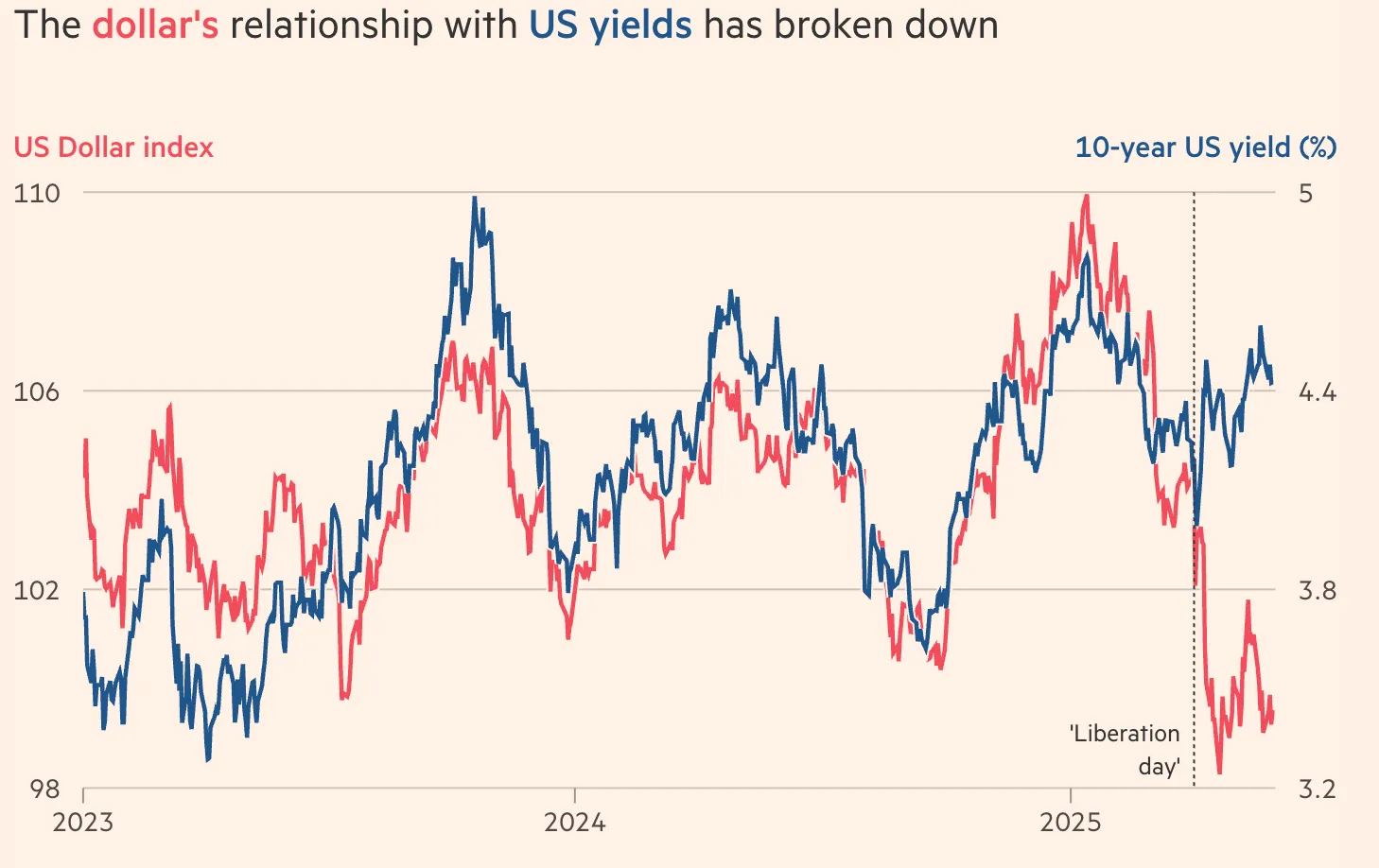
For years, the US dollar and Treasury yields moved in sync like well-trained dance partners. When yields rose, so did the dollar. That’s how it’s supposed to work. Higher yields signal economic strength, attract foreign capital, and boost the greenback. Textbook stuff.
But not at the moment.
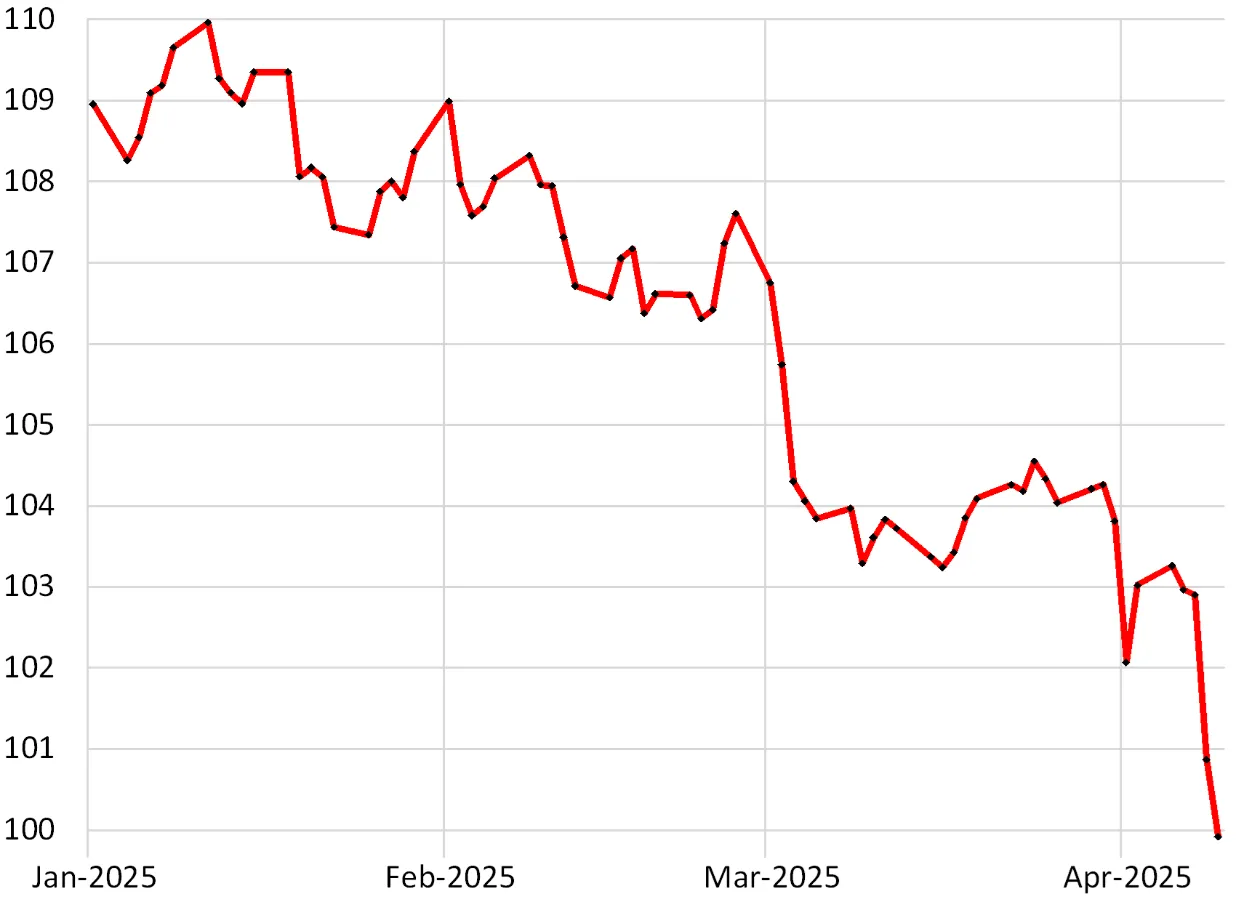
Since early April, the 10-year Treasury yield has climbed from 4.16% to 4.43%. Meanwhile, the US Dollar Index (DXY) has fallen over 5%, pushing it towards levels not seen in nearly three years.
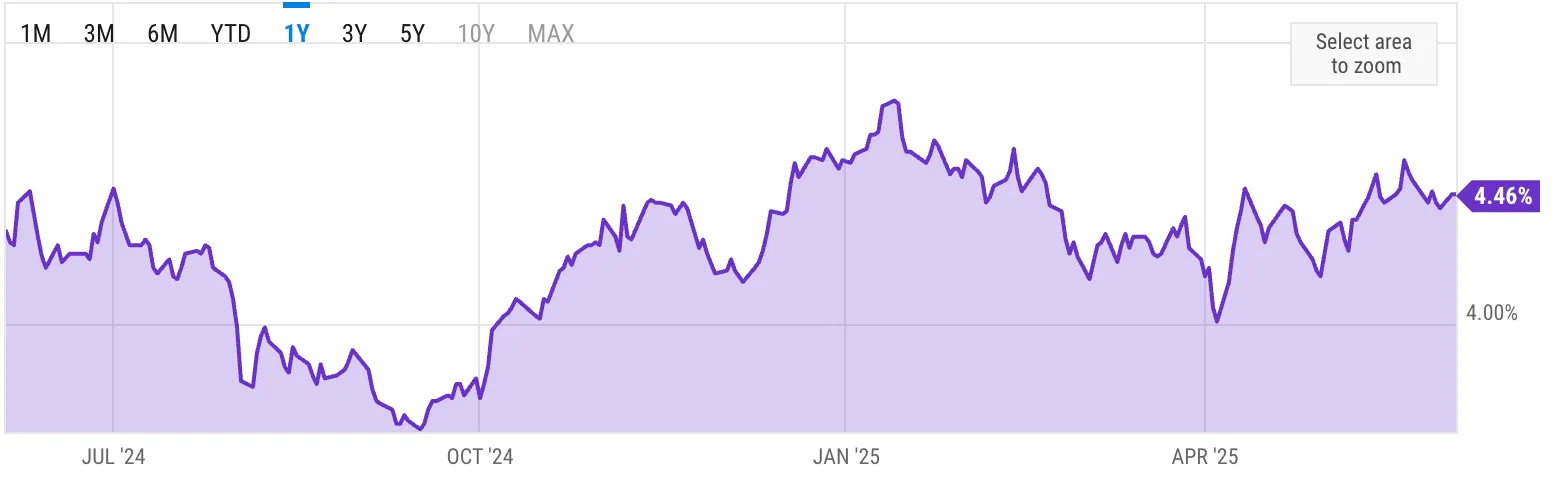
Meanwhile, the US Dollar Index (DXY) has fallen over 5%, reaching levels not seen in nearly three years.
That’s a serious decoupling - the two haven’t moved so independently in this way in years.
It’s not just a quirky blip on the charts. This correlation breakdown points to something deeper: a growing unease with US assets, driven by political interference, fiscal instability, and rising doubts about central bank independence. And in that uncertainty, Bitcoin may find an unlikely tailwind.
A break in the market correlation macro matrix
To understand why this matters, we need to look at the core issue: investor trust.
Under normal circumstances, rising US yields are bullish for the dollar. They reflect strong growth or expected Fed tightening, both of which attract foreign inflows. But in this case, yields are rising for the wrong reasons. Investors are demanding more compensation to hold US debt because they perceive more risk - not more resilience.
Why the shift?
- Trump’s recent tariff threats and erratic fiscal stance have added to fears that policymaking is becoming dangerously unpredictable.
- A Moody’s downgrade and growing US deficit concerns are fuelling speculation about the sustainability of America’s borrowing binge.
- And perhaps most worryingly, President Trump’s public attacks on Fed Chair Jerome Powell have cast a long shadow over the central bank’s perceived independence.
All of this adds up to something investors hate: uncertainty about the rules of the game.
As Shahab Jalinoos of UBS put it, “If yields are going up because US debt is more risky… at the same time the dollar can weaken.” In other words, the US is starting to resemble the kind of market where higher yields don’t inspire confidence - they inspire caution. That’s more common in emerging markets than in the world’s leading reserve currency.
Could this mean lasting change in the dollar yield relationship?
The effects of this shift go well beyond the bond and FX markets. As Goldman Sachs analysts pointed out, the breakdown in the dollar-yields relationship has “posed a challenge to both of the common portfolio hedges.” If both the dollar and bonds are under pressure at the same time, traditional diversification strategies start to fall apart.
And when portfolios lose their stabilisers, investors look for alternatives.
Gold has historically played that role - and it’s been rallying. But Bitcoin is now appearing in the same breath, especially for those who see the erosion of institutional trust as the bigger issue. As Michael de Pass of Citadel Securities said, the strength of the US dollar depends on "institutional integrity… rule of law… predictable policy."
Strip those away, and the foundations start to crack.
Enter Bitcoin.
Bitcoin market analysis: Where BTC fits in?
Bitcoin is often described as an inflation hedge or digital gold - but in practice, it behaves much more like a high-beta risk asset. That means it rises when investors feel confident and flush with liquidity and falls when they run for the exits.
So why is it rising now, even as yields climb? Because not all yield spikes are created equal.
When yields rise on the back of economic growth or tech optimism, like AI-fuelled productivity booms, Bitcoin and equities can climb together. But when yields rise due to policy dysfunction or fears about the US’s creditworthiness, the narrative flips.
In the current environment, crypto isn’t just benefiting from speculation. It’s benefiting from doubt - specifically, doubt in systems that were once considered unshakeable. Bitcoin was built in response to a loss of trust in traditional finance. When that trust erodes again, it’s no surprise to see BTC catch a bid.
Bitcoin performance thrives in chaos… sometimes
That said, let’s not pretend Bitcoin is a perfect hedge. It’s volatile, emotional, and still finding its footing in institutional portfolios.
But its strength lies in its neutrality. It’s not tied to any one government. It doesn’t rely on central bank credibility. And when traditional safe havens start to look shaky, as both the dollar and Treasuries are doing now, Bitcoin becomes a kind of philosophical hedge, if not a perfectly reliable one.
What’s more, as capital managers look to hedge dollar exposure or rebalance away from US-centric assets, there’s a growing trend of shorting the dollar or buying alternatives like gold, yen, Swiss francs - and yes, crypto.
Bitcoin technical outlook: What this means for traders
For traders, this correlation breakdown isn’t just an academic curiosity - it’s a signal that the market may be underestimating risk.
When yields rise, the dollar falls, and Bitcoin rallies, all at once, something is off-script. Add to that the fact that the VIX, Wall Street’s fear gauge, has been trending lower, and you’ve got a market that’s acting calm on the surface while the foundations quietly shift underneath.
This kind of divergence can create complacency-driven volatility, where sharp moves come not because fear is high but because no one sees them coming. For nimble traders, this opens the door to sudden breakouts, fakeouts, and reversion plays.
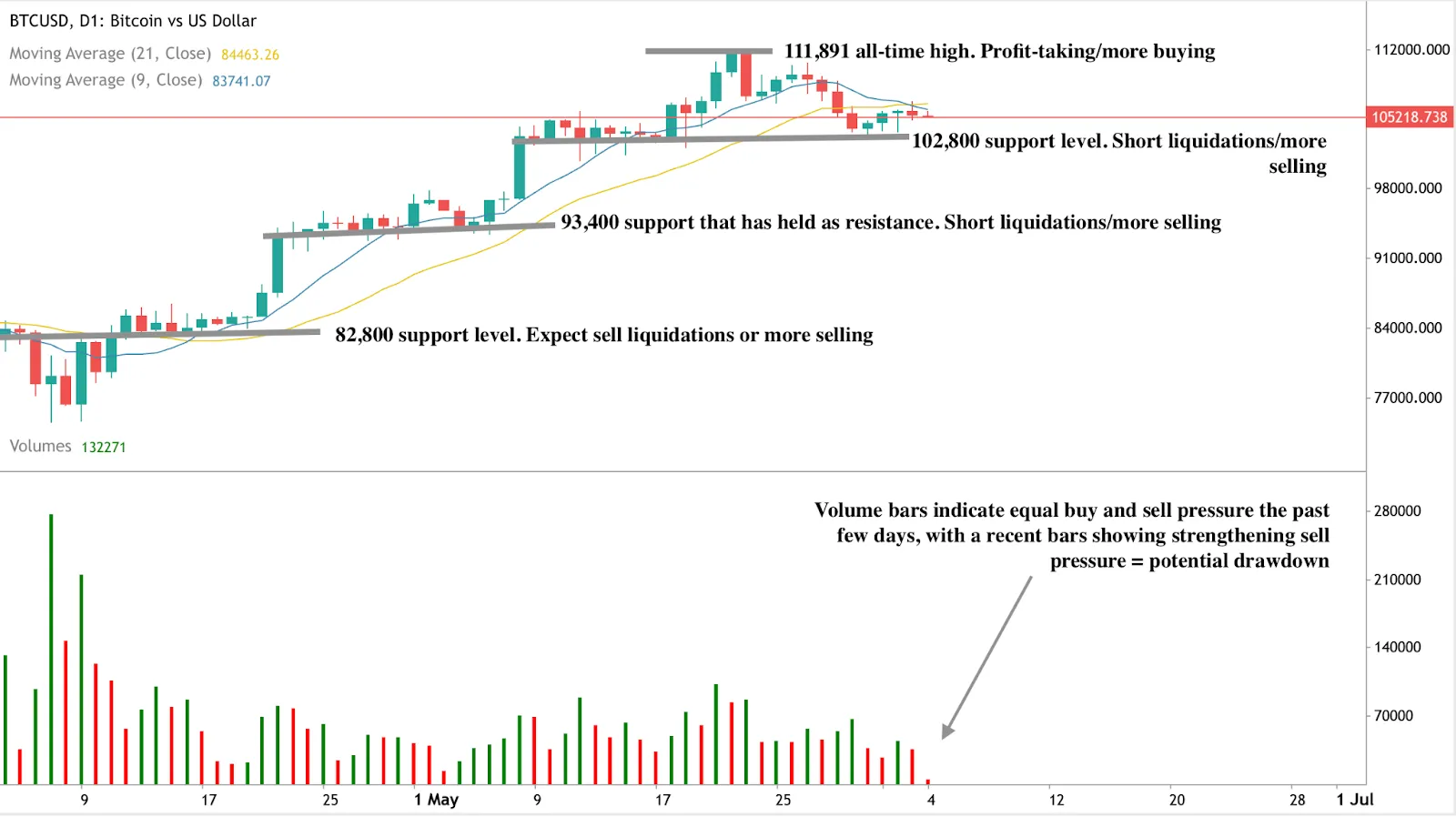
At the time of writing, Bitcoin sees some downward pressure within a sell zone, hinting that an uptick could materialise soon. However, the past few days have seen equal sell and buy pressure with the last few bars showing strong sell pressure building. This suggests we could see significant drawdown before a surge.
If prices slump further, they could find support at the $102,800, $93,400, and $82,800 price levels. If the upmove resumes, prices could be held at the all-time high.
Are you tracking Bitcoin’s price action? You can speculate on BTCUSD with a Deriv MT5 account.

How high can commodities rally on trade and risk?
It’s getting noisy out there, and not just on the trading floor. As tensions flare, commodities are stealing the spotlight.
It’s getting noisy out there, and not just on the trading floor. From missile strikes deep inside Russia to renewed tariff threats from Donald Trump, markets are once again on edge. As tensions flare, commodities are stealing the spotlight.
Gold is glinting, silver is surging, and investors are quietly pricing out peace. With geopolitical risk back in focus and global diplomacy wobbling, the rally in hard assets may be far from over.
Gold reclaims its safe haven asset crown
Gold prices surged more than 2% at the start of the week, hitting a three-week high. The trigger?
A perfect storm of falling confidence, a softening dollar, and a market that’s clearly on edge. For many investors, gold remains the go-to shield when things get messy - be it war, inflation, or financial instability.
The latest tensions between the US and China, paired with Ukraine’s increasingly bold strikes on Russian soil, have reignited demand for traditional safe-haven assets. Throw in the likelihood of lower interest rates from major central banks, and gold has found solid ground to rally. Remember, gold doesn’t pay interest - so when rates fall, the opportunity cost of holding it falls too, making it more appealing.
But beyond monetary policy and macro sentiment, gold is also benefiting from a broader narrative shift: markets aren’t just worried about inflation or economic growth anymore - they’re pricing in the possibility of a structurally riskier world.
Silver industrial demand steps into the spotlight
While gold often leads the headlines, silver is quietly stealing the show. It’s not just tagging along - it’s rallying on its own merits. Silver sits at a unique intersection: it acts as both a haven in turbulent times and a workhorse in the industrial world. That makes it especially sensitive to supply chain fears, and right now, those fears are mounting.
A major catalyst? Donald Trump’s weekend accusation that China has “totally violated” a trade agreement made in Geneva.

While details were thin, reports point to China’s failure to fast-track its rare earth mineral commitments, materials vital to high-tech manufacturing, especially in electric vehicles. Trump’s comments didn’t just stir the pot - they reignited concerns about global access to key components that the auto and tech sectors depend on.
And that’s where silver comes in. With rare-earth magnets in potentially short supply and automakers already warning of possible production shutdowns, demand for silver - used heavily in EVs, electronics, and solar tech, is getting an added lift. It’s not just about fleeing risk, it’s about front-running disruption.
With silver benefiting from both safe-haven flows and a budding industrial squeeze, it’s little wonder the metal is rallying alongside gold - and in some ways, for even more compelling reasons.
Copper also joined the rally, jumping nearly 6% as investors braced for potential U.S. tariffs on the industrial metal and a weaker dollar added momentum. The surge reflects mounting concern over trade-linked supply shocks extending beyond just precious metals.
The dollar is weakening as metals gain ground
At the same time, the dollar is weakening, giving commodities another leg up. A softer greenback tends to lift dollar-priced assets like gold and silver, making them more attractive to international buyers.

Add to that the growing expectation of rate cuts from major central banks, and the conditions are lining up neatly for a metals rally.
The European Central Bank is widely tipped to cut rates this week, and several US Federal Reserve officials, including Christopher Waller, have hinted that easing could come before the end of the year. Lower rates reduce the opportunity cost of holding non-yielding assets like gold, while also potentially fuelling inflation - a double boost for precious metals.
It’s a classic formula: geopolitical tension plus dovish central banks equals gold strength. Silver, with its dual narrative, just gets an added layer of momentum.
Geopolitical risk meets market uncertainty
All of this is unfolding as investors brace for a particularly tense few weeks. Alongside rate decisions and inflation updates, the markets are waiting on a key US jobs report, which could further sway monetary policy expectations. There’s also talk of a potential call between Trump and Chinese President Xi Jinping to rescue stalled trade talks. But at this point, markets seem less interested in words and more focused on action - or the lack of it.
The concern isn’t just about diplomacy failing - it’s about strategic breakdowns with economic consequences. From energy corridors in Eastern Europe to the minerals that power next-gen tech, the stakes are no longer just political - they’re logistical, financial, and deeply embedded in the global economy.
Gold price technical insights: Spike or the start of a supercycle?
So how high can commodities go from here? That depends on whether the world continues down its current path of confrontation and caution. If geopolitical risk escalates, whether from more aggressive moves in Ukraine, worsening China-US relations, or further strain on global supply chains, there’s every reason to believe gold and silver have more room to run.
But commodities are famously fickle. A surprise truce, unexpected economic data, or a hawkish shift from central banks could quickly flip the narrative. For now, though, the momentum is clear: hard assets are in demand, not just as a hedge against inflation or currency weakness but as insurance against a world that feels increasingly unstable.
In times like these, investors aren’t just buying metals - they’re buying peace of mind.
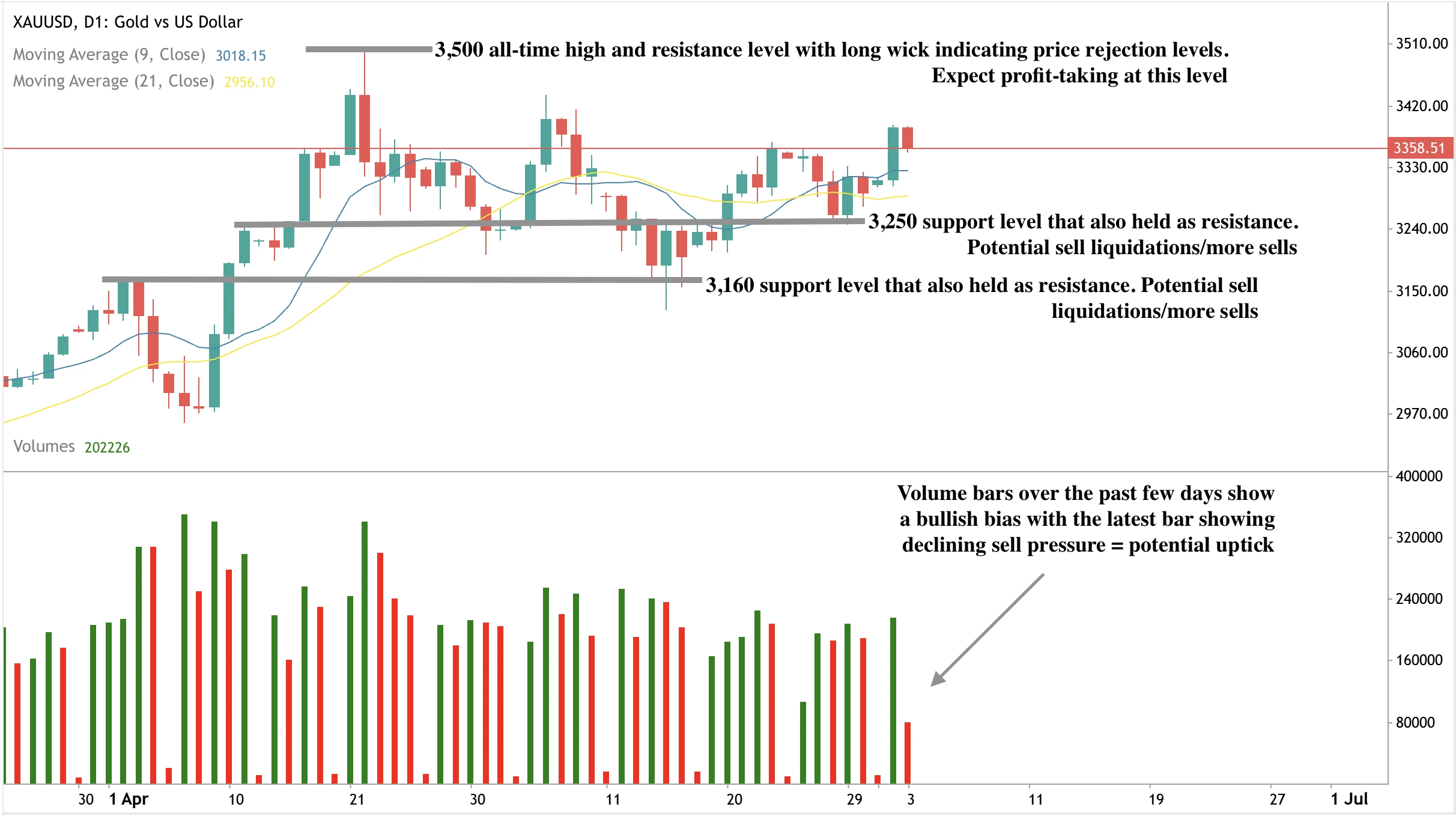
At the time of writing, gold is seeing a slight retreat after a significant uptick. The retreat is happening within a buy zone, which makes the case for a resumption in bullish price action. The volume bars showing some bullish bias over the past few days adds to the bullish narrative.
Should the price uptick materialise, we could see a surge toward the $3,500 all-time high. If we see a slump, prices could find support floors at the $3,250 and $3,160 price levels.
How high can gold rise? You can speculate on the price of the yellow metal with a Deriv X and a Deriv MT5 account.
Has the US market lost its shine or just its cool?
For years, US markets have been the poster child of global investing - sleek, dominant, and reliably on the up. But suddenly, money is flowing out.
Note: As of August 2025, we no longer offer the Deriv X platform.
For years, US markets have been the poster child of global investing - sleek, dominant, and reliably on the up. But suddenly, money is flowing out. Investors across Europe and Asia are pulling billions from funds tied to the US, and not in a slow drift either. This looks more like a sprint for the exits.
So what’s going on? Is this a sign that America’s economic glow is starting to fade, or are we simply witnessing a knee-jerk reaction to another round of political fireworks out of Washington?
Trump’s return to the White House and his sweeping new tariffs have clearly spooked global capital. But are investors overreacting, or finally rethinking their decade-long love affair with US markets?
Investors leaving US markets: Mood shift or something deeper?
Between December and April, global equity funds excluding the US saw an eye-catching $2.5 billion in inflows.
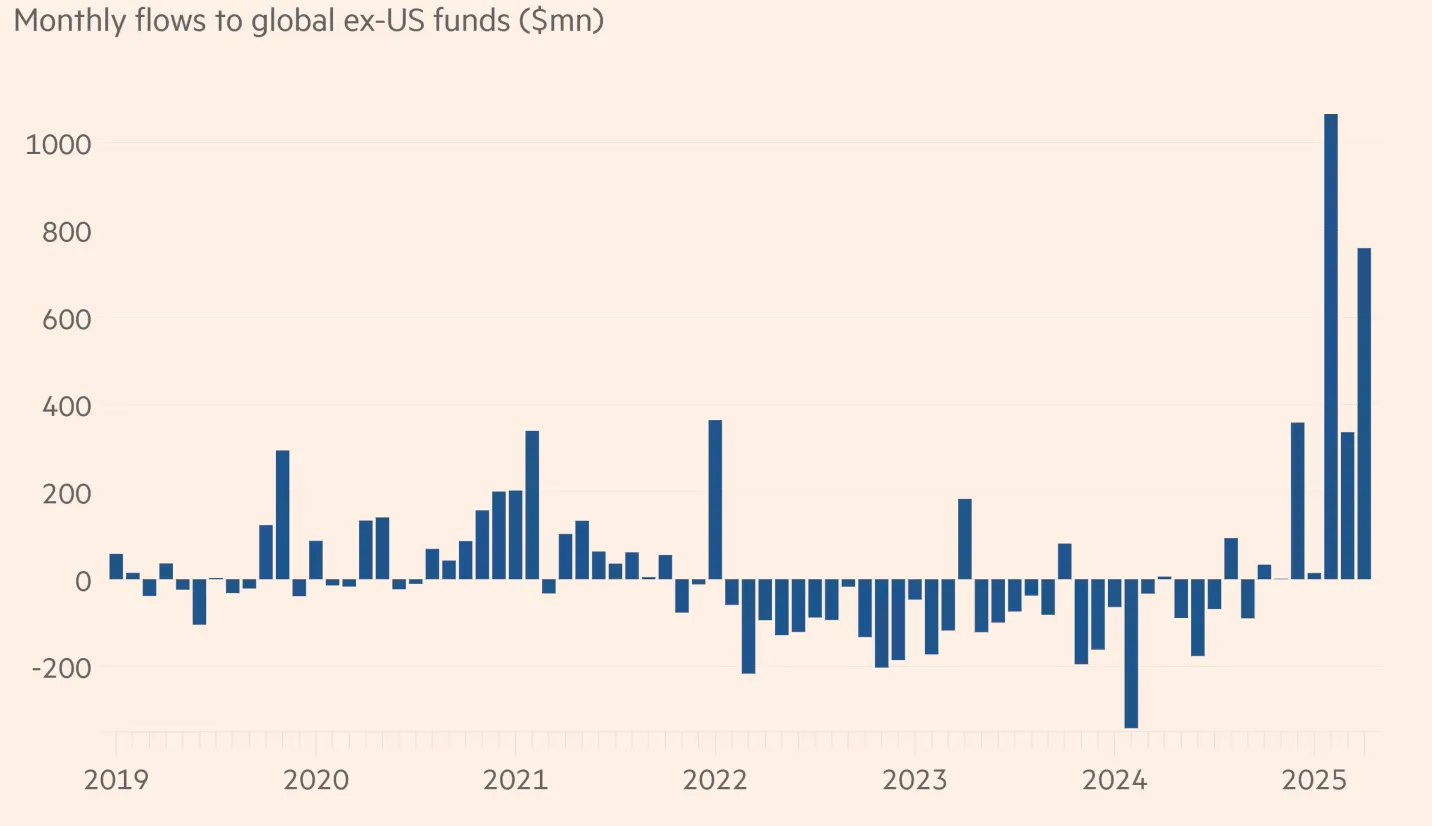
That’s not just a rebound, it’s a record-breaking reversal after three years of steady outflows. And notably, most of that money came in just the last three months. For investors, it seems, something snapped.
What triggered it?
Trump’s tariffs weren’t just bold - they were unexpected, sweeping, and fast-moving. Markets hate surprises, and this one raised eyebrows across boardrooms and trading floors alike. The fear isn’t just about strained global trade; it’s that the US, once the steady centre of the investing universe, is starting to look politically unpredictable. That kind of unpredictability makes capital nervous, but let’s not pretend this is only about politics.
Global investment reallocation: US cool-off overdue?
For much of the past decade, investors have been piling into the US - and why wouldn’t they? The S&P 500 outperformed nearly every other major index, powered by tech giants and a seemingly endless bull run. By the time 2024 rolled around, many global portfolios were heavily overweight the US, sometimes without even meaning to be.
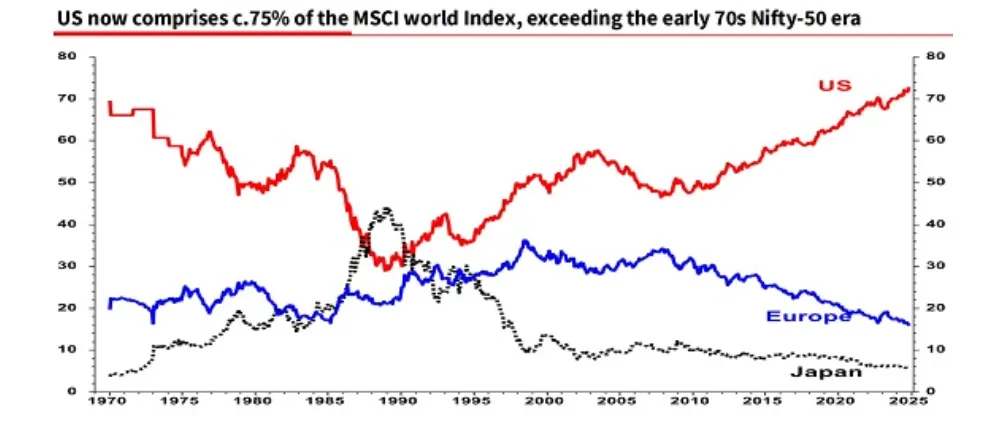
Index-tracking funds like the MSCI World were doing the heavy lifting, and with the US making up more than 70% of them, diversification was more illusion than reality.
In that context, this recent shift might not be panic. It might just be overdue.
After all, if your portfolio is stuffed with US equities, particularly high-flying tech names like Tesla and Nvidia, and those names are wobbling, some rebalancing is just good sense. Add in trade tensions, political whiplash, and lofty valuations, and it’s no surprise that investors are starting to look elsewhere. Europe, Asia, and emerging markets are back on the radar, not because they’re suddenly outperforming, but because they don’t carry the same baggage.
While others retreat, some see an opportunity
Interestingly, while many are heading for the door, some, like Europe’s private equity powerhouse EQT, are leaning in. Their founder, Conni Jonsson, has suggested now might be the perfect time to expand in the US, while others are too spooked to compete. Contrarian? Absolutely. But it’s also a reminder that what feels like a mass exodus to some can look like a bargain hunt to others.
EQT’s thinking is strategic. If others are retreating, valuations may drop, acquisition targets become more accessible, and a firm with long-term vision can quietly build strength while the rest of the market is fretting. It’s not a bet that the US is problem-free - far from it.
It’s a bet that the current wave of fear might be overdone.
So, what’s really going on?
In the end, this isn’t about the US collapsing, nor is it a full-scale global reordering - at least not yet. But it does hint at a turning point. For years, the US was the default choice for capital. Now, it’s being questioned - not abandoned, but scrutinised in ways it hasn’t been for a long time.
Whether this is a temporary cooling-off or a lasting shift depends on what happens next. If Trump’s policies continue to unsettle markets or if institutional investors keep reassessing their exposure to US risk, we may well be watching the start of a more balanced global investing era - not an exit from the US but an end to its automatic dominance.
So, has the American market lost its shine or just its cool?
According to analysts, it’s mostly the latter for now. But if investor nerves turn into long-term reallocation, that shine might take a little longer to regain.
S&P 500 technical insights
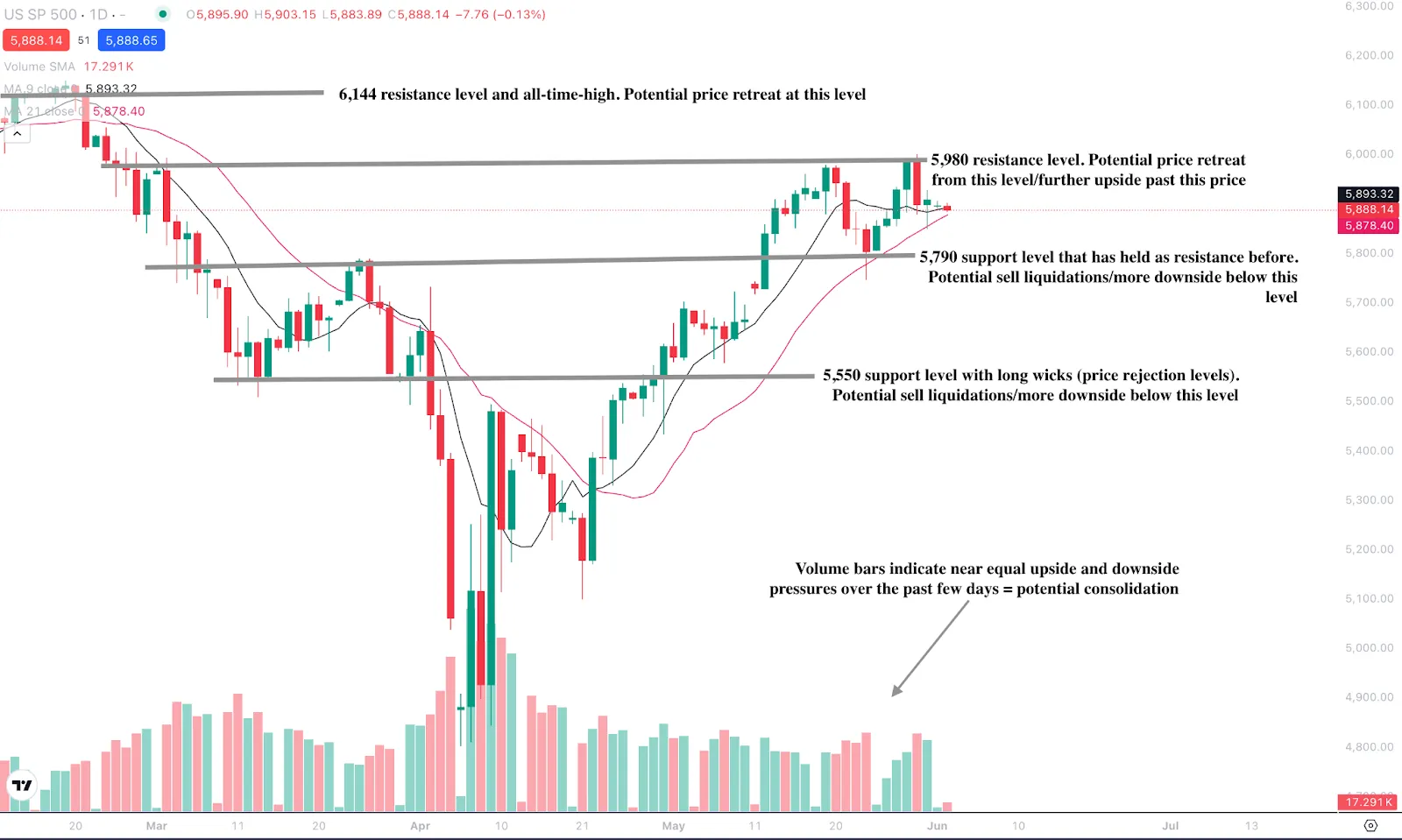
At the time of writing the S&P 500 has seen a significant retreat. A downside bias is evident on the daily chart though volume bars show almost even sellside and buyside pressures - hinting at potential price consolidation. Should the S&P 500 see an uptick, prices could encounter resistance at the $5,980 and $6,144 levels. On the other hand, should the S&P 500 see further slump, prices could be held at the $5,790 and $5,550 support levels.
Is the S&P 500 set for a major comeback? You can speculate on US markets with a Deriv X and a Deriv MT5 account.

Bitcoin whales hesitate while XRP builds quiet momentum
Bitcoin’s hanging out near all-time highs, headlines are buzzing, and GameStop just casually bought half a billion dollars worth. So why are the whales, the big-money Bitcoin holders, quietly shifting coins to exchanges?
Bitcoin’s hanging out near all-time highs, headlines are buzzing, and GameStop just casually bought half a billion dollars worth. So why are the whales, the big-money Bitcoin holders, quietly shifting coins to exchanges?
On-chain data says some of the biggest players in the game are easing off the gas. They’re not scooping up BTC like before, instead, they’re edging toward the exit.
Is this a warning sign? Or just the usual drama in crypto’s never-boring storyline?
Bitcoin whales tap the brakes
Blockchain analysts have spotted something interesting: those giant wallets holding over 10,000 BTC, aka whales, are no longer in accumulation mode. According to Glassnode, their Accumulation Trend Score has dipped to 0.4.

Translation? We’re now in “let’s cash in some gains” territory.
Even more telling, these wallets, many of which were buying when BTC hovered around $75K, are now moving coins to exchanges. Historically, that’s not just a coincidence. That’s what whales do before they sell.
Is Bitcoin peaking?
Not necessarily. When Bitcoin hits a major rally, it’s normal for big holders to lock in profits. It doesn’t mean the top is in, just that the smart money is doing what it does best: managing risk.
There’s also been a wave of optimism coming out of the Bitcoin 2025 Conference in Las Vegas - everything from pro-crypto policy announcements to whispers about a national Bitcoin reserve. All this hype creates the perfect backdrop for whales to sell into strength while everyone else is euphoric.
But let’s be clear: whales aren’t psychic. They’re just loaded and logical. Their moves usually reflect the broader market cycle - not some insider panic button.
Bitcoin institutional buying
While whales are trimming, institutions are still piling in. This week, GameStop revealed it bought 4,710 BTC, roughly $500 million, as part of its bold leap into digital assets.
MicroStrategy isn’t sitting still either. It just added another 4,020 BTC, bringing its total stash to a staggering 580,250 coins.

So, while some are taking chips off the table, others are going all in. If anything, the long-term belief in Bitcoin is still standing tall.
XRP strategic reserve move
Speaking of crypto confidence, XRP’s making headlines of its own. Webus International just announced plans to raise $300 million to build a strategic XRP reserve. The goal? Use XRP to power cross-border payments across its AI-driven transport network.
And it’s not the only one jumping on the XRP bandwagon. VivoPower, a Nasdaq-listed energy company, recently secured $121 million to kick off its own XRP treasury strategy - making it the first publicly traded firm to do so.
With former Ripple board member Adam Traidman joining as an advisor and major royal family backing, it’s clear XRP isn’t just riding the hype - it’s attracting serious money.
Bitcoin price prediction 2025
In the short term, Bitcoin might get a bit choppy. It’s bouncing between $107K and $109K, and if whale selling picks up, we could see a test of support levels.
But zoom out, and this isn’t a crash according to analysts - it’s a breather. Mid-size wallets and smaller holders are still accumulating, which signals grassroots confidence.
And on the XRP front? Institutional interest is picking up, with treasury strategies, ETF rumours, and real-world payment use cases gaining steam.
Bottom line: don’t let the whale noise throw you off your game. Whether you’re in Bitcoin, XRP, or both, remember that markets move in cycles. The key is staying focused, not flustered.
Bitcoin technical insight: Whale slump or institutional uptick?
Whales are selling. It happens. They’ve made a tidy profit, and now they’re managing risk. It doesn’t mean the sky is falling - just that the market is cooling off after a hot streak.
Meanwhile, institutions are buying, retail is holding, and the broader adoption trend is still moving forward.
The question isn’t whether whales are selling. It’s whether you’ve got a plan that can handle it. At the time of writing, BTC is hovering around its all-time high in a buy zone - hinting at potential further upside. The bullish narrative is challenged by the volume bars indicating dominant sell pressure over the past few days. Bulls could encounter a resistance wall at the all-time high, and should we see a slump, prices could find support at the $102,800, $93,400 and $82,800 support levels.

Has Bitcoin found its peak for now? You can speculate on BTCUSD with a Deriv MT5 account.
Sorry, we couldn’t find any results matching .
Search tips:
- Check your spelling and try again
- Try another keyword