Skip go di main content

Wetin be security codes and why you no suppose ever share dem

5
min wey e go take to read
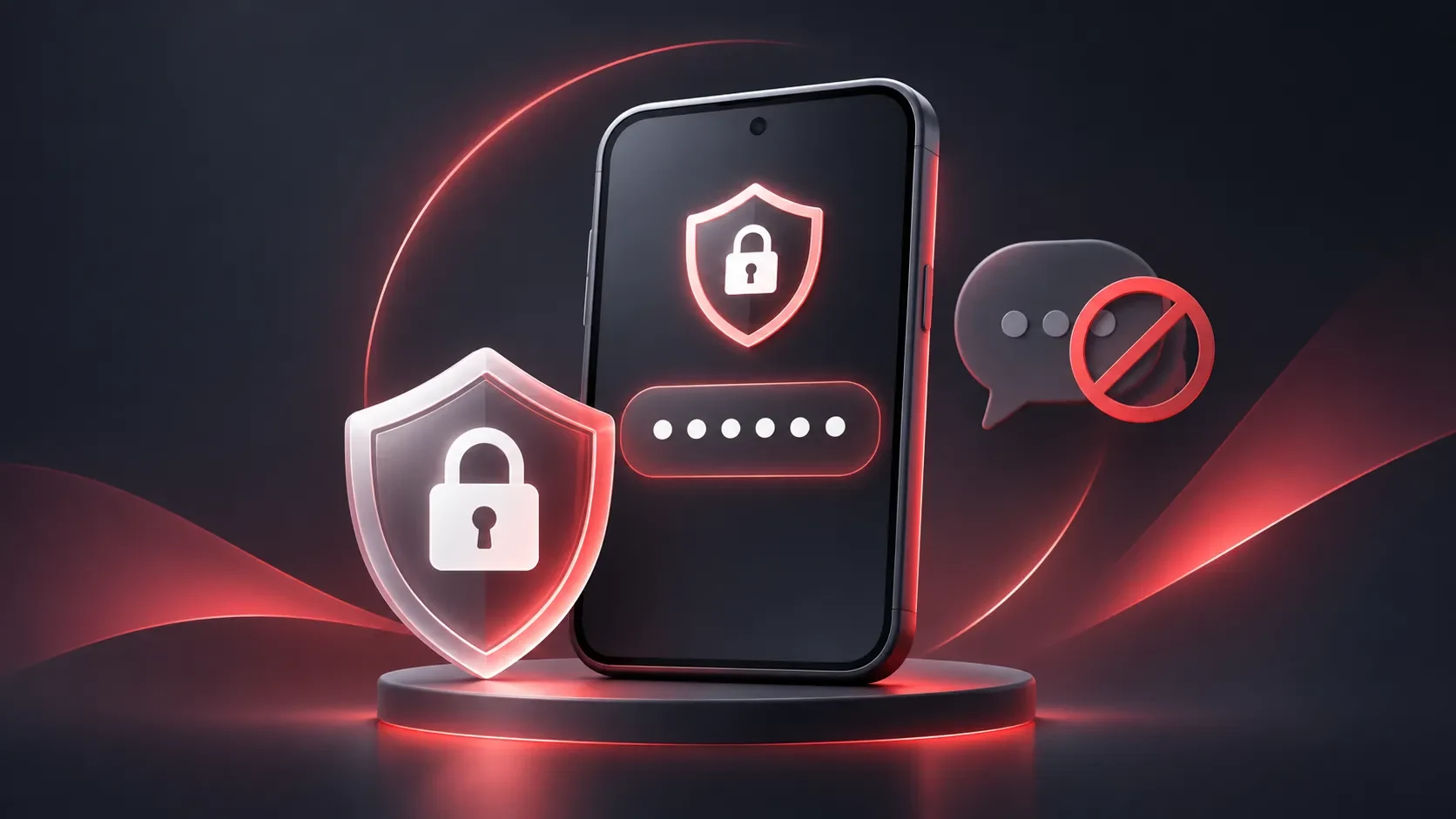
Illustration of protected phone wit generic verification-code field, security shields and blocked chat bubble, wey show how to use secure codes privately.

Secure codes dey help confirm say na you dey complete important action, like wen you dey sign in, change password or set up two-factor authentication (2FA). Because dese codes fit help protect access to your Deriv account, you suppose always keep dem private. Dis guide dey explain wetin secure codes be, why dem dey needed and how you fit handle dem safely.

Quick summary

  • Secure codes dey add extra check before you fit complete sensitive account actions.
  • Dem fit include one-time passwords, authenticator-app codes, password-reset codes and recovery codes.
  • Enter code yourself only for di official Deriv website or app, during step wey you expect.
  • No ever send, read out, forward, take screenshot of or post secure code.
  • If you share code by mistake, quickly secure your account through official Deriv channels.

Wetin be secure codes?

Secure code na credential wey dey help confirm say na you authorise login or account action. Unlike password, many secure codes dey temporary: dem fit expire afta short time or work only once.

You fit see secure code wen you:

  • Sign in from new device or browser
  • Turn on or use 2FA
  • Change or reset password
  • Confirm sensitive account-security action
  • Recover access to account

Secure codes dey useful because dem dey add anoda layer of verification. Even if pesin discover password, di pesin fit no be able to complete protected action without di additional code.

Common types of secure codes

One-time passwords (OTPs) na temporary codes wey dem dey send to registered email address or phone number. Dem dey help verify say you fit access di contact method wey dey linked to di account.

Authenticator-app codes na short codes wey dey work for limited time and wey authenticator app dey generate. Dem dey commonly used for 2FA and dem dey change regularly.

Password-reset codes dey help confirm say request to reset password get authorisation. Dem dey especially sensitive because dem fit be part of di process to create new password.

Recovery or backup codes na emergency codes wey dem dey create wen you set up 2FA. Dem fit help you regain access if you lose authenticator device, so you must store dem securely and treat dem like passwords.
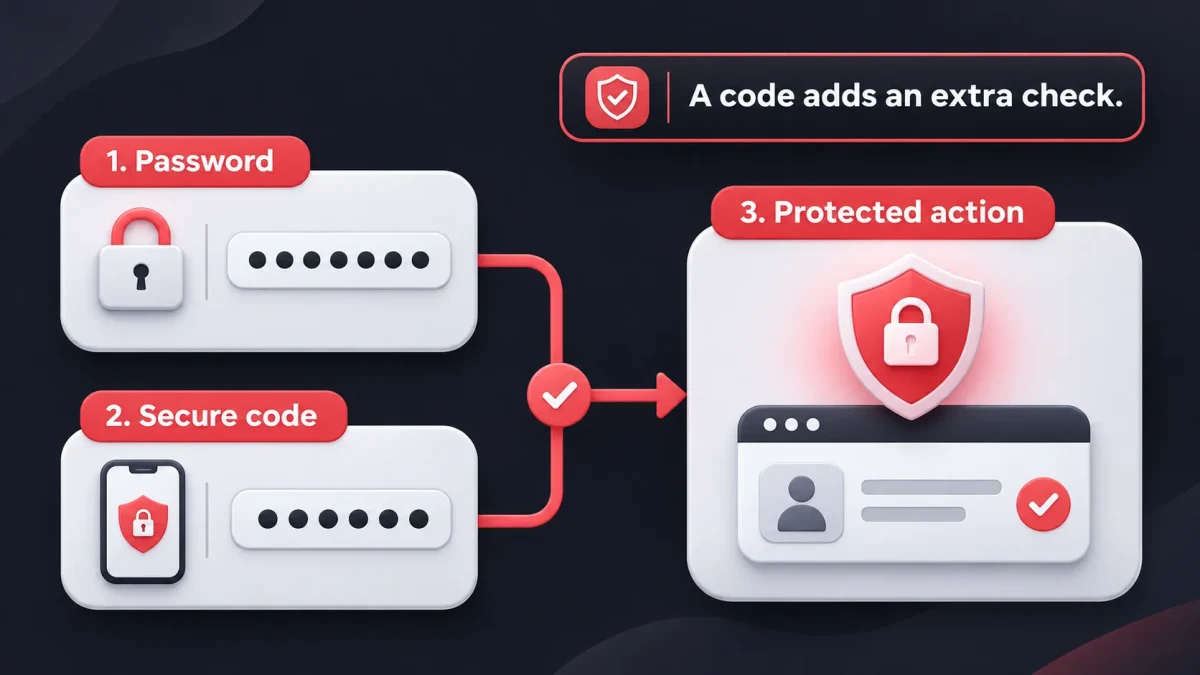
Secure codes help confirm that an important action—such as signing in, changing a password or setting up two-factor authentication (2FA)—is being completed by you. Because these codes can help protect access to your Deriv account, they should always remain private. This guide explains what secure codes are, why they are needed and how to handle them safely. Quick summary Secure codes add an extra check before sensitive account actions can be completed. They can include one-time passwords, authenticator-app codes, password-reset codes and recovery codes. Enter a code yourself only in the official Deriv website or app during an expected step. Never send, read aloud, forward, screenshot or post a secure code. If you accidentally share a code, secure your account promptly through official Deriv channels. What are secure codes? A secure code is a credential used to help confirm that a login or account action is authorised by you. Unlike a password, many secure codes are temporary: they may expire after a short period or work only once. You may encounter a secure code when you: Sign in from a new device or browser Turn on or use 2FA Change or reset a password Confirm a sensitive account-security action Recover access to an account Secure codes are useful because they add another layer of verification. Even if someone discovers a password, they may be unable to complete a protected action without the additional code. Common types of secure codes One-time passwords (OTPs) are temporary codes sent to a registered email address or phone number. They help verify that you can access the contact method linked to the account. Authenticator-app codes are short, time-limited codes generated in an authenticator app. They are commonly used for 2FA and change regularly. Password-reset codes help confirm that a request to reset a password is authorised. They are especially sensitive because they can be part of a process to create a new password. Recovery or backup codes are emergency codes created when setting up 2FA. They may help restore access if you lose an authenticator device, so they must be stored securely and treated like passwords.   Alt text: Diagram shows a password and a secure code as separate requirements before a protected account action can proceed. Why secure codes are needed Passwords can be guessed, reused or exposed through a data breach or phishing attempt. A secure code helps reduce the risk that a password alone can be used to access an account or make a sensitive change. For example, when you change a Deriv password from your profile, Deriv may send a one-time password to your registered email to help verify the request. You enter that OTP yourself as part of the official process, then set the new password.  This extra step is not a guarantee against every risk, but it creates an important barrier. It confirms that the person making the request has access to the required verification method at that moment. Codes are for you to enter, not to give away A secure code is not a piece of information to share with another person. It is an instruction for you to complete a specific security step yourself. Keep this distinction in mind: Safe action Unsafe action Entering a code yourself in the official Deriv website or app Sending a code in a chat, email or social-media message Using a code during a step you started Giving a code to someone who contacted you unexpectedly Storing recovery codes in a protected location Saving recovery codes in an unprotected note or screenshot Opening Deriv directly before entering a code Following an unverified link to enter a code   When it is safe to enter a code Enter a secure code only when all of these conditions apply: You started the action yourself. You are using the official Deriv website or app. You expected the verification step. The code is being entered into the relevant secure field—not sent to a person. For example, if you select Password in your Deriv profile and request a password change, an OTP sent to your registered email can be part of that expected process. The code should be entered only in the official password-change flow. If the action is unexpected, pause before entering anything. Open Deriv directly through your usual route and check your account settings instead of relying on a link in a message. Keep codes out of screenshots A screenshot can contain more information than it first appears to. It may show an OTP, account email, device notification, transaction reference, browser address or other personal details. Before sharing a screenshot for support purposes, review every visible element. Never include a password, secure code, QR code, recovery code or authenticator-app screen. When possible, crop or redact any personal, payment or account details that are not needed.  Alt text: Three cards show starting an account action, opening Deriv directly, and privately entering a secure code in the official platform. How to store recovery codes safely Recovery codes are different from ordinary one-time codes because they may remain valid until used or replaced. They are designed for emergencies, such as losing access to an authenticator app. Store them somewhere you can access when needed, but where other people cannot. A reputable password manager can be a suitable option when it is protected by a strong master password and 2FA. A protected offline copy may also be appropriate. Do not: Keep recovery codes in an email draft or unprotected cloud document Store them in a public or shared photo album Send them to yourself through chat Share them with a friend, family member or anyone claiming to help Include them in a support screenshot If you generate new recovery codes, securely remove any outdated copies so you do not rely on codes that no longer work. What to do if you shared a code A shared code may no longer be safe to use, even if it has not yet expired. Act promptly, but use only official routes. Open Deriv directly through the official website or app. Change your Deriv password to a new, unique password. Review your 2FA settings and recovery methods. Secure the email account linked to Deriv, particularly if it may receive password-reset instructions. Contact Deriv through official support if you think someone may have accessed your account.  Alt text: Three cards advise keeping codes private, storing recovery codes securely, and protecting an account promptly if a code is shared. Build a secure-code routine A few simple habits make secure-code requests easier to handle: Start account actions only from the official Deriv website or app. Use 2FA on your Deriv account and on the email account linked to it. Read verification messages carefully before acting. Keep recovery codes in a protected location before you need them. Never approve or enter a code for an action you did not start. Treat any request to share a code as a reason to stop and verify independently. Take the next step Review where you store your recovery codes and make sure 2FA is enabled on your Deriv account and the email linked to it. If you receive a code for an action you did not start, do not enter or share it—open Deriv directly and review your security settings.

‍Why secure codes dey needed

Pesin fit guess or reuse passwords, or dem fit become exposed through data breach or phishing attempt. Secure code dey help reduce di risk say pesin go use password alone to access account or make sensitive change.

For example, wen you change your Deriv password from your profile, Deriv fit send one-time password to your registered email to help verify di request. You go enter dat OTP yourself as part of di official process, then set di new password.

Dis extra step no dey guaranteed to protect you against every risk, but e dey create important barrier. E dey confirm say di pesin wey make di request get access to di required verification method at dat moment.

Na you suppose enter codes, no be to give dem out

Secure code no be information wey you suppose share wit anoda pesin. Na instruction for you to complete specific security step yourself.

Keep dis difference for mind:

Safe action Unsafe action
Enter code yourself for di official Deriv website or app Send code for chat, email or social-media message
Use code during step wey you start Give code to pesin wey contact you unexpectedly
Store recovery codes for protected location Save recovery codes for unprotected note or screenshot
Open Deriv directly before you enter code Follow unverified link to enter code

‍

Wen e dey safe to enter code

Enter secure code only wen all dese conditions apply:

  1. Na you start di action yourself.
  2. You dey use di official Deriv website or app.
  3. You bin expect di verification step.
  4. You dey enter di code for di relevant secure field, no be send am to pesin.

For example, if you select Password for your Deriv profile and request password change, OTP wey dem send to your registered email fit be part of dat process wey you expect. You suppose enter di code only for di official password-change process.

If you no expect di action, pause before you enter anything. Open Deriv directly through your usual route and check your account settings instead of relying on link for message.

No include codes for screenshots

Screenshot fit contain more information pass wetin e first appear to show. E fit show OTP, account email, device notification, transaction reference, browser address or oda personal details.

Before you share screenshot for support, check everything wey dey visible. No ever include password, secure code, QR code, recovery code or authenticator-app screen. Wen possible, crop or hide any personal, payment or account details wey dem no need.
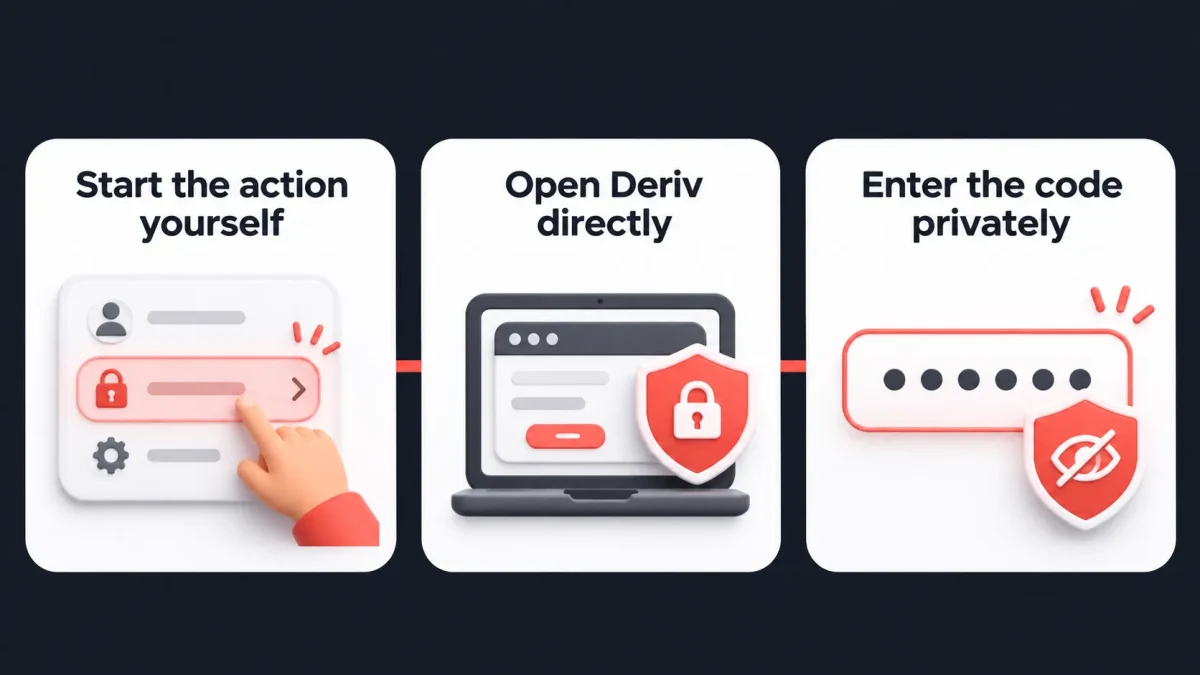
Three cards show starting an account action, opening Deriv directly, and privately entering a secure code in the official platform.

How to store recovery codes safely

Recovery codes dey different from ordinary one-time codes because dem fit remain valid until you use or replace dem. Dem design dem for emergencies, like wen you lose access to authenticator app.

Store dem for somewhere wey you fit access wen you need dem, but wey oda pipo no fit access. Password manager wey get good reputation fit be suitable option wen you protect am wit strong master password and 2FA. Protected offline copy fit also be appropriate.

No do dese tins:

  • Keep recovery codes for email draft or unprotected cloud document
  • Store dem for public or shared photo album
  • Send dem to yourself through chat
  • Share dem wit friend, family member or anybody wey claim say dem wan help
  • Include dem for screenshot wey you send to support

If you generate new recovery codes, securely remove any old copies so you no go rely on codes wey no dey work again.

Wetin to do if you share code

Code wey you don share fit no dey safe to use again, even if e neva expire. Act quickly, but use only official routes.

  1. Open Deriv directly through di official website or app.
  2. Change your Deriv password to new, unique password.
  3. Review your 2FA settings and recovery methods.
  4. Secure di email account wey dey linked to Deriv, especially if e fit receive password-reset instructions.
  5. Contact Deriv through dia official support if you think say somebody fit don access your account.
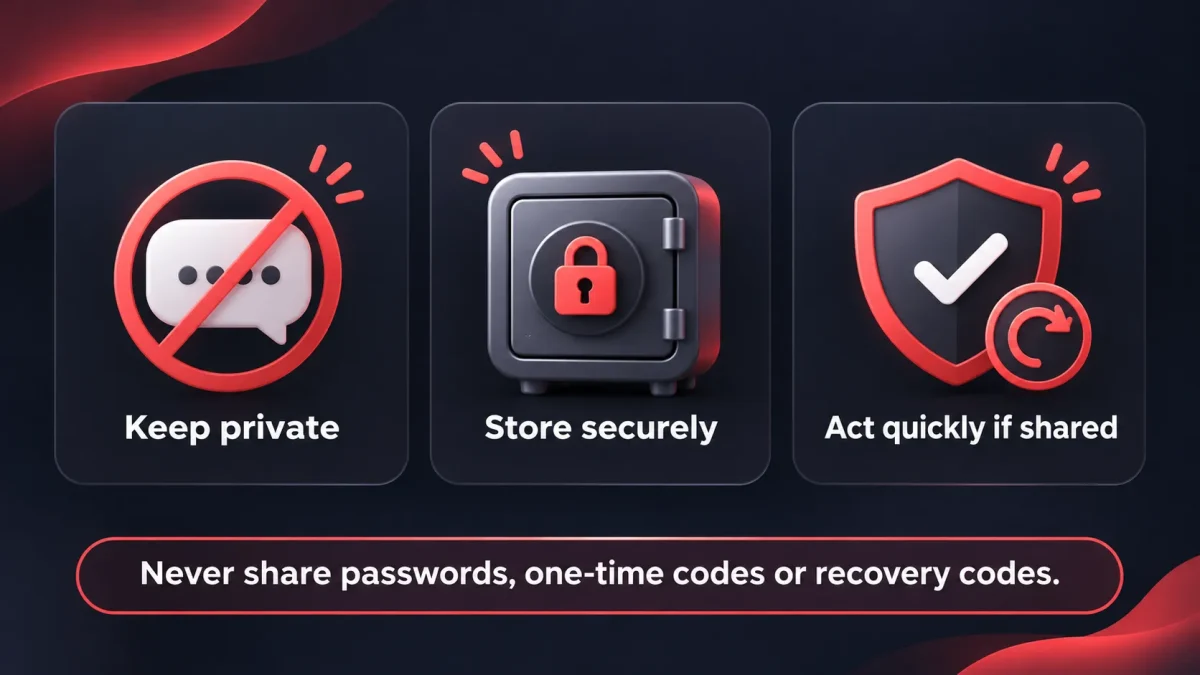
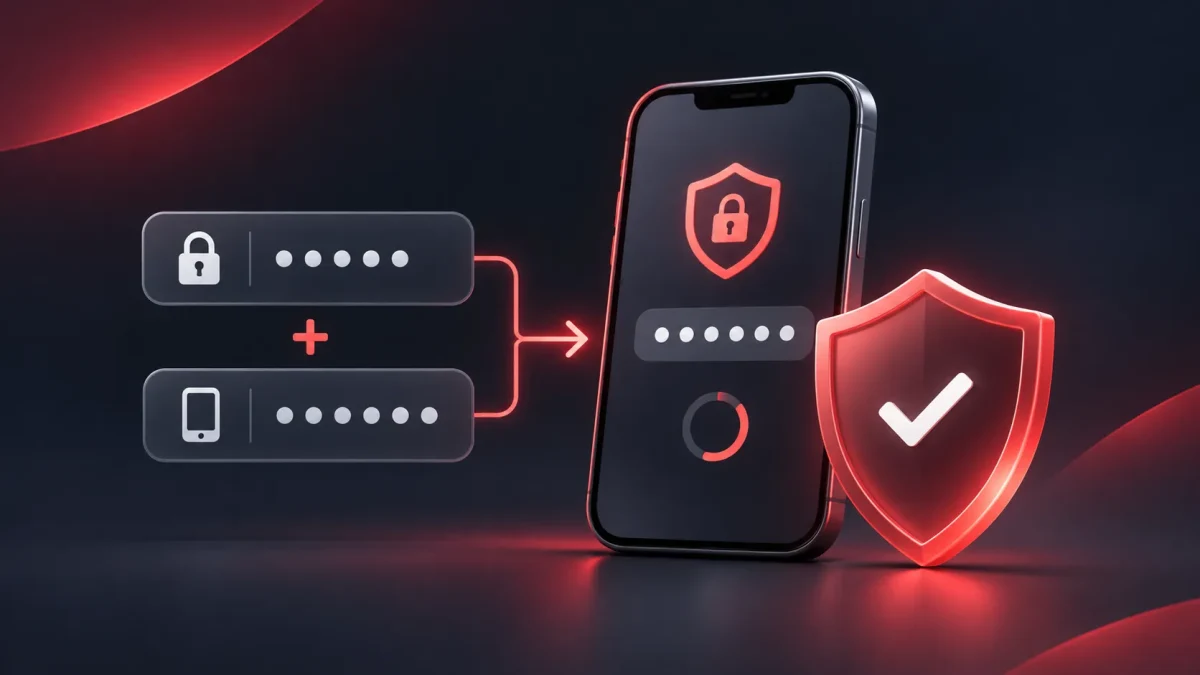
Three cards advise keeping codes private, storing recovery codes securely, and protecting an account promptly if a code is shared.

Set routine for secure codes

Some simple habits fit make am easier to handle requests for secure codes:

  • Start any action for your account only from di official Deriv website or app.
  • Use 2FA for your Deriv account and for di email account wey dey linked to am.
  • Read verification messages carefully before you take any action.
  • Keep recovery codes for protected place before you need dem.
  • No ever approve or enter code for action wey you neva start.
  • If anybody ask you to share code, stop and verify di request yourself through anoda source.

Take di next step

Check wia you dey keep your recovery codes and make sure say 2FA dey enabled for your Deriv account and di email wey dey linked to am. If you receive code for action wey you neva start, no enter or share am—open Deriv directly and check your security settings.

Quiz

Wen you suppose enta secure code?

FAQs

Analyse markets with AI-powered insights

Explore TradersView
WhatsApp