Make you trade top stock indices
Follow di general movement of di stock markets wit di top exchanges for di world. Combine high leverage wit advanced risk-management tools make you stay one step ahead wit your trades.

Why you suppose trade stock indices wit Deriv
Trading wey no get Swap, and no overnight fees
Focus on market movements without make overnight charges worry you.

Smart portfolios wey spread across different assets
Access different asset groups and control your exposure wit one trade.
Protection against negative balance
Protect your account from market swings wey you no expect.

Wetin we dey offer

North America
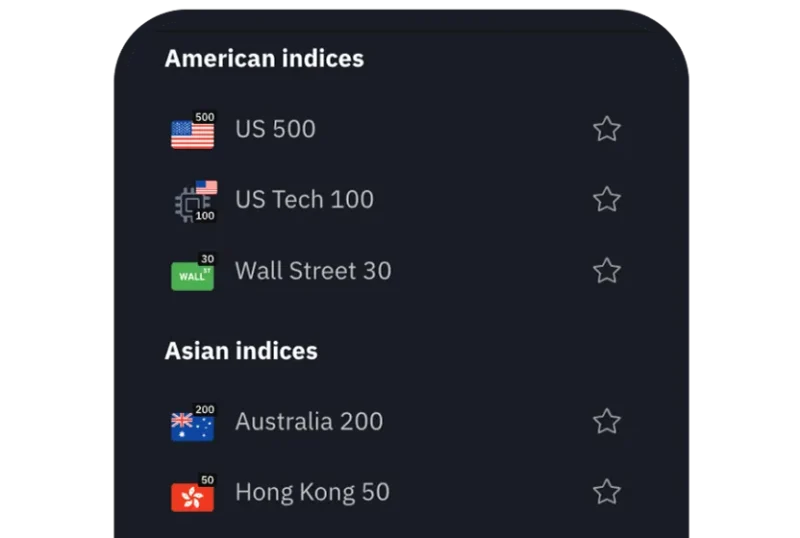
North American indices dey range from Wall Street big companies reach Silicon Valley tech giants.

Europe
European indices dey offer different trading opportunities, from di financial hubs for London reach di innovation centres for Berlin.

Asia Pacific
As dis region dey grow, Asian indices dey represent di economies for di world wey dey grow pass.
Check our stock indices
Instrument | Contract size | Base currency | Minimum size | Vol limit | Minimum spread | Target spread for % | Highest effective leverage | Margin wey you need (%) | Swap long (pts) | Swap short (pts) | Hours wey you fit trade (gmt) |
|---|---|---|---|---|---|---|---|---|---|---|---|
Australia 200 | 1 | AUD | 0.1 | 200 | 1.76 | 0.03% | 1:200 | 0.50% | -6.91 | 2.50 | Sunday 22:00 - Friday 21:00 GMT. Break dey every day 21:00 - 22:00 |
China H Shares | 1 | HKD | 0.1 | 500 | 7.47 | 0.12% | 1:100 | 1.00% | -5.24 | 1.14 | Sunday 22:00 - Friday 21:00 GMT. Break dey every day 21:00 - 22:00 |
DXYUSD | 1 | USD | 1 | 10000 | 0.053 | 0.05% | 1:250 | 0.40% | -24.20 | 0.18 | Sunday 22:10 - Friday 20:50 GMT |
Europe 50 | 1 | EUR | 0.1 | 500 | 1.53 | 0.04% | 1:200 | 0.50% | -4.49 | 0.53 | Sunday 22:00 - Friday 21:00 GMT. Break dey every day 21:00 - 22:00 |
France 40 | 1 | EUR | 0.1 | 100 | 1.33 | 0.05% | 1:200 | 0.50% | -4.49 | 0.53 | Sunday 22:00 - Friday 21:00 GMT. Break dey every day 21:00 - 22:00 |
Germany 40 | 1 | EUR | 0.1 | 100 | 1.7 | 0.01% | 1:200 | 0.50% | -4.49 | 0.53 | Sunday 22:00 - Friday 21:00 GMT. Break dey every day 21:00 - 22:00 |
Hong Kong 50 | 1 | HKD | 0.1 | 100 | 5.78 | 0.05% | 1:100 | 1.00% | -5.24 | 1.14 | Sunday 22:00 - Friday 21:00 GMT. Break dey every day 21:00 - 22:00 |
Japan 225 | 1 | JPY | 10 | 5000 | 7.61 | 0.03% | 1:200 | 0.50% | -2.99 | -0.86 | Sunday 22:00 - Friday 21:00 GMT. Break dey every day 21:00 - 22:00 |
Netherlands 25 | 1 | EUR | 0.1 | 100 | 0.37 | 0.05% | 1:100 | 1.00% | -4.49 | 0.53 | Sunday 22:00 - Friday 21:00 GMT. Break evri day 21:00 - 22:00 |
Spain 35 | 1 | EUR | 1 | 100 | 6.05 | 0.04% | 1:100 | 1.00% | -328.05 | -3.32 | Monday 06:00 - Friday 18:00 GMT |


Dis information na based on di most recent trading data wey dey available, and e fit no represent today’s trading conditions. Wetin we dey offer fit differ based on trade scenario.
How you fit trade stock indices wit Deriv
CFDs
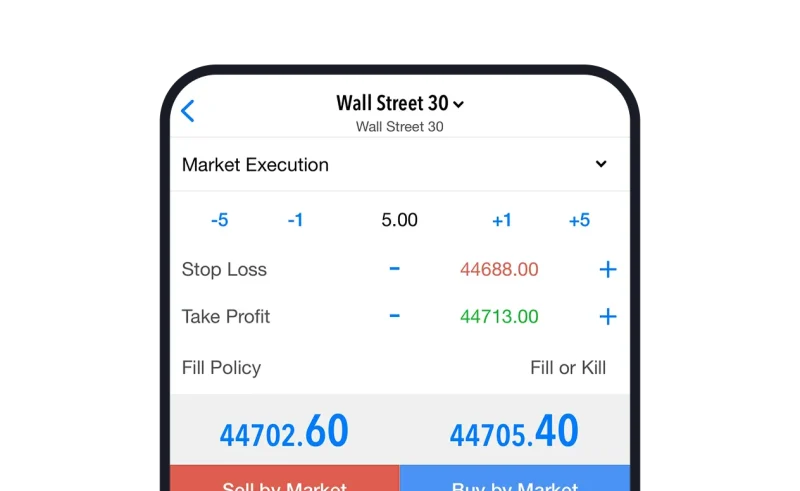
Trade based on di price movements of popular Stock indices wit high Leverage and advanced technical indicators.


Options
Predict di market trends of stock indices without risking more than your initial Trade amount.