
Di way stock market dey go up and down na normal part of trading. Some days, prices dey climb like rocket, and oda days, dem dey fall faster than roller coaster. If you dey trade, you need to understand volatility so you fit make better decisions and stay in control of your strategy.
Dis guide explain wetin stock market volatility mean, why e dey happen, and how you fit manage am like experienced trader.
Wetin be stocks? (Quick recap!)
Stocks (wey dem also dey call equities) represent ownership for company. Wen you buy stocks, you become shareholder, meaning say you own part of dat company. If di company dey do well, di value of im stock generally dey go up, and if e dey struggle, di stock price fit fall. Investors dey buy stocks wit di hope say dem go profit from price increases and dividends (wey be company profits wey dem share wit shareholders).
Why stock prices dey fluctuate?
Supply and demand na how di stock market dey work. If pipo wey want buy stock pass pipo wey want sell am, di price dey rise. If pipo wey want sell pass pipo wey want buy, di price dey fall. E look simple, but for reality, plenty factors dey affect prices, including economic conditions, investor sentiment, and even breaking news.
Wetin be stock market volatility?
Volatility dey measure how much stock prices dey go up and down. If prices dey move up and down sharply, di market get high volatility. If dem dey move steadily, volatility low. E important make you know say volatility no dey tell you whether prices go rise or fall. E only dey measure how strong price movements be.
Example from real life:
For di early days of di COVID-19 pandemic, di stock market bin dey move up and down sharply every day because nobody bin know wetin go happen next. Uncertainty = higher volatility.
Two types of volatility:
- Historical volatility: E dey measure how much di price of an asset don move for di past. Wen traders look past price movements, e dey help dem estimate possible future swings.
- Implied volatility: E dey show how much traders expect stock price to move for di future. Dem often dey derive am from options prices, and e dey useful to predict possible price swings.
How to measure volatility
Traders dey use different tools to measure stock market volatility:
- Beta: E dey show how sensitive a stock be compared to benchmark index (for example, S&P 500). Beta wey pass 1 mean say di stock get more volatility than di index, while beta wey dey below 1 mean say e more stable.
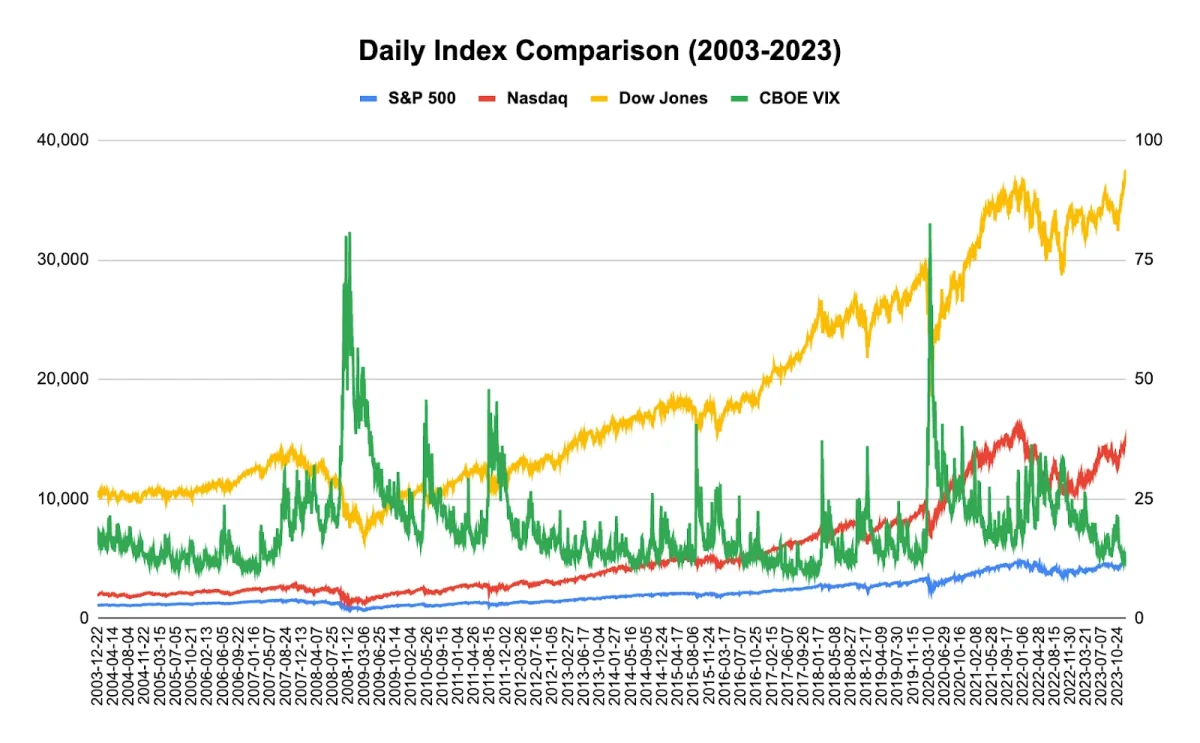
- VIX (Volatility Index): Dem also dey call am “fear gauge,” and di VIX dey measure expected market volatility ova di next 30 days. Wen VIX dey rise, e usually dey signal uncertainty and possible big price movements. Chicago Board Options Exchange (CBOE) na im dey calculate di VIX.
Wetin dey cause stock market volatility?
Several factors dey contribute to stock market volatility, including:
Macroeconomic factors (Tins wey affect di wider economy)
- Economic shocks: Global crises, recessions, or policy changes fit shake di market.
- Monetary policy: Wen central banks raise or lower interest rates, e dey affect market confidence.
- Political events: Elections, trade wars, and geopolitical conflicts fit create uncertainty and cause big market swings.
Microeconomic factors (Tins wey concern individual companies)
- Earnings reports: If company earnings pass expectations, im stock price often dey rise sharply. If di earnings no reach expectations, expect di price to fall.
- Industry trends: Changes for technology, regulations, or consumer habits fit affect entire sectors.
- Company news: If CEO step down or company make big acquisition, e fit cause major stock price movements.
How to manage stock market volatility
Volatility no be entirely bad tin. Some traders dey do well because of am. But e important make you get plan. Here be some strategies wey fit help you navigate market swings:
- Diversify your trades: Spread your investments across different industries to reduce risk.
- Think long-term: Focus on long-term growth, no be short-term market noise.
- Use dollar-cost averaging: Invest fixed amount regularly, no matter wetin dey happen for di market.
- Rebalance your portfolio: Adjust your investments from time to time to maintain di level of risk wey you prefer.
- Stay informed: Keep eye on economic news and market trends so you fit anticipate possible volatility.
Stock market volatility no be tin wey you need to fear. Na tin wey you need to understand and manage. Whether you be day trader wey dey look for quick price movements or long-term investor wey dey stay through di ups and downs, if you get di right strategies in place, you go fit stay confident for any market condition.
You ready to test your strategies for volatile markets? Sign up for free Deriv demo account wit $10,000 in virtual funds and test your trading skills today!
Quiz
Which of di following no dey cause stock market volatility?
FAQs