
Ausblick für Edelmetalle 2026: Können die Preise nach einer historischen Rallye halten?
%2520(1).png)
Edelmetalle beendeten das Jahr 2025 auf Niveaus, die die Märkte zwangen, lang gehegte Annahmen zu überdenken. Daten zeigten, dass Silber im Jahresverlauf um mehr als 150 % zulegte – die stärkste Performance seit 1979 – und kurzzeitig über 80 $ pro Unze stieg. Gold kletterte um rund 65 % und verzeichnete damit ebenfalls den besten Jahresgewinn seit Jahrzehnten, während Platin nach einer abrupten Neubewertung von Angebot und Nachfrage ein 17-Jahres-Hoch erreichte.
Solche Bewegungen verlaufen selten geräuschlos. Zu Beginn des Jahres 2026 fragen sich Investoren nicht mehr, ob Edelmetalle unterstützt werden, sondern ob die Preise auf erhöhtem Niveau bleiben können, sobald sich Volatilität, engere Handelsbedingungen und veränderte makroökonomische Signale einpendeln. Der Ausblick hängt nun von den Zinsen, der realen Nachfrage und davon ab, wie viel Überschuss der Markt bereits abgebaut hat.
Was könnte die Edelmetalle 2026 antreiben?
Die wichtigste Kraft, die den Ausblick für 2026 prägt, ist laut Analysten die Geldpolitik. Die Erwartung weiterer US-Leitzinssenkungen hat die Opportunitätskosten für das Halten nicht verzinslicher Anlagen gesenkt und sorgt so für kräftigen Rückenwind bei Gold und Silber.
Die Federal Reserve senkte im Dezember die Zinsen um 25 Basispunkte und brachte die Zielspanne auf 3,50 %–3,75 %.
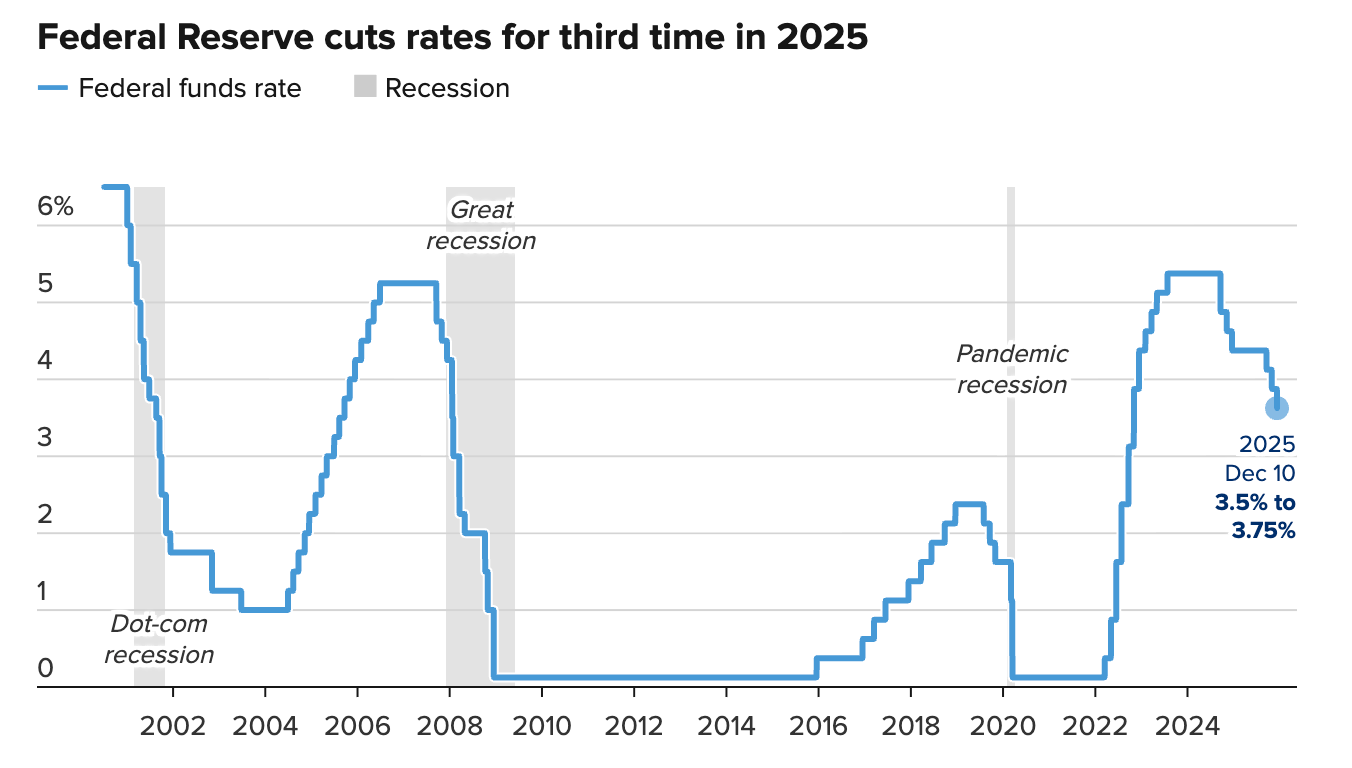
Das Protokoll der Sitzung zeigte, dass die meisten Verantwortlichen für weitere Lockerungen offen bleiben, falls die Inflation weiter nachlässt.
Beobachter des Marktes stellten fest, dass Silber mit überdurchschnittlicher Volatilität reagiert hat, da es an der Schnittstelle von Finanz- und Industrieanwendungen steht. Neben den Zuflüssen in sichere Häfen hat die Nachfrage aus der Solarindustrie, der Elektronik und von Elektrofahrzeugen einen ohnehin schon angespannten Markt weiter verknappt. Jahrelange Angebotsdefizite und schrumpfende Lagerbestände haben Silber besonders empfindlich gegenüber Veränderungen in der Investmentpositionierung gemacht, was erklärt, warum die Rallye sowohl explosiv als auch instabil wurde, als die Liquidität zum Jahresende abnahm.
Warum das wichtig ist
Die Auswirkungen gehen über die reinen Preischarts hinaus. Silbers Rolle als finanzieller Schutz und industrieller Rohstoff bedeutet, dass starke Schwankungen sich auf Produktionskosten, Anlagestrategien und Inflationserwartungen auswirken. Die Bank of America hob ihre Silberprognose für 2026 auf 65 $ pro Unze an und verwies auf anhaltende Angebotsengpässe, warnte jedoch zugleich, dass hohe Preise die Nachfrage am Rand abkühlen könnten.
Golds Einfluss ist breiter, aber stabiler. Die Rallye wurde durch geopolitische Spannungen verstärkt, darunter anhaltende Konflikte im Nahen Osten und Unsicherheit bezüglich der US-Außenpolitik. Analysten merken an, dass Golds Attraktivität Ende 2025 weniger auf spekulativem Überschwang als vielmehr auf Kapitalerhalt in einem Umfeld zurückzuführen war, in dem politische Klarheit weiterhin fehlt.
Auswirkungen auf Märkte, Industrie und Investoren
Die Volatilität hat das Verhalten bereits verändert. Die Entscheidung der CME Group, die Margin-Anforderungen für Edelmetall-Futures zu erhöhen, löste insbesondere bei Silber eine erzwungene Entschuldung aus, wodurch der Preis innerhalb weniger Tage von fast 86 $ auf die niedrigen 70er fiel. Diese Bewegungen wirkten als mechanischer Reset und nicht als Zeichen für kollabierende Fundamentaldaten und reduzierten die Hebelwirkung in einem Markt, der stark überfüllt war.
Die Investmentströme bleiben trotz der Turbulenzen robust. Silber-ETFs verzeichneten 2025 außergewöhnliche Zuflüsse und übertrafen Gold-ETFs sowie viele Aktien-Benchmarks. Platin folgte einem ähnlichen Muster: UBS hob die Preisprognosen an, nachdem sich die Angebotslage verschärfte und das erneute Investoreninteresse durch geringere Fördermengen im südafrikanischen Bergbau verstärkt wurde.
Expertenausblick
Die Prognosen für 2026 unterstreichen die Unsicherheit. Eine Reuters-Umfrage unter 39 Analysten erwartet für das nächste Jahr einen Silberdurchschnitt von etwa 50 $ pro Unze, während das 65-$-Ziel der Bank of America das Vertrauen widerspiegelt, dass strukturelle Defizite die Preise weiter stützen werden. Beide Werte liegen deutlich unter den Höchstständen der Rallye 2025 und verdeutlichen, wie schwer es ist, momentumgetriebene Spitzen mit Fundamentaldaten zu rechtfertigen.
Platin und Palladium stehen vor einem differenzierteren Weg. UBS warnt, dass bei anhaltend hohem Platinpreis die Nachfrage aus dem Autokatalysatorbereich wieder zu Palladium zurückkehren könnte, insbesondere da die Verbreitung von Elektrofahrzeugen langsamer voranschreitet als zunächst erwartet. Im gesamten Edelmetallkomplex werden Zinsen, physische Verfügbarkeit und politische Entscheidungen bestimmen, ob 2025 einen Höhepunkt oder eine neue Basis markiert.
Wichtigste Erkenntnis
Edelmetalle starten 2026 nach einer der stärksten Rallyes seit Jahrzehnten, angetrieben von fallenden Zinserwartungen, begrenztem Angebot und geopolitischen Risiken. Silbers Anstieg hat sowohl Chancen als auch Risiken erhöht, während Gold weiterhin als Anker des Marktes fungiert und Platin die sich wandelnden industriellen Realitäten widerspiegelt. Ob die Preise halten können, hängt davon ab, wie schnell Zinssenkungen umgesetzt werden, wie sich die industrielle Nachfrage entwickelt und ob die Angebotsknappheit anhält, sobald spekulative Übertreibungen vollständig abgebaut sind.
Technische Einblicke zu Silber
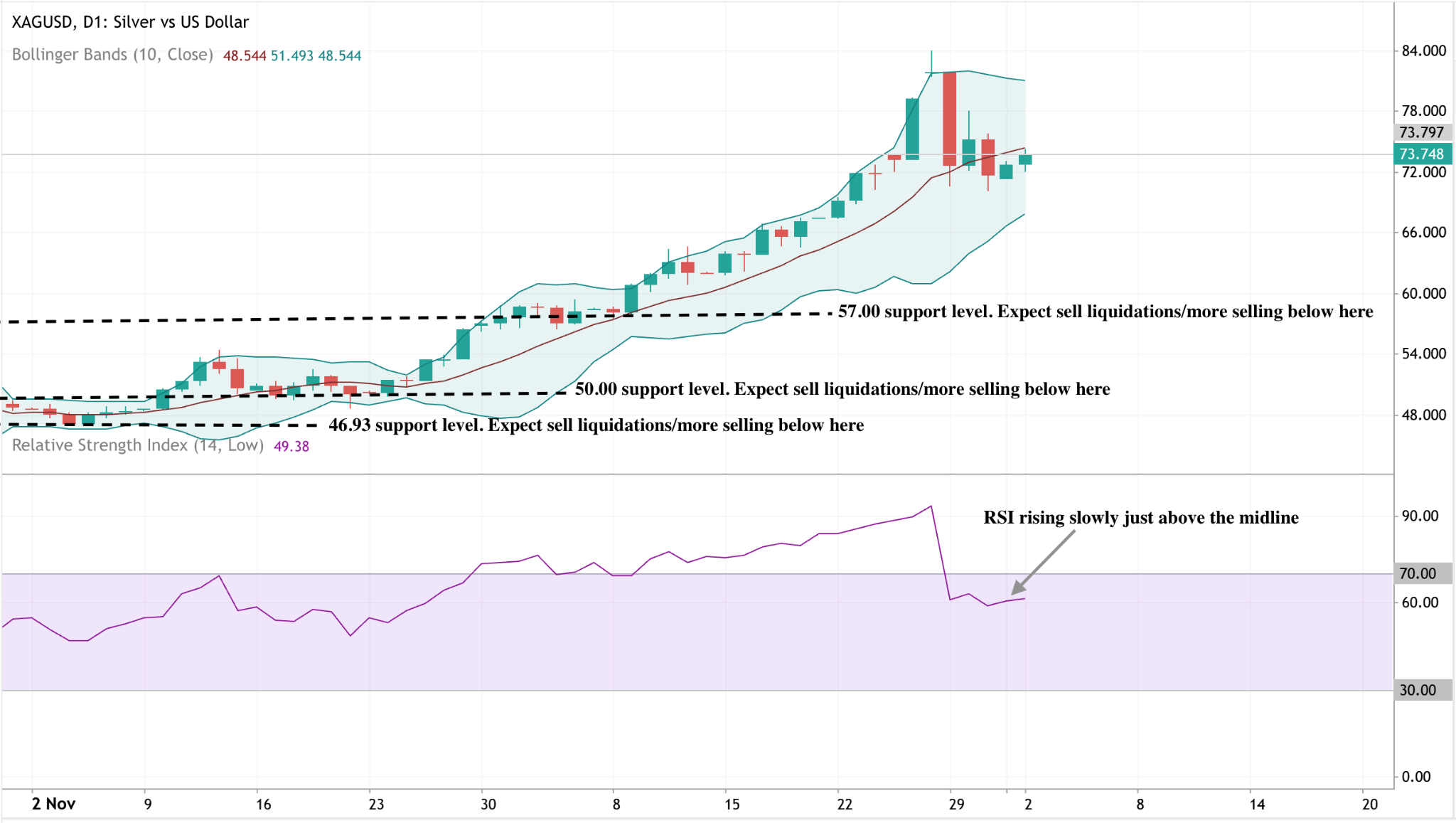
Silber befindet sich weiterhin in einer übergeordneten Aufwärtsstruktur, konsolidiert jedoch aktuell nach einer starken Rallye und zieht sich leicht von den jüngsten Hochs zurück. Die Bewegung hat den Druck von Momentum-Indikatoren verringert, ohne einen Trendwechsel anzuzeigen.
RSI hat sich abgekühlt und liegt nun knapp über der Mittellinie, was darauf hindeutet, dass das Momentum in eine neutralere Zone zurückgekehrt ist, während die zugrunde liegende Nachfrage intakt bleibt. Bollinger Bands, die sich während der Rallye stark ausgeweitet hatten, beginnen sich zu stabilisieren und deuten auf eine Pause der Volatilität statt auf erneuten Abwärtsdruck hin.
Solange Silber über der US$57-Unterstützung bleibt, ist der Aufwärtstrend strukturell intakt. Ein Bruch unter diese Zone würde weiteres Abwärtspotenzial in Richtung US$50 und US$46,93 eröffnen, während bei einer Rückkehr der Käufer über die jüngsten Hochs wahrscheinlich neuer Aufwärtsdruck entsteht.
Die angegebenen Wertentwicklungen sind keine Garantie für zukünftige Ergebnisse.


