
Bitcoin faces crucial test as selling pressure fades

Bitcoin is down just over 1% over the past 24 hours, but the real story sits beneath the surface. Over the weekend, the price came within a hair’s breadth of confirming a bearish breakdown near $86,000 before rebounding, leaving the market in a fragile holding pattern rather than a clear recovery.
That rebound coincided with a sharp slowdown in on-chain selling, yet institutional demand remains notably absent. U.S. spot Bitcoin ETFs have shed more than $1.7 billion since mid-January, while global markets brace for the Federal Reserve’s next policy signal. With volatility rising across assets, Bitcoin is now approaching a moment that could define its short-term direction.
What’s driving Bitcoin?
Bitcoin’s latest move has been shaped by a technical structure that has been building quietly for weeks. On the daily chart, BTC remains within a head-and-shoulders pattern, a formation that often precedes trend reversals when confirmed.
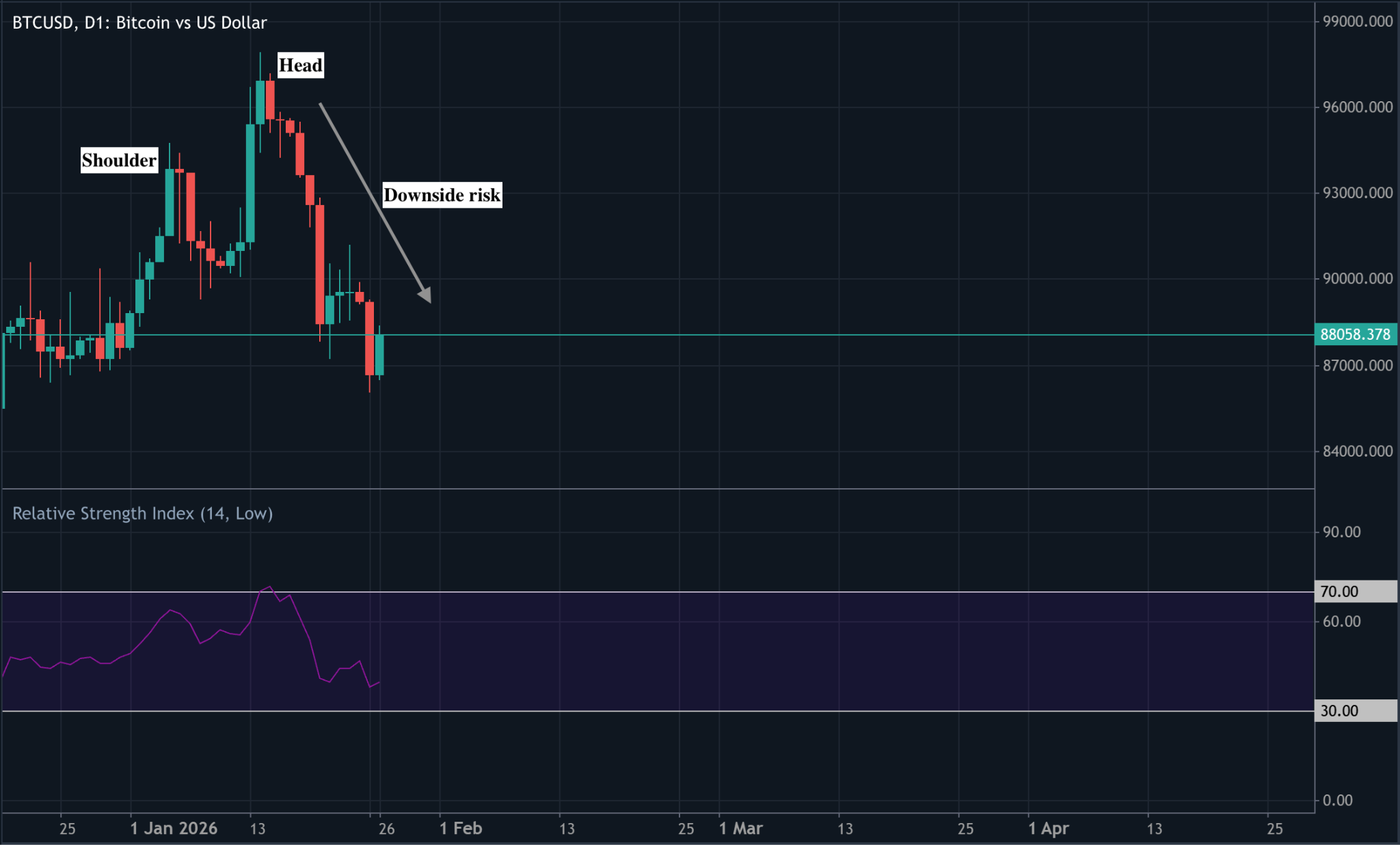
While the bounce prevented an immediate breakdown, the structure itself remains intact, keeping downside risk alive.
What changed over the weekend was the intensity of selling. On-chain data shows a sharp drop in coin movement across all holding ages. The Spent Coins Age Band metric fell from roughly 27,000 to just under 7,700, a decline of more than 70%.
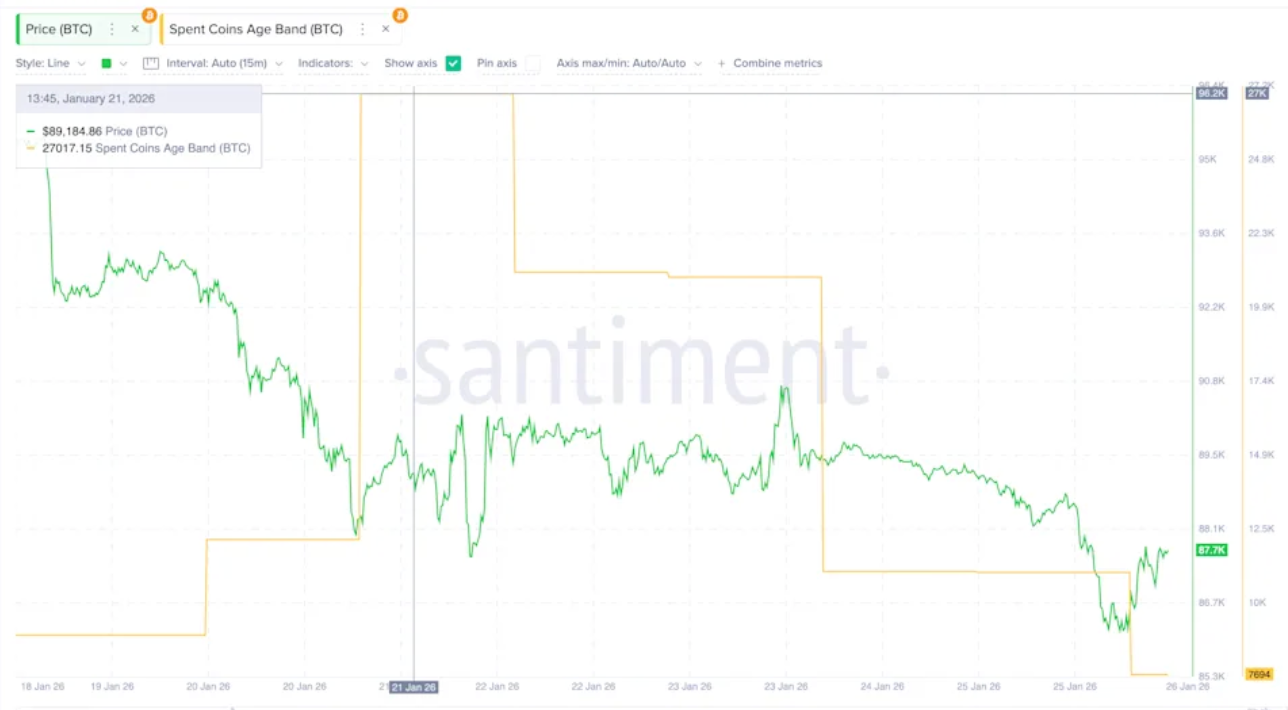
When fewer coins move, fewer holders are actively selling, and that reduction in supply pressure explains why Bitcoin stabilised rather than slipping straight through support. Still, easing sell pressure does not automatically translate into renewed demand.
Why it matters
The missing piece is institutional participation, and ETF flows make that gap difficult to ignore. U.S. spot Bitcoin ETFs have now posted several consecutive sessions of net outflows, with more than $100 million leaving the products on 23 January alone and roughly $1.33 billion exiting over the past week.
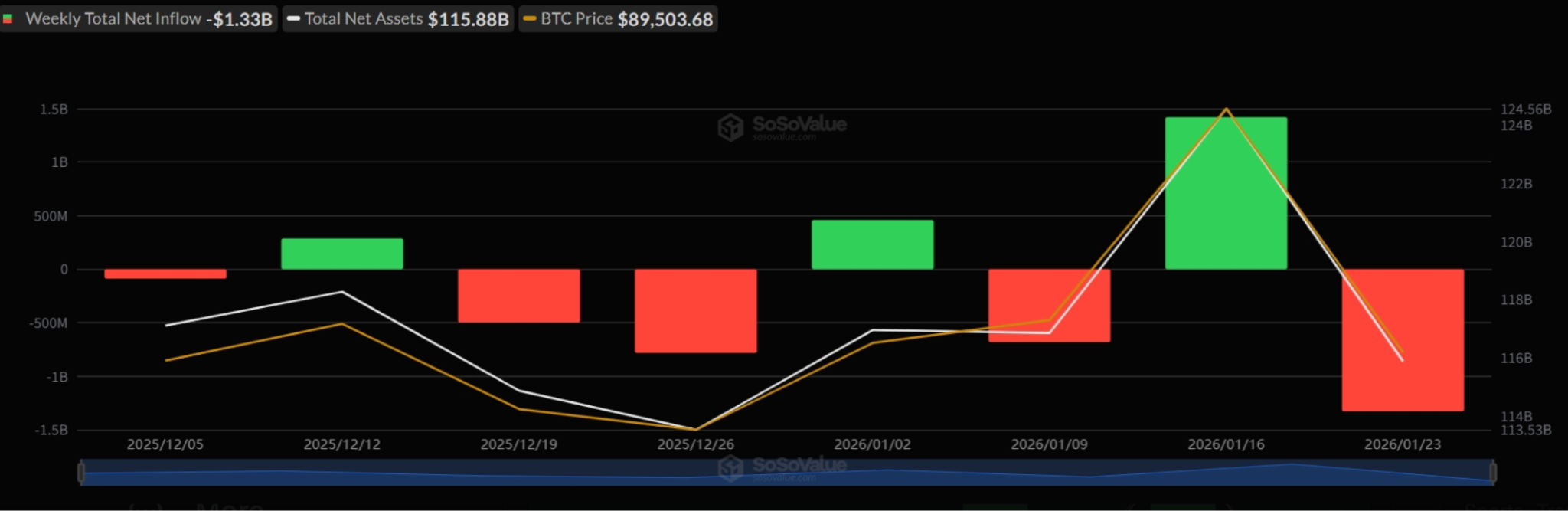
These funds have become a key entry route for large portfolios, making their behaviour a critical barometer of conviction, according to analysts.
Analysts caution that price rebounds unsupported by ETF inflows often struggle to extend. Bitwise CIO Matt Hougan has pointed out that sustained redemptions usually reflect hedge funds pulling back from the Bitcoin basis trade as returns compress. Data from Amberdata shows those yields have dropped below 5%, down sharply from around 17% a year ago, reducing the incentive for institutional positioning.
Impact on the crypto market
Bitcoin’s hesitation has rippled across the broader crypto market. Ether fell more than 7% over the past 24 hours, sliding back below the $3,000 level for the first time since early January. Altcoins have fared even worse, with capital rotating defensively into Bitcoin despite its own weakness. As a result, Bitcoin dominance has climbed to nearly 60%, highlighting how risk aversion tends to consolidate liquidity into the largest asset.
That defensive shift mirrors moves in traditional markets. Global equities weakened as Japan’s government bond market showed signs of stress and renewed U.S. tariff threats weighed on sentiment. The Nasdaq fell close to 2%, while Germany’s DAX slipped more than 1%. In contrast, traditional safe havens surged, with gold rising by more than 3% and silver rallying by 7% to fresh record highs. In this environment, crypto has traded firmly as a risk asset rather than a hedge.
Expert outlook
The immediate focus now turns to macro policy. The Federal Reserve is expected to leave interest rates unchanged at its January meeting, with CME FedWatch placing the probability of a cut below 3%.
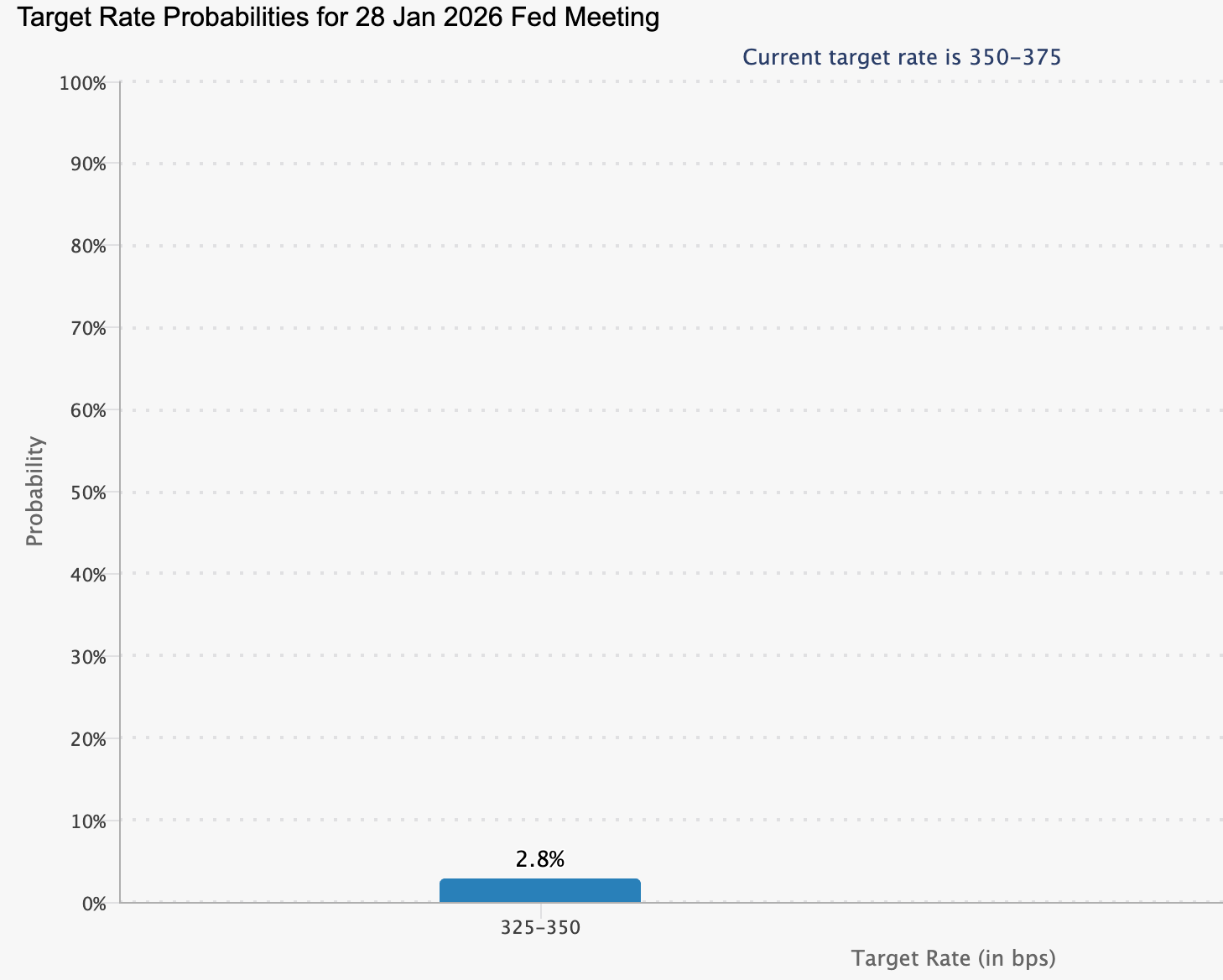
Markets will instead scrutinise Chair Jerome Powell’s press conference for any shift in tone, especially after delays to key U.S. GDP and consumption data have added uncertainty to the growth outlook.
For traders, ETF flows remain the most important near-term signal. “Volatility is back, and bitcoin is moving in line with risk assets again,” said Paul Howard of trading firm Wincent, adding that altcoins are likely to remain under pressure if macro stress persists. A sustained move back above $90,000 could stabilise sentiment, but failure to reclaim that level leaves Bitcoin exposed to another test of support.
Key takeaway
Bitcoin’s recent bounce reflects fading selling pressure rather than a clear return of buyers. With ETF outflows persisting and macro risks rising, the market is entering a decisive phase. How Bitcoin responds around key levels, alongside signals from the Federal Reserve and daily ETF flows, will shape the next move. For now, stability remains conditional rather than assured.
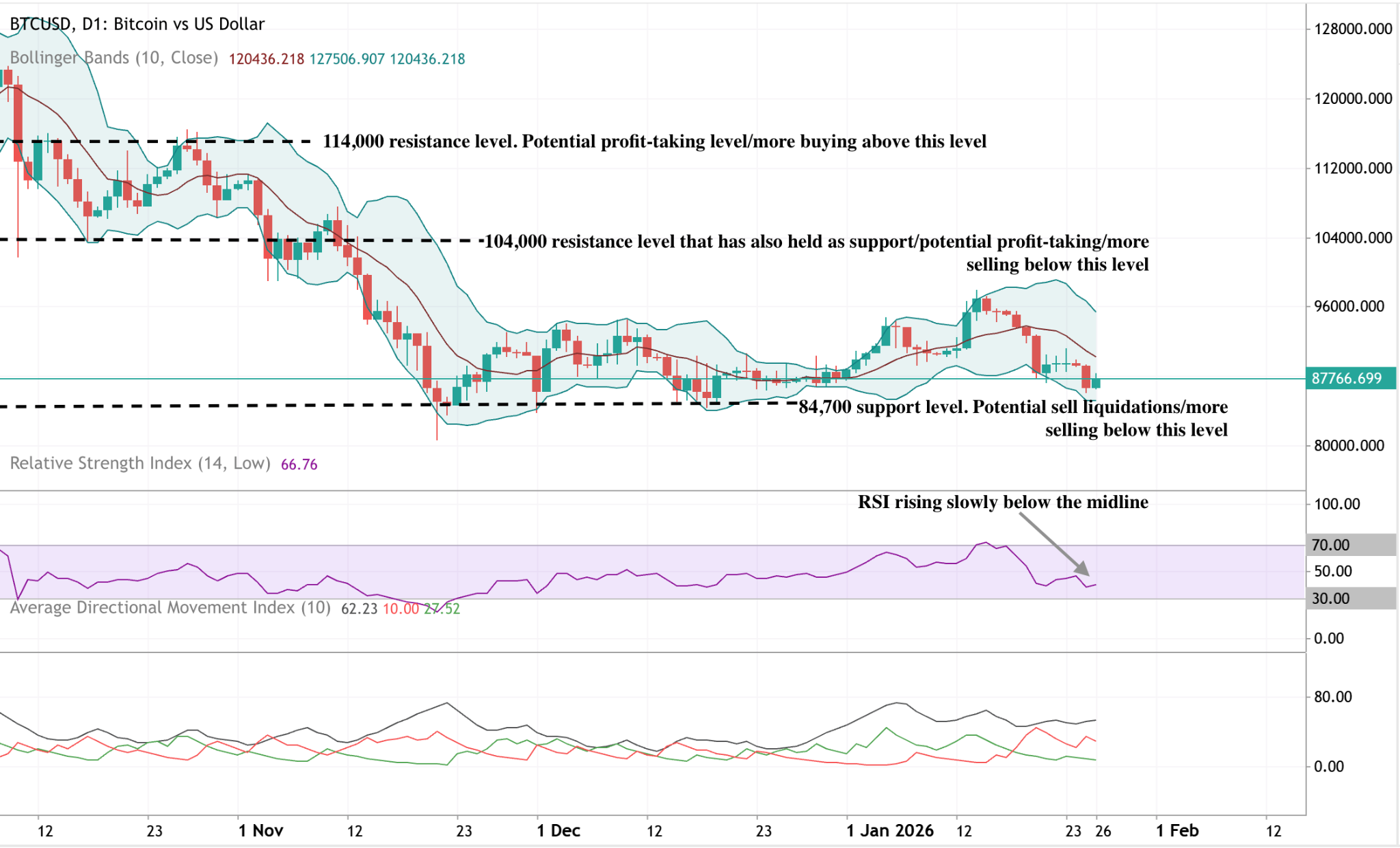
Bitcoin technical outlook
Bitcoin continues to consolidate following its earlier correction from highs, with price remaining contained within a broad range and trading below the mid-area of the Bollinger Bands. The bands have narrowed compared with prior periods, indicating reduced volatility and a slowdown in directional momentum.
Momentum indicators reflect this stabilisation phase, with the RSI rising gradually but remaining below the midline, pointing to subdued upside momentum relative to earlier phases. Trend strength remains elevated, as shown by a high ADX reading, although directional indicators suggest the trend is no longer accelerating.
Structurally, price continues to oscillate between the previously established zones around $84,700 on the lower end and the former resistance areas near $104,000 and $114,000 on the upper end, highlighting a market environment characterised by balance rather than active price discovery.
The information contained on the Deriv Blog is for educational purposes only and is not intended as financial or investment advice. The information may become outdated, and some products or platforms mentioned may no longer be offered. We recommend you do your own research before making any trading decisions.


