Swing trading for Stocks na medium-term trading approach wey positions dey remain open for several days or weeks to capture Market movements wey dey develop over time. E dey between di pace of day trading and di long-term view of investing, so traders fit participate for trends without watching screen all di time. Although e dey offer flexibility, outcomes no dey certain, and traders must manage risk carefully.
Quick summary
- Swing trading mean say you dey hold trades for several days or weeks.
- Traders dey use indicators, chart patterns, and fundamental triggers to build trade ideas.
- Overnight gaps and financing costs fit affect positions, so traders must consider dem wen dem dey plan.
- Effective setups dey combine trend structure, support and resistance, and risk control.
- Deriv platforms like Deriv MT5 and Deriv cTrader dey provide tools wey dey help traders analyse Markets and manage trades responsibly.
Wetin be swing trading strategy?
Swing trading dey balance timing wit patience. While day traders dey look for opportunities wey dey appear minute by minute, swing traders dey focus on movements wey dey develop over multiple sessions. Traders dey review wider Market conditions, like sector trends, volatility cycles, and earnings seasons, to anticipate wia pressure or momentum fit build, while dem recognise say price behaviour fit change unexpectedly.
Dr. Lena Moritz, Market Behaviour Researcher, suggest say:
“Swing trading dey work best wen traders see Markets as sequences of impulses and pauses. Wen dem recognise dis rhythm, e dey help dem avoid chasing noise and focus on meaningful movement.”
Traders often dey combine technical and fundamental information. For example, increased volatility around earnings announcements fit create short- to medium-term opportunities, but e dey also increase risk. So swing traders must weigh potential reward against dia exposure to uncertain moves.
Swing traders usually dey analyse:
- Technical indicators like moving averages, Relative Strength Index (RSI), Moving Average Convergence Divergence (MACD), and Average True Range (ATR)
- Price action patterns, including pullbacks, breakouts, and reversals
- Fundamental catalysts like news releases, economic reports, or company results
Because trades dey remain open overnight, prices fit gap higher or lower wen new information come out. As Jonathan Hale, portfolio strategist for Apex Investments, note: “Overnight gaps fit change risk immediately, na why swing traders dey rely heavily on volatility buffers and disciplined stop placement.” Traders dey also consider overnight financing charges, wey dey vary according to asset and account type.
Which swing trading indicators matter pass technical indicators?
Indicators dey help traders interpret momentum, trend direction, and volatility, but no single tool fit predict outcomes. Swing traders dey combine signals from multiple sources and compare dem wit chart structure.
Trend indicators, like moving averages, dey help traders understand whether price dey generally rise or fall. Momentum indicators, like RSI and MACD, dey provide information about di strength or weakness of a move. Volatility measures like ATR dey help traders set stop-loss levels wey account for normal price movement.
Omar Villareal, Senior Technical Analyst, explain say:
“Indicators suppose confirm wetin price already dey suggest. Wen price and indicators no agree, experienced swing traders dey trust structure first and signals second.”
One key principle na confluence: wen several pieces of information dey point for di same direction. For example, bullish RSI divergence near a support level fit increase trader confidence, although e no remove risk. Market conditions fit change quickly, and indicators fit give false or conflicting signals.
Swing trading fit feel easier to manage than intraday trading because e no require constant monitoring; but e still require consistent review, careful planning, and acceptance say Market outcomes no dey certain.
Which swing trading examples fit help?
Before traders place a trade, swing traders usually dey assess di wider trend on higher timeframes. Market wey dey trend often dey produce clearer setups, while range-bound conditions fit create false signals or choppy movement. Traders dey outline dia plans beforehand, including entry, stop-loss level, and target areas, to reduce emotional decisions during di trade.
Sophia Tan, Deriv trading strategist, explain further say:
“Di strongest swing setups dey happen wia multiple forms of evidence align — structure, momentum, volatility, and context. Na confluence dey turn good idea into reliable trade.”
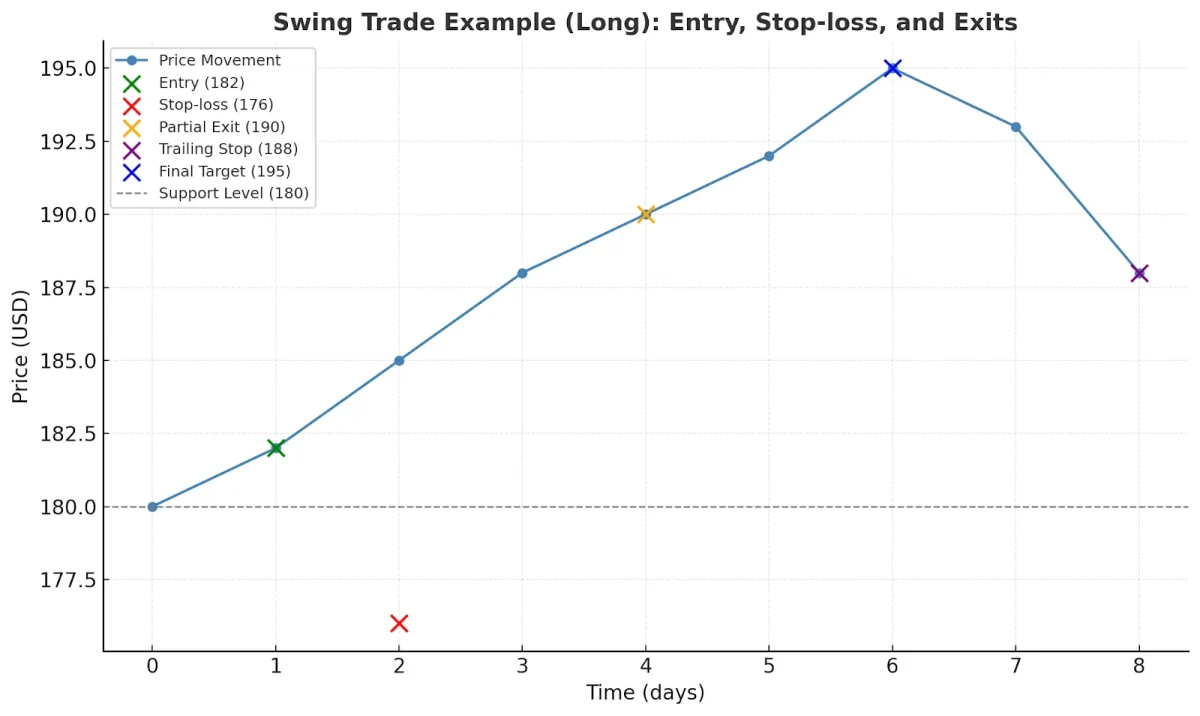
Example: Long trade setup
- Entry: Apple stock pull back to support at USD 180.
- Signal: Bullish pattern form on di H4 chart.
- Entry price: USD 182
- Stop Loss: Below support at USD 176
- Partial exit: At USD 190
- Trailing stop: Adjusted to USD 188
- Final target: USD 195
Example: Short trade setup
- Entry: Price reach resistance at 195 and begin turn lower
- Sell price: 195
- Stop Loss: 200
- Partial exit: 190
- Trailing stop: 187
- Final target: 182
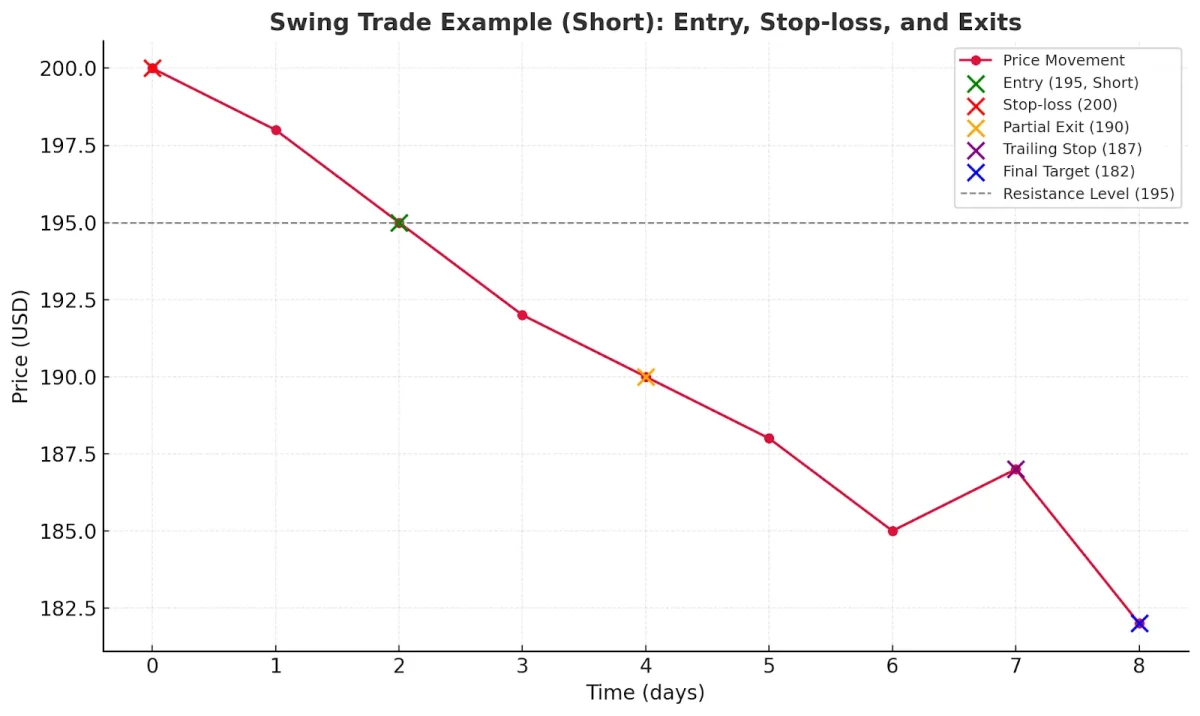
Dis examples dey show structured approaches to analysis, no be outcomes wey dey guaranteed. Real trades fit develop differently because of volatility, changing sentiment, or news events.
How risk management for swing trading and position sizing guide dey work?
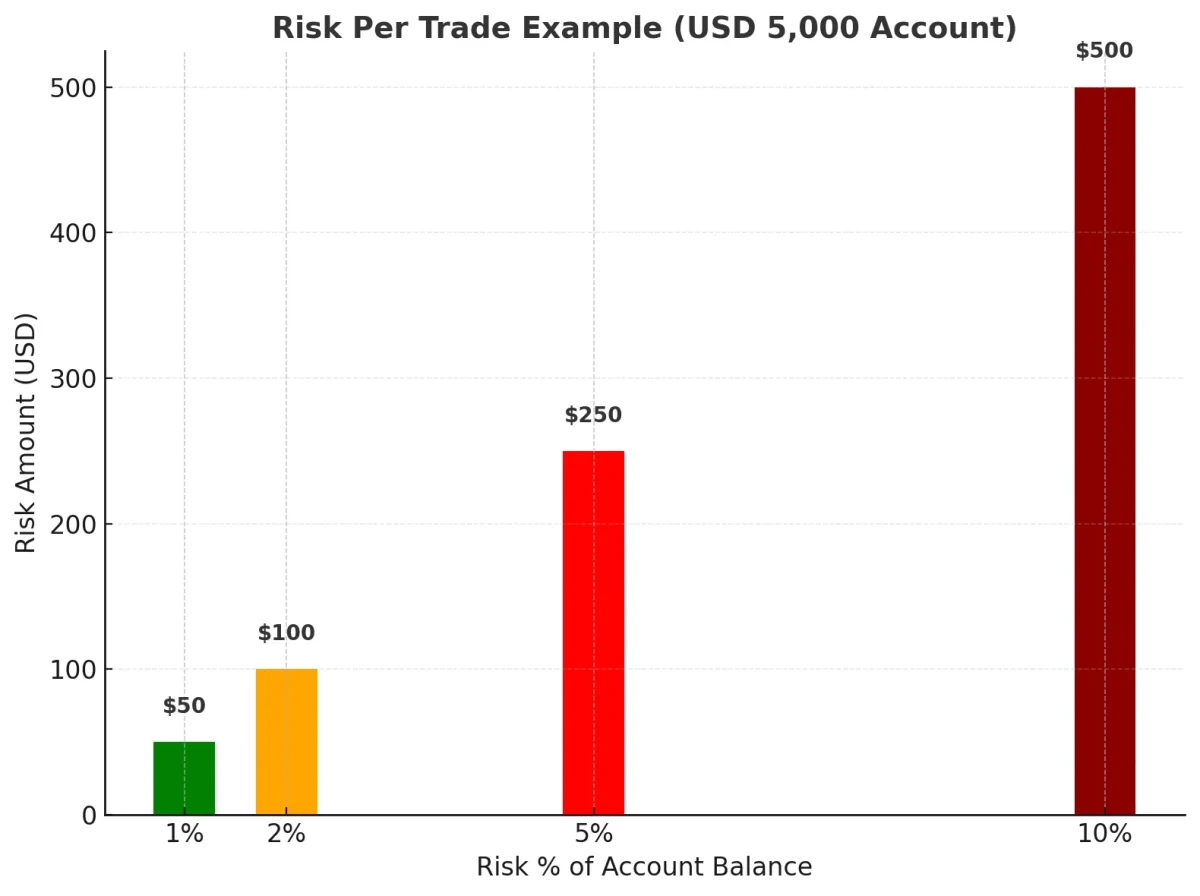
Risk management dey central to swing trading because positions dey remain exposed to overnight and weekend movements. Traders often dey risk only small portion of dia account, like 1–2%, to limit di impact of unfavourable price changes.
Volatility assessment dey equally important. Wen Markets become more volatile, traders fit widen stop-loss distances or reduce position sizes. Some traders dey set weekly or monthly risk caps to avoid significant drawdowns during unpredictable periods.
Caleb Hart, wey be Risk Management Specialist, explain further:
“To keep your risk size consistent dey more important than to always dey right. Even strong strategy fit become fragile if exposure no dey stable across trades.”
Oda factors wey dey influence risk include:
- Economic announcements like inflation or interest rate releases
- Company earnings wey fit cause rapid movement for individual stocks
- Financing costs wey dey accumulate while trades still dey open
Derived Indices for Deriv dey operate 24/7, and dis dey give traders ways to practise strategies outside traditional Market hours. Strong trade management dey focus on how to adapt to changing conditions instead of expecting smooth or predictable movements.
Which swing trading account types dey suitable for swing trading on Deriv?
Different account types dey offer different trading conditions:
- Financial account: E dey suitable for Stocks, forex, and Commodities.
- Swap-free account: E dey useful for longer holds or for traders wey dey follow Islamic finance principles.
- Zero Spread account: E dey help traders calculate costs precisely, wey fit dey valuable for index trading.
Traders dey choose accounts based on how long dem plan to hold trades, fee structure, risk tolerance, and di instruments wey dem prefer.
How swing trading in Stocks dey work for practice?
On 3 August 2023, Apple report earnings wey pass expectations. Afta di announcement, di stock climb from around USD 220 reach USD 225. Swing trader fit build trade around dis momentum:
- Entry: USD 225
- Stop Loss: USD 215
- Target: USD 240
- Trailing stop: Dem adjust am upward as price dey move
Dis scenario dey show how technical and fundamental elements fit align, although actual results dey depend on Market conditions. Nina Leclerc, Deriv Equity Products Specialist, tok say, “Swings wey earnings cause often dey provide clearer trends wey last several days than ordinary trading sessions.” “But traders still need defined risk limits before dem enter any setup.”
Demo accounts wey get 10,000 USD virtual funds dey allow new traders practise without risking real capital.
How beginners fit start
New traders often dey start by observing how trends and consolidations dey form across timeframes. Back-testing and journaling dey help dem identify patterns for how dem dey make decisions, including emotional responses and risk preferences.
As time dey go, beginners dey explore different swing trading styles—trend-following, breakout setups, or reversal attempts. Success dey depend on consistency, realistic expectations, and acceptance say losing trades na part of di process.
Dr. Mira Solberg, wey be trading psychology lecturer, tok say:
“Beginners dey improve fastest wen dem track dia behaviour, no be only profits. To note emotions during trades dey teach more than to review charts alone.”
Simple workflow for new traders:
- Scan Markets for instruments wey dey trend
- Use indicators and multi-timeframe charts to confirm setups
- Execute trades wit stops and targets wey you don define beforehand
- Review trades once or twice a day
- Record decisions and observations for trading journal
Comparison: Swing trading vs day trading vs long-term investing day trading
| Feature | Swing trading | Day trading | Long-term investing |
|---|---|---|---|
| How long you hold | Days to weeks | Minutes to hours | Months to years |
| Time wey you need to commit | Moderate | High | Low |
| Capital wey you need | E dey use Leverage; overnight fees dey apply | E dey use Leverage within di day | Full capital, minimal Leverage |
| Wetin di analysis dey focus on | Technical analysis + event tracking | Short-term chart behaviour | Fundamental and macro factors |
| E best for | Part-time traders | Traders wey want fast-paced setups | Long-term portfolios |
Which Deriv account types dey suitable for swing trading?
- Financial account: E best for Stocks, forex, and Commodities.
- Swap-free account: Dem design am for longer-term holds or Islamic finance.
- Zero Spread account: E dey suitable for traders wey want predictable costs for precise entries.
How to start swing trading on Deriv
Traders fit start wit Deriv demo account wey get 10,000 USD virtual funds before dem move to real account wen dem feel more confident. As traders dey build experience gradually, e dey help dem become familiar wit volatility, execution tools, and risk management.
Quiz
Wetin be strong signal to enter swing trade?
FAQs