Commodities na di raw materials wey dey keep di world running, from di coffee for your cup to di gold for your jewellery. Pipo don trade dem for centuries, since di days of di Silk Road, and today dem still be major part of di global economy. Di main thing wey dey determine commodities prices na one simple rule: supply and demand.
Wen demand high and supply low, prices dey rise well well. Wen di opposite happen, prices dey fall. Na so simple e be!
Di two types of commodities
| Hard commodities | Soft commodities | ||
|---|---|---|---|
| Metals | Energy | Agricultural products | Livestock and meat |
| Gold | Crude oil | Soy beans | Live cattle |
| Silver | Natural gas | Coffee | Lean hogs |
| Copper | Gasoline | Grains | Milk |
| Platinum | Cotton | ||
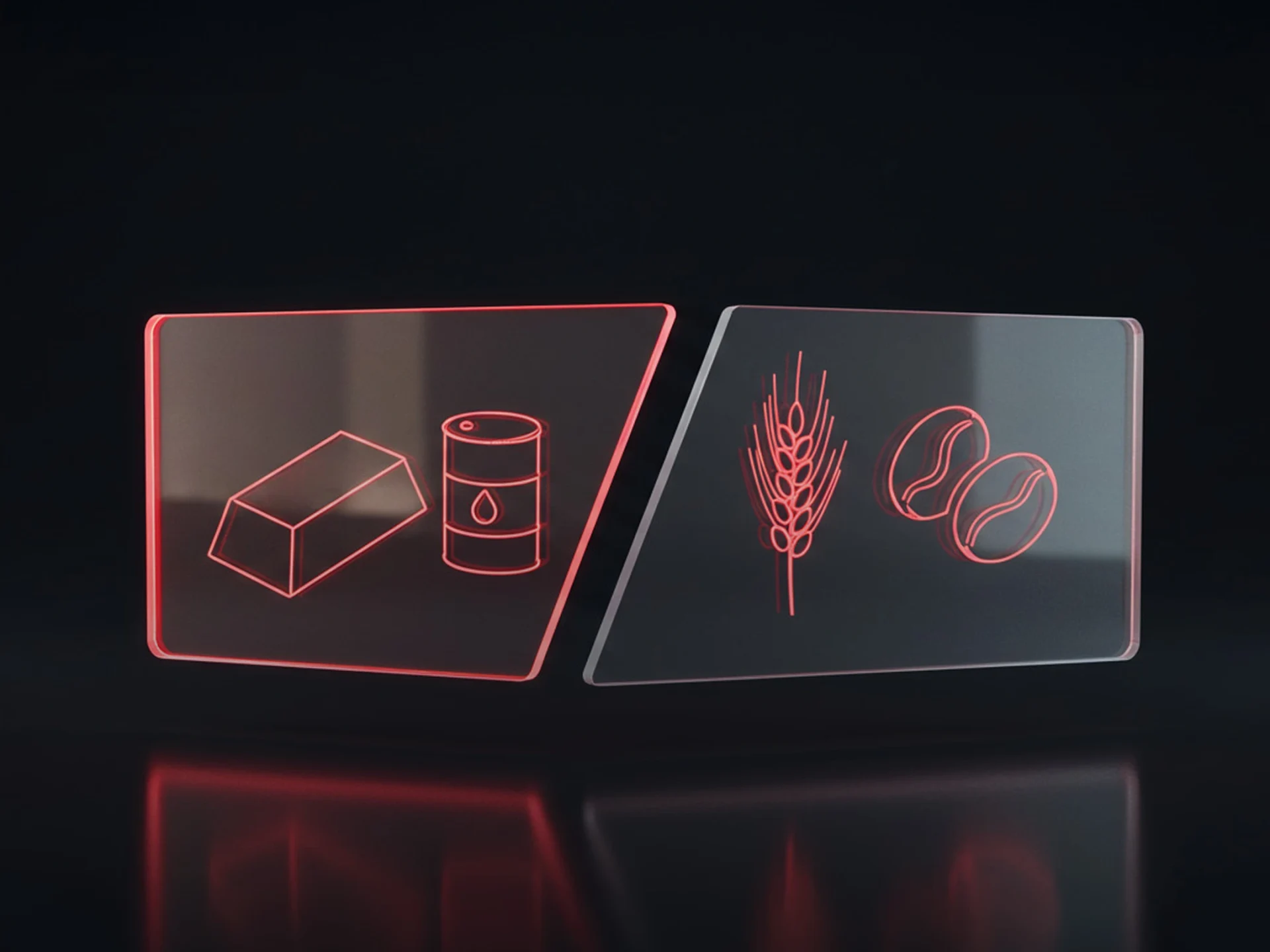
Commodities get two main types:
- Hard commodities. Dem be natural resources wey pipo dey mine or extract, like oil, gold, and metals.
- Soft commodities. Dem include agricultural products like wheat, coffee, and sugar.
Some of di most popular commodities for di trading world include oil, especially WTI and Brent crude, and gold, wey traders dey often turn to whenever di economy no stable.
How you fit get better at commodities trading
You wan improve your commodities trading skills? Here na a few important steps:
- Understand wetin dey move prices
Economic trends, political events, and even natural disasters fit change commodities prices sharply. For example, big storm fit disrupt oil production and make prices rise sharply. If you dey follow global news, e fit give you advantage.
- Use market analysis
Traders dey rely on two main types of analysis:- Fundamental analysis (looking at supply, demand, and economic conditions)
- Technical analysis (using historical price data to spot patterns)
- Follow di trends
Commodities dey move in trends, either up (bullish) or down (bearish). If you spot dis trends early, e fit help you trade at di right time.
How to trade commodities on Deriv
You no need to own barrels of oil or bars of gold to trade commodities. Instead, you fit trade dem using CFDs (Contracts for Difference) or Options on Deriv. Na so you fit do am:
CFD trading on Deriv
Trade commodities on platforms like Deriv MT5, Deriv cTrader, and Deriv X wit CFDs, wey allow you to:
- Go long (buy) if you think say prices go rise.
- Go short (sell) if you expect say prices go fall.
Your position dey stay open for as long as you want, and dis dey give you more control over your trading strategy.
Options trading on Deriv
If you prefer structured risk, try digital options on metals using Rise/Fall, Higher/Lower, or Touch/No Touch contracts. Dem allow you to predict price movements within a set timeframe.
- Rise/Fall. Predict if di price go end higher or lower than wen you enter.
- Higher/Lower. Set a target price (barrier) and predict if di market go finish above or below am.
- Touch/No Touch. Predict whether di market go reach a specific price.
Wit options, you go know your potential profit or loss before you enter a trade, and dis dey make risk management easier.
You ready to start trading commodities?
Commodities trading dey exciting because prices dey react to events for di real world, and dis dey bring both opportunities and risks. Wetin fit help you succeed? Keep learning, stay adaptable, and trade smart.
- Practise wit a Deriv demo account to build confidence! You go get $10,000 in virtual funds to practise before you start real trading.
- Sign up today and start to explore di commodities market!
Quiz
Na which commodity dem dey often call “black gold”?
FAQs