
Hybrid Indices na synthetic indices wey you fit find only on Deriv. Dem combine di directional structure of Crash and Boom Indices Crash and Boom Indices wit di way Volatility Indices price dey change. Dem design Hybrid Indices to simulate market conditions wey resemble real market conditions more, by introducing unpredictable price movement before major upward or downward events, while keeping di overall volatility lower.
Dis combination creates synthetic markets wey no dey behave too mechanically and wey require trading strategies wey fit adapt better. For traders wey want synthetic instruments wey resemble real-world price action more — without exposure to news events or economic data — Hybrid Indices na significant development for synthetic trading on Deriv.
Quick summary
- Hybrid Indices combine di directional behaviour of Crash/Boom wit di randomness wey be like Volatility Index own
- Annualised volatility na approximately 20%, wey lower than traditional Crash/Boom Indices own
- Di signature spikes and drops still dey, but e harder to predict di movements before dem
- You fit find am only on Deriv through Deriv MT5 and Deriv cTrader
- E suitable for traders wey dey look for synthetic price behaviour wey resemble real market behaviour more
Wetin be Hybrid Indices?
Hybrid Indices na synthetic indices wey algorithm generate and wey Deriv create. Economic news, geopolitical events, or market sentiment no dey influence dem. Instead, na transparent mathematical model dey produce dia price movements.
Wetin make Hybrid Indices different na di way dat model combine two established synthetic behaviours:
- Crash/Boom Indices dey provide structured directional movement, wey sudden spikes or drops dey follow
- Volatility Indices dey contribute continuous price fluctuation and randomness
Di result na synthetic asset wey dey trend for long periods, develop unstable or choppy movement, and then produce sharp upward or downward price event. Di timing and intensity of di movement before di event dey vary from one occurrence to di next.
Hybrid Indices vs traditional synthetic indices
| Feature | Crash/Boom Indices | Volatility Indices | Hybrid Indices |
|---|---|---|---|
| Trend behaviour | Directional, predictable | Non-directional | Directional, wit movements before major events wey dey vary |
| Signature moves | Sudden spike or drop | None | Sudden spike or drop |
| Annualised volatility | 30–40% | E dey vary by index | ~20% |
| How price behaviour resemble real market | Moderate | High | Highest |
Key takeaway: Hybrid Indices dey reduce overall volatility while dem dey increase uncertainty for di period before major price moves, making timing and risk management more important. To learn more about effective risk management, read our guide on how to manage volatility risks.
How Hybrid Indices dey work
Crash and Boom foundations
Hybrid Indices dey retain di core structure of Crash and Boom Indices:
- Crash-based hybrids dey rise gradually before sudden downward moves happen
- Boom-based hybrids dey decline gradually before dem produce sharp upward moves
Dese directional tendencies remain consistent across all Hybrid Index variants.
Added micro-volatility
Before each major price event, Hybrid Indices dey introduce irregular short-term price fluctuations. Dis micro-volatility:
- E dey interrupt smooth price movement
- E dey create false signals and temporary reversals
- E dey make am harder to anticipate di exact timing of spike or drop
Past price behaviour no dey reliably predict wen di next high-impact move go happen.
Similarities wit real markets
For live financial markets, prices often dey become unstable before major institutional trades or economic releases. Hybrid Indices dey replicate dis behaviour synthetically by combining structured direction wit controlled randomness, without relying on external data.
Key features and benefits
| Feature | Wetin e mean for traders |
|---|---|
| Available only on Deriv | You fit find am only on Deriv |
| Lower volatility | Average price swings wey smaller than Crash/Boom Indices own |
| Unpredictable movements before major events | More emphasis on timing and confirmation |
| Fully synthetic | No exposure to news, earnings, or macro events |
| Available 24/7 | You fit trade at any time, including weekends |
| Demo access | Test strategies wit virtual funds |
Hybrid Indices in action
Deriv currently dey offer Hybrid Indices across multiple volatility tiers.
Boom-based Hybrid Indices
| Index | Typical behaviour |
|---|---|
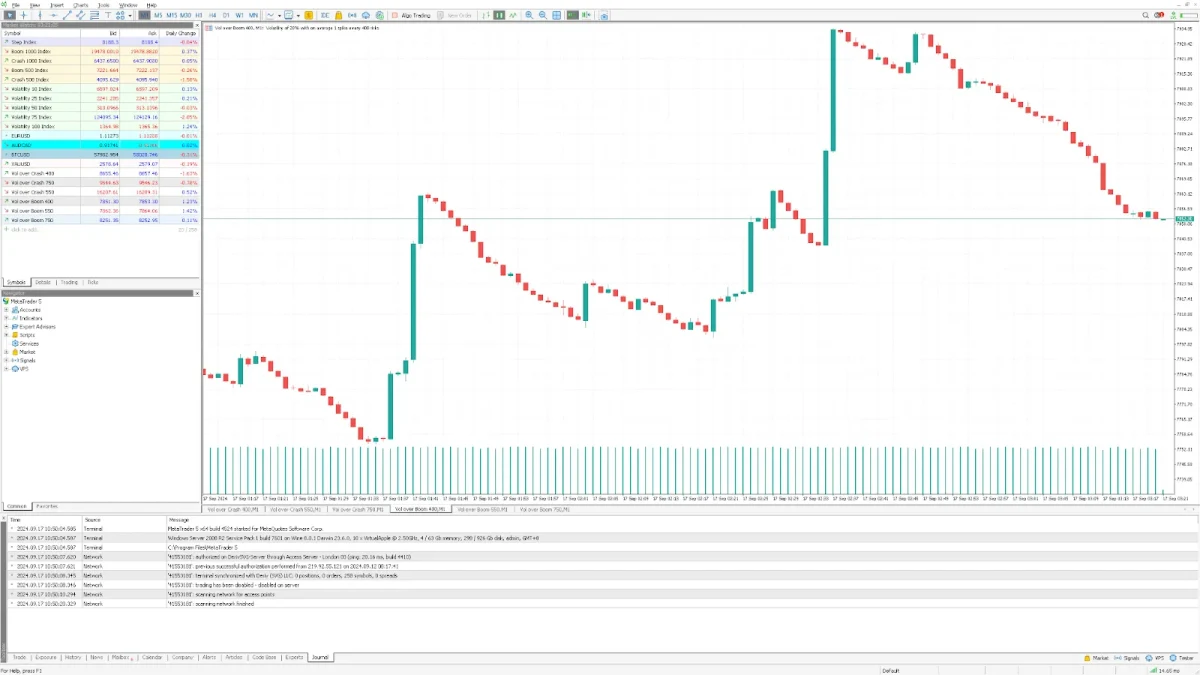
| Vol over Boom 400 | Price dey tend to rise gradually wit irregular upward surges |
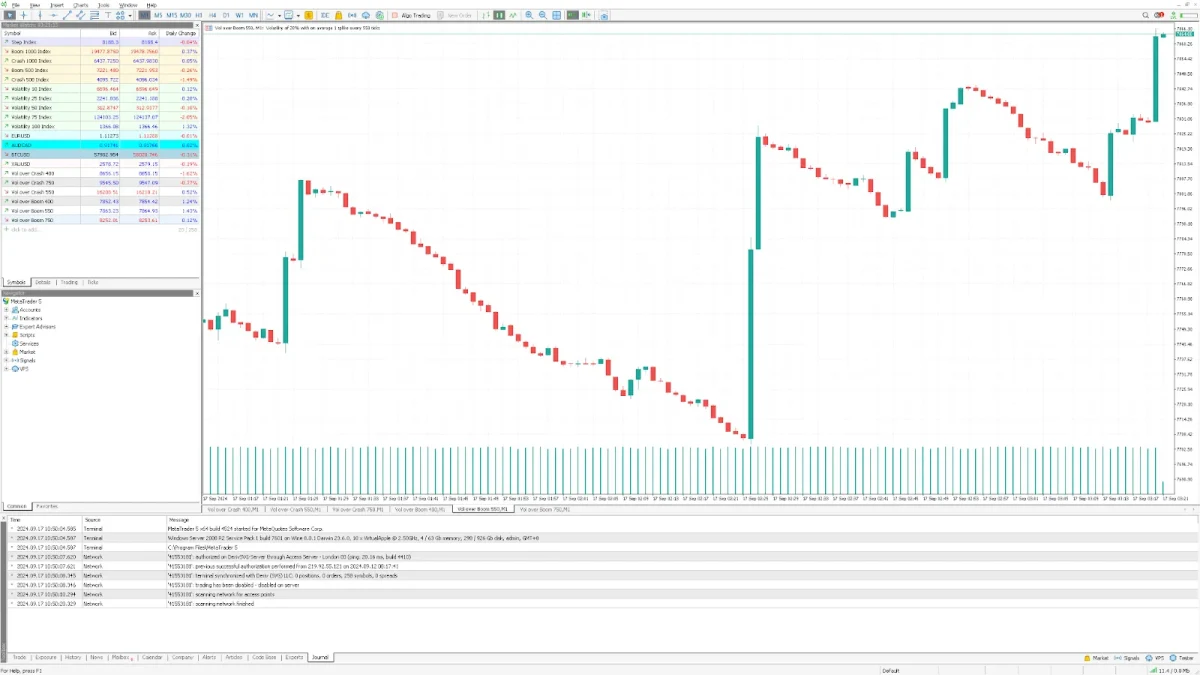
| Vol over Boom 550 | Stable phases wey uneven price acceleration dey follow |
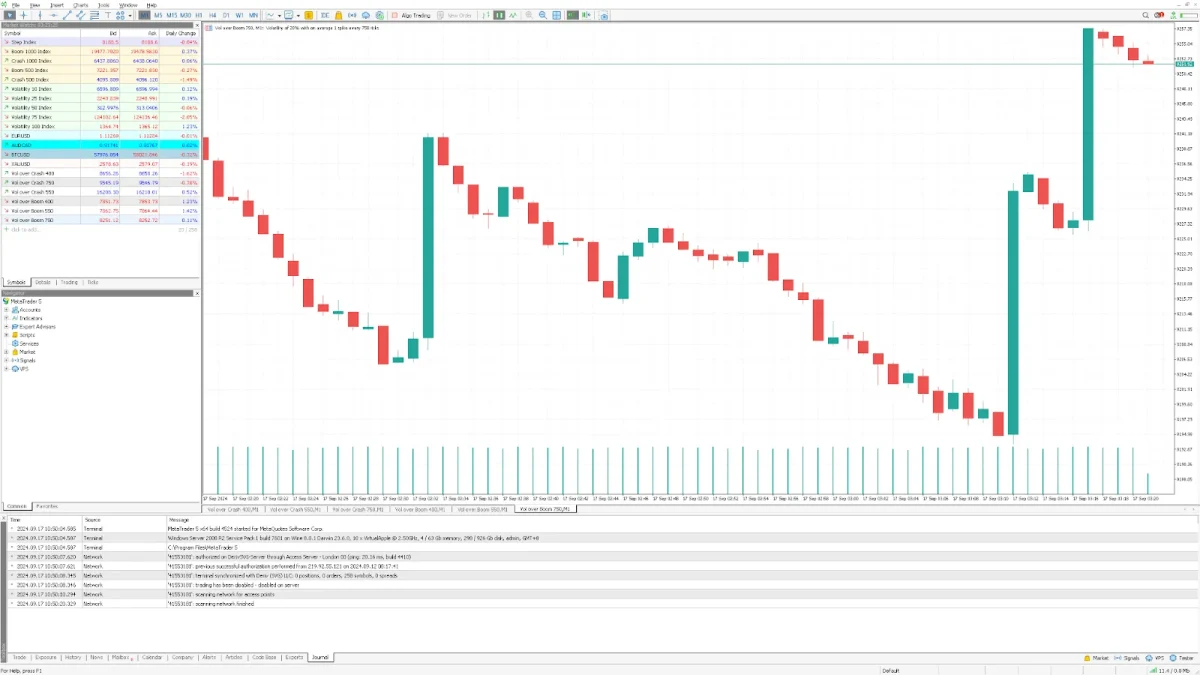
| Vol over Boom 750 | Long periods of flat movement wey large spikes dey interrupt |
Volatility over Boom 400
Volatility over Boom 550
Volatility over Boom 750
Crash-based Hybrid Indices
| Index | Typical behaviour |
|---|---|
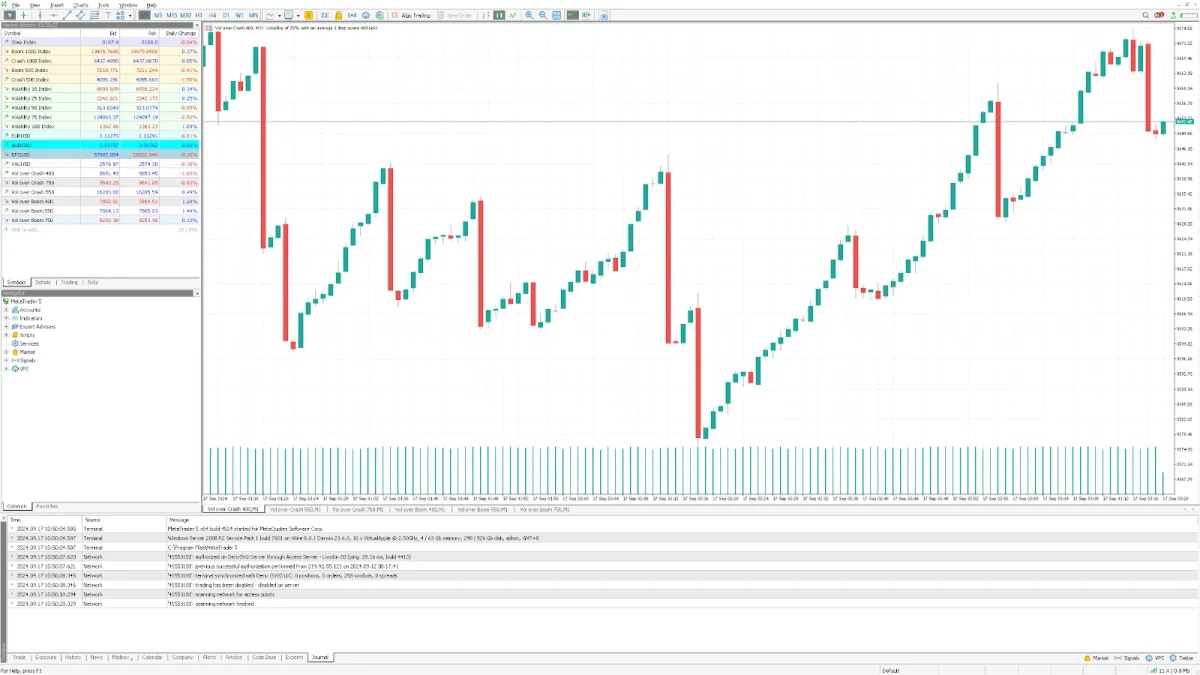
| Vol over Crash 400 | Gradual rises wey volatile downward moves dey follow |
| Smooth advances wit unstable pullbacks | Smooth advances wit unstable pullbacks |
| Vol over Crash 750 | Flat or choppy phases before steep declines |
Volatility over Crash 400
Volatility over Crash 550
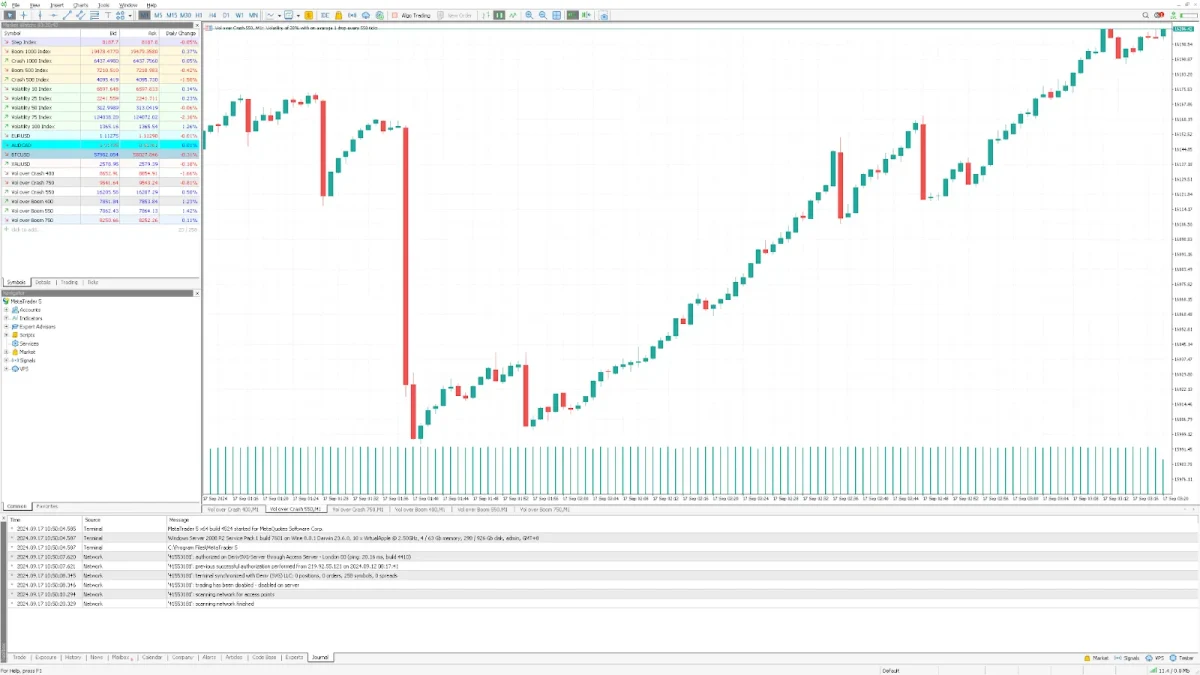
Volatility over Crash 750
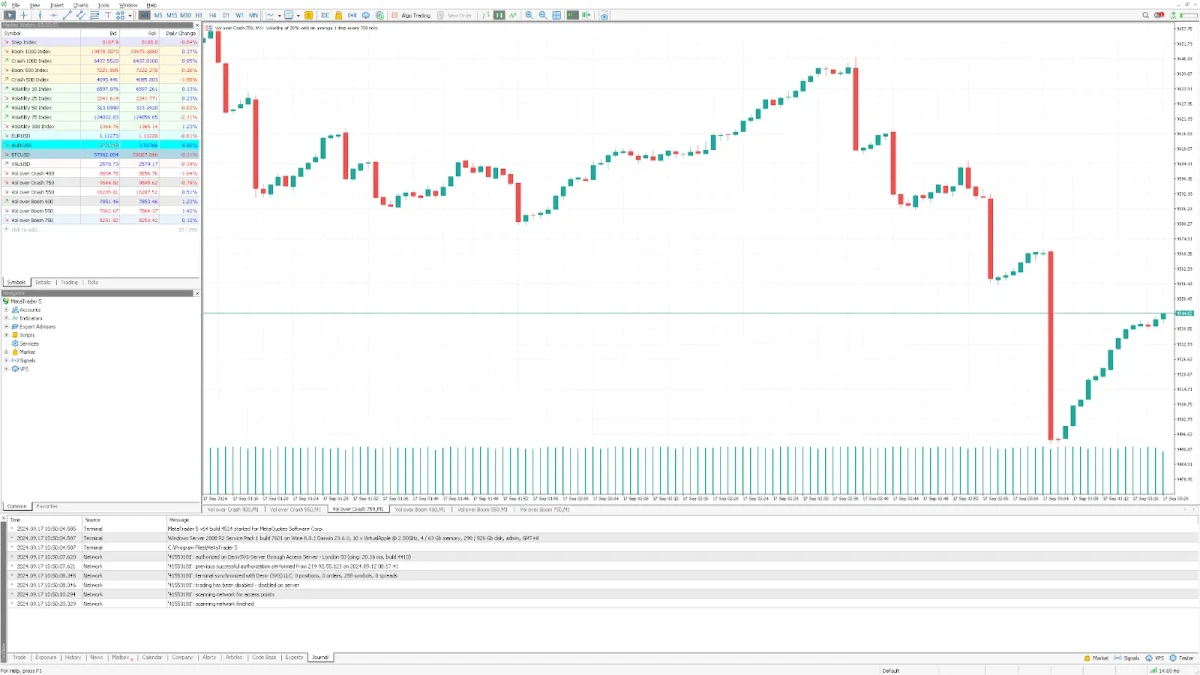
Hybrid Indices vs Crash/Boom Indices
| Asset type | Annualised volatility | How predictable e be | How trading feel |
|---|---|---|---|
| Crash/Boom Indices | 30-40% | Higher | Mechanical |
| Hybrid Indices | ~20% | Lower | E resemble real market more |
Key takeaway: Hybrid Indices dey reduce di size of price moves but increase uncertainty for di period before major moves, so you need more disciplined trade planning.
How to trade Hybrid Indices on Deriv
Step by step
- Open Deriv account
Create free account on Deriv.com and get access to demo balance. - Choose trading platform
- Deriv MT5: advanced indicators, custom tools, multi-market environment
- cTrader: cleaner interface, faster execution, simplified order management
- Deriv MT5: advanced indicators, custom tools, multi-market environment
- Select Hybrid Index
Find Vol over Boom or Vol over Crash indices for di synthetic markets section. - Practise on demo
Observe di volatility before major moves, test entries, and evaluate where to place stops. - Move to live trading
Start wit small position sizes and conservative leverage.
Trading and risk management considerations risk management strategies
Trading approach
- Expect false breakouts during volatile movements before major events
- Combine trend identification wit confirmation tools
- Avoid relying only on historical patterns
Risk management
- Use Stop Loss orders wey account for price movement wey dey change direction frequently
- Limit your position size even though volatility dey lower
- Avoid overtrading during consolidation phases
E important make you remember say lower volatility no remove risk — sharp movements still dey happen.
Hybrid Indices na structured form of synthetic trading wey no dey easy to predict. Dem dey combine directional behaviour wit volatility wey dey change before di movement. Dis dey create markets wey price dynamics resemble wetin dey happen for real world more closely, while dem remain transparent and available all di time.
For traders wey want more realism without exposure to external events, Hybrid Indices na different alternative among di synthetic markets for Deriv. Try dem on a free demo account to get started.
Quiz
Wetin make Hybrid Indices different from Crash/Boom Indices?
FAQs