Currency pairs na di foundation of forex trading. Dem dey determine how dem dey quote prices, how dem dey structure trades, and how dem dey apply costs like Spreads for di Market understanding trading costs. Forex pair dey show di value of one currency against anoda, and na di reference point for every price movement and transaction for di foreign exchange Market.
E dey important to understand how forex pairs dey work because dem dey influence not only price direction, but also trading costs, volatility, and how pipo dey interpret Market information.
Dis guide dey explain forex pairs step by step. E cover how dem dey structure pairs, di different types of pairs, how prices dey move, and how key concepts like pips, lot sizes, pip value, and Spreads connect. By di end, you go get clearer understanding of how dem dey structure forex quotes and why currency pairs dey central to forex trading.
Quick summary
- Forex pairs dey quote di value of one currency against anoda.
- Each pair get base currency and quote currency.
- Major, minor, and exotic pairs dey differ for liquidity, volatility, and Spreads.
- Pips, lot sizes, and pip value dey determine how dem dey calculate potential profits and losses.
- Spreads dey represent di cost of entering a trade, and dem dey vary according to di pair and Market conditions.
Wetin be forex pair?
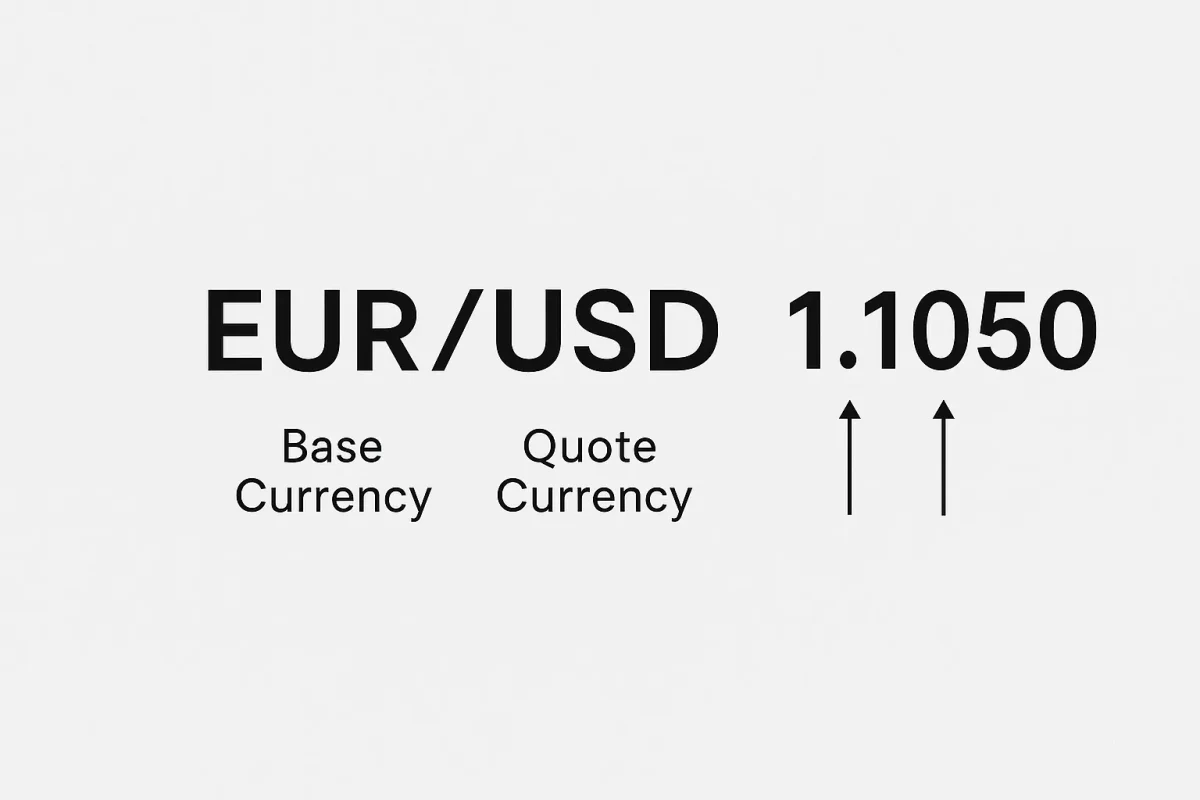
Forex pair consist of two currencies wey pipo dey trade against each oda, like EUR/USD (euro against US dollar) or GBP/JPY (British pound against Japanese yen). Di price of forex pair dey show how much of di second currency you need to buy one unit of di first currency.
For example, if EUR/USD dey trade at 1.1050, e mean say one euro dey worth 1.1050 US dollars. Forex prices dey change all di time as currencies dey strengthen or weaken based on economic data, interest rates, central bank decisions, and global Market sentiment.
Dem dey always quote currencies in pairs because every transaction involve exchanging one currency for anoda. Wen you buy forex pair, you dey buy di base currency and sell di quote currency. Wen you sell di pair, you dey do di opposite.
How pipo dey interpret forex pairs?
Every forex pair get two key components:
- Base currency: Di first currency for di pair. Na di currency wey you dey buy or sell.
- Quote currency: Di second currency for di pair. E dey show how much of dis currency you need to buy one unit of di base currency.
Make we use EUR/USD as example:
- EUR na di base currency.
- USD na di quote currency.
If EUR/USD rise from 1.1050 to 1.1100, di euro don strengthen against di US dollar. If e fall, di euro don weaken. Wen you understand dis relationship, e go give you context for how dem dey describe price movements for di forex Market.
Why forex pairs dey move?
Forex pairs dey move because currencies dey reflect di relative strength of two economies. Several factors dey influence dis movement:
- Interest rates: Higher interest rates dey tend to attract capital, and dis dey strengthen currency.
- Economic data: Employment figures, inflation reports, and GDP growth dey affect currency demand.
- Central bank policy: Statements and actions from central banks fit change expectations and prices.
- Market sentiment: Risk-on and risk-off behaviour dey influence which currencies traders prefer.
Because forex pair dey compare two currencies, positive news for one currency fit move di pair even if e no affect di oda currency.
Deriv Market analyst: “Forex prices dey always relative. Wen traders understand say every move dey reflect two economies at di same time, e go dey much easier to interpret currency behaviour.”
Which types of currency pairs dey?
Dem dey commonly group forex pairs into three categories based on liquidity, trading volume, and Market behaviour.
Major pairs
Major pairs dey include di US dollar and currencies from di largest economies for di world. Examples include EUR/USD, USD/JPY, GBP/USD, and AUD/USD.
Key characteristics of major pairs include:
- High liquidity
- Tighter Spreads
- Price behaviour wey dey more predictable
Beginners dey commonly use major pairs as starting point because dem get higher liquidity and Market information dey more widely available.
Deriv trading specialist: “Major forex pairs dey tend to show more consistent liquidity and pricing conditions compared wit pairs wey pipo no dey trade as much.”
Minor pairs
Minor pairs no include di US dollar, but dem involve oda major currencies, like EUR/GBP, EUR/AUD, or AUD/JPY.
Minor pairs typically get:
- Moderate liquidity
- Spreads wey dey slightly wider than those of major pairs
- Price movements wey multiple economic regions dey influence
Dis pairs fit offer diversification, but dem fit require closer monitoring.
Exotic pair
| Liquidity | Example currency pairs | ||
|---|---|---|---|
| MAJOR | High | Low | EUR/USD USD/JPY |
| MINOR | Medium | Medium | EUR/GBP AUD/JPY |
| EXOTIC | Low | High | USD/TRY GBP/MXN |
Exotic pairs dey combine major currency wit currency from emerging Market, like USD/TRY or GBP/MXN. Dis pairs get lower liquidity and dem dey tend to get higher volatility.
Characteristics of exotic pairs include:
- Wider Spreads
- Higher volatility
- Higher sensitivity to political and economic instability
Exotic pairs generally no dey as suitable for beginners because of dia higher trading costs and di risks wey come wit dem.
How beginners dey typically choose forex pairs?
Wen you just dey start, choosing di right forex pairs dey as important as understanding how dem dey work. Beginners dey often start by focusing on:
- Liquidity: Pairs wey pipo dey trade more typically get higher liquidity, and dis dey affect how traders dey enter and exit trades.
- Spreads: Lower Spreads dey reduce trading costs.
- Volatility: Moderate price movement dey easier to manage than extreme swings.
- Trading sessions: Some pairs dey move more during specific Market hours.
Major pairs dey often meet dis criteria, so dem fit be practical starting point for new traders.
Wetin be pips for forex trading?
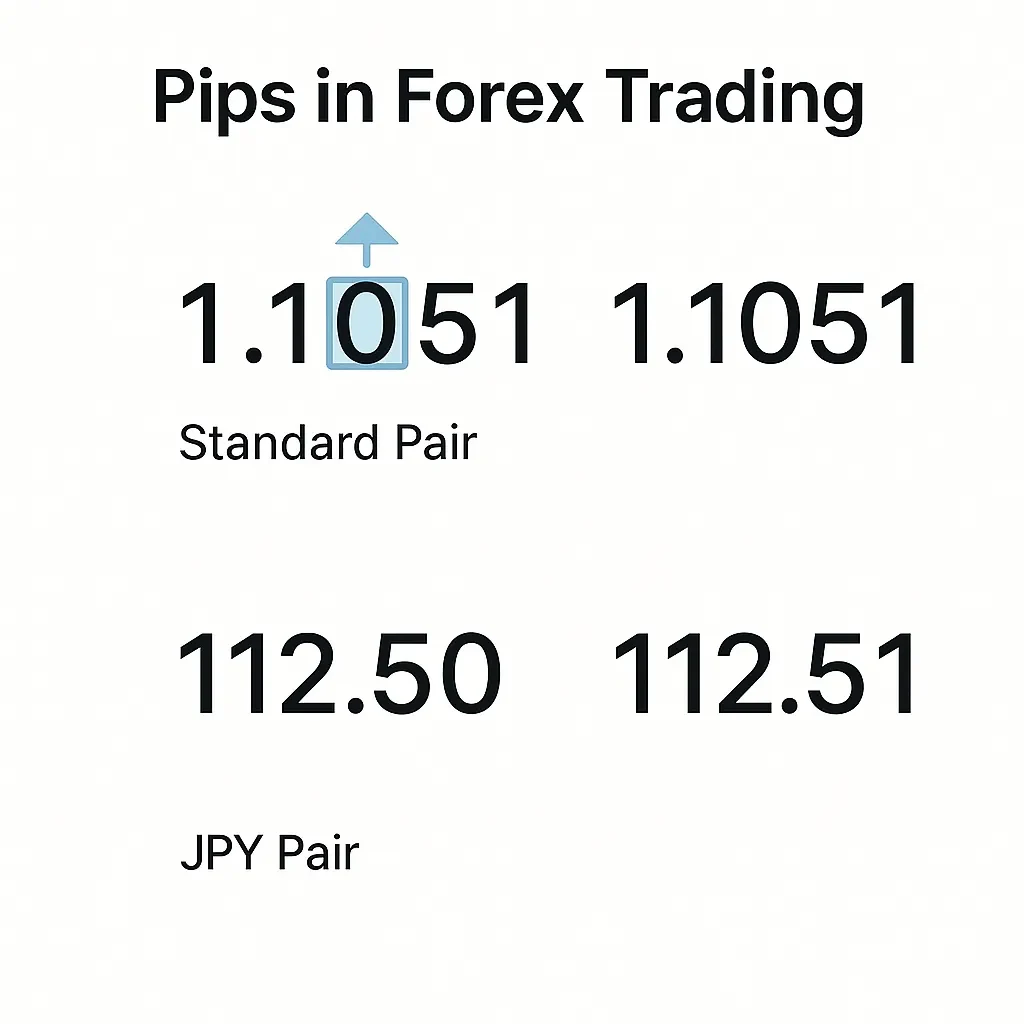
pip (percentage in point) na di smallest standard price movement for forex pair. For most pairs, pip na di fourth decimal place. For example, movement from 1.1050 to 1.1051 na one pip.
For pairs wey include Japanese yen, pip na usually di second decimal place. For example, movement from 112.50 to 112.51 represent one pip.
Pips dey provide standard way to measure price changes, so traders fit compare movements across different pairs.
Forex education analyst from Investopedia tok say:
“To use pips dey provide standard way to describe price movement across different currency pairs.”
Wetin be forex lot sizes?
Traders dey place forex trades for lots, wey dey define di size of a position. Common lot sizes include:
- Standard lot: 100,000 units of di base currency
- Mini lot: 10,000 units
- Micro lot: 1,000 units
- Nano lot: 100 units
Smaller lot sizes dey allow beginners to trade wit lower exposure while dem still dey gain experience for live market conditions.
Wetin be pip value for forex?
Pip value dey show how much one pip dey worth for money terms. E depend on three factors:
- Di forex pair wey you dey trade
- Di lot size
- Di exchange rate
One common formula wey dem dey use to calculate pip value na:
Pip value = pip size × lot size × exchange rate
For example, if you trade mini lot (10,000 units) of EUR/USD at 1.1050:
- Pip size = 0.0001
- Lot size = 10,000
Pip value ≈ 0.0001 × 10,000 × 1.1050 ≈ 1.105 USD per pip
To understand pip value dey help traders manage risk and set appropriate Stop Loss and Take Profit levels.
How spreads dey work for forex trading?
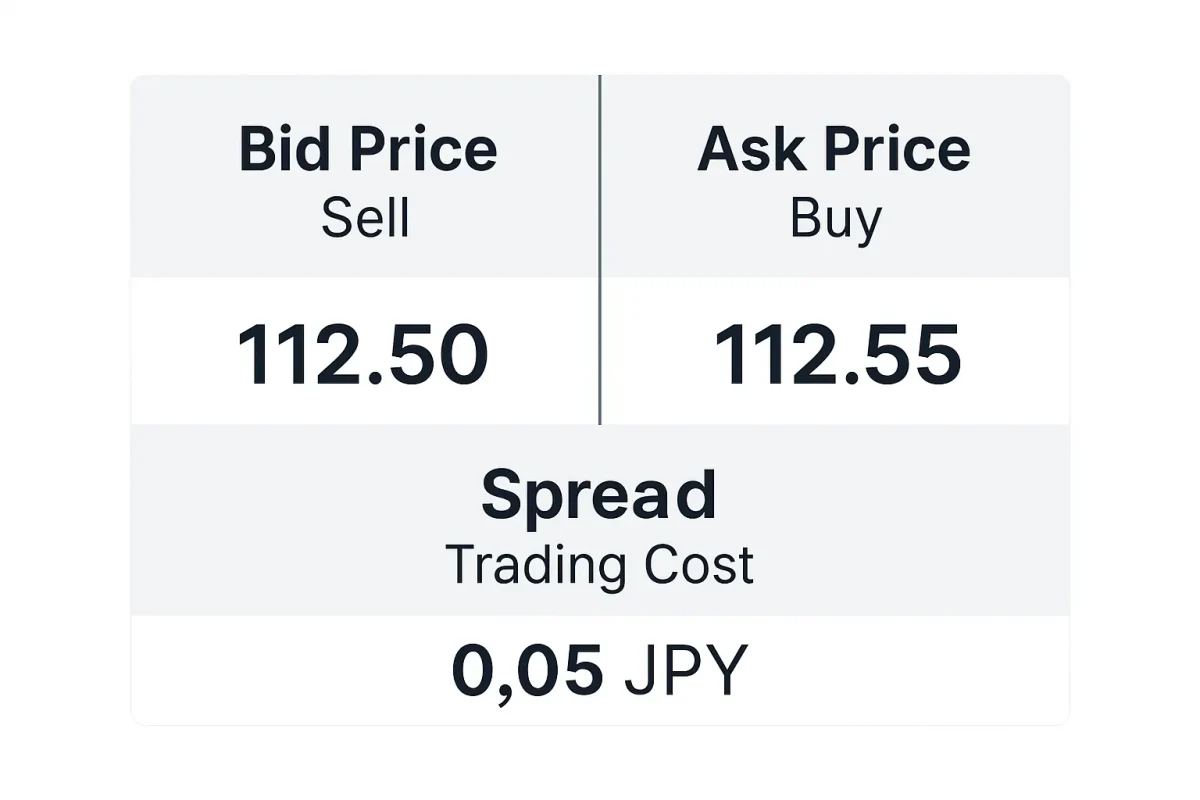
Di spread na di difference between di bid price (sell) and di ask price (buy). E represent di cost of entering a trade.
For example, if USD/JPY get:
- Bid price: 112.50
- Ask price: 112.55
Di spread na 0.05 JPY. Wen you open trade, di price must move for your favour by at least di spread before di position fit become profitable.
Wetin dey affect forex spreads?
Different factors dey influence whether spreads dey tight or wide:
- Liquidity: Pairs wey pipo dey trade often usually get tighter spreads.
- Volatility: Sudden market movements fit make spreads widen.
- Time of day: Trading sessions wey overlap often dey result in lower spreads.
- Trading conditions: Different account types and platforms fit offer different spreads.
E dey especially important to monitor spreads for short-term traders, because costs fit significantly affect results.
Deriv risk analyst: “Spreads na one of di trading costs wey pipo dey overlook most. Even small differences fit significantly affect outcomes, especially for traders wey dey trade often.”
How forex pairs, pips, and spreads take connect?
Forex pairs, pips, lot sizes, pip value, and spreads all connect wit each oda:
- Forex pairs dey define wetin you dey trade.
- Pips dey measure how much di price move.
- Lot size dey determine how large your exposure be.
- Pip value dey translate price movement into profit or loss.
- Spreads dey determine di cost of entering each trade.
To understand how dis elements dey work together dey help you interpret trading costs and price movement more clearly.
How beginners fit practise risk management strategies for forex trading?
Before dem trade wit real money, beginners fit practise how to read forex pairs and place trades wit demo account and choose di right trading platform. Demo trading dey allow you to:
- Observe how different pairs dey behave
- Practise how to calculate pip value and trade size
- Understand how spreads dey affect trades
- Practise how to make decisions without using real funds
To use structured approach for learning dey help traders understand better how trading mechanics dey work.
Wetin beginners need to understand about forex pairs?
To understand forex pairs na foundational step for learning how di forex market dey operate. By learning how pairs dey structured, how prices dey move, and how key concepts like pips and spreads dey affect trades, new traders fit build strong foundation. Wit practice, discipline, and continued learning, forex trading concepts dey become clearer over time as traders dey gain more exposure and experience.
Quiz
Which of dis na major forex pair?
FAQs