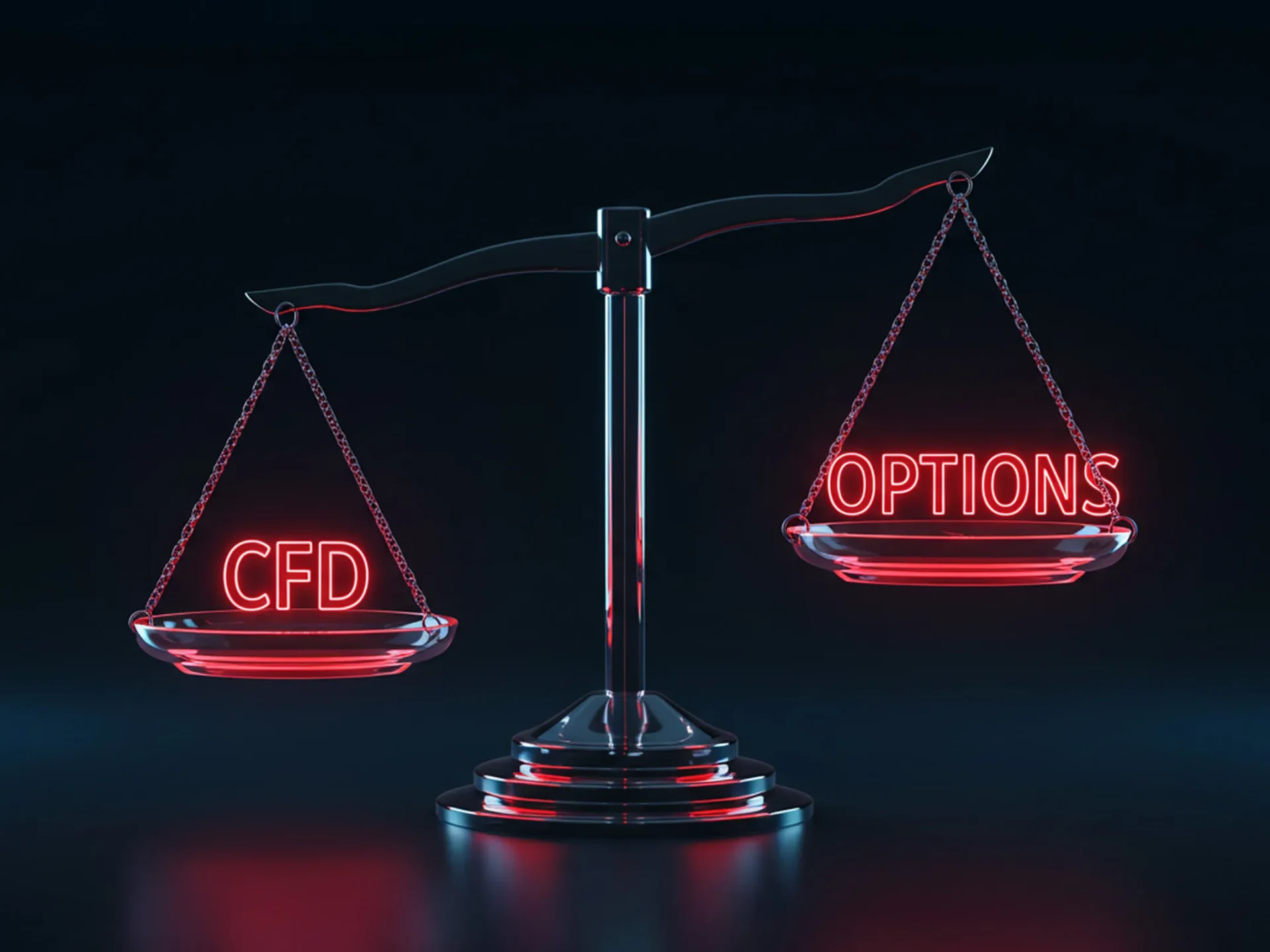
Trading derivatives dey give you access to global markets without say you own di underlying asset. For Deriv, you fit do dis through contracts for difference (CFDs) or options CFD trading guide, and each one get im own advantages.
For dis guide, we compare CFDs and options based on dia structure, platforms, costs, and trading strategies, so you fit decide which one fit your goals.
Quick summary
- CFDs dey offer flexibility and leverage, wey allow you open and close trades anytime — but losses fit pass your deposit if you no manage dem carefully.
- Options get fixed expiry times and limits on losses, wey dey provide structured outcomes and clearer risk control for both short-term and long-term trades.
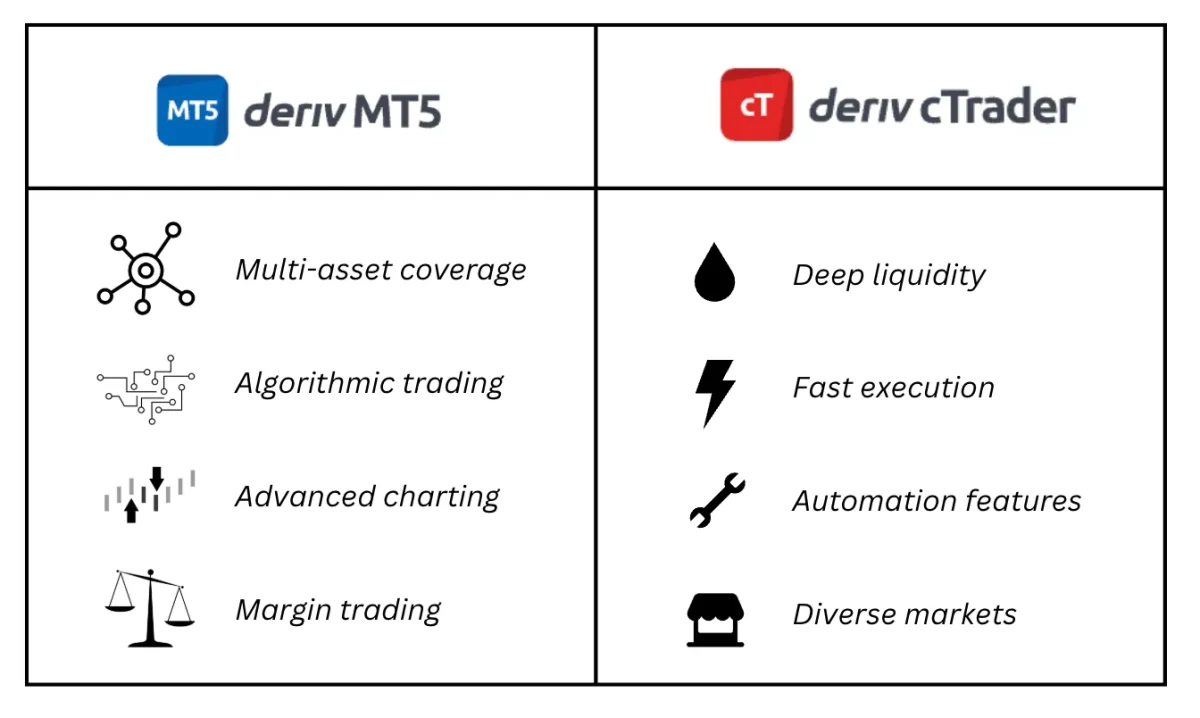
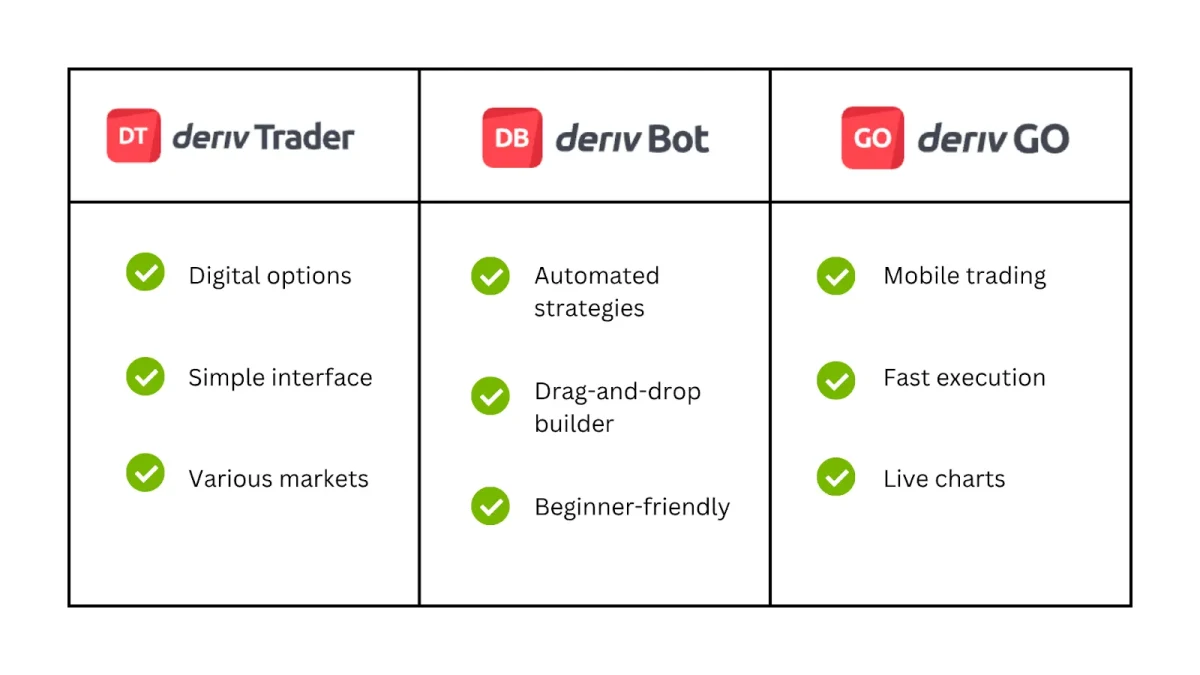
- CFDs dey available on Deriv MT5 and Deriv cTrader; options dey on Deriv Trader, Deriv Bot, and Deriv GO — so traders fit choose tools wey fit dia style.
- CFD payoff dey follow linear pattern. Leverage dey increase both profits and losses. Option payoffs dey vary: digital get step-like payoff, vanilla slope dey change for di strike, and multipliers get limit on dia payoff.
Now wey you know di basic differences, make we look how dis products dey work on Deriv platforms.
Wetin be di difference between CFDs and options on Deriv?
Make we start by looking at how each product dey work on di platforms wey Deriv provide for am.
CFDs on Deriv MT5 and Deriv cTrader
Dem build dis platforms for professional-grade trading. Both Deriv MT5 and Deriv cTrader dey offer access to multiple assets, advanced charting, fast execution, and automation features, wit deep liquidity to support dem. Dem also support margin trading, diverse markets, and flexible risk management.
Example: Forex scalper on Deriv cTrader fit execute dozens of short-term trades for volatile pair.
Options on Deriv Trader, Deriv Bot, and Deriv GO
Dis platforms dey make options trading easy to understand. Deriv Trader dey make digital and turbo options straightforward. Deriv Bot dey automate strategies wit drag-and-drop logic blocks, while Deriv GO dey enable quick mobile trading for fast-moving markets.
Di way dem separate dis products dey allow traders focus on di strengths of each one and dey support transparency — for 2025, Deriv dey continue to follow best practices for margin reporting and client protection.
How CFDs, options, and futures take compare?
Dis comparison dey show how CFDs dey prioritise flexibility and leverage, options dey emphasise predictability and risk wey get limit, while futures dey focus on standardised contracts and long-term commitments — wey usually fit institutional traders.
| Feature | CFDs | Options | Futures |
|---|---|---|---|
| Leverage | Up to 1:1000 (depending on di asset) | Wit multipliers (up to 4000×) | Usually 10–50× (exchange-regulated) |
| Risk exposure | Losses fit pass deposit | Losses no fit pass deposit | Losses fit pass margin deposit |
| Duration | No expiry; you fit close anytime | Fixed timeframes (seconds – months) | Fixed expiry dates wey di contract set |
| Flexibility | You fit enter or exit anytime | Di contract terms limit am | You must hold or offset before expiry |
| Profit potential | No limit; e dey depend on price movement | Fixed or variable payout | No limit; e dey depend on contract size and price change |
| Wetin determine di outcome | Entry price vs exit price | E dey depend on contract type (digital, turbo, vanilla) | Entry price vs settlement price at expiry |
| Ownership | None | None | E dey represent commitment to buy or sell at expiry |
| Accessibility | Retail traders fit access am through Deriv MT5 and Deriv cTrader | E dey available on Deriv Trader, Deriv Bot, and Deriv GO | Institutions dey commonly trade am on major exchanges |
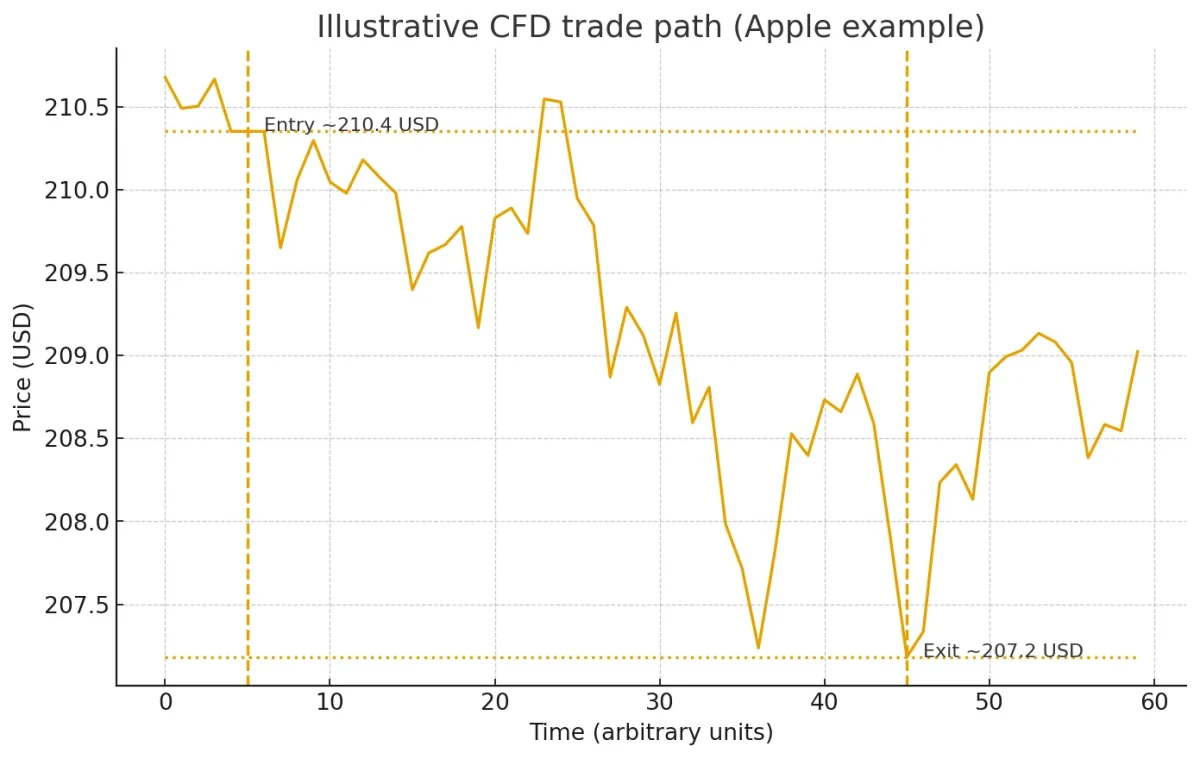
CFD example:
Buy 10 CFDs on Apple at 210 USD wit 10% margin (deposit 210 USD).
- If Apple rise to 215 USD → profit na 50 USD.
- If Apple fall to 205 USD → loss na 50 USD.
Options example:
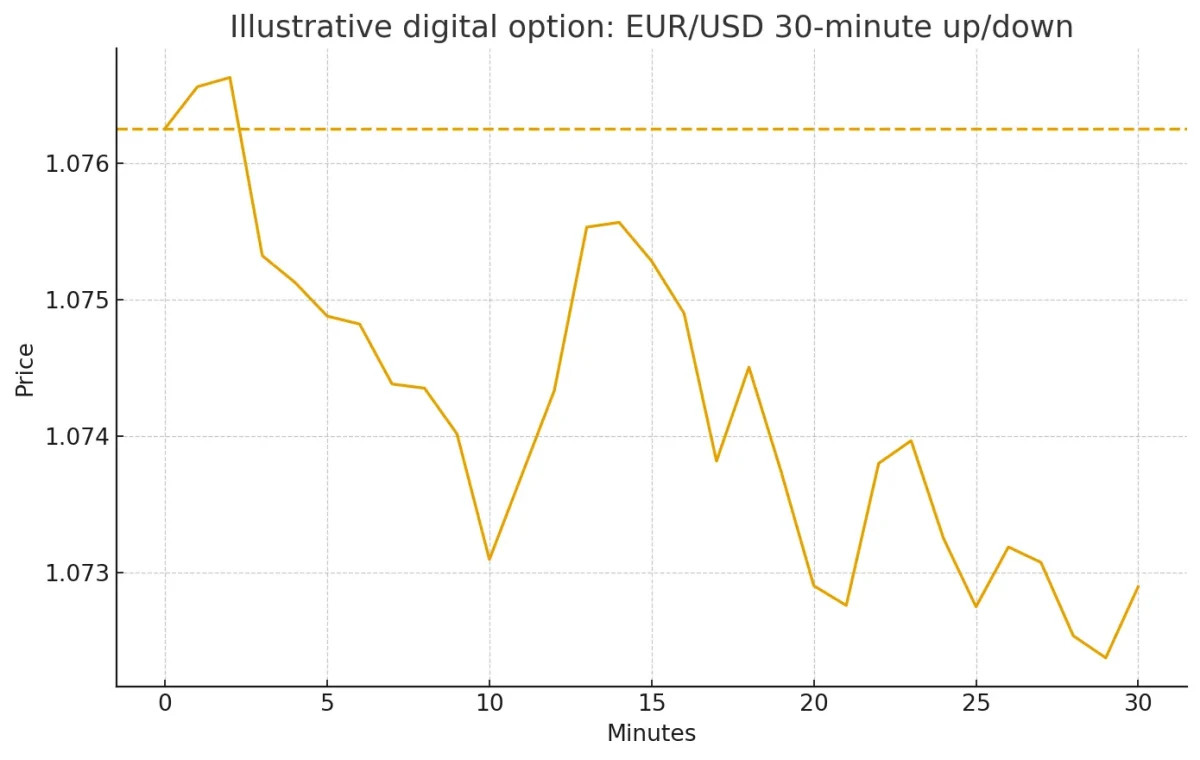
Buy digital option on EUR/USD, dey predict say e go rise within 30 minutes.
- If di prediction correct → fixed payout (70–90%).
- If di prediction wrong → loss no go pass di initial Trade amount.
Futures example:
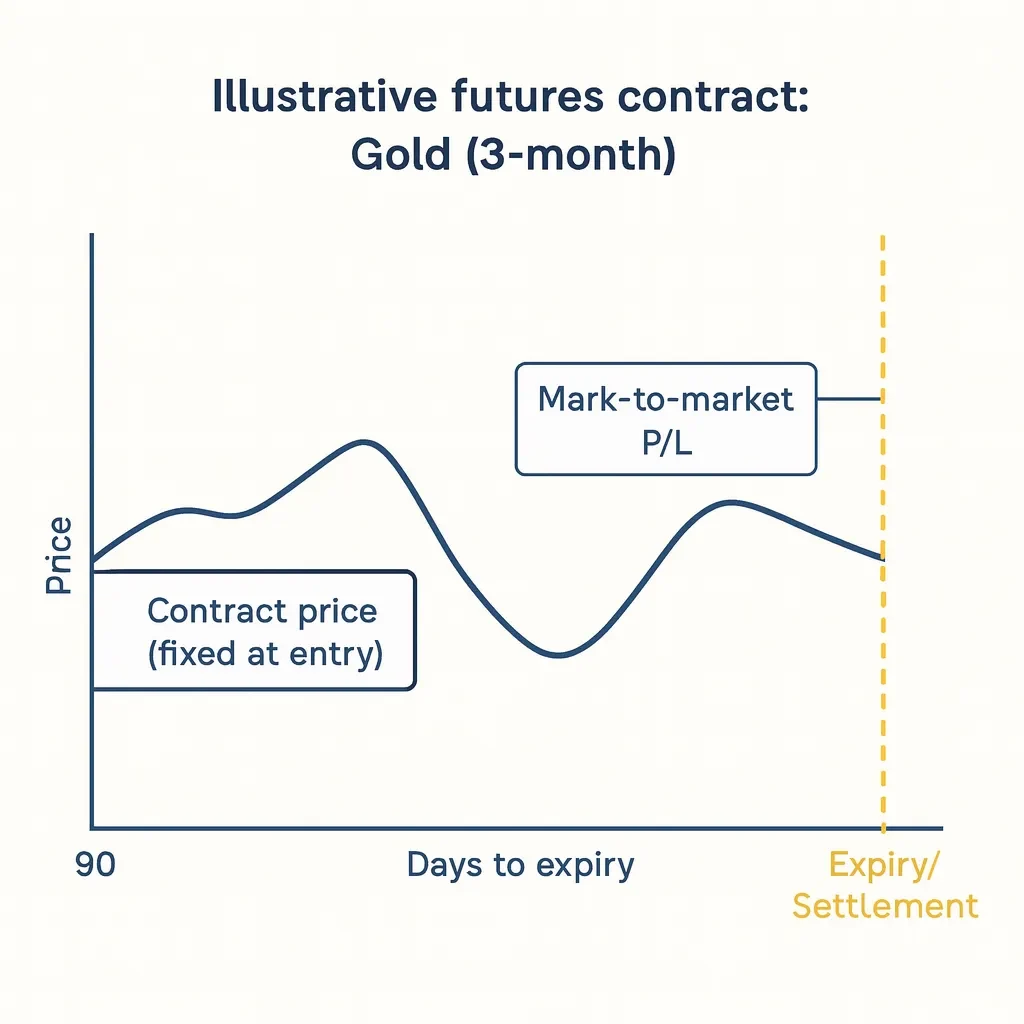
Gold futures contract dey require di trader to buy or sell gold at fixed price on future date.
- Profits or losses dey depend on di price difference between di contract entry and settlement.
- Futures often dey require higher capital and margin, wey make dem less flexible for retail traders.
CFD traders dey use leverage for larger positions; options traders dey prefer exposure wey dem don define beforehand.
Dis examples dey show how each product dey balance control, leverage, and risk.
Wetin you need to know about costs, funding, and practical considerations?
CFDs
- Spreads include costs; some assets fit also get small commissions.
- Overnight financing (swap) fit add charges or credits depending on di position direction.
- Liquidity dey important; for fast markets, slippage fit happen between when you place order and when dem fill am.
- Equity CFDs fit reflect dividends and corporate actions depending on di position side.
Options
- You go know di Trade amount or premium upfront, and na im represent di maximum loss.
- Payouts dey depend on contract type; digital and turbo options dey pay fixed returns when di conditions dey met.
- Time sensitivity dey important: time decay and volatility dey affect pricing, especially for vanilla options.
When you dey compare, consider di deposit, how long you expect to hold di trade, volatility, and whether you value flexibility (CFD) or outcomes wey dem don define beforehand (option).
When you suppose choose CFDs or options?
Market conditions dey influence which product you choose:
- Volatility: CFD traders dey use leverage to make profit from markets wey dey rise and fall. Options traders dey use digital or turbo contracts to make quick predictions wit limits on losses.
- Hedging: Some traders dey hedge CFDs wit options — for example, dem fit balance long CFD on di S&P 500 wit put option.
- Regulation: Leverage restrictions dey make options attractive for beginners because dem go know di losses in advance.
- Market trends: CFDs fit bullish or active markets; options fit uncertain conditions wey require structured outcomes.
Muhammad Bilal Tariq, Deriv Product Owner, tok say:
“Retail traders dey increasingly use both CFDs and options to balance risk and opportunity. CFDs dey provide flexibility, while options dey help structure exposure around volatility events.”
Which trading strategies and risk management approaches dey work best for you? trading strategies
CFD strategies
- Trend following: Use indicators like moving averages to follow di direction wey market dey move.
- Range trading: Identify consolidation zones and trade wen price dey return to di average.
- Event trading: Respond to news releases wit tight stops and limited exposure.
Options strategies
- Short-duration trades: Use digital or turbo contracts to trade based on your expectations about quick price movements.
- Hedging: Protect open CFD positions wit options exposure for di opposite direction.
- Time-based speculation: Set option expiry to match events wey you expect, like data releases.
According to Deriv Academy analysts:
“Traders wey limit dia exposure for each position to 1–2% of dia account equity dey better able to maintain dia performance during volatile periods.”
Risk management tips
- Use Stop Loss for CFDs and choose appropriate expiry terms for options.
- Spread your trades across different markets to balance your exposure.
- Track your performance wit Deriv portfolio analytics tools.
Wen traders use dis techniques, e dey help dem adapt to market changes and maintain discipline for both CFDs and options.
How futures compare wit CFDs and options for retail traders?
| Futures | CFDs | Options | |
|---|---|---|---|
| Margin | Full value upfront | Deposit (margin) | Cost (premium) |
| Flexibility | Fixed contract | No fixed end date | No fixed end date |
| Capital wey you need | High | Low | Low |
Futures dey different for structure, capital requirements and flexibility, and dem often suit institutions pass retail traders.
- Structure: Futures bind buyers and sellers to a set price on a fixed date, while you fit close CFDs and options anytime.
- Capital: Futures require larger deposits and standard contract sizes.
- How dem dey use dem: Institutions dey use futures to hedge commodities, rates or indices, while retail traders fit access CFDs and options more easily.
Deriv dey focus on CFDs and options because dem combine flexibility wit defined-risk features wey individual traders prefer.
How you fit choose di right product for your strategy?
Your decision depend on how you balance opportunity and risk.
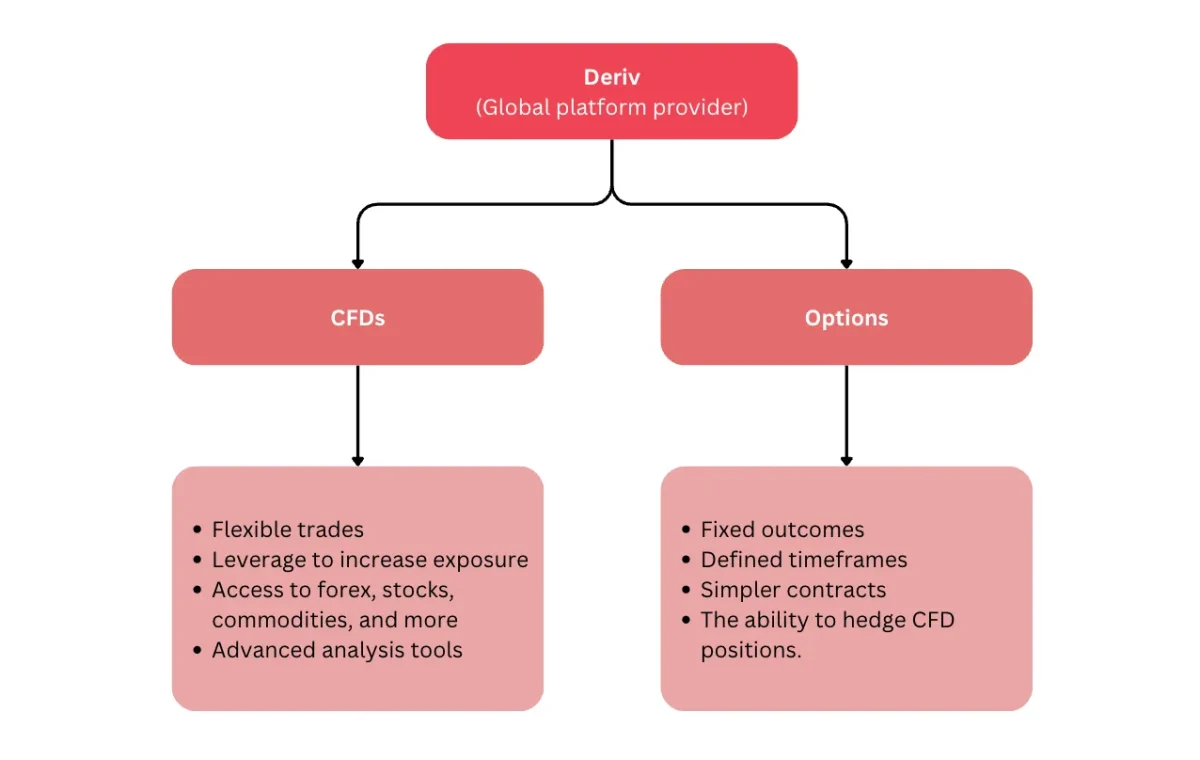
Choose CFDs if you want:
- Flexible trades wey no get expiry.
- Leverage to increase exposure wit smaller deposits.
- Access to forex, stocks, commodities, cryptocurrencies and derived indices.
- Advanced analysis tools and options for different strategies.
Choose options if you prefer:
- Fixed outcomes wit losses wey get limit.
- Defined timeframes for structured trades.
- Simpler contracts wey no require margin management.
- Di ability to hedge CFD positions.
Deriv in-house experts note say traders dey combine dis instruments to balance opportunity and protection:
“Retail traders dey increasingly use both CFDs and options to balance risk and opportunity. CFDs dey provide flexibility, while options dey help traders structure dia exposure around volatility events.”
If you neva decide, open a free Deriv demo account wit 10,000 USD in virtual funds to test both products under real conditions.
Wetin be di common mistakes wey you should avoid?
- Using too much leverage: High leverage dey increase gains and losses; small market movements fit trigger large drawdowns.
- Ignoring time factors: Short expiries fit make trades fail even wen dem for otherwise be correct.
- Chasing volatility: Sudden market movements dey widen Spreads and increase slippage; define your risk and stay consistent.
- Neglecting costs: Overnight financing or option time decay fit affect your results.
- Skipping reviews: Keep a trade journal to improve your strategy and discipline.
Wen you avoid dis habits, e dey help you preserve your capital and maintain your performance over time.
Di main point
Wen you compare CFDs, options and futures:
- CFDs: Flexibility and leverage.
- Options: Simplicity and risk wey get limit.
- Futures: Hedging for institutions, higher capital requirements.
Di best choice for you depend on your objectives, risk tolerance and di platform wey you prefer. Try both CFDs and options for a Deriv demo account to see which one suit your trading approach.
FAQs