Di main difference na whether you own di asset or get exposure through Leverage: Spot trading dey give you direct ownership of di asset, while futures and CFDs dey let you speculate on price movements wit Leverage without owning di underlying asset.
Dis guide dey compare each option wit practical examples so you go understand di risks before you trade.
Quick summary
- Spot: You own di coin directly.
- Futures: Contracts based on price, without coin ownership.
- CFDs: Contracts wit broker wey dey follow coin price, without ownership.
- Risk factor: Leverage and liquidation dey make losses happen faster compared to spot.
Di three ways you fit take trade crypto prices
| Trading type | Wetin e be |
|---|---|
| Spot trading | You dey buy or sell di actual coin. |
| Futures trading | You dey trade contract wey dey based on di coin price. |
| CFD trading | You dey trade contract wit broker, based on di coin price. |
Spot trading: You own di coin
For spot trading, wen you buy coin, you own di crypto asset directly.
Trades dey settle immediately at current Market prices, without Leverage or borrowed funds.
Di maximum loss no fit pass your initial capital, but di asset value fit fall reach zero.
Futures trading: You dey trade contract
Futures dey get dia value from price movements, without transferring physical coins.
Perpetual futures no get expiry date. Dem dey remain open until you close dem yourself or dem get liquidated.
Key features wey dey unique to futures:
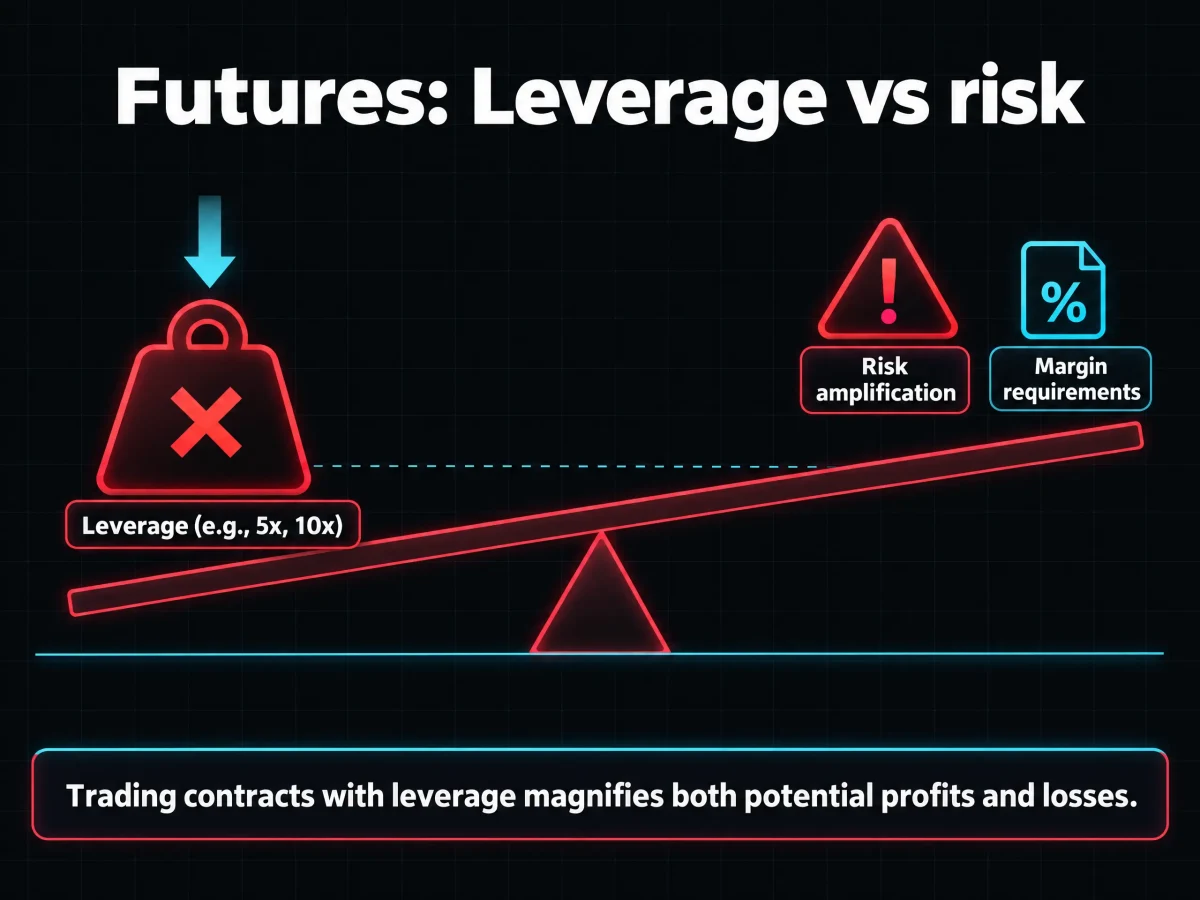
- Leverage: E dey multiply your exposure beyond di amount wey you put down (for example, 5x Leverage).
- Margin: Di deposit wey you need to keep positions open.
- Liquidation: Automatic closing of position wen Margin no fit cover losses.
Trading positions fit be:
- Long: You dey make profit wen price rise.
- Short: You dey make profit wen price fall.
Leverage dey increase both profits and how fast losses happen; small price movements against your position fit lead to quick liquidation.
CFDs: A different product
Contracts for Difference (CFDs) na derivative agreements wit brokers wey no involve delivery of di asset.
CFDs get different provider rules, including overnight swap fees and optional negative Balance protection. Always check di terms carefully.
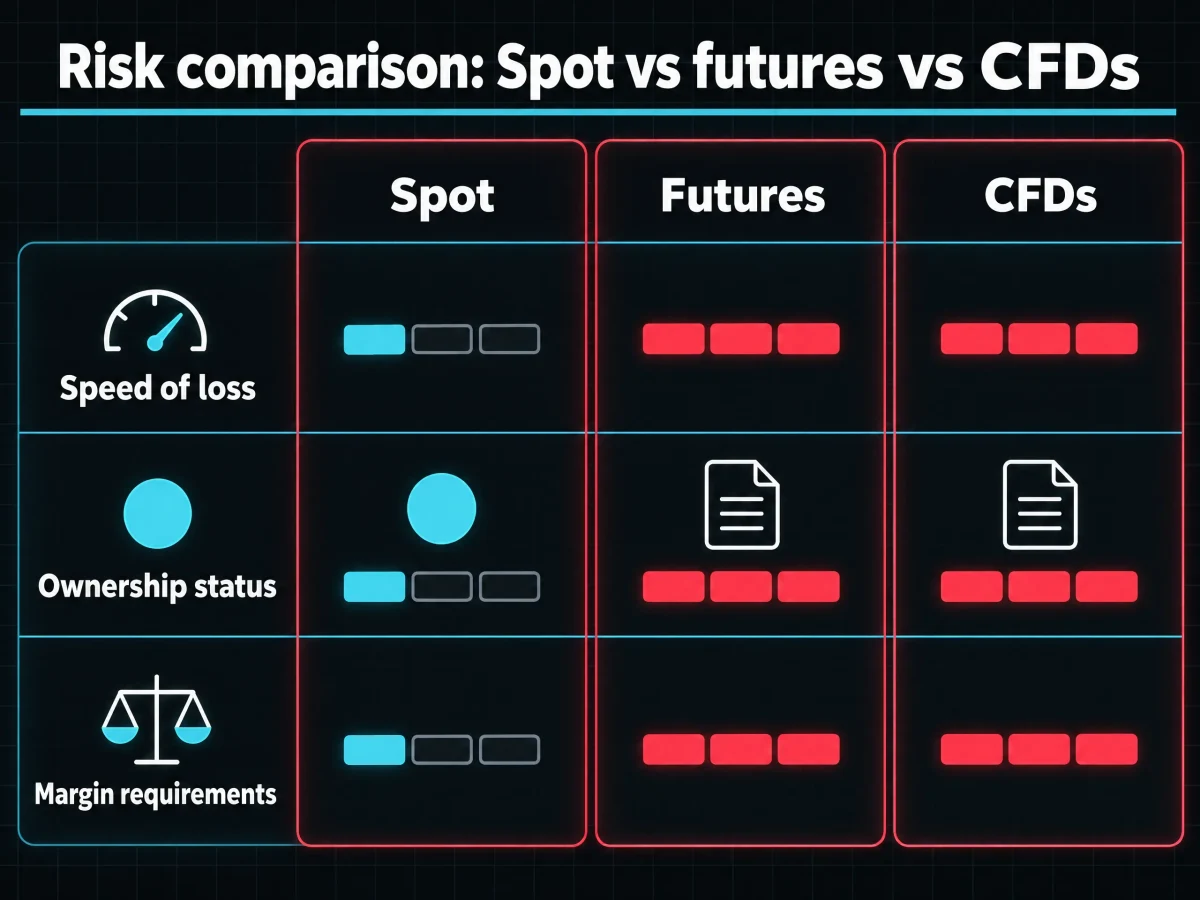
Side-by-side comparison
| Question | Spot | Futures | CFD |
|---|---|---|---|
| Wetin you dey get? | Di coin itself | Contract wey dey based on di price | Contract wey dey based on di price |
| You own di coin? | Yes | No | No |
| E dey use Leverage? | No | Yes | Often, depending on di provider |
| You fit make profit if di price fall? | No be by just holding di coin | Yes, wit short position | Often, depending on di provider |
| Your position fit close automatically? | No | Yes, through liquidation | E depend on di provider rules |
| Wetin be di maximum amount you fit lose? | Di amount wey you pay | Check di product rules | Check di product rules |
Always confirm di maximum loss limits for each product before you trade leveraged instruments.
Main point: Spot dey give you ownership without Leverage; futures and CFDs dey offer leveraged contracts wey increase your exposure.
Example: di same price movement, two outcomes
Dis na hypothetical scenario wey no include fees and funding rates:
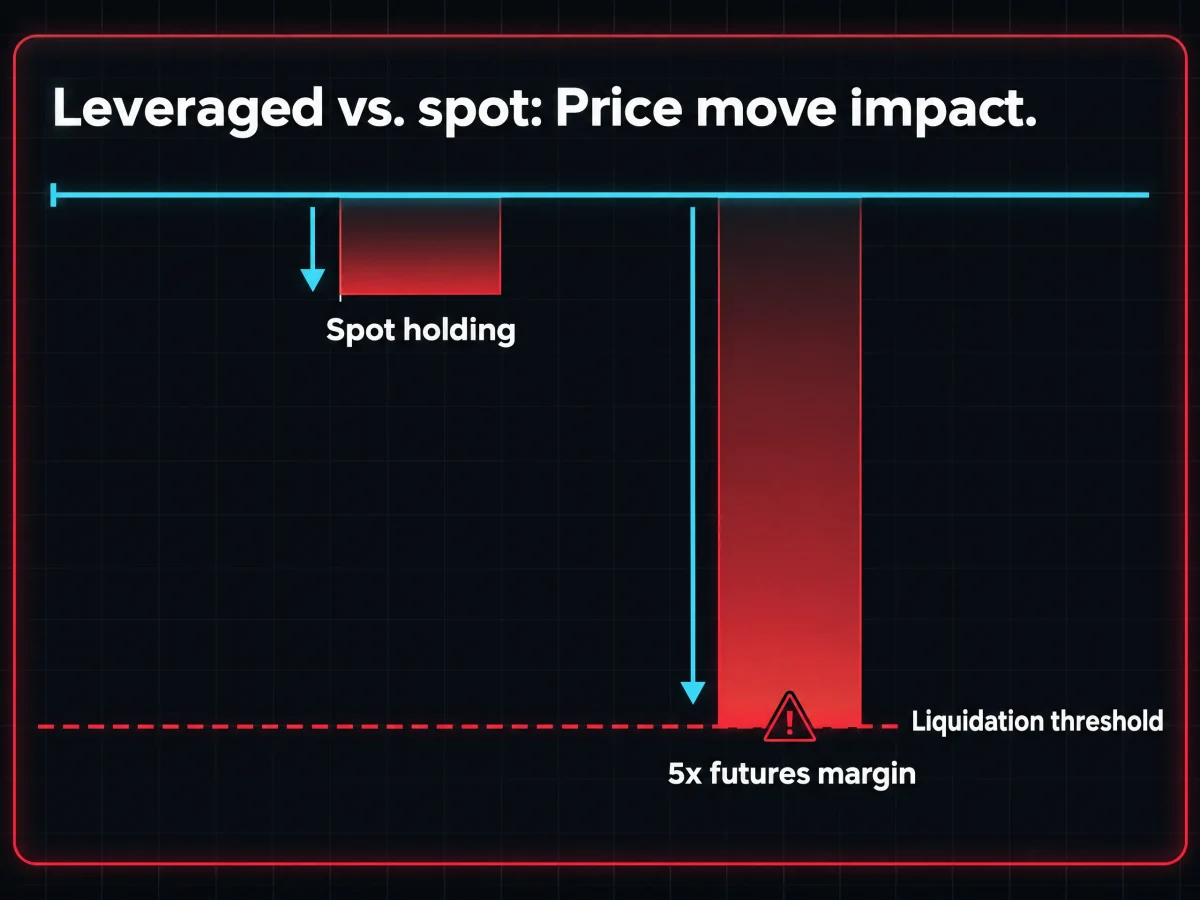
Using 100 USDT capital:
- Spot: 100 USDT purchase = 100 USDT exposure.
- 5x Futures: 100 USDT Margin = 500 USDT exposure.
| Price movement | Spot (100 USDT) | 5x futures (100 USDT Margin) |
|---|---|---|
| E rise 10% | +10 USDT | +50 USDT |
| E fall 10% | −10 USDT | −50 USDT |
| E fall 20% | −20 USDT. You still hold coins wey worth 80 USDT. | −100 USDT. Dis na your entire Margin, so di position fit close at dis point or before e reach dis point. |
Futures dey significantly increase di effect of price movements in both directions.
Important difference: Spot dey let you hold your coins wen Market prices fall, while futures fit trigger liquidation before prices recover.
Wetin each product mean for your risk
| Risk | Spot | Futures |
|---|---|---|
| Price fall | You dey lose value, up to di amount wey you pay. | Your Leverage dey multiply your losses. |
| How fast losses happen | E dey slower, because no get Leverage. | E dey faster, because small price movement fit use up your Margin. |
| Automatic closing | E no apply. | Liquidation fit close your position without you choosing to close am. |
| Extra costs | Trading fees. | Trading fees on di full position size, plus any funding payments. |
| How complex e be | Fewer concepts to learn first. | More concepts to learn first: Leverage, Margin, liquidation, funding. |
Funding rates na regular payments between long and short traders wey dey keep perpetual futures prices in line wit spot prices.
How to choose between dem
Consider dese factors wen you dey evaluate di options:
- Spot: E suitable for simpler trading without Leverage risks.
- Checklist to see if you ready for futures:
- Make sure you understand Leverage, Margin and liquidation rules well.
- Know your exact liquidation price levels before you trade.
- Make sure say di Margin wey you fit lose dey within di risk wey you willing to accept.
- CFDs: Dem get separate framework from exchange products.
- If you no sure, continue wit spot trading while you dey learn.
Futures na optional product, and whether dem dey available depend on local regulatory rules.
Risk reminder
Leveraged products carry significant risk of loss and fit lead to automatic liquidation. Trade only wit capital wey you fit afford to risk. Dis content na for educational purposes only.
Next step
Learn more about how risk dey work for our Leverage and Margin guide.
Quiz
For spot trading, wetin you dey receive wen you buy?
You put 100 USDT as margin wit 5x Leverage. How big your position be?
Wetin liquidation mean?
Which of dis statements na di correct one?
FAQs


