
You fit identify crypto scams and fake apps wen you check URLs for spelling mistakes, avoid links wey dem neva verify, and ignore urgent requests for passwords or recovery phrases.
Because crypto transactions dey permanent and dem no fit reverse dem, na dis kind deceptive tactics dey cause most losses for beginners, rather than bad trades.
Dis quick guide go help you recognise common warning signs and protect your funds.
Quick summary
- Phishing dey copy real brands to trick you into sharing your login details, codes, or money.
- Major warning signs include urgent messages, requests for passwords or codes, and promises of returns wey dem say dey guaranteed.
- Fake apps and sites fit look real. Always verify di URL and how you reach di site.
Why crypto scams dey work
Scammers no need to hack you if dem fit trick you into giving dem your login details, codes, or payments. Dem dey pretend say tins urgent so dat you go act without thinking.
Common scams and dia warning signs
| Scam | How e dey work | Warning signs |
|---|---|---|
| Phishing messages | Fake emails or texts wey dey pretend to come from official support. | Urgent warnings, direct login links. |
| Fake website | Copies of genuine login pages wey dem create to steal login details. | URLs wey dem spell wrongly or unusual domain extensions. |
| Fake app | Fake apps wey dem design to look like trusted brands. | Dem dey send dem through direct links or app stores wey dem neva verify. |
| Fake helpers & signal sellers | Strangers wey dey offer “guaranteed” trading profits or help. | Promises of guaranteed returns, crypto fees wey you must pay upfront. |
| Request for recovery phrase | Requests for seed phrases to restore wallets. | Anybody wey ask for your recovery phrase. |
| Online “friend” scam | Pipo wey you meet online dey build your trust so dem fit ask you for crypto. | Conversations wey always lead to requests for money. |
Phishing: How e dey look for real life
Example: You receive urgent message wit login link. Di page look real, but di URL get extra letter. If you type your details, you go give your login details directly to scammer.
Safe habit: No click links inside messages. Open bookmark wey you don save to sign in directly.
How to recognise fake website
Always check dis three details before you Log in:
- Web address: Look closely to see if any letters dey extra, missing, or swapped.
- How you reach di site: Use only bookmarks wey you don save or type di URL yourself.
- Details wey dem request: Real login pages no dey ask for recovery phrases or advance payments.
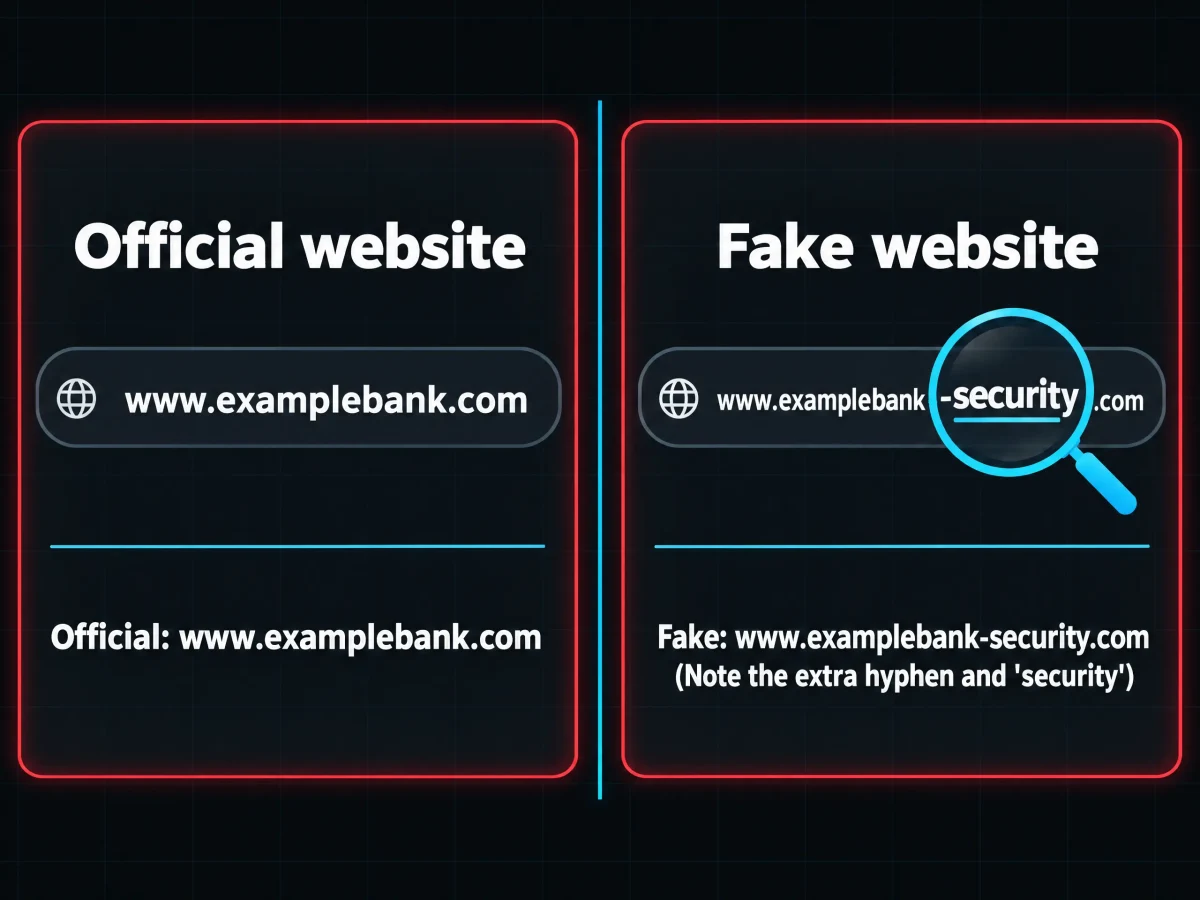
Note: Padlock icon for di browser address bar no guarantee say di site dey safe.
How to recognise fake app
Scammers often dey publish fake mobile apps wey dey copy official platforms. Use dis tips to protect yourself:
- Check di provider verified website to confirm if di official app dey available.
- Avoid downloading apps directly from links inside emails or messages.
Look out for small differences for logos, publisher names, and app titles.
Wetin scammer fit ask you for
| Wetin dem dey ask for | Why e dey dangerous | Wetin you fit do |
|---|---|---|
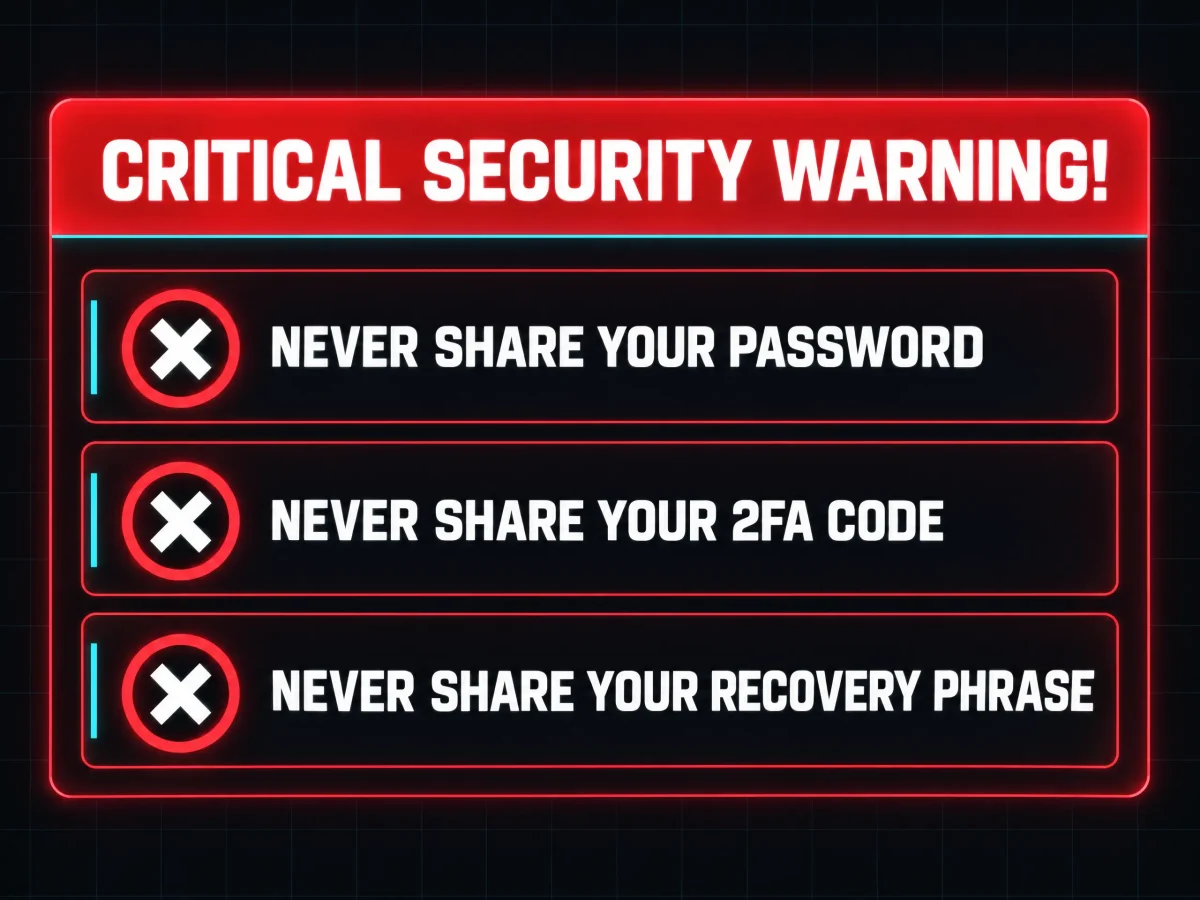
| Your password | Dem fit take full control of your account | No share am wit anybody. |
| One-time code | E fit allow dem bypass 2FA checks | No share codes; support no dey ask for dem. |
| Your recovery phrase | Dem fit remove all di funds for your wallet | No share am, no matter di reason. |
| “Small payment first” | Dem fit steal di fee wey you pay upfront | Refuse and block dem. |
| Remote access to your device | Dem fit take full control of your device | No give dem access. |
“Guaranteed” returns and “signals”
Crypto prices dey change all di time. Nobody fit guarantee trading profits or predict movements wit 100% certainty.
- Messages wey you no request, wey dey offer trading tips or signals
- Promises of returns wey dem say get “no risk” or dey “guaranteed”
- Pressure to deposit or send crypto immediately
Habits wey fit reduce your risk
Follow dis important habits to protect your account:
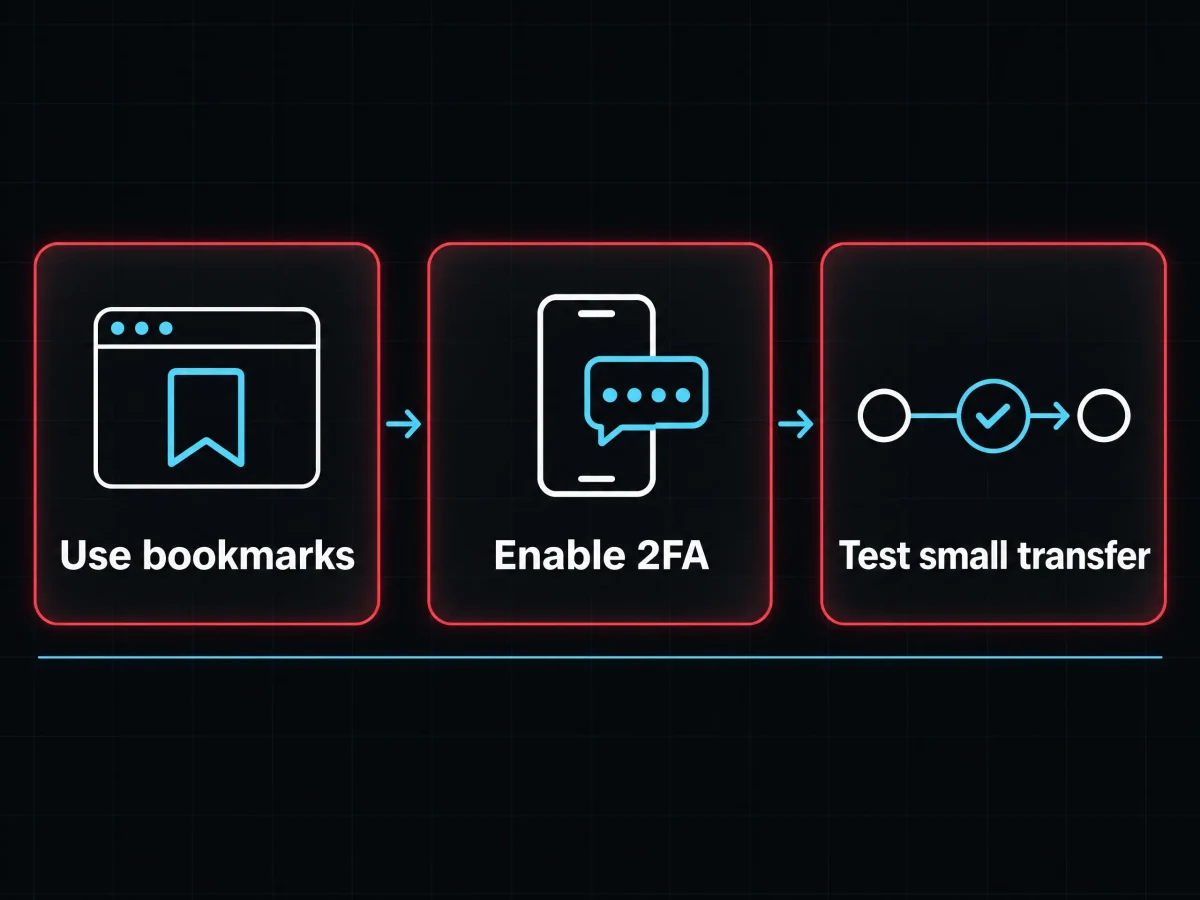
- Use bookmarks: Access platforms only through trusted bookmarks wey you don save.
- Strong passwords: Use long, unique passwords for evri platform.
- Enable 2FA: Make second verification step necessary for all logins.
- Secure your email: Protect your recovery email wit 2FA and strong password.
- Check addresses again: Verify di recipient wallet address and network before you send funds.
- Test transfers: Send small test amount before you transfer all di funds.
Wetin to do if you think say scammer don scam you
- Stop immediately: No send any more funds.
- Update login details: Change di passwords for your email and trading account.
- End sessions: End active sessions and remove devices wey you no recognise.
- Contact support: Contact di platform official support directly.
- Save evidence: Save messages, transaction IDs, and screenshots.
Risk reminder
Security habits fit reduce risks, but dem no dey remove trading market risks. Trade only wit money wey you fit afford to lose. Dis content na for education only. E no be financial advice.
Quiz
One message tok say dem need to review your account urgently, and e get link inside. Wetin be di safest way to respond?
Which of dis tins you no suppose share wit anybody?
Padlock symbol dey show for di browser. Wetin e prove?
Pesin wey you no know promise you “guaranteed” return if you send crypto first. Wetin you suppose do?
FAQs


