Sam Altman just hit the panic button

December 3, 2025
An illustration of two humanoid robots running on a digital track against a bright red background.

OpenAI has just triggered its highest internal alarm. The Wall Street Journal reported on Monday, Sam Altman sent a company-wide “Code Red” memo - the first full red alert in OpenAI’s history - and told everyone to drop everything that isn’t making ChatGPT dramatically better, right now. This is the clearest signal yet that OpenAI feels its lead slipping.

With $9 billion in projected 2025 losses dwarfing $13 billion in revenue, OpenAI’s AI empire seems teetering, according to reports.

The memo that broke the internet

Altman didn't mince words in his Monday dispatch: OpenAI is in "red" mode, escalating from a milder "orange" alert just weeks ago. 

  • Faster, smarter responses: Quicker load times, fewer hallucinations, and the kind of reliability that doesn't make you want to chuck your phone.
  • Deeper personalisation: ChatGPT should "feel intuitive and personal," per head Nick Turley-think less generic bot, more creepy-accurate mind reader.
  • Broader brainpower: Handling weirder queries without the "I'm sorry, Dave" cop-out, plus better reasoning across the board.

To make it happen? According to Altman, through daily war-room calls with product, research, and engineering leads. Team swaps encouraged. No sacred cows - except the cash cow that's starting to cough. This follows an "orange" warning in October, but red means business: full resource reallocation to stem the user bleed.

What ‘Code Red’ actually changes? 

Altman’s leaked memo reveals that OpenAI is scrambling to address ChatGPT’s speed and reliability issues, following Google’s Gemini 3, which landed a significant blow.

Metric Number Context
2025 projected revenue $13 billion Up from ~$4B in 2024, but still far from breakeven
2025 projected loss ~$9 billion Cash burn now ≈70% of revenue
Estimated funding needed 2025–2030 $207 billion (HSBC estimate) Even if revenue hits every target
ChatGPT weekly active users 800 million+ Growth has visibly slowed

Source: Forbes, HSBC, Techcrunch

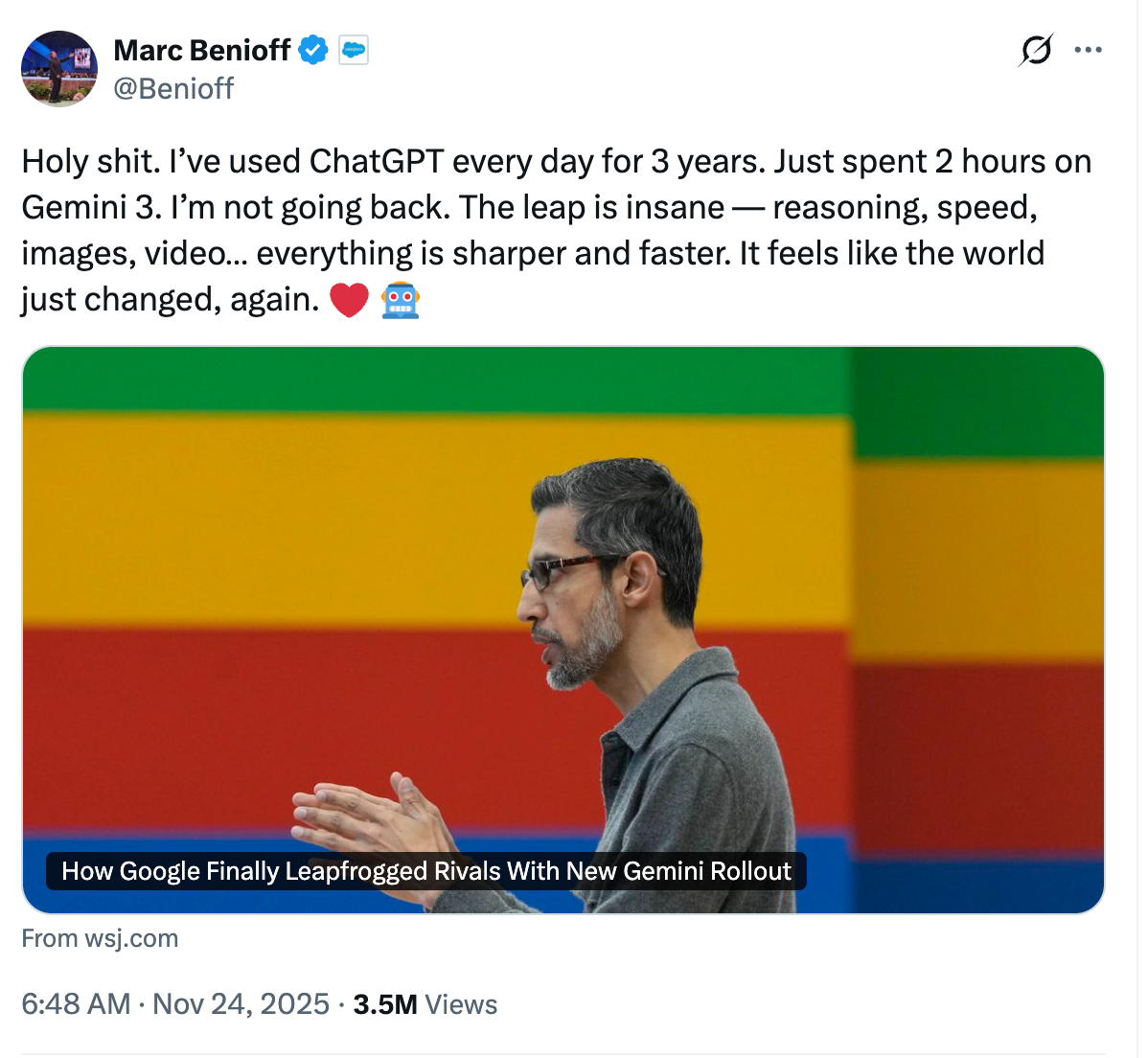
Add Anthropic's Claude 4 (enterprise darling, leading in quality for business) and Meta's freewheeling Llama models, and OpenAI's 70% market share feels like a polite fiction. Even Salesforce's Marc Benioff ditched ChatGPT for Gemini after a two-hour test: "The leap is insane."

Source: X

Silver lining? A new model drops soon

Further reports revealed OpenAI's shipping a "brand-new reasoning model" (whispers of "o3-pro" or "Orion") next week. If it lands, expect a user exodus reversal, potentially reclaiming benchmark crowns in reasoning, coding, and math. 

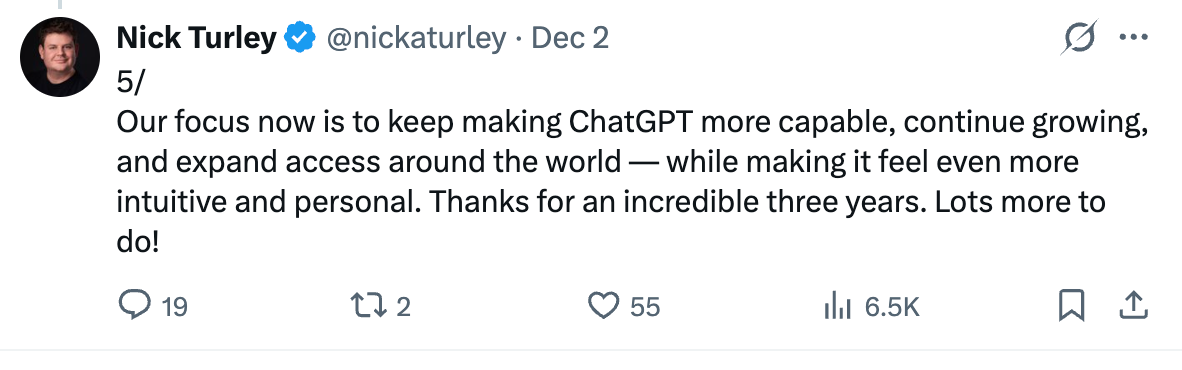
Vp and head of ChatGPT app, Nick Turley summed it up on X: "Our focus now is to keep making ChatGPT more capable... while making it feel even more intuitive and personal." OpenAI's mum on the memo, but actions scream louder. He added that, with 220M paying users projected by 2030, the stakes are sky-high.

Source: X

Analysts say this scramble could refocus a distracted giant - or expose cracks too wide to patch. In the AI arms race, today's leader is tomorrow's cautionary tale market watchers expressed. 

Why this matters

Experts expressed a Code Red at OpenAI is not just an internal fire drill - it’s a sign of an industry reaching a critical inflection point. OpenAI has enjoyed a year-long head start, but Gemini 3’s surge, Anthropic’s enterprise dominance, and Meta’s rapid open-source advances have narrowed the gap at alarming speed. When the world’s most valuable AI company panics publicly, it signals deeper competitive and financial pressure across the entire sector.

To many, the memo also reflects a transition from model hype to product performance. This means users increasingly care less about which model is “smartest” in benchmarks and more about latency, reliability, cost, and personalisation - areas where ChatGPT has recently fallen behind. It was added that if OpenAI cannot regain trust quickly, corporate adoption, investor confidence, and user loyalty could swing elsewhere within months.

Key takeaway

OpenAI’s Code Red marks the company’s most serious pivot since ChatGPT’s launch - a forced return to fundamentals as rivals accelerate, according to experts. The next few weeks will determine whether a new reasoning model can stabilise user numbers and restore OpenAI’s leadership, or whether Gemini, Claude, and Llama permanently reshape the competitive landscape. The AI race is no longer about who launched first - it’s about who adapts fastest.

The performance figures quoted are not a guarantee of future performance.

常见问题解答

Why did OpenAI declare a Code Red?

Reports revealed internal metrics showed slowing user growth, mounting performance complaints, and intensifying competition from Google Gemini 3, Anthropic Claude 4, and Meta’s Llama models. The company fears losing its edge if ChatGPT doesn’t improve rapidly.

Is OpenAI in financial trouble?

Fortune reports OpenAI is not insolvent, but its cash burn is enormous - $9 billion in projected 2025 losses against $13 billion in revenue. HSBC estimates it may need over $200 billion in funding by 2030 to sustain model development.

Does ChatGPT risk losing its market lead?

Watchers presume yes. Enterprise users increasingly prefer Claude for accuracy and reliability, while Gemini 3 is gaining traction for speed and reasoning. OpenAI’s once-dominant 70% market share is now slipping based on recent data.

What is the new model OpenAI plans to release?

Rumoured to be o3-pro or Orion, the new model focuses on improved reasoning, coding, and task-solving. It’s intended to retake benchmark leadership and win back advanced users.

What happens if ChatGPT doesn’t improve quickly?

According to reports, if performance issues persist, more users and enterprises may migrate to Gemini, Claude, or open-source alternatives. That could accelerate OpenAI’s funding needs and weaken its competitive moat.

内容