
ට්රම්ප්ගේ ග්රීන්ලන්ත උපාය මාර්ගය මත රන් සහ රිදී මිල ඉහළ යන්නේ ඇයි?

වොෂින්ටනයෙන් ඇති වූ භූ දේශපාලනික අවදානම වෙළඳපොලවල් විසින් අවබෝධ කර ගැනීමත් සමඟ ආසියානු වෙළඳාමේ මුල් භාගයේදී රන් සහ රිදී නව වාර්තාගත ඉහළ අගයන් කරා ඉහළ ගියේය. ග්රීන්ලන්තය සම්බන්ධයෙන් යුරෝපීය මිතුරන්ට එරෙහිව පුළුල් තීරුබදු පැනවීමට එක්සත් ජනපද ජනාධිපති ඩොනල්ඩ් ට්රම්ප් කළ නිවේදනය ආයෝජකයින් කම්පනයට පත් කළ අතර, ආරක්ෂිත වත්කම් වෙත යොමු වීමට සහ ගෝලීය කොටස් වෙළඳපොල අස්ථාවර කිරීමට හේතු විය.
මෙම වෙනස්කම් උද්ධමනය හෝ පොලී අනුපාත කප්පාදුව සමඟ එතරම් සම්බන්ධයක් නොතිබුණි. ඒ වෙනුවට, එය වෙළඳ ඛණ්ඩනය, රාජ්ය තාන්ත්රික බිඳවැටීම් සහ භූ දේශපාලනික බලපෑම් කිරීමේ මාධ්යයක් ලෙස තීරුබදු අවි ආයුධ ලෙස භාවිතා කිරීම පිළිබඳ වර්ධනය වන නොසන්සුන්තාව පිළිබිඹු කරයි. අත්ලාන්තික් සාගරය හරහා ආතතීන් පැතිර යද්දී, රන් සහ රිදී නැවත වරක් උද්ධමන ආවරණවලට වඩා දේශපාලන බැරෝමීටර ලෙස ක්රියා කරයි.
රන් සහ රිදී ඉහළ යාමට හේතුව කුමක්ද?
රන් මිලෙහි පුපුරන සුලු චලනය සඳහා ක්ෂණික උත්ප්රේරකය වන්නේ, එක්සත් ජනපදයට ග්රීන්ලන්තය මිලදී ගැනීමට ඉඩ නොදෙන්නේ නම්, යුරෝපීය රටවල් අටක් මත පෙබරවාරි 1 සිට 10% ක තීරුබදු පැනවීමටත්, ජුනි මාසය වන විට එය 25% දක්වා ඉහළ නැංවීමටත් ට්රම්ප් කළ තර්ජනයයි. ඉලක්ක කරගත් රටවල් අතර ජර්මනිය, ප්රංශය, ඩෙන්මාර්කය, එක්සත් රාජධානිය, ස්වීඩනය, නෝර්වේ, ෆින්ලන්තය සහ නෙදර්ලන්තය ඇතුළත් වේ - මේ සියල්ල දිගුකාලීන එක්සත් ජනපද මිතුරන් වේ.
වෙළඳපොල ප්රතිචාර දැක්වූයේ තීරුබදු වලට පමණක් නොව, ඒවා මගින් ඇති කළ පූර්වාදර්ශයට ය. වෙළඳ ප්රතිපත්තිය සෘජුවම භෞමික ඉල්ලීම් සමඟ සම්බන්ධ කිරීම ආර්ථික බලහත්කාරයේ තියුණු උත්සන්න වීමක් නියෝජනය කරයි. ආයෝජකයින් ඉක්මනින්ම පළිගැනීමේ අවදානම, ප්රතිපත්ති අඩපණ වීම සහ දිගුකාලීන අවිනිශ්චිතතාවය මිලට ගත් අතර, ඓතිහාසිකව රන් වර්ධනය වන්නේ එවැනි තත්වයන් යටතේ ය. යුරෝපීය නිලධාරීන් අනතුරු ඇඟවූයේ මෙම පියවර අත්ලාන්තික් සබඳතාවල "භයානක පහළට වැටීමක්" අවදානමට ලක් කරන බවත්, රාජ්ය තාන්ත්රිකභාවයට මෙම ප්රතිවිපාක පාලනය කිරීමට අපහසු විය හැකි බවට හැඟීම ශක්තිමත් කරන බවත්ය.
රිදී ද රන් අනුගමනය කරමින් ඉහළ ගොස් ඇති නමුත් වඩා වැඩි අස්ථාවරත්වයක් සහිතවය. බිය නිසා ඇති වන ගලා ඒමෙන් රන් ක්ෂණිකව ප්රතිලාභ ලබන අතර, රිදී වල ප්රතිචාරය ආරක්ෂිත ඉල්ලුම සහ කාර්මික බාධා කිරීම් පිළිබඳ කනස්සල්ලේ මිශ්රණයක් පිළිබිඹු කරයි.
යුරෝපීය නායකයින් යුරෝ බිලියන 93 ක පමණ එක්සත් ජනපද භාණ්ඩ මත පළිගැනීමේ පියවර ගැන විවෘතව සාකච්ඡා කිරීමත් සමඟ, සැපයුම් දාම බිඳ වැටීම සහ නිෂ්පාදන ක්රියාකාරකම් මන්දගාමී වීම පිළිබඳ බිය රිදී මිල ගණන් ද ශක්තිමත් කිරීමට පටන් ගෙන තිබේ.
මෙය වැදගත් වන්නේ ඇයි
මෙම ඉහළ යාම වැදගත් වන්නේ එය වටිනා ලෝහවල ධාවකයන්ගේ වෙනසක් සංඥා කරන බැවිනි. ශක්තිමත් එක්සත් ජනපද ශ්රම වෙළඳපොල දත්ත සහ කෙටි කාලීන Federal Reserve පොලී අනුපාත කප්පාදු කිරීමේ අපේක්ෂාවන් වියැකී ගියද මෑත කාලීන රන් ශක්තිය දිගටම පැවතුනි. අනාගත වෙළඳපොලවල් දැන් ඊළඟ Fed ලිහිල් කිරීම ජුනි මාසයට පෙර සිදු නොවන බවට මිල කර ඇතත්, රන් දිගටම ඉහළ යයි.
එම විෂමතාවය ගැඹුරු කනස්සල්ලක් ඉස්මතු කරයි. ආයෝජකයින් තවදුරටත් පොලී අනුපාත හෝ උද්ධමන ගමන් පථ කෙරෙහි පමණක් අවධානය යොමු නොකරයි. ඒ වෙනුවට, ඔවුන් පහසුවෙන් ආකෘතිගත කළ නොහැකි හෝ හෙජ් කළ නොහැකි දේශපාලන අවදානමට ප්රතිචාර දක්වයි.
Saxo Markets හි ප්රධාන ආයෝජන උපායමාර්ගික Charu Chanana ප්රකාශ කළ පරිදි, ප්රධාන ප්රශ්නය වන්නේ මෙය "වාචාලකමේ සිට ප්රතිපත්තිය දක්වා" ගමන් කරන්නේද යන්නයි, මන්ද කාලසීමාවන් නියම කළ පසු, වෙළඳපොලවල් තර්ජනය සැබෑ ලෙස සැලකිය යුතුය.
වෙළඳපොල, වෙළඳාම සහ ආයෝජකයින් කෙරෙහි බලපෑම
පුළුල් වෙළඳපොල ප්රතිචාරය වේගවත් විය. යුරෝපීය සහ එක්සත් ජනපද කොටස් අනාගත ගිවිසුම් පහත වැටුණු අතර, යුරෝ, ස්ටර්ලින් සහ යෙන් වලට සාපේක්ෂව එක්සත් ජනපද ඩොලරය දුර්වල විය. එම දුර්වල ඩොලරය රන් සඳහා සාම්ප්රදායික බාධාවක් ඉවත් කළ අතර, එහි ඉහළ යාමේ වේගය වැඩි කළේය.
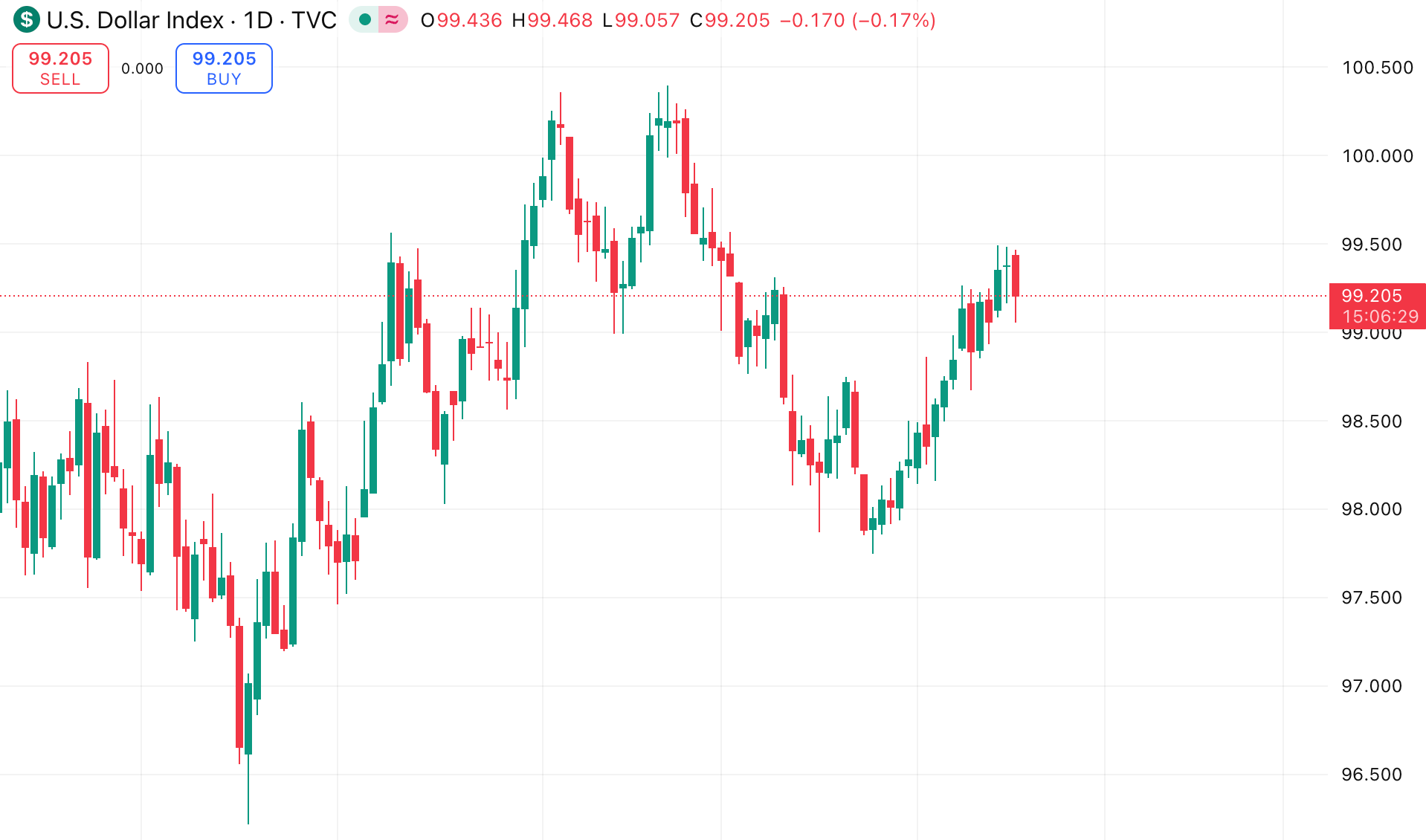
වැදගත්ම දෙය නම්, US bond yields ඉහළ මට්ටමක පවතින විට පවා මෙය සිදුවීමයි, එමඟින් තහවුරු වන්නේ මෙම පියවර මූල්ය ලිහිල් කිරීමට වඩා අවදානම් මග හැරීම මගින් මෙහෙයවනු ලබන බවයි.
රිදී වල කාර්යභාරය වඩාත් සංකීර්ණ වේ. ගෝලීය ආර්ථිකය අවපාතයකට ඇද නොදමා වෙළඳ ආතතීන් උත්සන්න වුවහොත්, දැඩි සැපයුම් තත්වයන් සහ උපායමාර්ගික කර්මාන්තවලට නිරාවරණය වීම හේතුවෙන් රිදී රන් අභිබවා යා හැකිය. කෙසේ වෙතත්, තීරුබදු කාර්මික නිෂ්පාදනය අර්ථවත් ලෙස මන්දගාමී කළහොත්, ඍණාත්මක වර්ධන සිරස්තල මත රිදී තියුණු පසුබෑම්වලට මුහුණ දිය හැකිය. එම ද්විත්ව නිරාවරණය දැන් රිදී වෙළඳපොලේ දක්නට ලැබෙන වැඩි අස්ථාවරත්වය පැහැදිලි කරයි.
ආයෝජකයින් සඳහා පණිවිඩය පැහැදිලිය. වටිනා ලෝහ නැවත වරක් කළඹ රක්ෂණයක් ලෙස සලකනු ලැබේ. ETF ගලා ඒම සහ ව්යුත්පන්න ස්ථානගත කිරීම් යෝජනා කරන්නේ භෞතික පරිභෝජනය ද්විතියිකව පැවතුනද ආයතනික ඉල්ලුම වේගවත් වන බවයි. අවධානය යොමු වී ඇත්තේ ප්රාග්ධන සංරක්ෂණයට මිස ස්වර්ණාභරණ හෝ කාර්මික භාවිතයට නොවේ.
විශේෂඥ දැක්ම
ඉදිරිය දෙස බලන විට, රන් සඳහා කෙටි කාලීන ගමන් පථය රඳා පවතින්නේ ට්රම්ප්ගේ තීරුබදු තර්ජන ක්රියාත්මක කරන්නේද නැතහොත් සාකච්ඡා මගින් තනුක කරන්නේද යන්න මතය. පෙබරවාරි 1 වෙළඳපොලවල් සඳහා තීරණාත්මක දිනයක් බවට පත්ව ඇත. ප්රතිපත්ති ක්රියාමාර්ග තහවුරු කිරීම රන් මිල නොදන්නා භූමියකට තල්ලු කළ හැකි අතර, පළිගැනීම් සිදුවුවහොත් සමහර බැංකු විශ්ලේෂකයින් දැනටමත් අවුන්සයකට ඩොලර් 4,800 ට වැඩි අවස්ථා ගෙනහැර දක්වයි.
රිදී වල දැක්ම රඳා පවතින්නේ වෙළඳ ආතතීන් ආර්ථික ඔරොත්තු දීමේ හැකියාව සමඟ ඡේදනය වන ආකාරය මතය. ස්ථාවර වර්ධනයක් සමඟ ඒකාබද්ධ වූ අඛණ්ඩ භූ දේශපාලනික ආතතිය සාපේක්ෂ පදනමක් මත රිදී සඳහා වාසිදායක වනු ඇත. කෙසේ වෙතත්, වෙළඳ ප්රවාහයන්ගේ තියුණු පිරිහීමක් රන් එහි පෙරමුණ පුළුල් කිරීමට ඉඩ ඇත. ආයෝජකයින් යුරෝපා සංගමයේ ප්රති-බලහත්කාර මෙවලම සක්රීය කිරීම පිළිබඳ සාකච්ඡා දෙස ද බලා සිටින අතර, එය කලාතුරකින් භාවිතා වන මෙවලමක් වන අතර එය ආරවුල සැලකිය යුතු ලෙස උත්සන්න කළ හැකිය.
ප්රධාන කරුණු
රන් වල වාර්තාගත ඉහළ යාම දේශපාලන කම්පනයකට ප්රතිචාරයක් මිස ආර්ථික දුර්වලතාවයට නොවේ. ට්රම්ප්ගේ ග්රීන්ලන්තය හා සම්බන්ධ තීරුබදු තර්ජන වෙළඳ යුද්ධ බිය නැවත පණ ගන්වා ඇති අතර ආයෝජකයින් දෘඩ වත්කම් වෙත තල්ලු කර ඇත. වර්ධන අවදානම් වලට වැඩි සංවේදීතාවයක් තිබුණද රිදී ද ඊට සහභාගී වේ. මෙම රැලිය දීර්ඝ වේද යන්න දැන් එක් ප්රශ්නයක් මත රඳා පවතී: මෙම තර්ජන ප්රතිපත්ති බවට පරිවර්තනය වේවිද, නැතහොත් රාජ්ය තාන්ත්රිකභාවය නැවත පාලනය ලබා ගනීවිද?
රිදී තාක්ෂණික දැක්ම
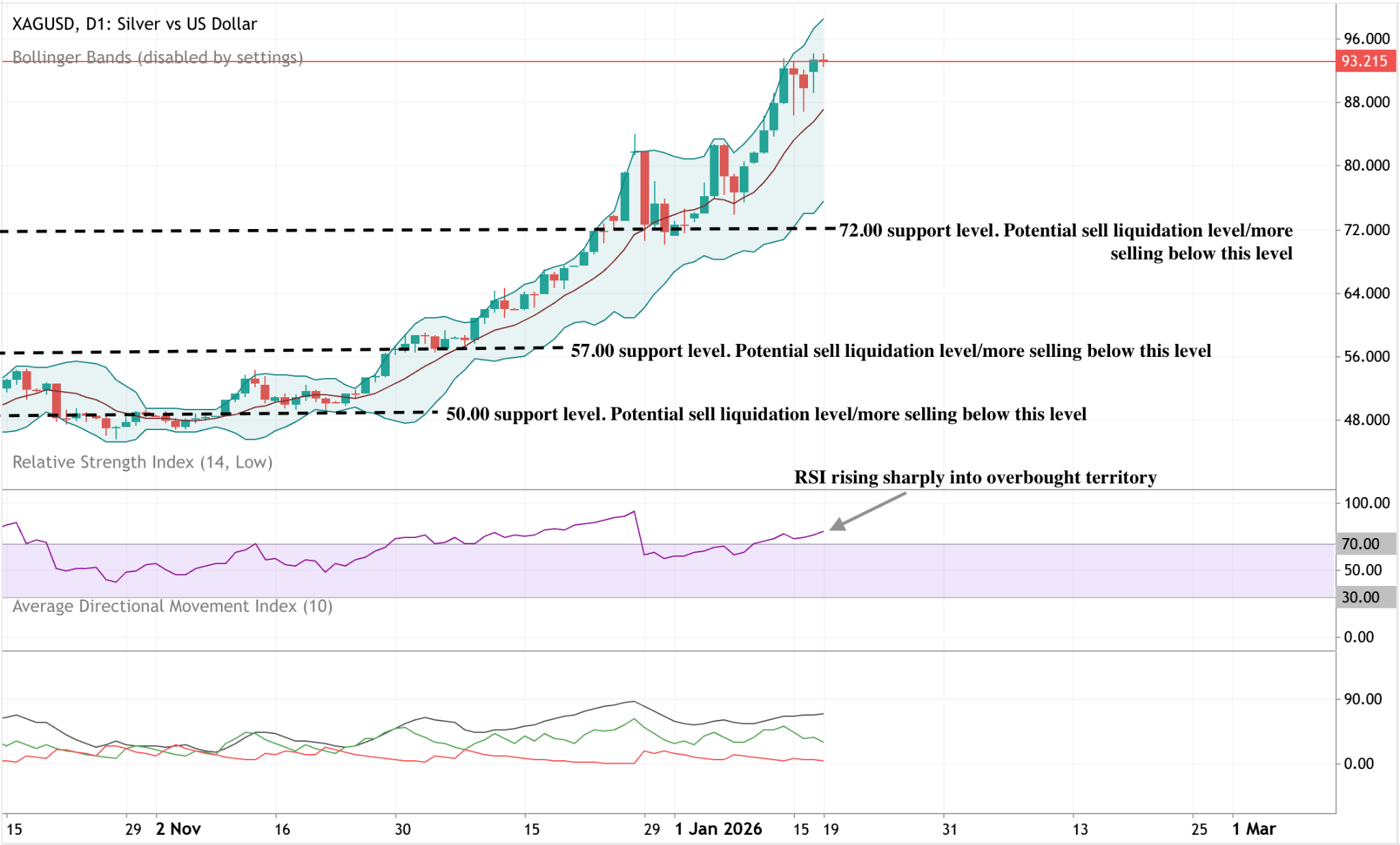
රිදී ඩොලර් 93 පමණ දක්වා ඉහළ ගොස් ඇති අතර, එය දින 30 ක් තුළ 38.7% කට ආසන්න ලාභයක් සනිටුහන් කරයි, වෙළඳ පරිමාව සාමාන්ය මට්ටම් මෙන් 15 ගුණයක් පමණ යැයි ගණන් බලා ඇත - එය දශක ගණනාවක් තුළ දක්නට ලැබුණු වඩාත්ම ආක්රමණශීලී රිදී රැලි වලින් එකකි. මෙම පියවර රිදී මිල දිගු කිරීමේ භූමියක ස්ථිරව තබන අතර, තාක්ෂණික තත්වයන් බොහෝ විට අවසාන අදියර හෝ පිපිරුම් අවධීන් සමඟ සම්බන්ධ වේ. රන් ද තියුනු ලෙස ඉහළ ගොස් ඇති අතර, පුළුල් වටිනා ලෝහ ගම්යතා පසුබිම ශක්තිමත් කරයි.
ප්රවණතා ශක්තිය ප්රතික්ෂේප කළ නොහැකිය. 52 ආසන්නයේ ඇති ADX කියවීම් ඉතා ප්රබල, පරිණත ප්රවණතාවක් පෙන්වා දෙන අතර, ගම්යතා දර්ශක කාල රාමු හරහා විහිදී ඇත: RSI දෛනික ප්රස්ථාරයේ 70 ට වැඩි, සතිපතා 86 ට ආසන්න සහ මාසිකව 90 ට වැඩි වේ. මෙම සංයෝජනය ප්රබල ඉහළ යාමේ ගම්යතාවයක් පිළිබිඹු කරයි, නමුත් රැලිය පරිණත වන විට වර්ධනය වන වෙහෙසට පත්වීමේ අවදානම ද ඉස්මතු කරයි.
මිල පුළුල් වන අස්ථාවරත්වය සමඟ ඉහළ Bollinger Band ඔස්සේ දිගටම ගමන් කරයි - එය සම්භාව්ය පැරබෝලික පැතිකඩකි. ඒ අතරම, ළඟම ඇති ව්යුහාත්මකව අර්ථවත් ආධාරකය ඩොලර් 73 ට ආසන්නව පවතී, එය වත්මන් මට්ටම්වලට වඩා 20% කට වඩා පහළින් වන අතර, මෙම පියවර කොතරම් දුරට විහිදී ඇත්ද යන්න අවධාරණය කරයි. ඓතිහාසිකව, ADX මෙම අන්තයන්ට ළඟා වූ විට, ගම්යතාවයේ ඕනෑම අඩුවීමක් නොගැඹුරු ඒකාබද්ධ කිරීම්වලට වඩා තියුණු, වේගවත් පසුබෑම් මගින් අනුගමනය කිරීමට නැඹුරු වේ.
රන් තාක්ෂණික දැක්ම
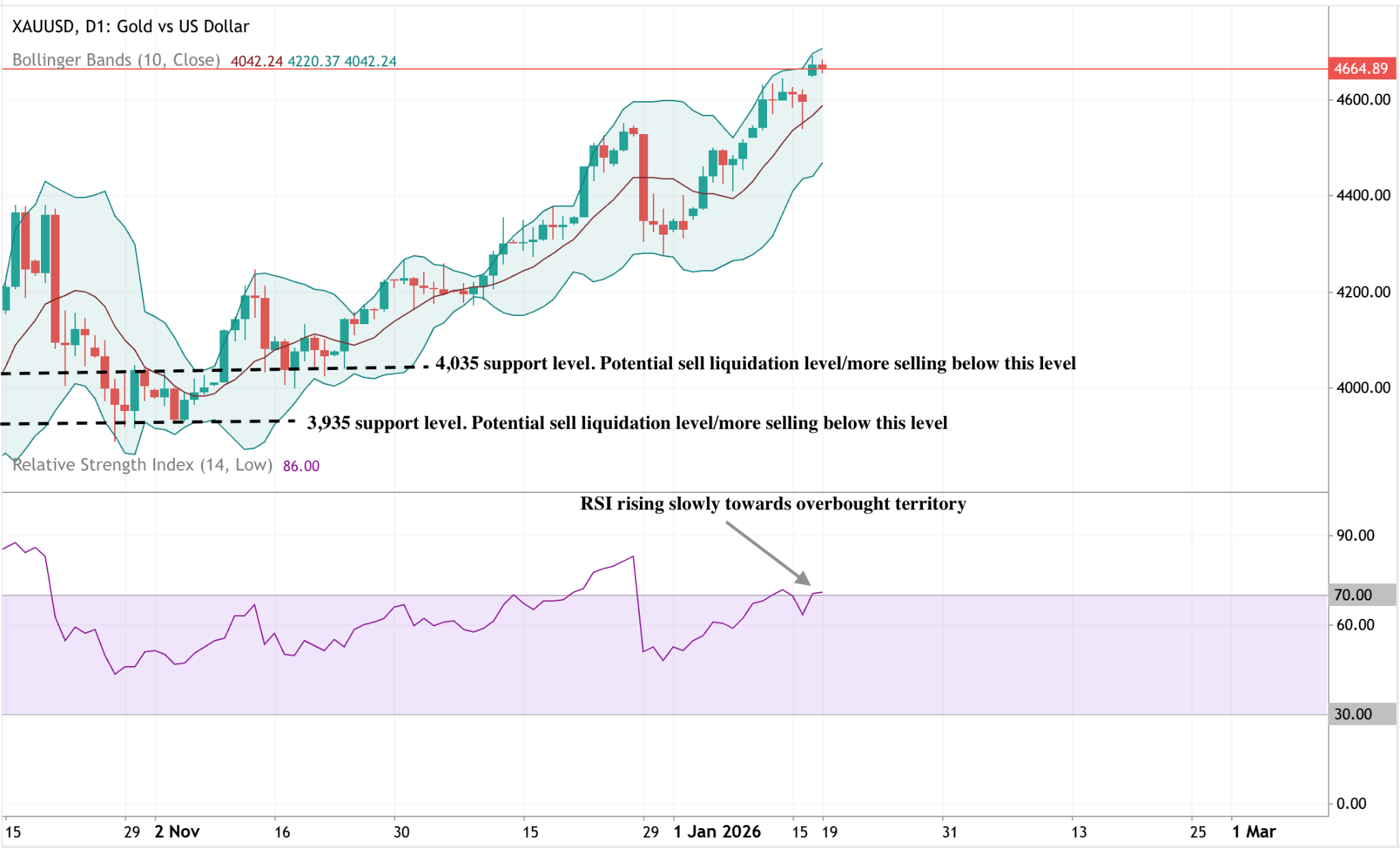
ශක්තිමත් ඉහළ යාමේ දිගුවකින් පසු රන් මෑත කාලීන ඉහළ අගයන් අසල දිගටම ගනුදෙනු වන අතර, මිල ඉහළ Bollinger Band වෙත තද වී ඇත - එය තිරසාර ඉහළ යාමේ ගම්යතාවයේ සලකුණක් වන නමුත් කෙටි කාලීන දිගු වීමක් ද වේ. අස්ථාවරත්වය පුළුල්ව පවතී, එය අඩු විශ්වාසයකින් යුත් පාවීමකට වඩා ශක්තිමත් සහභාගීත්වයක් පිළිබිඹු කරයි.
ගම්යතා දර්ශක සමාන තත්වයන් පෙන්වයි: RSI ක්රමයෙන් අධික ලෙස මිලදී ගත් (overbought) භූමිය දෙසට ඉහළ යමින් පවතී, එයින් යෝජනා වන්නේ ගම්යතාවය ස්ථිර නමුත් තවදුරටත් ආක්රමණශීලී ලෙස වේගවත් නොවන බවයි. ව්යුහාත්මකව, පුළුල් ප්රවණතාවය නොවෙනස්ව පවතින අතර, මිල ඩොලර් 4,035 සහ ඩොලර් 3,935 කලාපවලට ඉහළින් පවතී, මෑත කාලීන මිල ක්රියාකාරිත්වය ක්ෂණික ප්රවණතා ආපසු හැරවීමකට වඩා ඒකාබද්ධ කිරීමක් පෙන්වා දෙයි.
Deriv Blog හි අඩංගු තොරතුරු අධ්යාපනික අරමුණු සඳහා පමණක් වන අතර එය මූල්ය හෝ ආයෝජන උපදෙස් ලෙස අදහස් නොකෙරේ. තොරතුරු යල් පැන ගිය හැකි අතර, සඳහන් කර ඇති සමහර නිෂ්පාදන හෝ වේදිකා තවදුරටත් ලබා නොදිය හැකිය. ඕනෑම වෙළඳ තීරණයක් ගැනීමට පෙර ඔබේම පර්යේෂණයක් කිරීමට අපි නිර්දේශ කරමු. උපුටා දක්වා ඇති කාර්ය සාධන සංඛ්යා අනාගත කාර්ය සාධනය පිළිබඳ සහතිකයක් නොවේ.


