
Bitcoin $92,000 ඉක්මවා යාම නව වෙළඳපල අදියරක් සංඥා කරයිද?
%2520(1).png)
Bitcoin නැවත $92,000 ට ඉහළින් නැගීම, මෙම චක්රයේ සෑම ප්රධාන හැරවුම් ලක්ෂයක් සමඟම පැවති විවාදයක් නැවත පණගන්වා ඇත: වෙළඳපල හුදෙක් අධික ලෙස විකිණීම (oversold) නිවැරදි කරමින් සිටීද, නැතහොත් ආයතනික සහ සාර්ව ආර්ථික බලපෑම් සහිත නව අදියරක් ආරම්භ වී තිබේද?
BOJ මගින් ඇති වූ අවදානම් ඉවත් කිරීමේ පියවරක්, DeFi exploit එකක් සහ leveraged liquidations රැල්ලක් හේතුවෙන් Bitcoin $80,000–$82,000 කලාපය දෙසට ඇද වැටුණු දුෂ්කර කාල පරිච්ඡේදයකින් පසුව මෙම යථා තත්ත්වයට පත්වීම සිදු විය. එය $92,000 නැවත ලබා ගන්නා විට, වෙළඳුන් තනි සිරස්තලයකට වඩා පුළුල් බලවේගයන්ගේ පෙළගැස්මක් දෙස බලා සිටියහ.
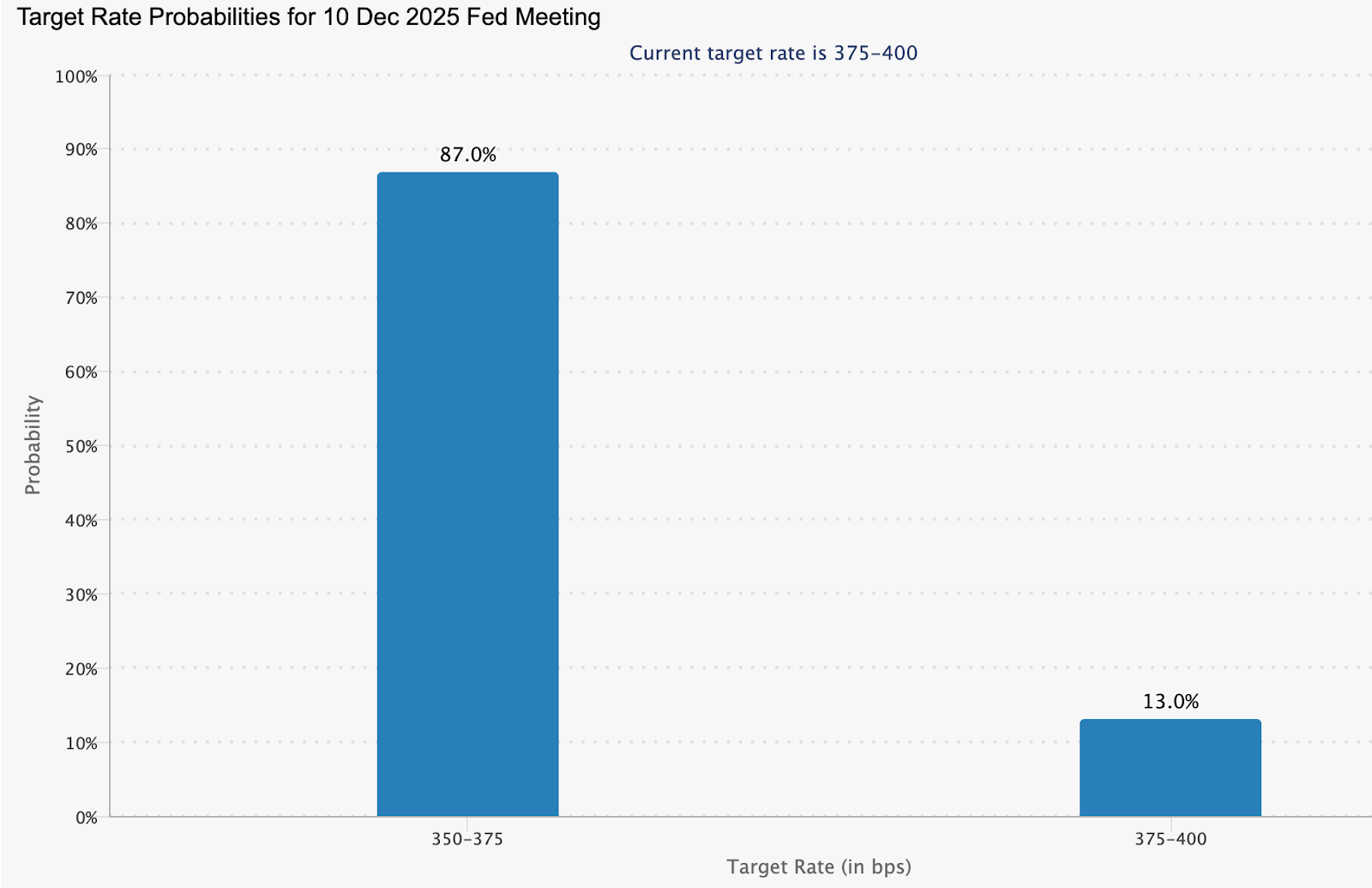
දෙසැම්බර් පොලී අනුපාත කප්පාදුවක් සඳහා වූ අපේක්ෂාවන් තියුනු ලෙස ඉහළ යද්දී මෙම ඉදිරි ගමන සිදුවිය. අනාවැකි වෙළඳපල දැන් 25 bps කප්පාදුවක් සඳහා 87% ක සම්භාවිතාවක් පෙන්නුම් කරන අතර, ද්රවශීලතාවයේ වෙනස්වීම් වලට ප්රතිචාර දැක්වීමට දැනටමත් හුරු වී ඇති වෙළඳපලකට මෙය ප්රබල සාර්ව ආර්ථික පසුබිමක් එක් කරයි.
එම පසුබිම තුළ, Vanguard හි ප්රතිපත්ති වෙනස් කිරීම, Bank of America හි කළඹ වෙන් කිරීම් (portfolio allocations) පිළිබඳ උපදෙස් සහ crypto ආශ්රිත ETF හරහා ඉහළ යන ඉල්ලුම ඇතුළු ආයතනික සංඥා, Bitcoin පුළුල් වෙළඳපල සංවාද වෙත නැවත ඇද දමනු ලබන බවට හැඟීම සාමූහිකව වර්ධනය කර ඇත.
Bitcoin $92K ඉක්මවා යාමට හේතු වන්නේ කුමක්ද?
මෙම යථා තත්ත්වයට පත්වීම අතිච්ඡාදනය වන උත්ප්රේරක කිහිපයක ප්රතිඵලයකි. මෘදු එක්සත් ජනපද ශ්රම දත්ත සහ Federal Reserve නිලධාරීන්ගේ ලිහිල් ප්රතිපත්ති ප්රකාශයන් හේතුවෙන් දෙසැම්බර් රැස්වීමේදී මූල්ය ලිහිල් කිරීම් ආරම්භ විය හැකි බවට වෙළඳපල එකඟතාවයකට තල්ලු වීමත් සමඟ මෑත සතිවල පොලී අනුපාත කප්පාදු අපේක්ෂාවන් ඉහළ ගොස් ඇත.
ද්රවශීලතා අපේක්ෂාවන් කෙරෙහි Bitcoin හි සංවේදීතාව එහි වඩාත්ම ස්ථාවර චර්යාත්මක ලක්ෂණයක් ලෙස පවතින අතර, නොවැම්බර් මාසයේ විකුණුම්වලින් පසුව විශ්වාසය නැවත ගොඩනැගීමට මෙම වෙනස උපකාරී වී ඇත. ආයතනික ස්ථානගත කිරීම් ද වෙළඳපල ව්යුහයට වැදගත් වන ආකාරයෙන් විකාශනය වෙමින් පවතී.
ආයෝජකයින් යථා තත්ත්වයට පත්වීමේදී ද්රවශීල නිරාවරණය (liquid exposure) අපේක්ෂා කළ බැවින් BlackRock හි IBIT ETF ඩොලර් බිලියන 3.7 ක වෙළඳ පරිමාවක් වාර්තා කළේය - එය Vanguard හි S&P 500 ETF අභිබවා යාමකි. ධනවත් ගනුදෙනුකරුවන්ට ඔවුන්ගේ වත්කම්වලින් 1-4% ක් ඩිජිටල් වත්කම් සඳහා වෙන් කළ හැකි බවට යෝජනා කරමින් Bank of America කළ ප්රකාශය මෙම ගම්යතාවයට තවත් රුකුලක් විය.
Bitcoin ETF වෙළඳාමට ඉඩ දීමට Vanguard ගත් තීරණය අර්ථවත් වුවද, එය රැලිය සඳහා තනි හේතුවක් වීමට වඩා, ගනුදෙනුකරුවන්ගේ ඉල්ලුමට අනුවර්තනය වන වරක් ප්රවේශම් වූ ආයතනවල පුළුල් රටාවක කොටසකි.
එය වැදගත් වන්නේ ඇයි
සාර්ව සහ ව්යුහාත්මක බලවේගවල එකතුව මෙම අවස්ථාව සම්මත සහන රැලියකට (relief rally) වඩා වෙනස් කරයි. Bitcoin හි යථා තත්ත්වයට පත්වීම සිදුවන්නේ ඔක්තෝම්බර් මාසයේ $126,000 ආසන්නයේ පැවති ඉහළම අගයේ සිට 36% ක පහත වැටීමකින් පසුව වන අතර, එමඟින් තත්ත්වයන් අධික ලෙස විකිණීමට (oversold) ලක්වී ස්ථානගත කිරීම් පිරිසිදු වී ඇත.
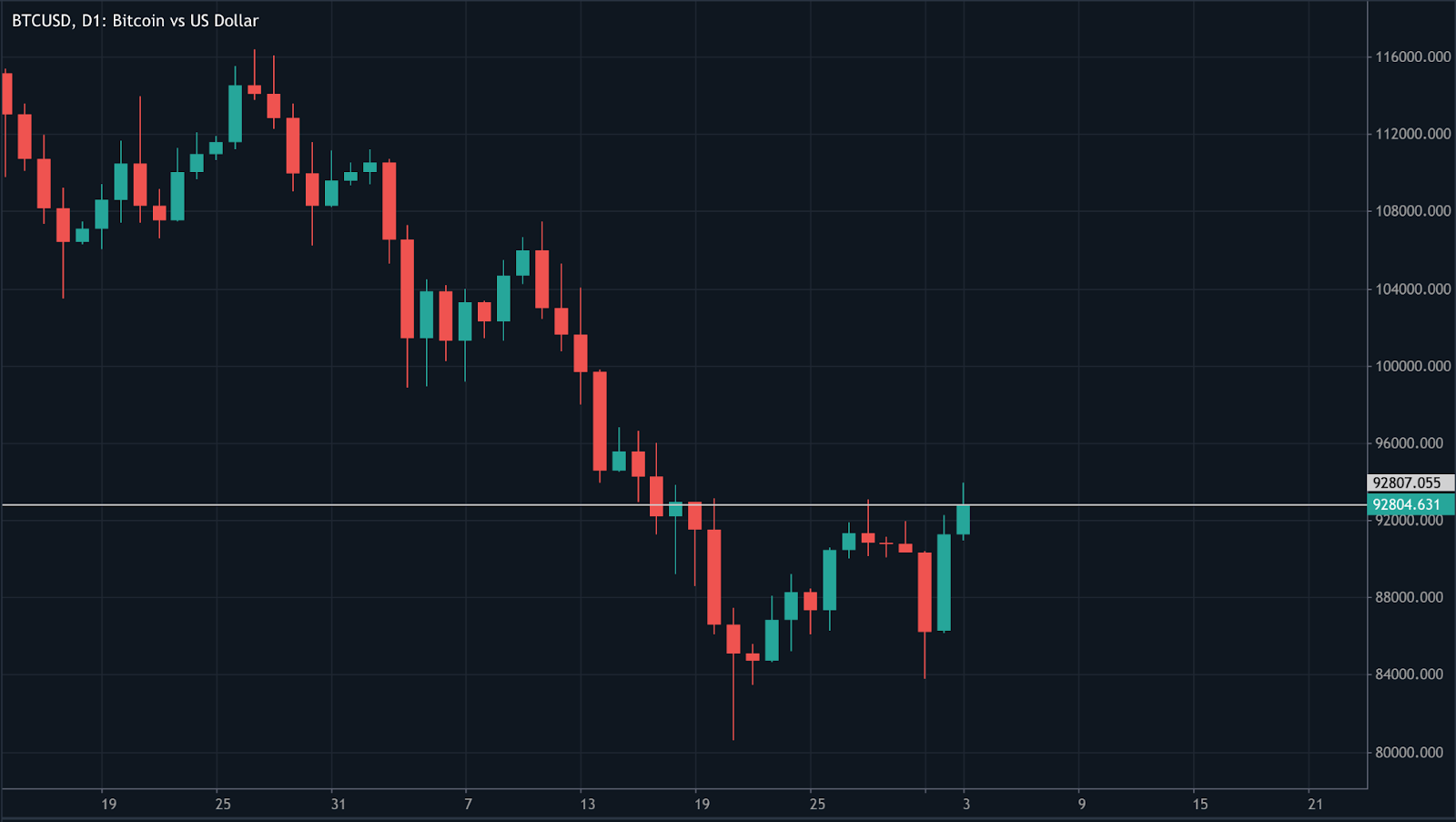
නොවැම්බර් යනු ඓතිහාසිකව වසර අවසානය දක්වා ශක්තිමත් වීමට පෙර වෙළඳපල පහළම මට්ටමට වැටෙන කාල පරිච්ඡේදයක් බව BTIG පෙන්වා දුන් අතර, තාක්ෂණික පසුබිම එම රටාව සමඟ සමීපව ගැලපේ. පොලී අනුපාත කප්පාදු අපේක්ෂාවන් සහ ඉවත් වූ ස්ථානගත කිරීම් අතර අන්තර්ක්රියාකාරිත්වය මෙම යථා තත්ත්වයට පත්වීමට වඩාත් කල් පවතින හැඟීමක් ලබා දී ඇත.
Deriv MT5 මත මෙම යථා තත්ත්වයට පත්වීම නිරීක්ෂණය කරන වෙළඳුන්, මෑත කාලීන පහත වැටීම මගින් පිරිසිදු ව්යුහයක් සහ පැහැදිලි ප්රතික්රියා ලක්ෂ්ය නිර්මාණය කළ ආකාරය දකිනු ඇත. එමගින් වත්මන් චලනය සැබෑ ගම්යතාවයක් ගොඩනඟන්නේද නැතහොත් හුදෙක් ආපසු හැරීමක්ද යන්න නිරීක්ෂණය කිරීම පහසු කරයි.
ආයතනික හැඟීම් මාස ගණනාවක් පුරා වෙළඳපල ගැඹුරට බලපෑ හැකි ආකාරයෙන් වෙනස් වෙමින් පවතී. Glider හි Brian Huang සඳහන් කළේ, ආයෝජන ප්රවේශයේදී "පැරණි පාසලේ" ලෙස සැලකූ සමාගම් පවා අනුගත වෙමින් සිටින බවයි. ඊට හේතුව අස්ථාවරත්වය මධ්යයේ වුවද ඩිජිටල් වත්කම් සඳහා ගනුදෙනුකරුවන්ගේ ඉල්ලුම අඛණ්ඩව පැවතීමයි. මෙම මෘදු ආකල්පය ඕනෑම තනි නිවේදනයක් තරම්ම වැදගත් වේ. සාර්ව ආර්ථික පරිසරය වඩාත් සහයෝගී වන අවස්ථාවක එය ගලා ඒම පුළුල් කරන අතර bitcoin නිරාවරණය සාමාන්යකරණය කරයි.
ස්ථාන ප්රමාණය (position size) කළමනාකරණය කරන වෙළඳුන් සඳහා, අස්ථාවරත්වය ඉහළ යන විට සහ ආධාරක මට්ටම් පරීක්ෂා කරන විට අවදානම් මට්ටම් ගණනය කිරීමට Deriv Trading Calculator වැනි මෙවලම් උපකාරී වේ.
වෙළඳපල සහ ආයෝජකයින් කෙරෙහි බලපෑම
Bitcoin නැවත $92,000 ට ඉහළින් නැගීම ආශ්රිත වෙළඳපල හරහා අවදානම් හැසිරීම් ප්රතිසංස්කරණය කළේය. වෙළඳුන් ද්රවශීල වාහන වෙත මාරු වීමත් සමඟ ETF පරිමාවන් ඉහළ ගිය අතර, crypto කොටස් අසමාන ලෙස ප්රතිචාර දැක්වීය.
Bitcoin වලට නිරාවරණය වූ කොටස් යථා තත්ත්වයට පත්වීමත් සමඟ ඉහළ ගිය නමුත්, පතල් සමාගම් දිගටම අරගල කළේය - මෙය ආයෝජකයින් පිරිසිදු මිල නිරාවරණය සහ මෙහෙයුම් අවදානම් සහිත ව්යාපාර අතර වඩාත් තියුනු ලෙස වෙනස හඳුනා ගන්නා බවට ලකුණකි. වෙළඳපල ඒකාකාරී ලෙස ඉහළ යාමකට වඩා තෝරා බේරා ගැනීමක් සිදු කරන බව මෙම විෂමතාවය අවධාරණය කරයි.
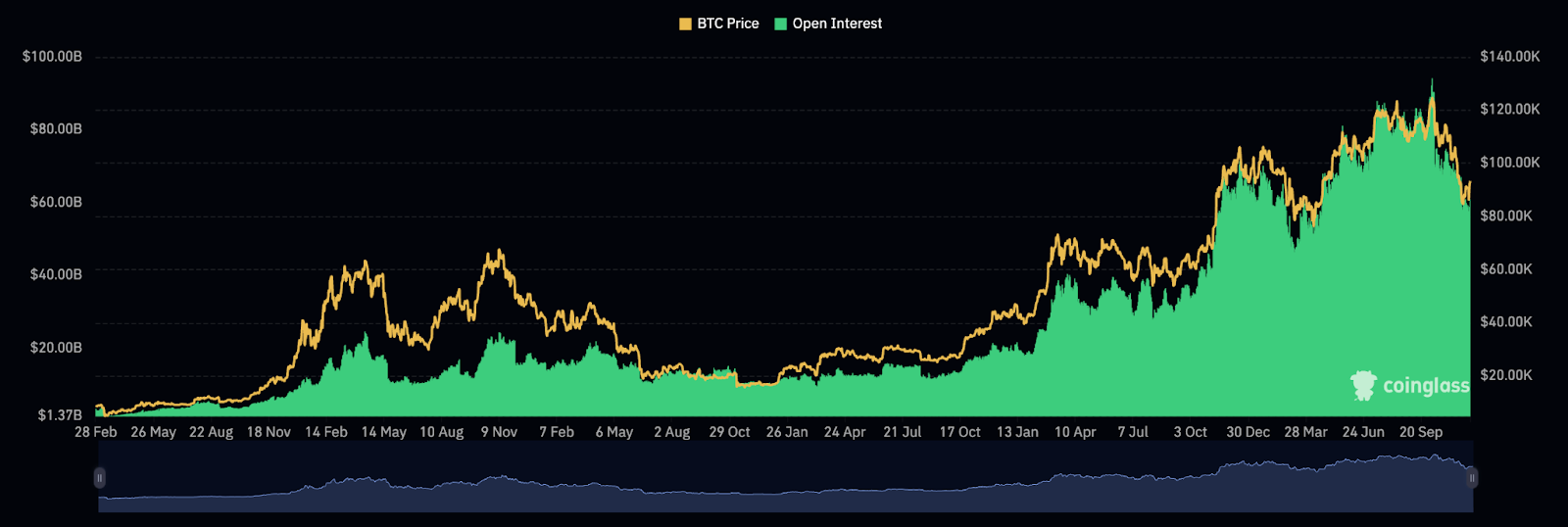
විශ්ලේෂකයින්ට අනුව, වෙළඳුන් සඳහා මෙම යථා තත්ත්වයට පත්වීම මගින් leverage (ණයට ගත් මුදල්) ධාවකයක් සහ අවදානමක් ලෙස ඉටු කරන කාර්යභාරය ඉස්මතු කර ඇත. දෙසැම්බර් මස මුලදී $90,000 ට වඩා පහත වැටීම මගින් අධික ලෙස දීර්ඝ වූ ස්ථානගත කිරීම්වල අස්ථාවරත්වය හෙළිදරව් වූ අතර, ඩොලර් මිලියන සිය ගණනක liquidations ඇති කළේය. පසුව ඇති වූ යථා තත්ත්වයට පත්වීම මගින් හැඟීම් ස්ථාවර කළද, වෙළඳපල තවමත් නිර්මාණාත්මක ගම්යතාවය සහ තවත් බලහත්කාරී ඉවත් කිරීමක් අතර පටු මාවතකට මුහුණ දෙයි.
විවෘත පොලිය (open interest) වත්මන් මට්ටම්වල සිට ක්රමයෙන් ඉහළ යන්නේද - එය මෙම චලනයට සහාය වනු ඇත - නැතහොත් ඉතා ඉක්මනින් වේගවත් වී නැවත අස්ථාවරත්වය හඳුන්වා දෙන්නේද යන්න ආයෝජකයින් බලා සිටිනු ඇත.
විශේෂඥ දැක්ම
Bitcoin හි යථා තත්ත්වයට පත්වීම නව අදියරක ආරම්භය සනිටුහන් කරයිද නැතහොත් හුදෙක් තාක්ෂණික නිවැරදි කිරීමක්ද යන්න පිළිබඳව විශ්ලේෂකයින් බෙදී සිටිති. BTIG හි Jonathan Krinsky විශ්වාස කරන්නේ අධික ලෙස විකිණීමේ තත්ත්වයන් සහ සෘතුමය රටාවන් $100,000 දෙසට ළඟා වීමට ඉඩ ඇති "reflex rally" එකක් පෙන්වා දෙන බවයි.
පුළුල් ප්රවණතාව තවමත් විවාදාත්මක බව සහ සාර්ව ආර්ථික තහවුරු කිරීම මත රඳා පවතින බව පිළිගනිමින්, මෙම ප්රකාශය පැහැදිලිවම උපායික වේ.
දිගුකාලීන අපේක්ෂාවන් වඩාත් තීරණාත්මක ලෙස ධනාත්මක (bullish) වේ. Huang තර්ක කරන්නේ "කෙටි කාලීන වේදනාව අවසන් නොවනු ඇතත්", ව්යුහාත්මක ඉල්ලුම අඛණ්ඩව ගොඩනැගෙන්නේ නම්, මධ්ය කාලීන ගමන් පථය තවමත් Bitcoin අවසානයේ $150,000 කලාපයට ළඟා වීම දෙසට යොමු වන බවයි. Federal Reserve හි දෙසැම්බර් රැස්වීම දැන් ඊළඟ ප්රධාන සන්ධිස්ථානය ලෙස පවතී.
පිරිසිදු 25 bps කප්පාදුවක් වත්මන් යථා තත්ත්වයට පත්වීම වලංගු කළ හැකි අතර, රඳවා තබා ගැනීමක් හෝ දැඩි (hawkish) භාෂාවක් ගම්යතාවය සමතලා කළ හැකිය. ETF ගලා ඒම, leverage තත්ත්වයන් සහ තවදුරටත් ආරක්ෂක සිදුවීම් නොමැති වීම මෙම යථා තත්ත්වයට පත්වීම පුළුල් චක්රීය වෙනසක් බවට පරිණත වේද යන්න තීරණය කරනු ඇත.
BTC තාක්ෂණික අවබෝධය
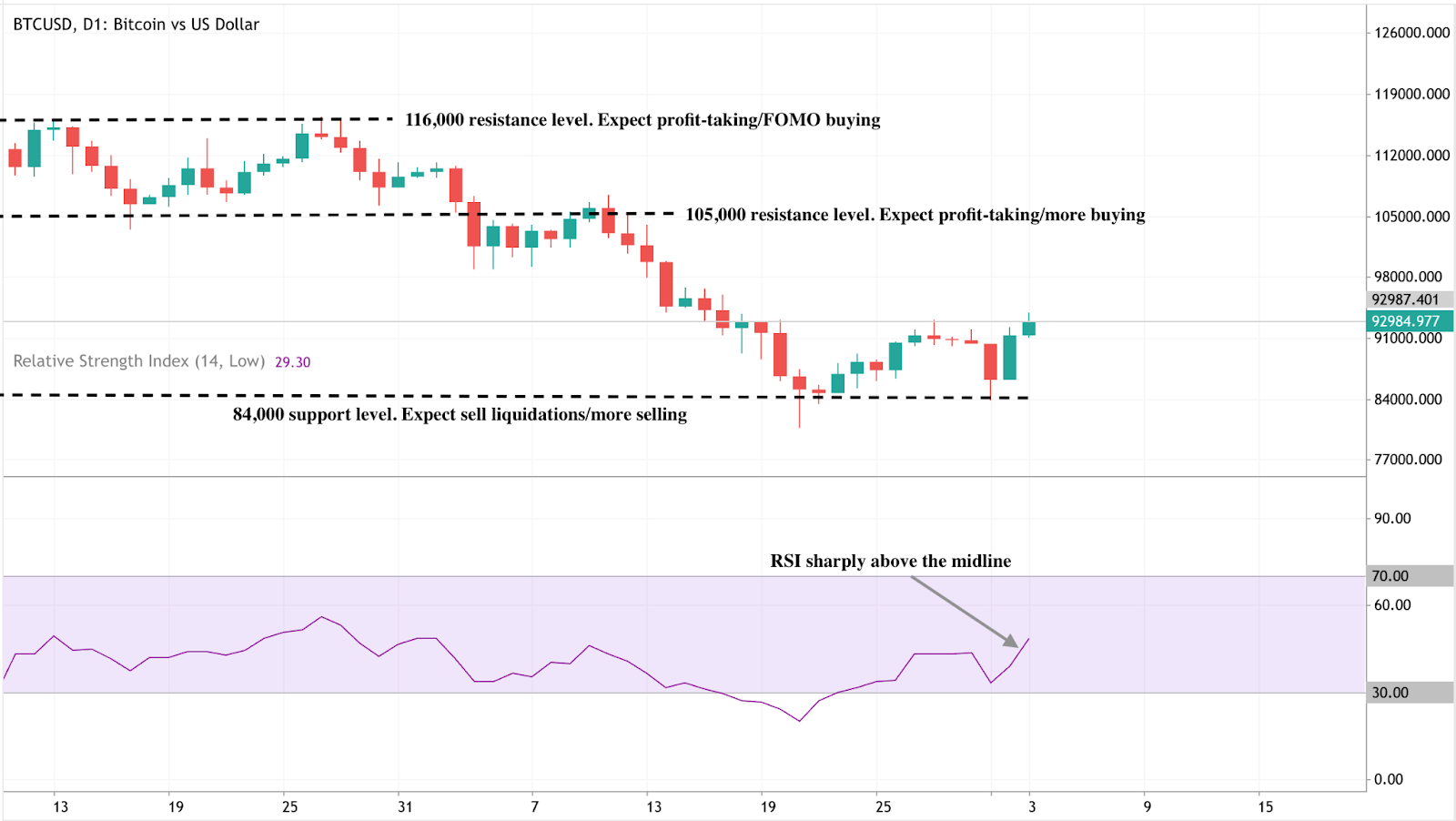
මෙය ලියන අවස්ථාව වන විට, Bitcoin (BTC/USD) $93,000 ට මදක් පහළින් ගනුදෙනු වෙමින් පවතින අතර, ප්රධාන $84,000 ආධාරක මට්ටමේ සිට යථා තත්ත්වයට පත්වීම අඛණ්ඩව සිදු කරයි - මෙම කලාපයේ තවදුරටත් පහත වැටීම් සිදුවුවහොත් විකුණුම් liquidations ඇති විය හැක. මෙම යථා තත්ත්වයට පත්වීම දැන් BTC $105,000 සහ $116,000 ප්රතිරෝධී මට්ටම් වෙත සමීප කරයි. ධනාත්මක (bullish) හැඟීම් නැවත පැමිණීමත් සමඟ FOMO මත පදනම් වූ මිලදී ගැනීම් ඇති කළ හැකි බැවින්, මෙම ප්රදේශ දෙකම ලාභ ලබා ගැනීම් ආකර්ෂණය කර ගත හැකි අතර, ඒවාට ඉහළින් සිදුවන ඕනෑම බිඳීමක් මිලදී ගැනීම් වේගවත් කළ හැකිය.
මෑත කාලීන ඉහළ යාම දිගුකාලීන පහත වැටීමකින් පසු කෙටි කාලීන ගම්යතාවයේ වෙනසක් ද සනිටුහන් කරයි. ගැනුම්කරුවන් සෙමෙන් නැවත බලය ලබා ගන්නා විට විකුණුම්කරුවන්ට පාලනය අහිමි වන බව යෝජනා කරමින්, ඉටිපන්දම් (candles) දැන් පෙර අවම අගයන්ට ඉහළින් පොකුරු ගැසෙමින් පවතී.
RSI මධ්ය රේඛාවට ඉහළින් 60 ප්රදේශය දෙසට තියුනු ලෙස පැන ඇති අතර, දුර්වල කලාපයක රැඳී සිටීමෙන් පසු ධනාත්මක ගම්යතාවය වැඩිදියුණු වන බව සංඥා කරයි. තවමත් අධික ලෙස මිලදී ගත් (overbought) මට්ටම්වලට වඩා පහළින් තිබුණද, මෙම තියුනු ඉහළ යාම ඉල්ලුම ශක්තිමත් වන බව පෙන්නුම් කරන අතර, BTC එහි ආසන්නතම ආධාරකයට ඉහළින් රැඳී සිටියහොත් යථා තත්ත්වයට පත්වීම දිගටම කරගෙන යාමට ඉඩ ඇති බව යෝජනා කරයි.
ප්රධාන කරුණු
Bitcoin $92,000 ට ඉහළින් ගමන් කිරීම බලවේග කිහිපයක මංසන්ධියක් ලෙස හොඳින් වටහා ගත හැකිය: වෙනස් වන සාර්ව ආර්ථික අපේක්ෂාවන්, විකාශනය වන ආයතනික පිළිගැනීම සහ දැඩි නිවැරදි කිරීමකින් පසු සැලකිය යුතු තාක්ෂණික යළි පිහිටුවීමක්. මෙම යථා තත්ත්වයට පත්වීම තනි උත්ප්රේරකයක් මගින් පැහැදිලි කළ නොහැක. ඒ වෙනුවට, ස්ථානගත කිරීම් යළි පිහිටුවා ඇති සහ ද්රවශීලතාවය වඩාත් හිතකර විය හැකි අවස්ථාවක වෙළඳපල සහාය දක්වන සංඥා එකතුවකට ප්රතිචාර දක්වයි. ඊළඟ ප්රධාන පරීක්ෂණය Federal Reserve හි දෙසැම්බර් රැස්වීමත් සමඟ පැමිණෙන අතර, මෙම යථා තත්ත්වයට පත්වීම දීර්ඝ වේද නැතහොත් ඇනහිටීද යන්න එය තීරණය කරනු ඇත.
උපුටා දක්වා ඇති කාර්ය සාධන සංඛ්යා අනාගත කාර්ය සාධනය පිළිබඳ සහතිකයක් නොවේ.


