Why traders choose Deriv for commodities

Commodities trading on Deriv allows traders to participate in markets that move with global supply, demand, and economic trends. From energy products like oil and natural gas to metals such as gold, and agricultural commodities including cocoa and grains, Deriv provides access through CFDs and digital options.
This article combines the latest insights from Deriv’s educational and blog resources to explain why commodities trading matters, how it works on Deriv, and how traders can use its platforms responsibly and effectively.
Quick summary
- Commodities help diversify portfolios and hedge against inflation.
- Deriv provides CFDs and digital options that allow flexible participation in commodity price movements without owning the physical assets.
- CFDs suit traders who prefer active management; digital options fit those seeking defined risk and event-based trading.
- Traders benefit from high liquidity, transparent pricing, and diverse markets on Deriv.
- Understanding market context, risk, and platform tools builds long-term consistency.
Why trade commodities on Deriv?
Trading commodities gives retail traders access to markets that react directly to global events, making them ideal for those who follow macroeconomic and geopolitical news. According to Deriv, commodities offer four key benefits:
Commodities trading on Deriv provides:
- Diversification: Commodities often move differently from equities or currencies, helping reduce overall portfolio risk.
- Inflation hedge: Commodity prices tend to rise with inflation, preserving purchasing power.
- Global exposure: Traders can benefit from global supply–demand dynamics in oil, metals, and agriculture without needing physical ownership.
- Flexible access: Deriv’s platforms offer CFDs and options that allow both short- and long-term exposure with transparent cost structures.
In addition to these advantages, Deriv’s trading ecosystem is built for accessibility and learning. Traders benefit from a seamless environment across desktop and mobile platforms, 24/7 availability for selected synthetic assets, and robust educational tools such as Deriv Academy and regular webinars that cover market analysis, strategy building, and platform walkthroughs. This approach helps users develop both technical and fundamental literacy while practising responsible trading.
A Deriv market analyst gave their insights:
“Commodities remain one of the most direct ways for traders to engage with macro trends. Whether you’re hedging inflation or trading price cycles, Deriv’s platforms offer tools suited for both precision and flexibility.”
What makes CFDs trading a flexible option for commodities markets?
CFDs trading provides flexibility because it allows traders to profit from both rising and falling prices while controlling leverage and risk parameters.
CFDs (contracts for difference) let traders speculate on commodity price movements with leverage, enabling both long and short positions. On Deriv MT5 and Deriv cTrader, traders can:
- Set stop-loss and take-profit orders.
- Use partial closes and trailing stops to manage risk dynamically.
- Trade with small position sizes suitable for beginners.
At a glance: This section explains how CFDs give traders full control over trade management and flexible strategies that suit different time horizons.
Example: A trader expects gold to rise after strong central-bank demand data. They open a long CFD position with a tight stop below support and trail it as the price moves higher.
An IMF outlook in 2025 mentioned:
“Gold and oil continue to show resilience amid macroeconomic uncertainty, supported by central bank demand and energy policy shifts.”
Advantages of CFDs trading:
- Full trade management and flexibility.
- Ability to capture intraday and swing opportunities.
- Transparent cost structure with spreads and potential overnight swaps.
Deriv also integrates margin and leverage management tools designed to help traders monitor exposure and apply predefined risk controls. Traders can adjust leverage based on account type and market volatility, ensuring that potential losses remain proportionate to their strategy. The platform’s negative balance protection prevents account balances from going below zero, which helps limit losses to deposited funds.
How do digital options work in commodities trading?
Digital options help traders structure short-term market participation by offering predefined risk parameters and fixed contract conditions.
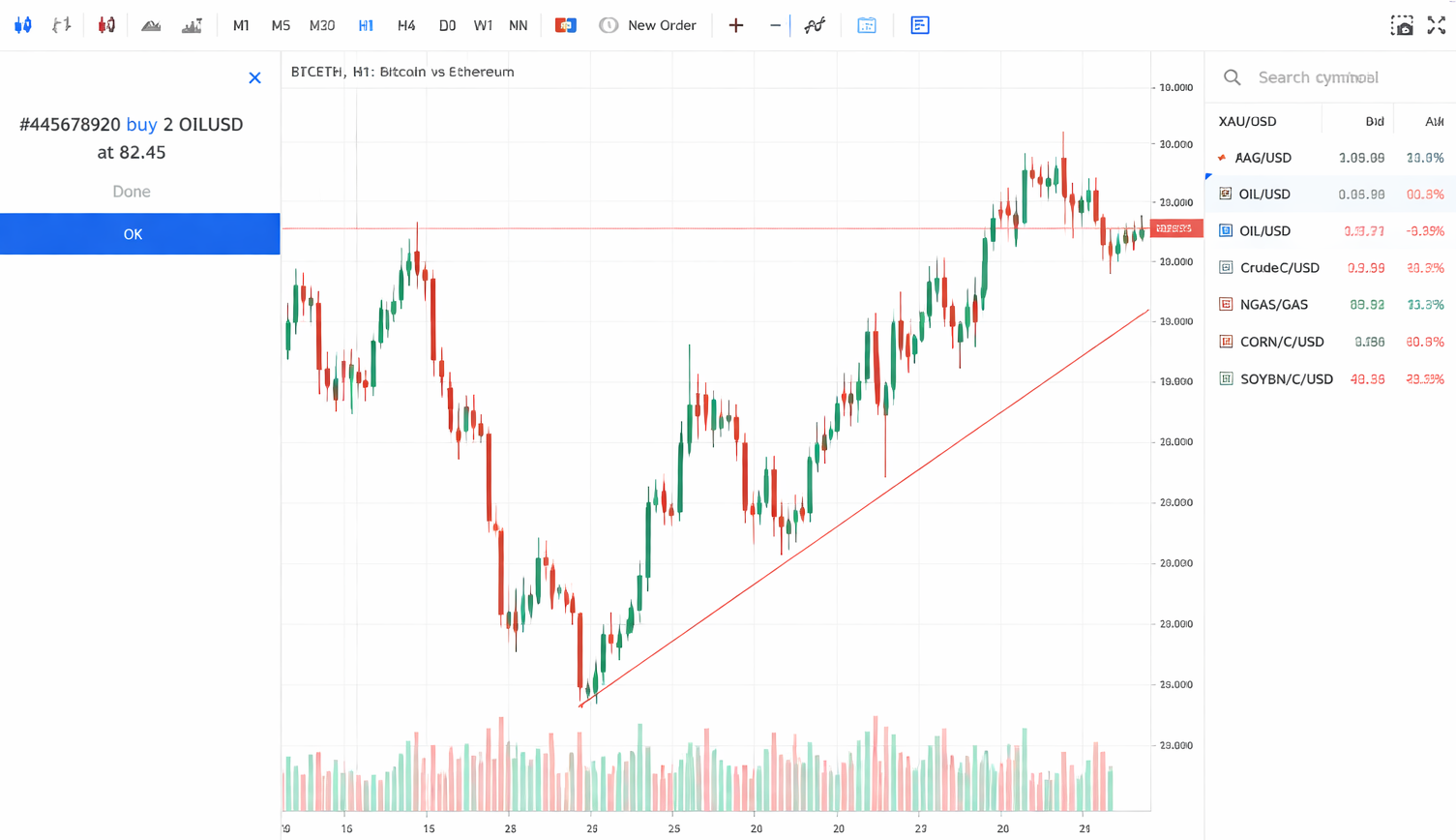
Digital options on Deriv Trader, SmartTrader, and Deriv Bot allow traders to define direction, time frame, and risk before entering a position. Each contract has a known maximum loss (the stake) and a fixed potential payout.
Common trade types include:
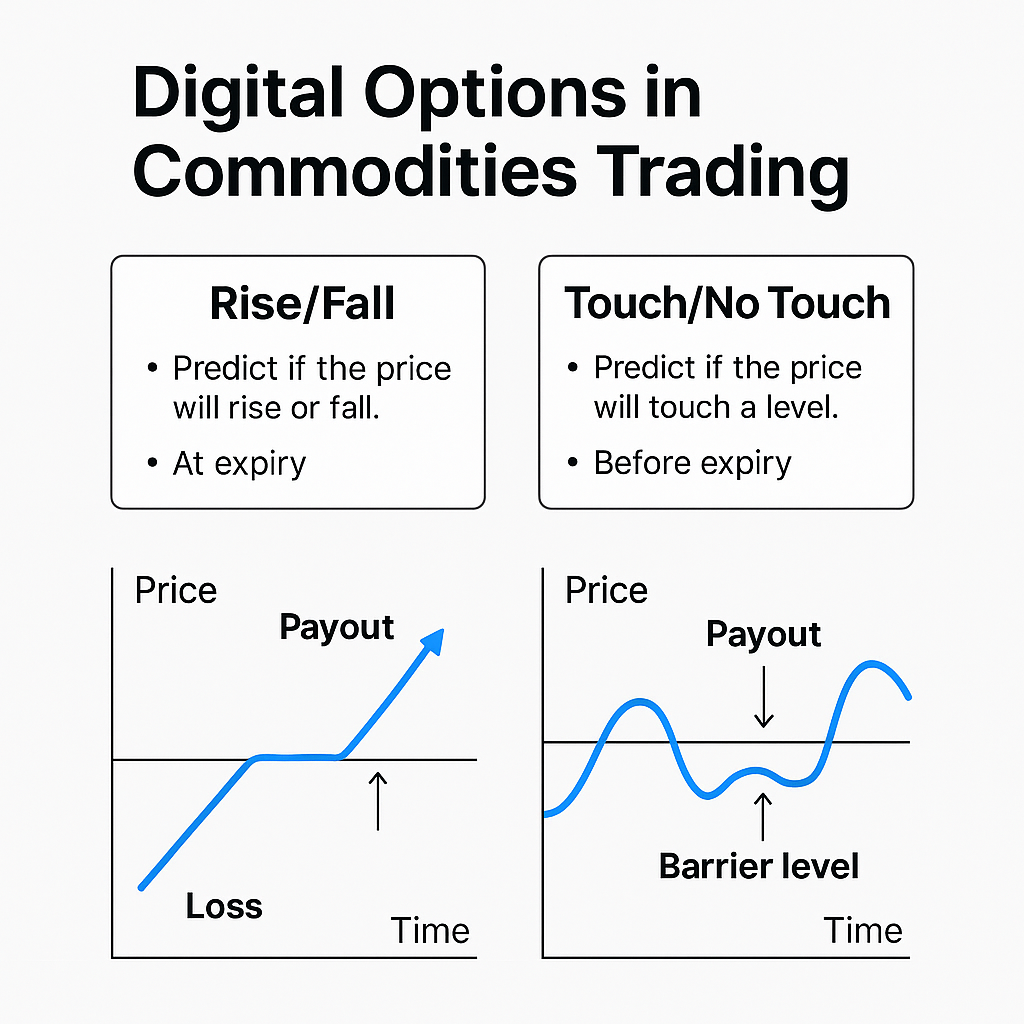
- Rise/Fall: Predict whether the price will end higher or lower at expiry.
- Higher/Lower: Set a price barrier and forecast whether the market will finish above or below it.
- Touch/No Touch: Predict if the market will reach a certain level before expiry.
Why traders use digital options:
- Defined risk and reward.
- Simplicity. A more structured way to express short-term views or event-driven scenarios, particularly in volatile market conditions.
- Access through automation using Deriv Bot for consistent execution.
Example: A trader expects a short-term rise in UK Brent Oil crude after an OPEC+ announcement. They choose a Rise contract on SmartTrader with a 15-minute expiry and a fixed stake, ensuring controlled exposure.
A commodities analyst from Financial Times External reminds:
“Digital options let retail traders apply professional-style event strategies with limited downside. It’s a simple but powerful gateway into commodities.”
What global factors influence commodities markets and CFDs trading?
Global factors influence commodities markets and CFDs trading through supply–demand shifts, geopolitical events, economic policy changes, and seasonal variations.
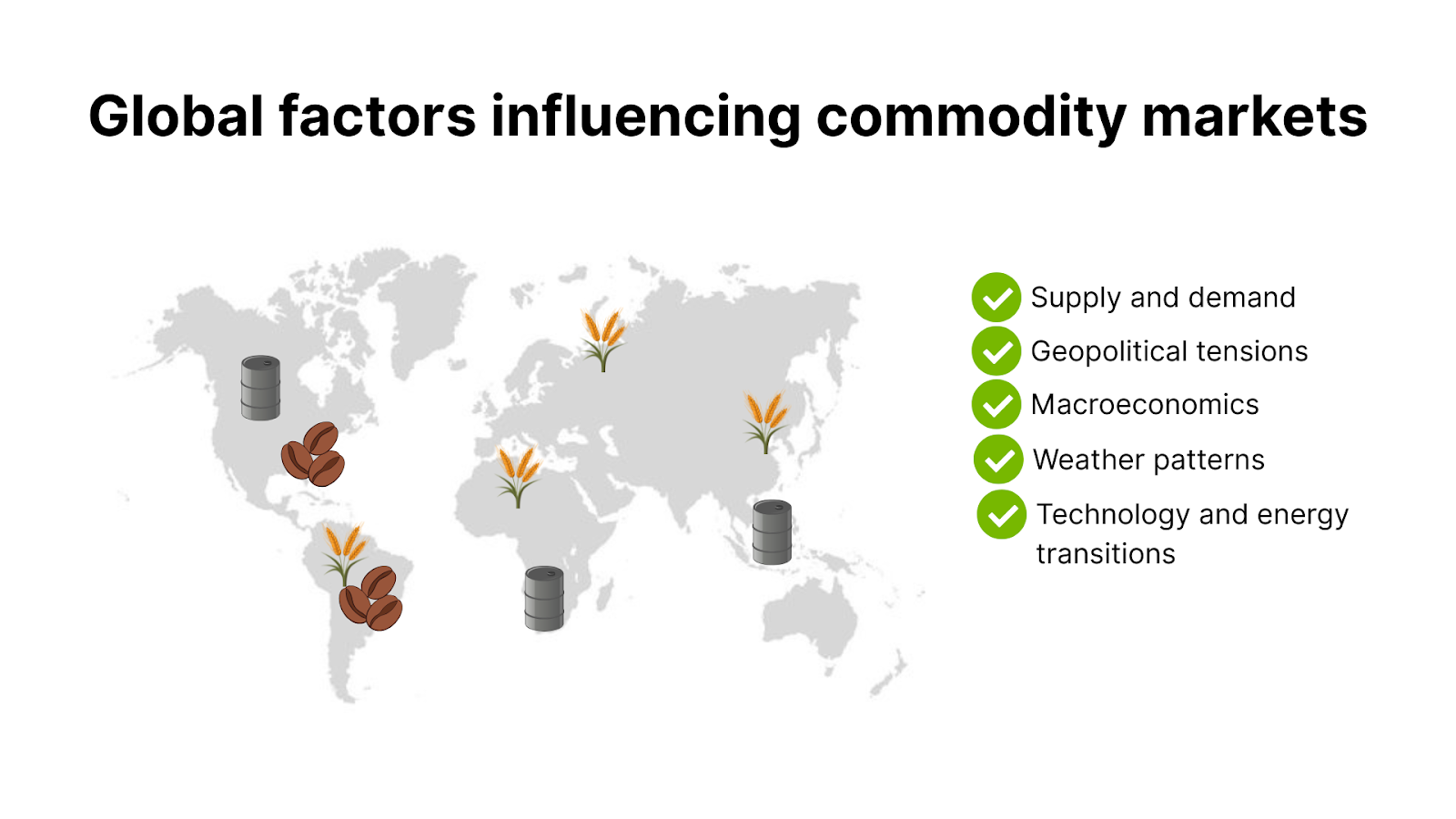
Commodity prices are influenced by a blend of fundamentals, geopolitical factors, and seasonal trends:
- Supply and demand: Production cuts or surpluses drive price changes, particularly in oil and soft commodities.
- Geopolitical tensions: Conflicts and sanctions can disrupt supply chains, impacting energy and agricultural prices.
- Macroeconomic indicators: Interest rates, inflation, and currency movements affect commodity demand and investment flows.
- Weather patterns: Agricultural commodities like cocoa and grains react strongly to droughts, floods, or disease.
- Technology and energy transitions: The shift toward renewable energy affects demand for fossil fuels and metals used in green infrastructure.
As of 2025, OPEC+ reportedly continues to shape the energy landscape through strategic production adjustments, while the global shift toward renewable power influences long-term demand for oil and metals. Climate-related disruptions in cocoa and coffee supply have also caused significant price swings. Traders on Deriv can use in-platform tools, such as real-time market feeds and technical analysis indicators, to interpret and react to these developments.
Because supply–demand data updates weekly, traders can also use digital options for short-term plays around energy reports, while CFDs are more suitable when trends develop over several sessions.
A Deriv market analyst elaborates:
“Traders who align their CFD or options exposure with key macro events—like OPEC+ decisions or EIA reports—tend to achieve more consistent performance.”
How can traders improve risk management in trading commodities?
Traders can improve risk management in trading commodities by setting clear exposure limits, diversifying across markets, and automating stop-losses and take-profits.
Deriv emphasises responsible trading through proper risk management and platform tools.
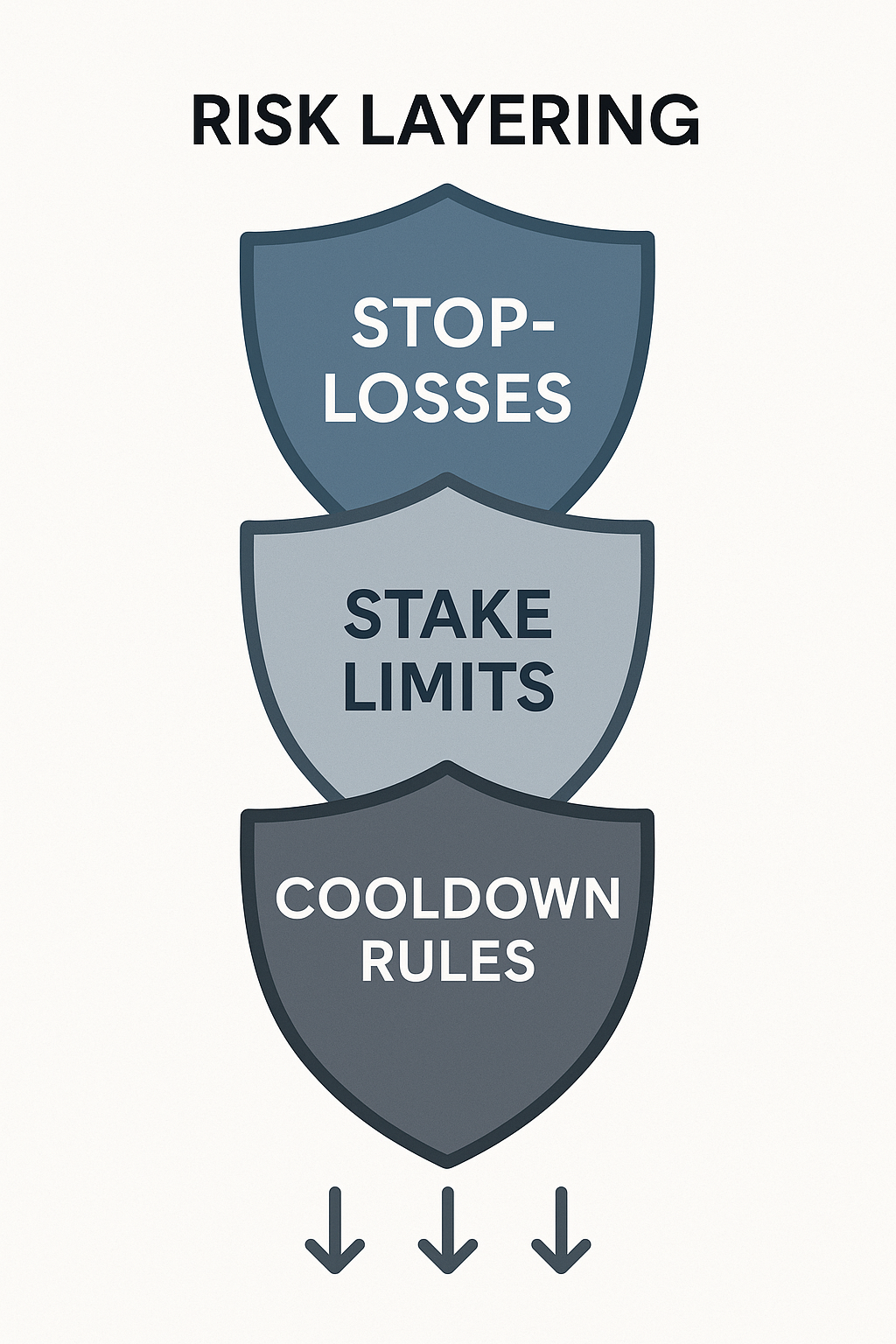
While risk management tools can help structure exposure, they do not remove market risk. Commodity prices can move sharply due to unexpected geopolitical developments, economic data releases, or supply disruptions. Traders should treat stop-losses, stake limits, and diversification as protective measures rather than guarantees, and reassess risk continuously as market conditions change.
Key practices include:
- Set risk limits: Define a percentage of capital to risk per trade (1–2% typical for CFDs; 0.5–1% for options).
- Avoid correlation risk: Limit simultaneous trades in highly related commodities (e.g., WTI and Brent).
- Use stop-losses and take-profits: Automate exits to prevent emotional decision-making.
- Check contract details: Review spreads, trading hours, and swap rates before entering CFDs.
- Prefer options for events: During high volatility, digital options can cap risk better than leveraged trades.
Example: Before a major EIA report, a trader might select a No Touch option to limit exposure to large intraday swings.
Which beginner trading strategies work best for commodities trading?
Beginner trading strategies work best when they focus on one or two commodities, use small risk percentages, and combine both technical and fundamental insights.
- Start narrow: Focus on one or two commodities, such as gold or oil, to understand price drivers.
- Use demo accounts: Practise with virtual funds before trading live.
- Combine technical and fundamental views: Align chart signals with macro events (e.g., EIA reports or central-bank meetings).
- Track and review: Keep a trading journal to analyse performance and refine strategies.
- Stay informed: Follow credible sources, such as EIA, OPEC, and IMF updates.
Common beginner mistakes include overleveraging, trading without a defined plan, and ignoring global news. New traders often react emotionally to price swings or try to recover losses quickly. Deriv’s demo accounts and educational materials can help prevent these pitfalls by promoting structured learning in a simulated environment before trading with real funds.
Context line: This approach helps traders develop habits that lead to better decision-making and consistency over time.
Key takeaways
Commodities trading on Deriv combines accessibility, flexibility, and transparency. CFDs provide full trade control and multi-day management, while digital options offer simplicity and defined risk. By understanding global factors, practising sound risk management, and using Deriv’s platform tools effectively, traders can build a disciplined, sustainable approach to the commodities markets.
A member of Deriv education team comments:
“Traders who pair sound risk controls with market awareness often find commodities a rewarding way to diversify their trading strategy.”
Disclaimer:
The information contained in the Blog is for educational purposes only and is not intended as financial or investment advice.
Options trading on Deriv Trader is unavailable for clients residing within the EU.