跳至主要內容

什麼是安全碼?為何絕對不能與他人分享

5
分鐘閱讀
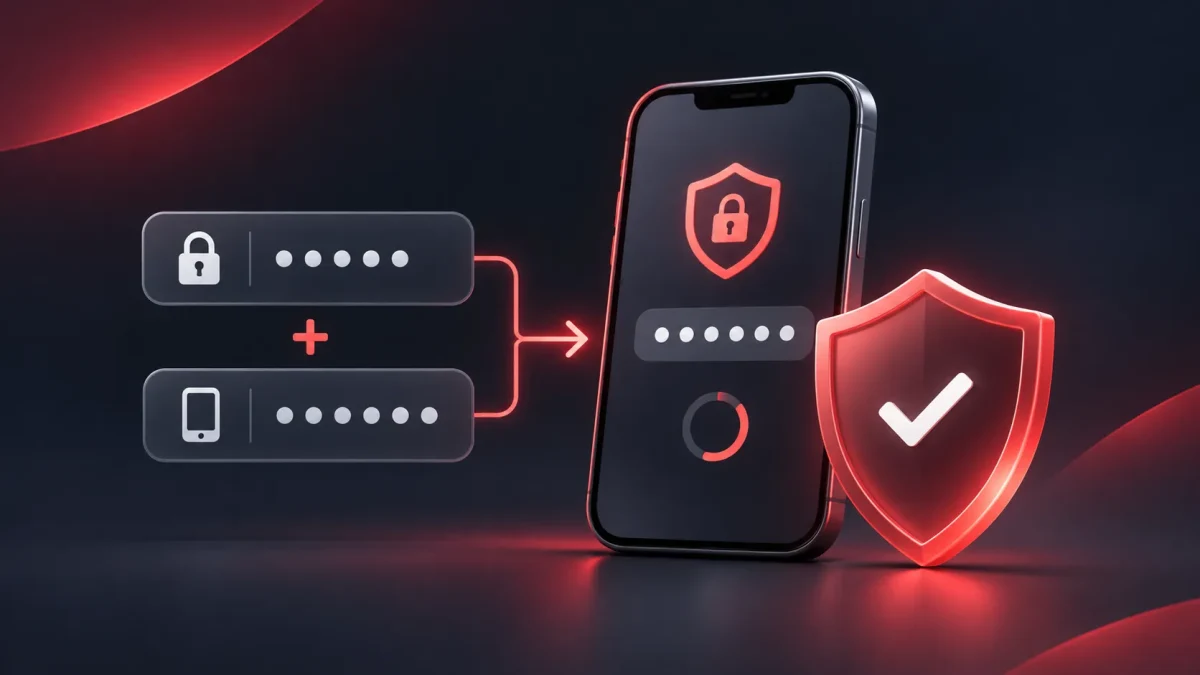
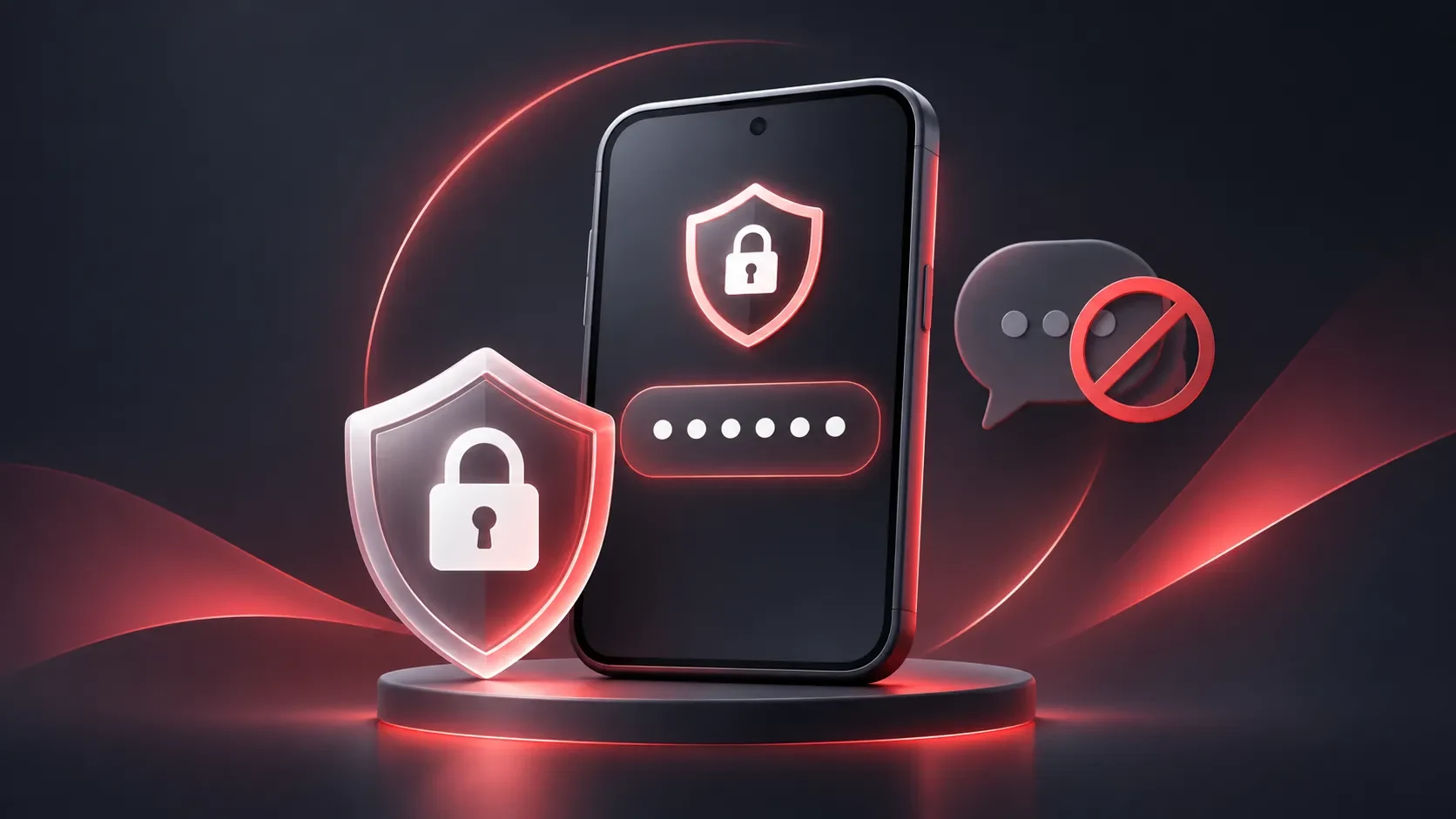
示意圖:一支受保護的手機,畫面上有通用的驗證碼欄位,周圍有安全盾牌和一個被封鎖的對話氣泡,代表安全碼的私密使用方式。

安全碼可協助確認登入、變更密碼或設定雙重驗證(2FA)等重要操作確實由您本人完成。由於這些代碼有助於保護您的 Deriv 帳戶存取權限,因此務必妥善保密。本指南將說明什麼是安全碼、為何需要使用安全碼,以及如何安全地處理。

重點摘要

  • 在完成敏感的帳戶操作之前,安全碼會多加一道檢查。
  • 安全碼可能包括一次性密碼、驗證器應用程式代碼、密碼重設碼和復原碼。
  • 請僅在預期的步驟中,於 Deriv 官方網站或應用程式內自行輸入代碼。
  • 請勿傳送、朗讀、轉寄、截圖或張貼安全碼。
  • 如果您不慎分享了代碼,請立即透過 Deriv 官方管道保護您的帳戶。

什麼是安全碼?

安全碼是一種憑證,用於協助確認登入或帳戶操作是由您本人授權。與密碼不同的是,許多安全碼是暫時性的:它們可能在短時間後失效,或僅能使用一次。

在下列情況下,您可能會遇到安全碼:

  • 從新裝置或瀏覽器登入
  • 開啟或使用 2FA
  • 變更或重設密碼
  • 確認敏感的帳戶安全操作
  • 恢復帳戶的存取權限

安全碼之所以實用,是因為它多增加了一層驗證。即使有人取得了密碼,若沒有額外的代碼,也可能無法完成受保護的操作。

常見的安全碼類型

一次性密碼(OTP)是傳送至已登記電子郵件地址或電話號碼的臨時代碼,有助於驗證您能夠存取與帳戶連結的聯絡方式。

驗證器應用程式代碼是由驗證器應用程式產生、有時間限制的簡短代碼,通常用於 2FA,且會定期更換。

密碼重設碼有助於確認重設密碼的請求已獲授權。由於它可能是建立新密碼流程的一部分,因此特別敏感。

復原碼或備用碼是設定 2FA 時產生的緊急代碼。如果您遺失驗證器裝置,這些代碼可能有助於恢復存取權限,因此必須安全保存,並比照密碼妥善對待。
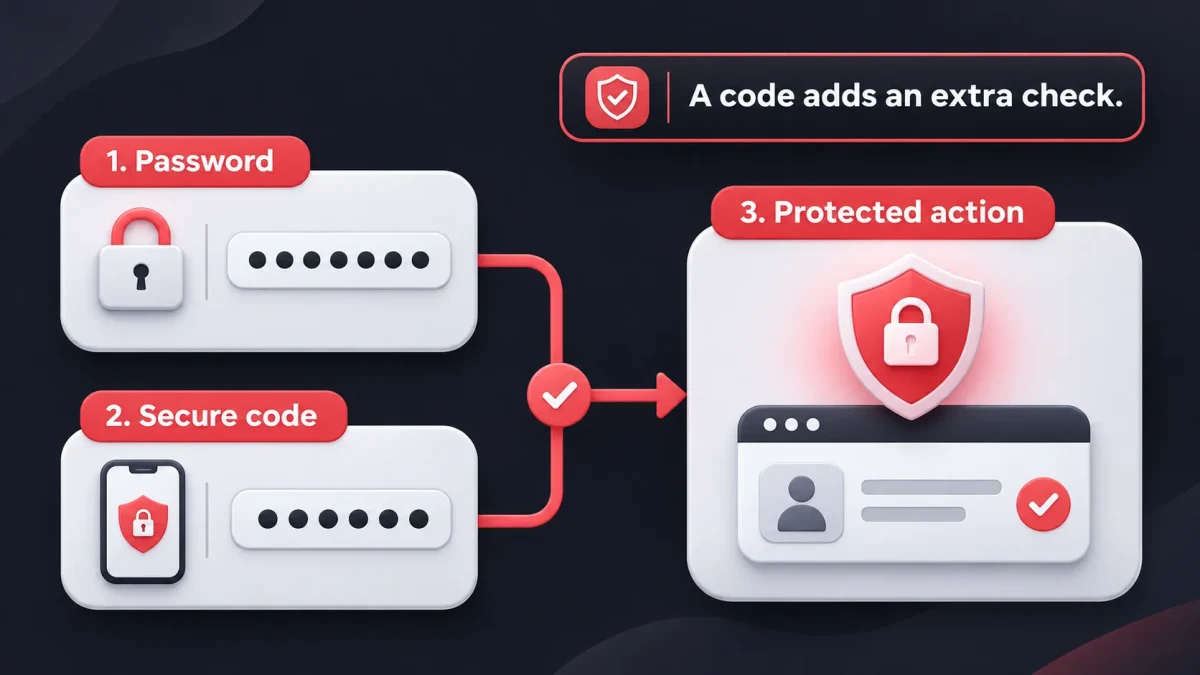
Secure codes help confirm that an important action—such as signing in, changing a password or setting up two-factor authentication (2FA)—is being completed by you. Because these codes can help protect access to your Deriv account, they should always remain private. This guide explains what secure codes are, why they are needed and how to handle them safely. Quick summary Secure codes add an extra check before sensitive account actions can be completed. They can include one-time passwords, authenticator-app codes, password-reset codes and recovery codes. Enter a code yourself only in the official Deriv website or app during an expected step. Never send, read aloud, forward, screenshot or post a secure code. If you accidentally share a code, secure your account promptly through official Deriv channels. What are secure codes? A secure code is a credential used to help confirm that a login or account action is authorised by you. Unlike a password, many secure codes are temporary: they may expire after a short period or work only once. You may encounter a secure code when you: Sign in from a new device or browser Turn on or use 2FA Change or reset a password Confirm a sensitive account-security action Recover access to an account Secure codes are useful because they add another layer of verification. Even if someone discovers a password, they may be unable to complete a protected action without the additional code. Common types of secure codes One-time passwords (OTPs) are temporary codes sent to a registered email address or phone number. They help verify that you can access the contact method linked to the account. Authenticator-app codes are short, time-limited codes generated in an authenticator app. They are commonly used for 2FA and change regularly. Password-reset codes help confirm that a request to reset a password is authorised. They are especially sensitive because they can be part of a process to create a new password. Recovery or backup codes are emergency codes created when setting up 2FA. They may help restore access if you lose an authenticator device, so they must be stored securely and treated like passwords.   Alt text: Diagram shows a password and a secure code as separate requirements before a protected account action can proceed. Why secure codes are needed Passwords can be guessed, reused or exposed through a data breach or phishing attempt. A secure code helps reduce the risk that a password alone can be used to access an account or make a sensitive change. For example, when you change a Deriv password from your profile, Deriv may send a one-time password to your registered email to help verify the request. You enter that OTP yourself as part of the official process, then set the new password.  This extra step is not a guarantee against every risk, but it creates an important barrier. It confirms that the person making the request has access to the required verification method at that moment. Codes are for you to enter, not to give away A secure code is not a piece of information to share with another person. It is an instruction for you to complete a specific security step yourself. Keep this distinction in mind: Safe action Unsafe action Entering a code yourself in the official Deriv website or app Sending a code in a chat, email or social-media message Using a code during a step you started Giving a code to someone who contacted you unexpectedly Storing recovery codes in a protected location Saving recovery codes in an unprotected note or screenshot Opening Deriv directly before entering a code Following an unverified link to enter a code   When it is safe to enter a code Enter a secure code only when all of these conditions apply: You started the action yourself. You are using the official Deriv website or app. You expected the verification step. The code is being entered into the relevant secure field—not sent to a person. For example, if you select Password in your Deriv profile and request a password change, an OTP sent to your registered email can be part of that expected process. The code should be entered only in the official password-change flow. If the action is unexpected, pause before entering anything. Open Deriv directly through your usual route and check your account settings instead of relying on a link in a message. Keep codes out of screenshots A screenshot can contain more information than it first appears to. It may show an OTP, account email, device notification, transaction reference, browser address or other personal details. Before sharing a screenshot for support purposes, review every visible element. Never include a password, secure code, QR code, recovery code or authenticator-app screen. When possible, crop or redact any personal, payment or account details that are not needed.  Alt text: Three cards show starting an account action, opening Deriv directly, and privately entering a secure code in the official platform. How to store recovery codes safely Recovery codes are different from ordinary one-time codes because they may remain valid until used or replaced. They are designed for emergencies, such as losing access to an authenticator app. Store them somewhere you can access when needed, but where other people cannot. A reputable password manager can be a suitable option when it is protected by a strong master password and 2FA. A protected offline copy may also be appropriate. Do not: Keep recovery codes in an email draft or unprotected cloud document Store them in a public or shared photo album Send them to yourself through chat Share them with a friend, family member or anyone claiming to help Include them in a support screenshot If you generate new recovery codes, securely remove any outdated copies so you do not rely on codes that no longer work. What to do if you shared a code A shared code may no longer be safe to use, even if it has not yet expired. Act promptly, but use only official routes. Open Deriv directly through the official website or app. Change your Deriv password to a new, unique password. Review your 2FA settings and recovery methods. Secure the email account linked to Deriv, particularly if it may receive password-reset instructions. Contact Deriv through official support if you think someone may have accessed your account.  Alt text: Three cards advise keeping codes private, storing recovery codes securely, and protecting an account promptly if a code is shared. Build a secure-code routine A few simple habits make secure-code requests easier to handle: Start account actions only from the official Deriv website or app. Use 2FA on your Deriv account and on the email account linked to it. Read verification messages carefully before acting. Keep recovery codes in a protected location before you need them. Never approve or enter a code for an action you did not start. Treat any request to share a code as a reason to stop and verify independently. Take the next step Review where you store your recovery codes and make sure 2FA is enabled on your Deriv account and the email linked to it. If you receive a code for an action you did not start, do not enter or share it—open Deriv directly and review your security settings.

‍為何需要安全碼

密碼可能被猜出、重複使用,或因資料外洩或網路釣魚而暴露。安全碼有助於降低僅憑密碼就能存取帳戶或進行敏感變更的風險。

例如,當您從個人檔案變更 Deriv 密碼時,Deriv 可能會將一次性密碼傳送至您已登記的電子郵件,以協助驗證該請求。您需在官方流程中自行輸入該 OTP,然後設定新密碼。

這個額外步驟無法保證防範所有風險,但它建立了一道重要的屏障,可確認提出請求的人在當下能夠使用所需的驗證方式。

代碼是供您自行輸入,而非提供給他人

安全碼不是可以與他人分享的資訊,而是讓您自行完成特定安全步驟的指示。

請牢記以下區別:

安全做法 不安全做法
在 Deriv 官方網站或應用程式內自行輸入代碼 透過聊天、電子郵件或社群媒體訊息傳送代碼
在您自行發起的步驟中使用代碼 將代碼提供給突然與您聯絡的人
將復原碼存放在受保護的位置 將復原碼儲存在未受保護的筆記或截圖中
輸入代碼前先直接開啟 Deriv 透過未經驗證的連結輸入代碼

‍

何時可以安全地輸入代碼

僅在下列所有條件皆符合時,才輸入安全碼:

  1. 操作是由您自行發起的。
  2. 您使用的是 Deriv 官方網站或應用程式。
  3. 該驗證步驟在您的預期之內。
  4. 代碼是輸入至相關的安全欄位,而不是傳送給他人。

例如,如果您在 Deriv 個人檔案中選擇密碼並要求變更密碼,傳送至您已登記電子郵件的 OTP 就可能是該預期流程的一部分。該代碼應僅在官方的密碼變更流程中輸入。

如果該操作出乎您的預期,請先暫停,不要輸入任何內容。請透過您平常的方式直接開啟 Deriv 並檢查帳戶設定,而不要依賴訊息中的連結。

請勿在截圖中留下代碼

截圖所包含的資訊可能比乍看之下更多,其中可能顯示 OTP、帳戶電子郵件、裝置通知、交易參考編號、瀏覽器網址或其他個人資料。

在為取得支援而分享截圖之前,請檢查每一個可見的元素。請勿包含密碼、安全碼、QR code、復原碼或驗證器應用程式畫面。如有可能,請裁切或遮蔽不必要的個人、付款或帳戶資料。
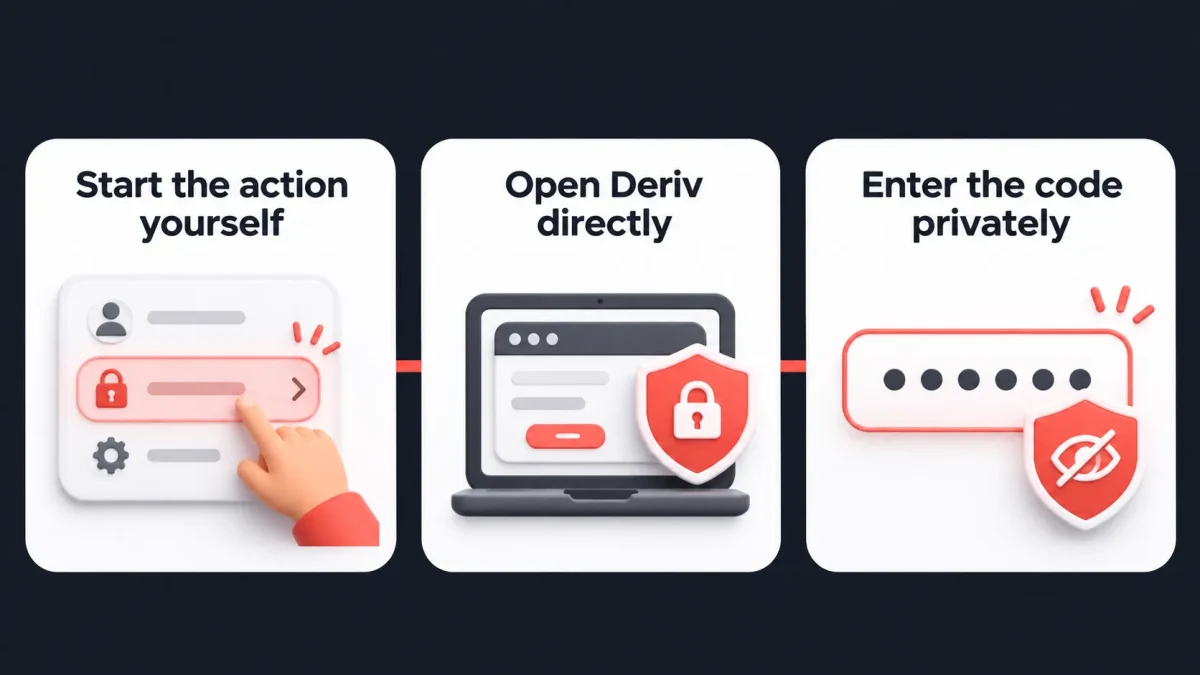
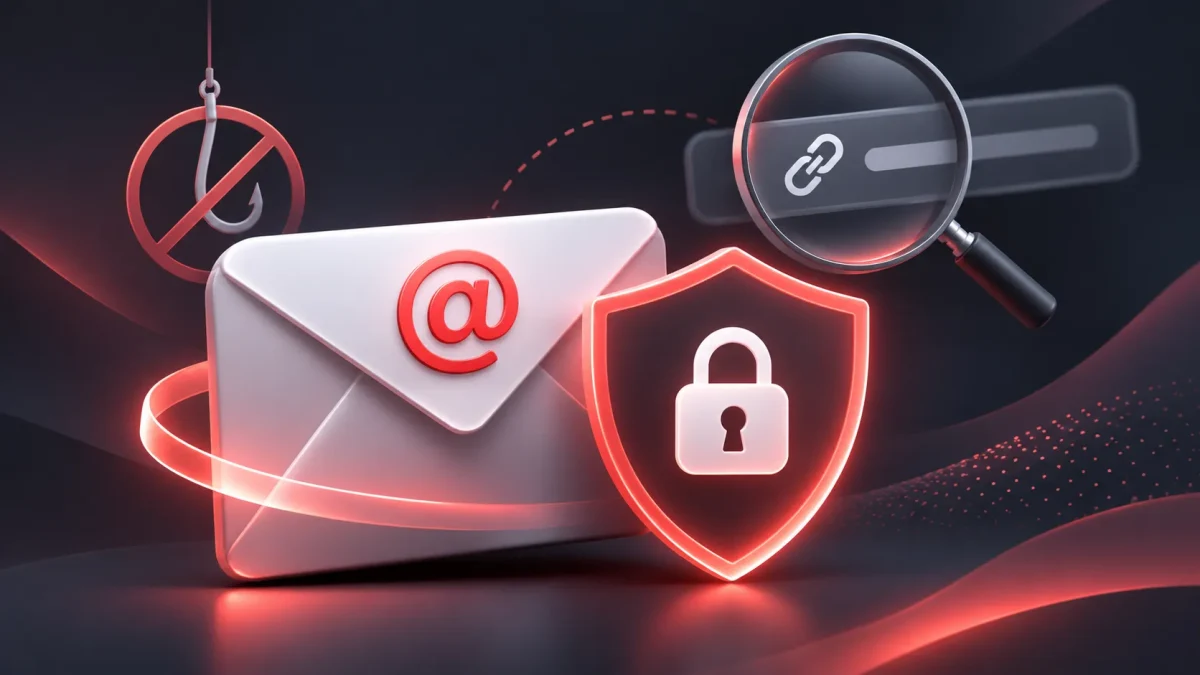
Three cards show starting an account action, opening Deriv directly, and privately entering a secure code in the official platform.

如何安全地保存復原碼

復原碼不同於一般的一次性代碼,因為它們可能在使用或被取代之前持續有效。復原碼是為緊急情況而設計,例如無法再使用驗證器應用程式時。

請將復原碼存放在您需要時能夠取用、但他人無法取得的地方。信譽良好的密碼管理工具可能是合適的選擇,前提是以強度高的主密碼和 2FA 加以保護。受保護的離線備份也可能是合適的做法。

請勿:

  • 將復原碼保存在電子郵件草稿或未受保護的雲端文件中
  • 將其存放在公開或共用的相簿中
  • 透過聊天傳送給自己
  • 與朋友、家人或任何自稱要提供協助的人分享
  • 將其包含在為取得支援而提供的截圖中

如果您產生了新的復原碼,請安全地刪除所有過期的副本,以免依賴已失效的代碼。

如果您已分享代碼,該怎麼辦

即使已分享的代碼尚未過期,也可能不再安全。請立即採取行動,但僅限使用官方管道。

  1. 請直接透過官方網站或應用程式開啟 Deriv。
  2. 請將您的 Deriv 密碼變更為全新且獨一無二的密碼。
  3. 請檢查您的 2FA 設定和復原方式。
  4. 請保護與 Deriv 連結的電子郵件帳戶,尤其是可能會收到密碼重設說明的信箱。
  5. 如果您認為有人可能已存取您的帳戶,請透過官方支援聯絡 Deriv。
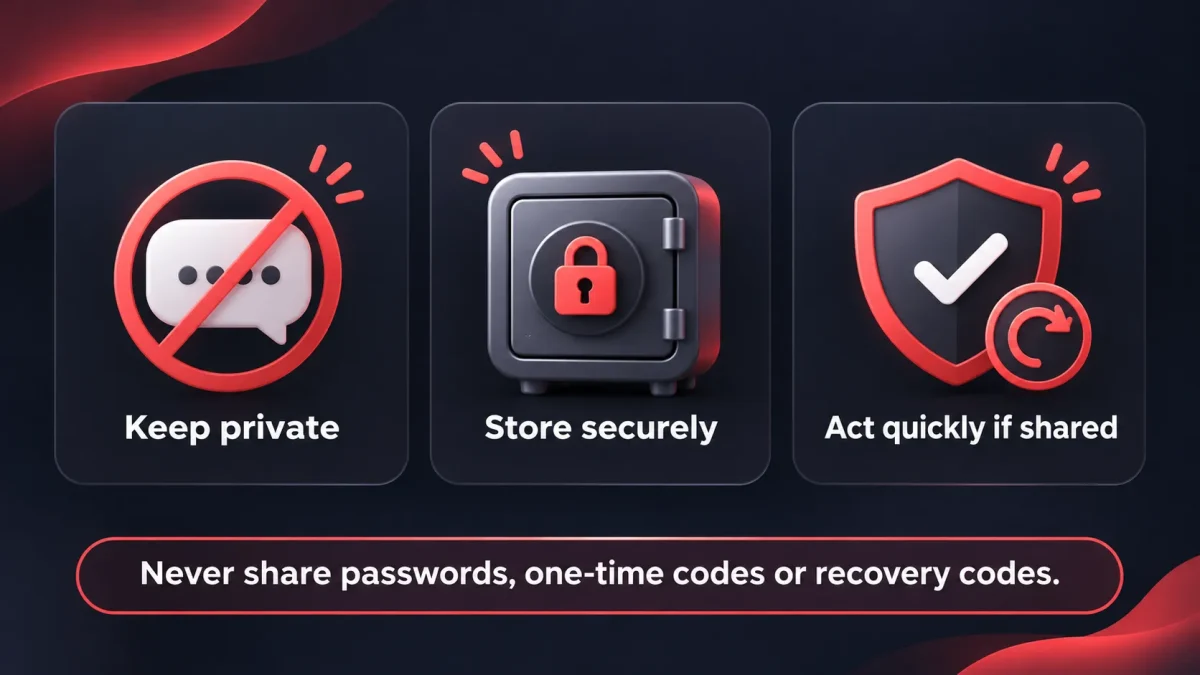
Three cards advise keeping codes private, storing recovery codes securely, and protecting an account promptly if a code is shared.

建立安全碼使用習慣

培養幾個簡單的習慣,可讓您更輕鬆地處理安全碼相關要求:

  • 請僅從 Deriv 官方網站或應用程式啟動帳戶操作。
  • 為您的 Deriv 帳戶啟用 2FA,並為與其連結的電子郵件帳戶啟用 2FA。
  • 採取行動前,請仔細閱讀驗證訊息。
  • 請在需要之前,將復原碼存放在受保護的位置。
  • 切勿核准或輸入非您本人發起之操作的驗證碼。
  • 任何要求您分享驗證碼的請求,都應視為停下來並獨立查證的理由。

採取下一步

請檢查您存放復原碼的位置,並確認您的 Deriv 帳戶及與其連結的電子郵件均已啟用 2FA。如果您收到非您本人發起之操作的驗證碼,請勿輸入或分享,而是直接開啟 Deriv 並檢查您的安全設定。

Quiz

您應該在什麼時候輸入安全碼?

常見問題

Analyse markets with AI-powered insights

Explore TradersView
WhatsApp