
“Hech kim qonundan ustun emas”: Jerome Powellning Oval ofisga qarshi qat'iy pozitsiyasi

Jerome Powell yillar davomida karyeraviy diplomatning vazmin va ehtiyotkor ohangida gapirib keldi. Dunyoning eng qudratli markaziy banki boshqaruvchisi sifatida uning so'zlari odatda bozorlarni tinchlantirishga qaratilgan, ularni junbushga keltirishga emas. Ammo yakshanba, 11-yanvar kuni niqob yechildi. Moliya olamini larzaga keltirgan video bayonotda Powell Trump ma'muriyatini "bahona qilingan" huquqiy urushda aybladi.
Bloomberg xabariga ko'ra, bu shunchaki 2,5 milliard dollarlik ofis ta'miri haqida emas; bu Prezidentning mustaqil bo'lishga qasamyod qilgan odamdan sodiqlik talab qilishi haqidadir. Bugungi kunda afsonaviy "Fed Put" — bozorning markaziy bank har doim vaziyatni qutqarib qolishiga bo'lgan uzoq yillik ishonchi — "Fed Probe" bilan almashdi.
Bahona: 2,5 milliard dollarlik ta'mirlash ishlari
Ushbu tarixiy mojaroning uchquni, sirtqi qarashda, ko'chmas mulk bo'yicha nizodir. Department of Justice (DOJ) juma kuni Federal Reservega Vashingtondagi bosh qarorgohini modernizatsiya qilish bo'yicha o'n yillik loyiha yuzasidan katta hakamlar hay'ati chaqiruv qog'ozlarini taqdim etdi.
Biroq, Powell "nazorat" haqidagi gaplarga ishongani yo'q. Keskin video murojaatida u tergovni foiz stavkalari bo'yicha uni majburlashga qaratilgan "bahona" deb ta'rifladi. Reuters xabariga ko'ra, Powell jinoiy ayblovlar tahdidi "Federal Reserve foiz stavkalarini Prezidentning xohish-istaklariga emas, balki jamoatchilikka nima xizmat qilishini eng yaxshi baholashimizga asoslanib belgilashining bevosita oqibati" ekanligini ta'kidladi.
Trumpning populistik harakati: pilikni yoqish
Vaqt tasodif emas. O'tgan haftaning ikkinchi yarmida Prezident Trump saylov yilida bozorlarni jonlantirish maqsadida o'zining populistik iqtisodiy xabarlarini keskin kuchaytirdi - bu harakatlar, paradoksal ravishda, hozirgi sotuvlar to'lqinini keltirib chiqarishga yordam bergan bo'lishi mumkin.
Taklif qilingan yoki buyurilgan choralar orasida:
- "O'z vakillariga" qarz olish xarajatlarini pasaytirish uchun ipoteka bilan ta'minlangan qimmatli qog'ozlarni sotib olishni buyurish
- Institutsional investorlarga yakka tartibdagi uylarni sotib olishni taqiqlash
- Kredit karta foiz stavkalariga bir yillik 10% cheklov kiritish taklifi - ijro tafsilotlarisiz
Fond menejerlari uchun bu rag'batlantirish emas edi. Bu siyosiy improvizatsiya edi. Va Fedga qaratilgan yangi hujumlar bilan birgalikda, bu xavf signalini ko'tardi: moliya tizimining ichki tuzilishiga siyosiy aralashuv.
Bir strateg shaxsiy suhbatda aytganidek: Trump hozir aksiyalarning qimmatlashishini xohlaydi, ammo Fed mustaqilligiga hujum qilish - bu aynan ularni qo'llab-quvvatlaydigan kapitalni qo'rqitib yuborishning eng tezkor usullaridan biridir.
Bozordagi tartibsizlik: Oltin ko'tarilmoqda, dollar tushmoqda
Moliya bozorlari darhol va kuchli xavotir bilan munosabat bildirdi. "Institutsional xavf mukofoti" — investorlar siyosiy beqarorlik uchun to'laydigan narx — to'satdan diqqat markaziga chiqdi.
- Oltinning tarixiy yurishi: The Straits Times xabariga ko'ra, spot oltin narxlari misli ko'rilmagan rekord darajaga — bir unsiya uchun 4 563,61 dollarga yetdi, chunki investorlar eng ishonchli boshpanaga qochishdi.
- Dollar zarba ostida: Reuters ma'lumotlariga ko'ra, AQSh dollari indeksi 0,3 foizga tushib, 98,899 ni tashkil etdi, chunki dunyo zaxira valyutasining avtonomiyasiga bo'lgan ishonch tebrandi.
- Fyucherslar qizil zonada: AQSh aksiyalari fyucherslari tushib ketdi, Nasdaq-100 erta savdolarda 0,6 foiz yo'qotdi, chunki texnologiya sektori yanada o'zgaruvchan foiz stavkalari muhitiga tayyorgarlik ko'rmoqda.
Nima uchun oltin narxi oshmoqda
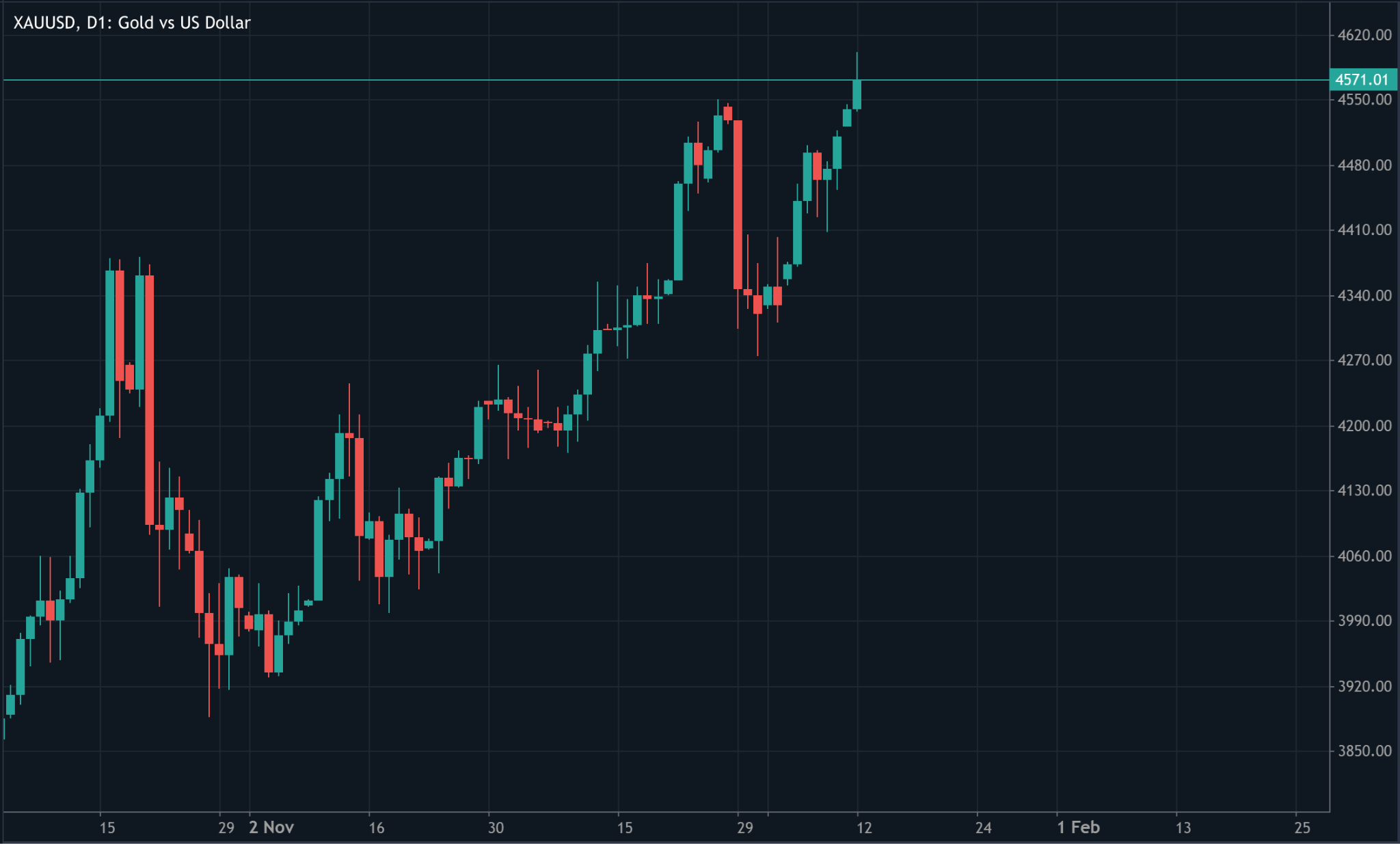
Tahlilchilarning fikriga ko'ra, oltinning ko'tarilishi endi texnik ko'rsatkichlar haqida emas. Bu ishonch haqida.
Hatto oltin haddan tashqari sotib olinganlik signallarini berayotgan bo'lsa ham, talab o'sishda davom etmoqda. Nega? Chunki makro xavflar ro'yxati kengayib bormoqda:
- Monetar siyosatga siyosiy aralashuv
- Oshib borayotgan geosiyosiy keskinliklar, jumladan Eron bo'yicha potentsial AQSh harakatlari va Buyuk Britaniya hamda Germaniyaning Arktikadagi pozitsiyalarini kuchaytirishi haqidagi xabarlar
- Asosiy AQSh CPI ma'lumotlari oldidan stavkalarni pasaytirish bo'yicha noaniqlik
Tahlilchilar ta'kidlaganidek, qoidalar o'zgaruvchan va institutlar zaif bo'lib tuyulganda oltin gullab-yashnaydi. Va hozirda har ikkala shart ham mavjud.
Kumush: o'sha shamollar, o'tkirroq qirralar
Kumush esa ayni paytda xuddi shu makro to'lqinda harakatlanmoqda - ammo qo'shimcha o'zgaruvchanlik bilan.
Uning ikki tomonlama tabiati muhim. Xavfsiz boshpana oqimlari kumushni oltin bilan bir qatorda qo'llab-quvvatlaydi, ammo sanoat talabi o'sish rivoyatlari qayta paydo bo'lganda yoqilg'i qo'shadi. Bu kombinatsiya kumushni kuchli - va xavfli qiladi.
Tahlilchilar ogohlantirishicha, kumush rallilari ko'pincha tezkor pullarni jalb qiladi. Kayfiyat o'zgarganda, chiqishlar xuddi shunday shiddatli bo'lishi mumkin. Investorlar uchun kumush jozibador bo'lib qolmoqda, ammo vaqtni to'g'ri tanlash oltindagiga qaraganda ancha muhimroq.
Xavf ostidagilar: Avtonomiya va sodiqlik
Bu shunchaki huquqiy jang emas; bu sekin harakatlanuvchi konstitutsiyaviy inqirozdir. The Straits Times nashrida Maybank strategi Fiona Lim ta'kidlaganidek, ma'muriyatning bosimi may oyida Powellning muddati tugaganda "sodiq" odamni o'rnatish istagidan dalolat beradi.
"Powell chetdan qilingan tanqidlardan charchadi va aniq hujumga o'tmoqda", dedi National Australia Bank FX strategiyasi rahbari Ray Attrill Reuters agentligiga. Kurashni jamoatchilik ko'z o'ngiga olib chiqish orqali Powell bozorning siyosiylashgan Feddan qo'rqishi har qanday huquqiy himoyadan kuchliroq qalqon bo'lishiga tikmoqda.
Asosiy xulosa
Tahlilchilarning fikriga ko'ra, investorlar uchun o'yin qoidalari o'zgardi. Fed endi shunchaki inflyatsiya bilan kurashmayapti; u mustaqil organ sifatida o'z mavjudligi uchun kurashmoqda. Saxo Markets tahlilchilari ta'kidlaganidek, Fed va Oq uy o'rtasidagi "ochiq urush" o'nlab yillar davomida kuzatilmagan o'zgaruvchanlik darajasini joriy etdi.
Bu sud zalida yoki direktorlar kengashi xonasida tugashidan qat'i nazar, tahlilchilarning fikriga ko'ra, bir narsa aniq: "vazmin" Fed davri tugadi. "Qat'iy" Fed davri boshlandi.
Oltin bo'yicha texnik prognoz
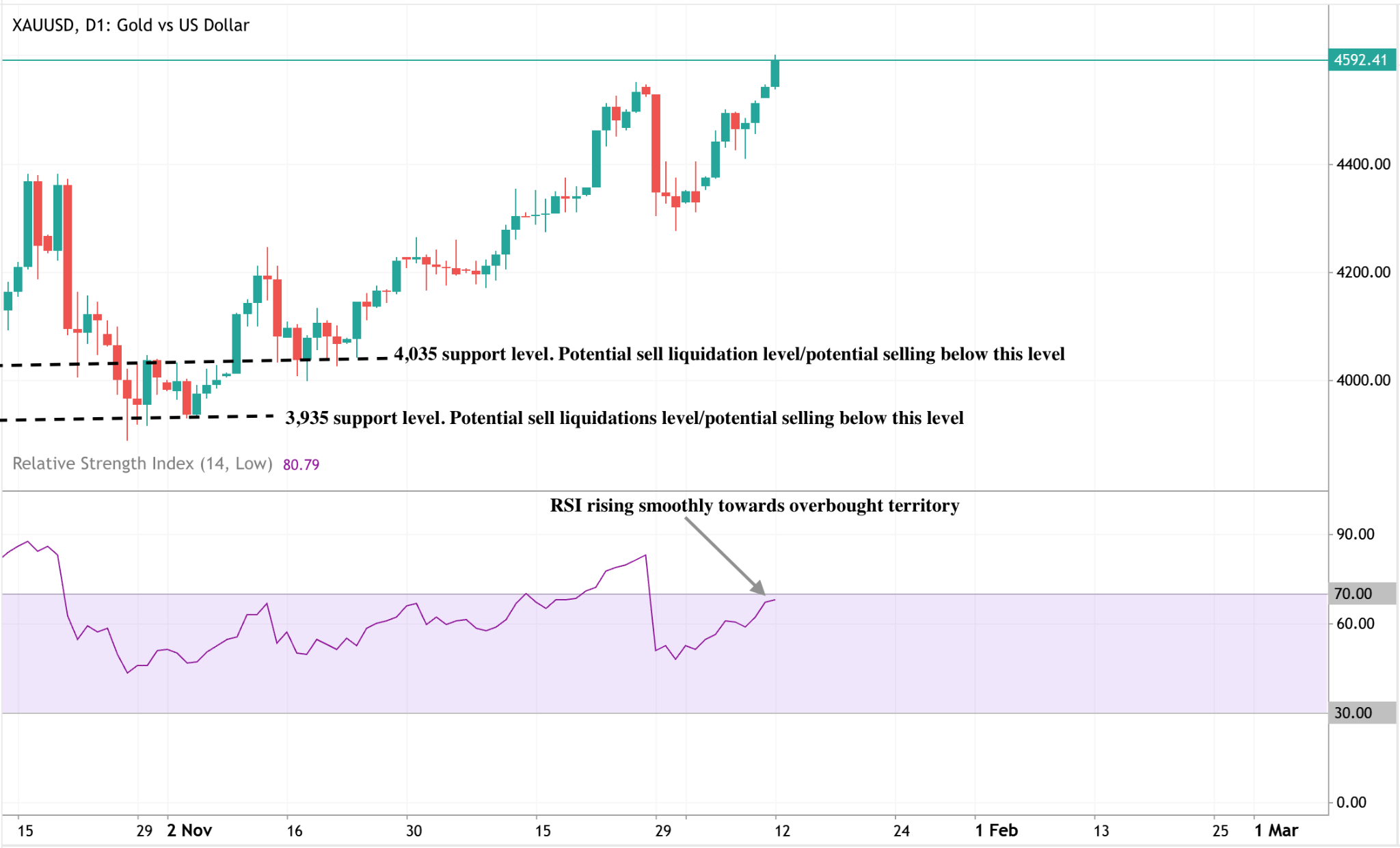
Oltin o'zining o'sish yurishini davom ettirmoqda, yuqori Bollinger Band yaqinidagi yangi cho'qqilarga intilmoqda va asosiy tendentsiyaning kuchini mustahkamlamoqda. Ralli momentum ko'rsatkichlari tomonidan yaxshi qo'llab-quvvatlanmoqda, Relative strength index silliq ravishda haddan tashqari sotib olingan hududga ko'tarilib, charchagan harakatni emas, balki kuchli sotib olish bosimini bildirmoqda.
O'sish sur'ati yaqin muddatli foyda olish xavfi ortib borayotganini ko'rsatsa-da, kengroq tuzilma mustahkam konstruktiv bo'lib qolmoqda. Narx 4 035 dollarlik qo'llab-quvvatlash zonasidan - va eng muhimi 3 935 dollardan yuqori tursa, har qanday orqaga qaytish tendentsiyani buzuvchi emas, balki tuzatuvchi bo'lishi mumkin.
Joriy darajadan yuqori barqaror kuch o'sish moyilligini saqlab qolishi mumkin, konsolidatsiya esa kengroq buqa rivoyatiga putur etkazmasdan momentumni qayta tiklashga imkon beradi. Narx harakati kutilmagan hodisalarni keltirib chiqarish xavfi har doim mavjud, treyderlar ehtiyot bo'lishlari kerak. Siz ushbu darajalarni Deriv MT5 hisobi bilan kuzatishingiz mumkin.
Keltirilgan ko'rsatkichlar kelajakdagi natijalarning kafolati emas.


