المحتويات
مقال
The $300B tech rout: Is the AI boom wobbling?
November 18, 2025
مقال
The $300B tech rout: Is the AI boom wobbling?
November 18, 2025
مقال
The $300B tech rout: Is the AI boom wobbling?
November 18, 2025
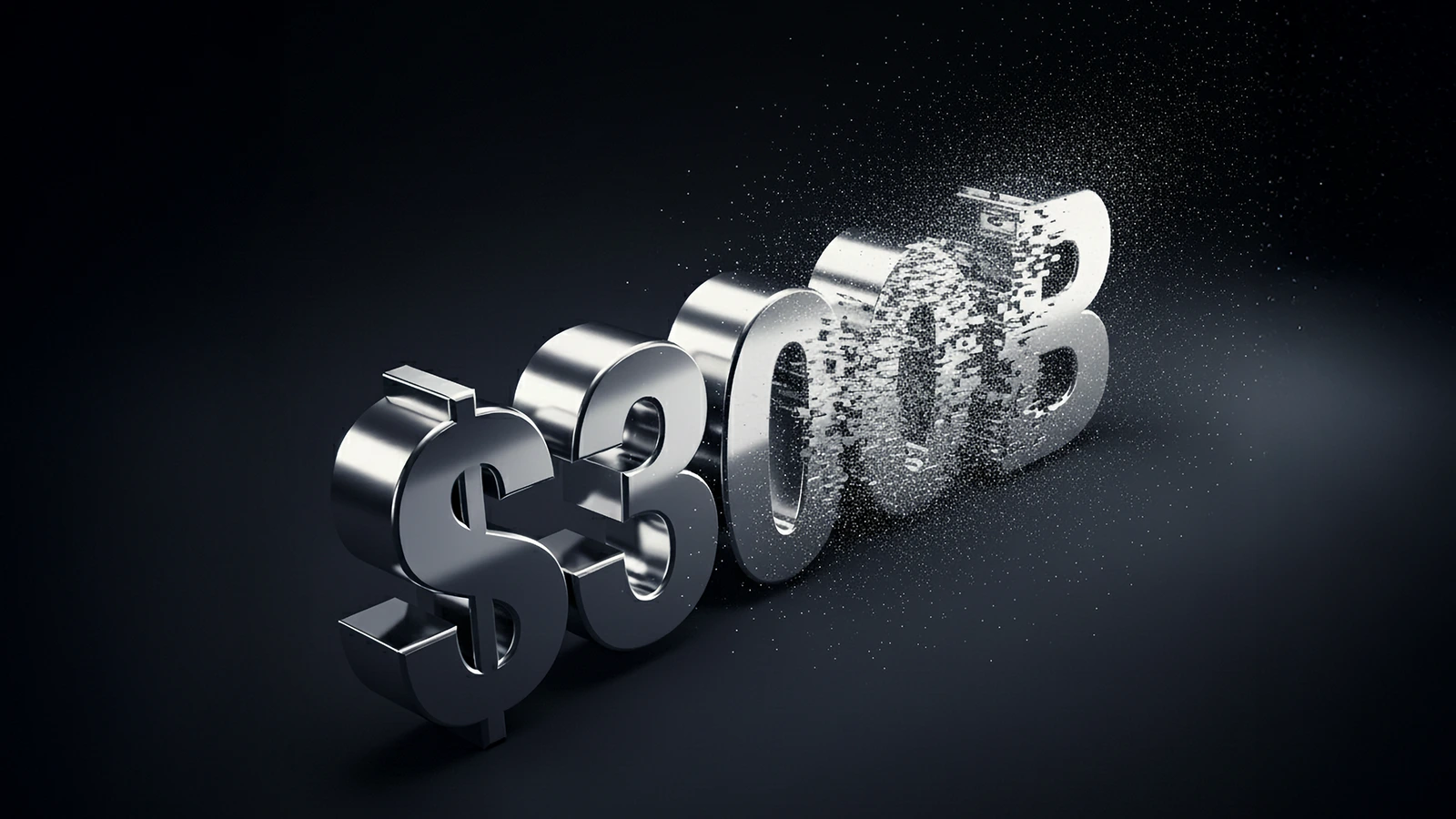
The tech sector just witnessed a staggering $300 billion wiped out in a single trading session - fuelling fears that Wall Street’s once-unstoppable AI mania may finally be hitting its first real stress test.
At the centre of the storm sits Nvidia, the face of the artificial intelligence revolution and now the focal point for investors anxiously awaiting a potentially market-defining earnings release.
What caused $300 billion to vanish overnight?
Recent reports indicate that a wave of profit-taking and valuation anxiety swept through major technology and AI-linked stocks this week, erasing nearly $300 billion in market capitalisation. The selloff was triggered by growing doubts over whether the blistering pace of AI spending - especially around chipmakers like Nvidia - can keep matching expectations.
Hedge funds and institutional investors have begun shorting high-flying AI names, arguing that valuations have outpaced fundamentals. Adding to the unease, SoftBank and several major funds reportedly trimmed their Nvidia stakes, stoking fears that even long-term believers are hedging exposure to what some now call “AI’s overextended trade.”
Why Nvidia’s earnings matter for the AI boom
All eyes are now on Nvidia’s Q3 2025 earnings report, widely seen as the ultimate referendum on AI’s near-term sustainability. Analysts expect around $54 billion in quarterly revenue - a staggering figure by any measure - but the real focus is guidance. Can Nvidia maintain the hypergrowth pace that markets have priced in?
If management signals slower data-centre expansion or weaker forward demand, the “AI bubble” narrative could gain traction and trigger a broader correction across tech indices. For now, investors are balancing their faith in AI’s transformative power against concerns that markets have priced in perfection.
Is there really an AI bubble? Expert views
Market veterans and financial commentators are openly comparing today’s AI enthusiasm to the euphoric highs of the dot-com era. Investors such as Michael Burry and Peter Thiel have taken bearish positions on leading AI stocks - a stark contrast to the unshakable optimism that defined 2024’s rally.
Critics argue that valuations now hinge more on potential than performance. Despite rapid innovation and record-level R&D spending, the returns remain speculative. Investors are demanding concrete proof that AI infrastructure build-outs will generate sustainable profits, not just impressive headlines.
Market sentiment: The role of social media
X (formerly Twitter) has become the epicentre of the AI-bubble debate. Finance influencers and analysts are dissecting Nvidia’s $230–$300 billion market-cap wipeout in real time, framing the upcoming results as a “make-or-break moment” for the entire AI movement.
Viral posts warn that disappointment could spark a ripple effect across the Nasdaq and S&P 500, given the tech sector’s outsized weight in major indices. The tone online has shifted from celebration to caution - a subtle but telling sign that sentiment is fraying.
What happens next?
This week marks a critical inflection point for the technology sector. Nvidia’s earnings report could either reaffirm the AI revolution’s financial credibility or intensify fears that exuberance has overshot reality.
If results beat expectations and guidance stays strong, confidence in AI’s profit potential may return swiftly. But a miss could confirm what sceptics have warned - that valuations have run too far, too fast.
Either way, the market’s verdict on Nvidia will likely ripple far beyond one company. It may determine whether the AI boom evolves into a durable growth era or becomes another cautionary chapter in tech’s long history of bubbles.
Watch out for Nvidia's next movements with a Deriv MT5 account today.
إخلاء مسؤولية:
The performance figures quoted are not a guarantee of future performance.
الأسئلة الشائعة
ماذا يعني «انفجار» فقاعة السوق في مجال التكنولوجيا أو الذكاء الاصطناعي؟
كم خسرت Nvidia من قيمتها السوقية خلال موجة البيع؟
من هم أكبر منتقدي اتجاه الاستثمار الحالي في الذكاء الاصطناعي؟
هل تصحيحات السوق التقنية كهذه نادرة؟
ما الذي يجب أن يراقبه المتداولون في نتائج أرباح Nvidia القادمة؟


